4 trends shaping the future of food safety
Today, our food safety system enjoys a good reputation, both nationally and internationally, and we want to keep it that way. Food businesses are preparing to meet the various challenges this brings. How can they respond to new foods and cutting-edge technologies that enable greater transparency throughout the supply chain? Each of these 4 trends could be a game changer for our future food safety system.
Building a stronger food safety culture
Belgium’s self-checking system, introduced after the dioxin crisis in 1999, has made our food businesses highly reliable trading partners when it comes to producing safe food. They can now go one step further to remain the best in food safety. “I can see that there is still a lot of potential for developing a food safety culture in businesses in the sector,” says Kristien Neyts, Quality Coach at Quality Coaching.
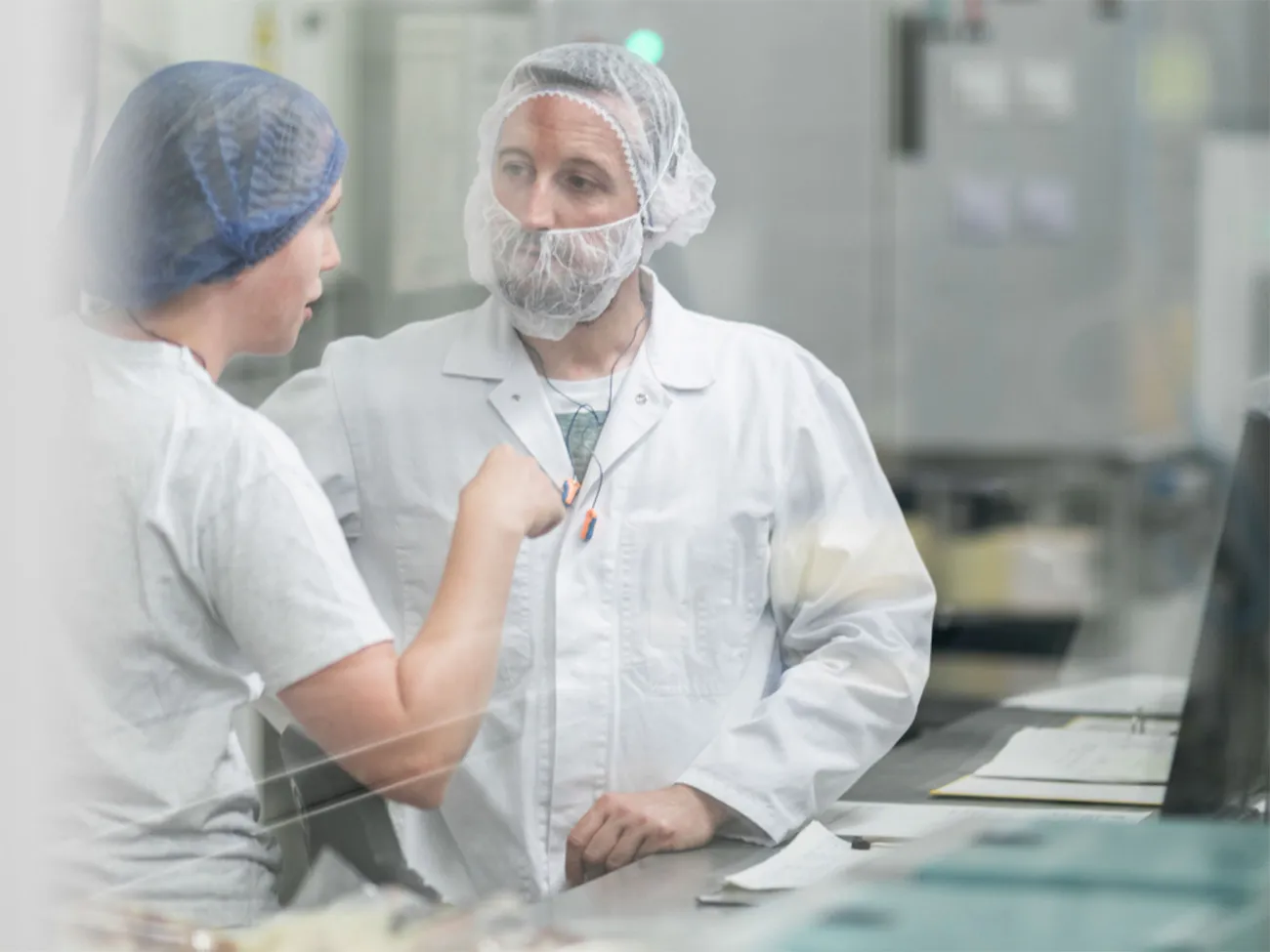
“Food quality and safety are not just the responsibility of the quality department. Everyone in the business must make food safety a priority and communicate proactively about it, from operators to marketing managers, members of the management team and the CEO. We need to break down the silos between departments and make sure that food safety is communicated and promoted throughout the organisation. Here, management commitment plays an essential role.
To help businesses achieve this, academics and the food sector are joining forces through the Q-DNA innovation project
New foods, new challenges
Cultivated meat, yellow mealworms and algae are just some examples of the new foods and ingredients that will increasingly find their way onto our plates in the future. However, developing these new foods poses a challenge for the current food safety system. Businesses looking to bring a new food product to market must demonstrate that it is safe for human consumption. “That is precisely why the European legislation on novel foods was introduced,” explains Lore Knaepen, Program Manager New and Shifting Resources at Flanders’ FOOD.
“Submitting an application is often a lengthy and costly process, with costs reaching half a million euros or more. Once a product has been approved as a novel food, and the application includes data subject to exclusive property rights, the authorisation is exclusive to the applicant for 5 years. Fortunately, a few years ago the application procedure was simplified somewhat and centralised,” adds Lore.
The protein transition is one of the reasons food businesses are innovating intensively with new types of protein sources. According to Wim Geeraerts, Food Policy Advisor at Fevia, insects are also offering more and more opportunities as alternative proteins. Following the yellow mealworm and the migratory locust, the house cricket has also been recognised as a novel food since March.
“Insects are rich in essential amino acids, minerals, vitamins and fibre. They offer the food industry a wide range of possibilities and applications. In practice, insects can be used as protein sources in a variety of products, such as biscuits, pasta and sauces. EFSA is currently assessing various other insect-based products. After all, appetite comes with eating!”
Blockchain technology brings greater transparency
You may know blockchain from the digital currency bitcoin, but did you know that this technology also offers opportunities for our sector? Blockchain works through a decentralised, chronological “ledger” that records all transactions. This makes it possible to certify an entire chain, from raw material to finished product, without the involvement of third parties. Blockchain technology can therefore help combat food fraud, predict food incidents and strengthen consumer confidence.
This increases transparency throughout the production chain: you can trace a product’s journey and find out who was responsible for each link in the chain. “Businesses have an ever-growing volume of data to process. They can use artificial intelligence (AI) to analyse this data and identify correlations that humans are unable to detect,” explains Régis Coli, manager of the Walloon innovation cluster Wagralim.
To make data sharing across the agri-food chain easier, ILVO, the Research Institute for Agriculture, Fisheries and Food, has a data-sharing platform, DjustConnect. “Through DjustConnect, businesses in the agri-food sector can discover and make use of the many opportunities offered by the data economy, without losing control of their data,” explains Stephanie van Weyenberg of ILVO.
Find out more about blockchain in our sector
Stopping pathogens in their tracks with WGS
Whole genome sequencing (WGS) is a technique that maps all the DNA of an organism. “The technique has not yet been made a legal requirement, but it can provide the food industry with a wealth of information,” says Kristien Neyts, Quality Coach.
“By recording bacteria in databases, for example, we can detect an outbreak more quickly and establish a link between contaminated food, a human infection and the source of the contamination in the food chain. Detecting and analysing the problem is a prerequisite for taking targeted measures and preventing it from escalating. The technique also enables us to respond appropriately to an environmental monitoring result: is routine cleaning and disinfection sufficient, or are we dealing with a persistent microorganism that requires a different approach?”
WGS is a powerful tool that will become the method of choice for research into bacterial food safety. However, conclusions drawn from such a vast database must be treated with the utmost care, especially when it comes to establishing responsibility in the event of an outbreak.
“I’ve noticed that food businesses are reluctant to use this technology and share their data. However, it brings us benefits: more targeted risk analysis, early detection of problems and outbreak prevention. It all starts with the right mindset and transparent communication, from both food business operators and the government.
Question about this story? Ask your question
Keep following this
Get an email when a new story is published. No account needed.
- ThemeManaging food safety risks
- SubjectFood safety