Mapping energy consumption through volumetric flow measurement
Texte Marjolein de Wit-Blok | Photos BEKO Technologies
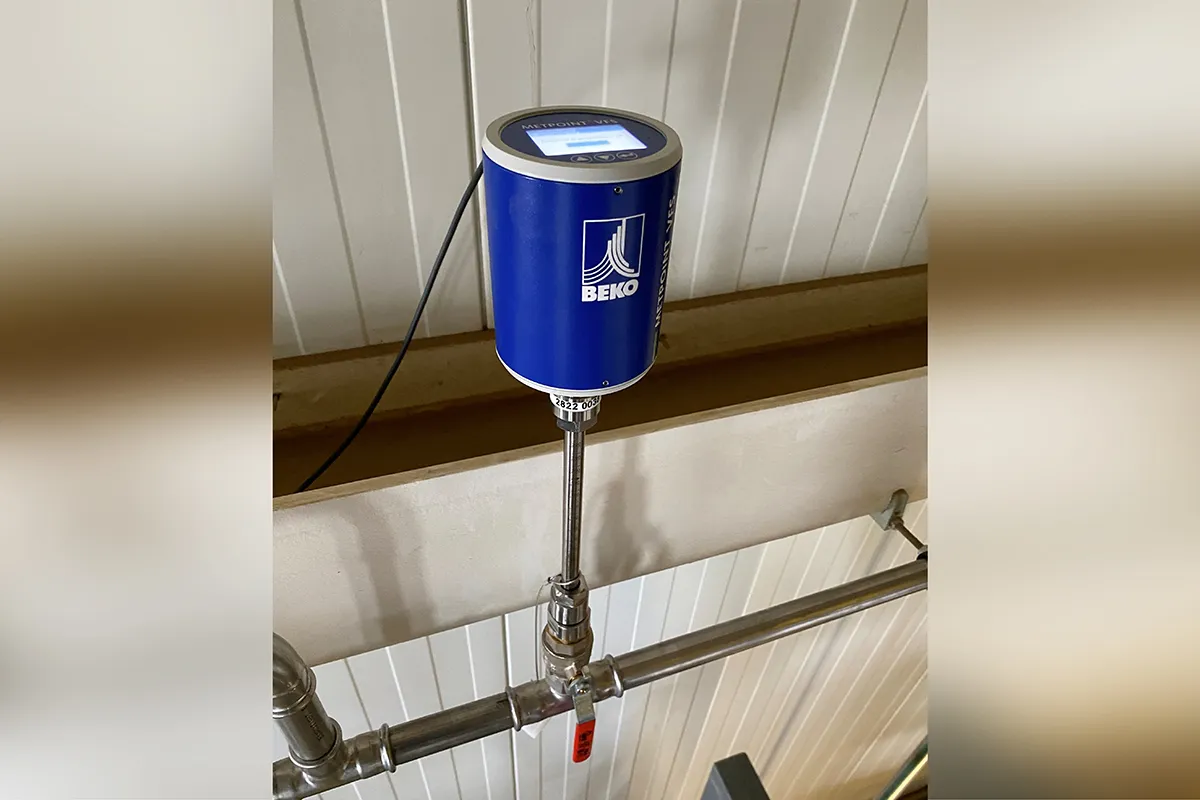
Driven by climate agreements and cost savings, almost all companies are focusing on sustainability in general and energy savings in particular. In many cases, compressed air users can take significant steps simply by measuring their compressed air consumption. Continuous monitoring provides valuable insight into trends, making it possible to detect anomalies quickly. To this end, BEKO Technologies offers an upgraded flow sensor with an open design and a line laser for simpler, more precise installation.
Monitoring volumetric flow in a compressed air system is important for several reasons. Flow monitoring can detect problems such as leaks or inefficient operation of compressors and equipment. Addressing these issues reduces compressed air consumption and the associated costs, energy use and CO2 emissions. Flow monitoring is also important for targeted maintenance, checking the condition of the system and, where appropriate, collecting data for predictive maintenance. Finally, flow measurement can provide valuable insights for optimising processes and products.
Measurement with METPOINT
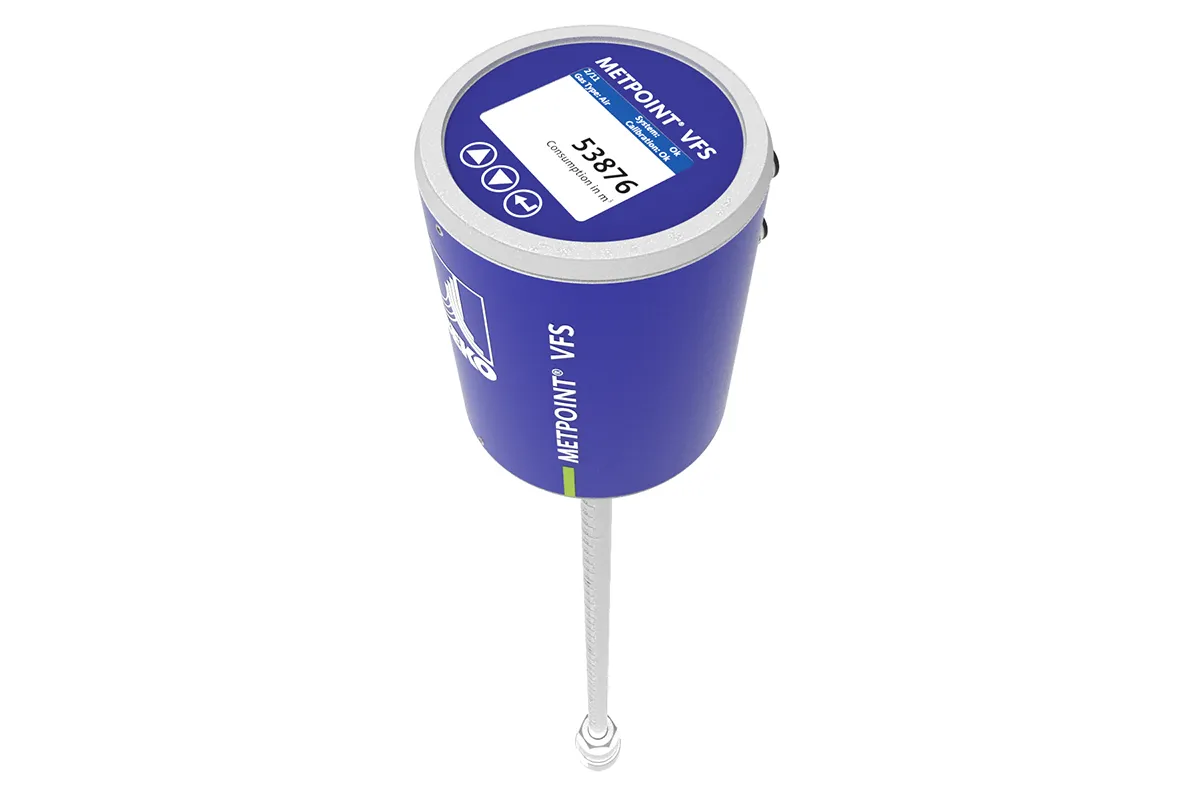
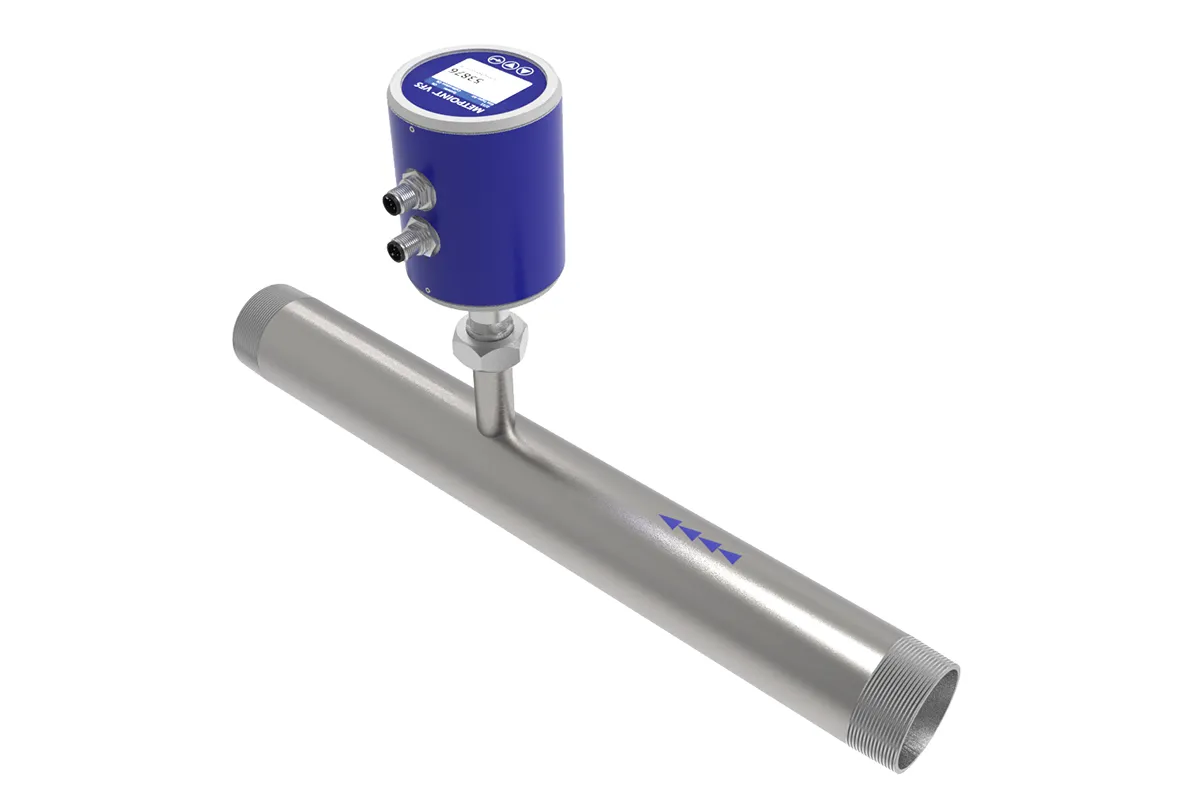
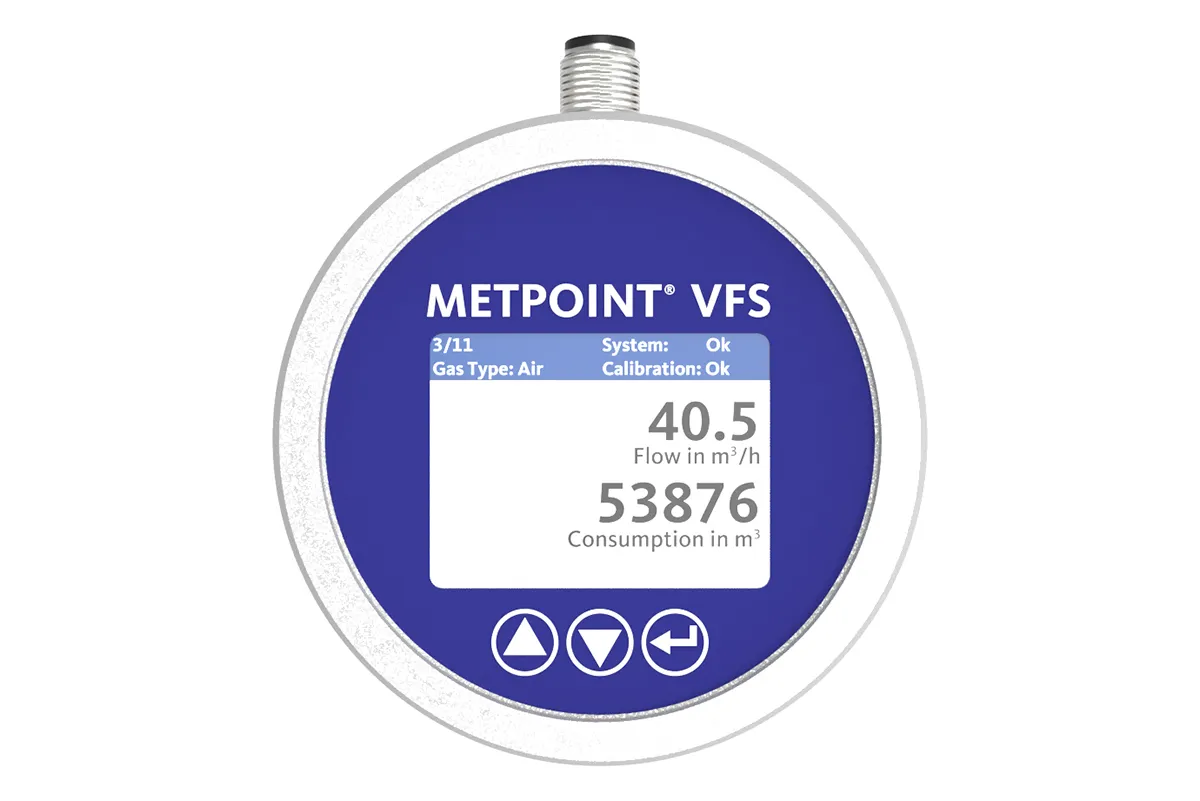
Accurate volumetric flow measurement requires a high-performance measuring instrument. BEKO Technologies has developed the METPOINT VFS in-house, in TI and TM versions. Both sensors record volumetric flow and consumption, as well as flow velocity and the temperature of the medium. Another feature they share is the proven thermal mass measurement principle and high accuracy, at ± 1.5 % of the measured value and ± 0.3 % of full scale. This high level of measurement and process reliability is achieved in part through continuous monitoring of the sensor position. The TI version must be correctly aligned to operate, which requires a line laser. The TM is installed using an integrated measuring section. Both sensors feature an open design, with two temperature sensors of different lengths encapsulated in 1.4404 stainless steel. « This makes dirt deposits less likely and, thanks to the different lengths of the temperature sensors, the VFS is less susceptible to condensation », explains Sara Deckers, Focus Industry Manager at BEKO Technologies. « The sensor is also easy to clean. In addition, the TI design can be combined with extra protection for pressures up to a maximum of 50 bar. » For outputs, you can choose between a 4…20 mA current output, Modbus RTU and/or a pulse output, allowing data to be stored directly via the operating system or a BEKO data logger. Last but not least, the sensors are fitted with an innovative display: a 2-inch TF LCD screen (resolution: 240 x 230) that is legible from any direction.
In practice
Sara Deckers: « Now that high-performance, robust and reliable measuring devices are available, companies can start making significant energy savings. Make no mistake, even the smallest air leaks are literally wasting your money. » Air leaks lead to:
- Compressors constantly generating more compressed air than needed;
- The need, in some cases, to use an additional compressor;
- A risk of product contamination or reduced accuracy because dirt enters through the leak.
Sara Deckers concludes: « Flow measurements not only help detect leaks and faults, but are also a powerful tool for making optimisations. I see this every time at companies that simply fit their machines, sometimes dozens or hundreds of them, with a volumetric flow meter to see how much compressed air is actually being generated and how much is really contributing to the process. It is a revelation for users every time. »
A business enquiry for Beko Technologies? Get in touch
Companies in this story

Keep following this
Get an email when a new story is published. No account needed.
- ThemeImproving production process reliability
- SubjectTechnology
- CompanyBeko Technologies