A sustainable dairy sector: why is it essential for a resilient food system?
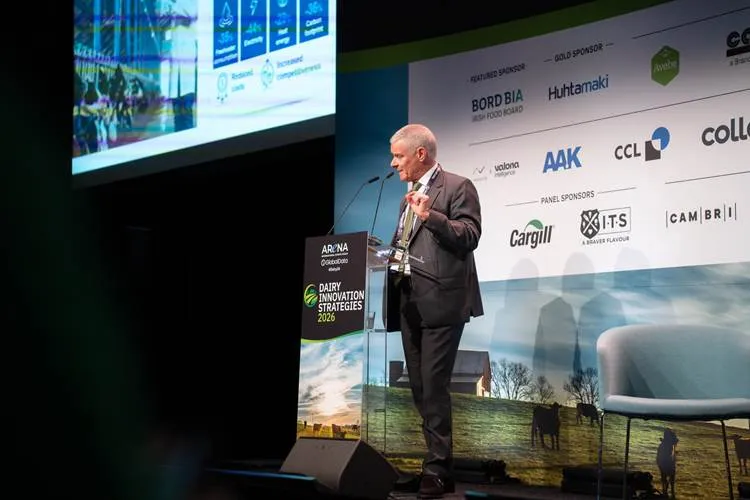
With the global population exceeding 8 billion, our food systems are under immense pressure to ensure safe, affordable food for everyone. In the European Union alone, consumers drink around 154 billion litres of beverages with a limited shelf life each year, or nearly 300 litres per person. At the twelfth edition of the Dairy Innovation Strategies Conference, Lorenzo van Haelst, Managing Director of Tetra Pak France & Benelux, highlighted why a sustainable dairy industry is the cornerstone of more resilient food systems.
The twelfth edition of the Dairy Innovation Strategies Conference took place on 25 and 26 March 2026 at the Postillion Hotel & Convention Center in Amsterdam. This annual event brings together experts, producers, policymakers and innovators from the dairy industry to discuss the sector’s future, focusing on topics such as sustainability, technological advances and the optimisation of production and processing strategies.
Food systems under pressure
At the event, Lorenzo van Haelst, Managing Director of Tetra Pak France and Benelux, explained in detail how our food systems work today and why they need to evolve. After all, food does not simply appear on our plates. It has to be grown, processed, packaged and transported before it reaches us. The choices made at each stage by businesses and policymakers determine how much food is wasted, how much energy we consume, and the scale of the impact on the climate and nature.
Today, our food system is still responsible for more than a third of global greenhouse gas emissions, while the population continues to grow. To keep feeding everyone without putting additional pressure on natural resources, we need food systems that waste less and remain reliable, even in the face of conflict, climate crises or economic hardship.
The role of the dairy sector
The dairy industry is at the heart of this challenge. In the European Union alone, more than 23 million tonnes of milk were consumed in 2025. However, milk and liquid beverages are highly perishable products. The challenge is clear: how can we ensure food safety while reducing the carbon footprint of the entire value chain?
Aseptic processing and packaging solutions offer an answer.
“Aseptic” means free from microbiological contamination. This technology keeps products safe and tasty for six to twelve months without refrigeration or preservatives, while preserving their colour, texture and nutritional qualities. This innovation makes nutritious food more accessible around the world while helping to combat waste.
This approach also has a direct impact on energy consumption and costs. Products that do not require refrigeration can be transported and stored at ambient temperature. This reduces the energy used for transport and storage and makes distribution more efficient, particularly in regions where a reliable cold chain cannot be guaranteed.
Working together to build resilience
While aseptic technology is a major lever, making the dairy sector sustainable requires a broader approach across the entire production chain. Tetra Pak works closely with dairy producers across Europe to improve production-line efficiency, reduce raw material use and minimise waste.
“We helped a Dutch customer diversify into UHT milk and plant-based beverages,” explains Lorenzo. “With integrated processing, packaging and automation solutions, the company was able to cut operating costs by 20 to 40% while making its production more resilient.”
He says projects like these show what is already possible today. “To replicate this progress on a larger scale, we have also set specific targets. By 2030, we want to cut emissions from equipment used to process dairy products at ambient temperature by 50% compared with 2019. With a reduction of 42% so far, we are already on track. We also aim to halve product losses on processing lines that follow best practice. But progress of this kind requires collaboration across the entire chain, from producers and retailers to policymakers.”
Question about this story? Ask your question
Keep following this
Get an email when a new story is published. No account needed.
- SubjectNews