Robots in the fields
Texte & photos FAULHABER
How can we produce tomorrow’s food efficiently and, above all, who will be able to do it? Meeting this challenge will require help. Smart technologies have the potential to significantly improve agricultural efficiency.
Forecasts indicate that the global population is expected to reach nine to ten billion by the end of the century. This raises the question of how to produce enough food without endangering precious natural resources such as groundwater reserves and fertile soils. And how can we ensure there is enough labour for the intensive work of harvesting and preserving crops amid a severe staff shortage?
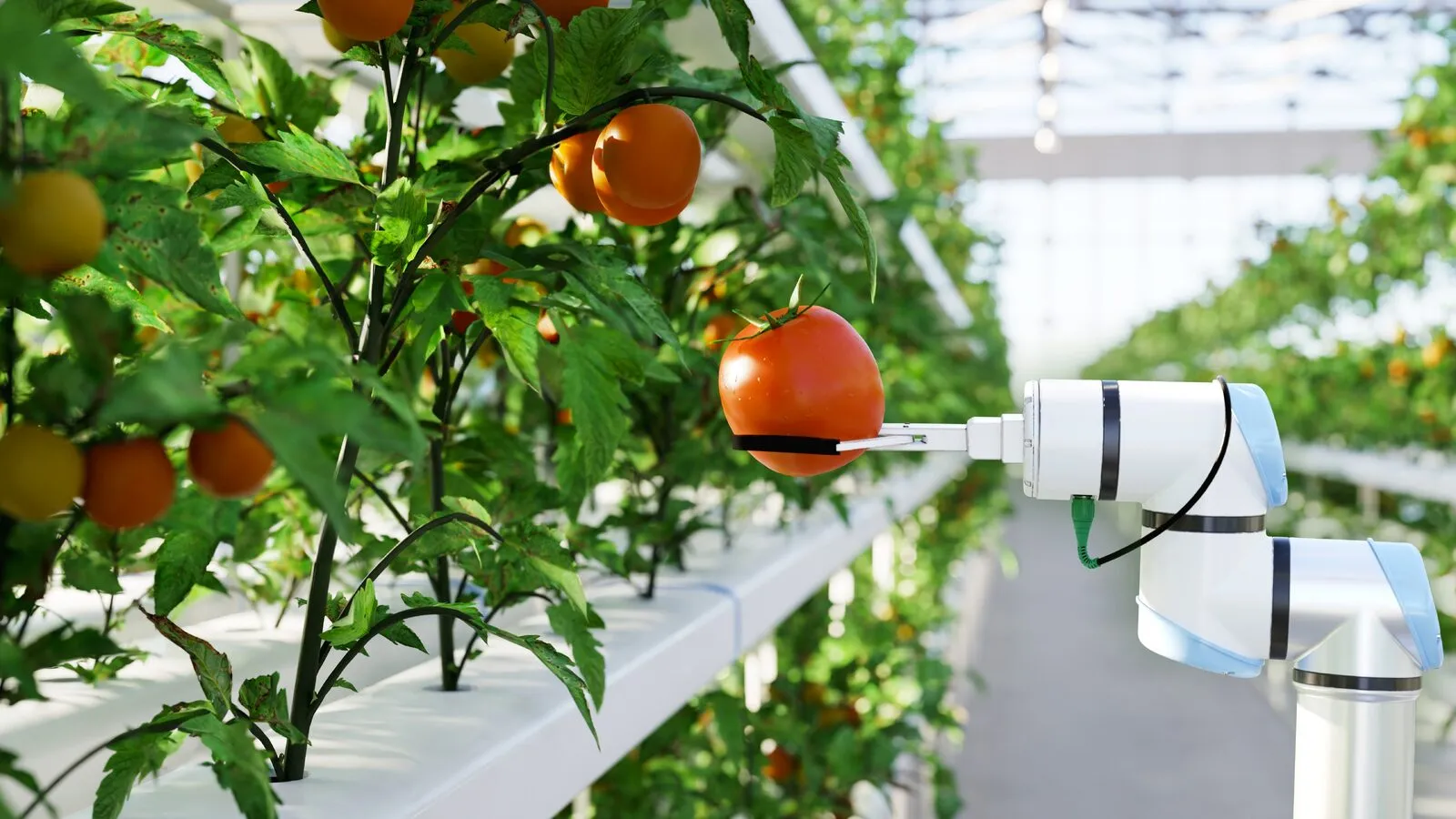
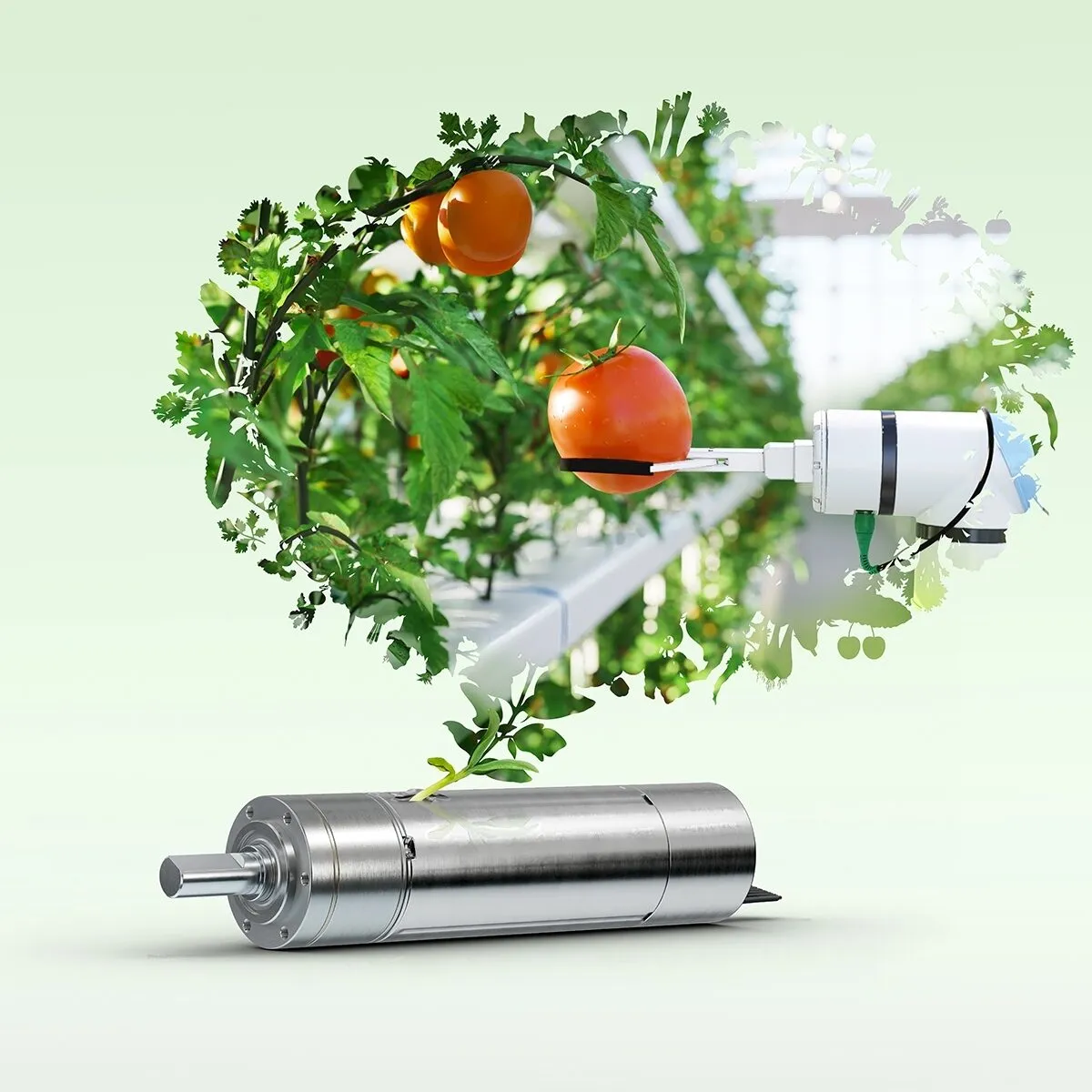
In addition to the heavy machinery used to cultivate large areas of farmland, agriculture still relies on many manual tasks. The physical strain they involve and the growing labour shortage are major obstacles. Current technological developments are making agriculture increasingly digital and automated, opening up new possibilities for greater sustainability. From gently picking fruit with robots fitted with grippers to applying fertilisers and crop protection products precisely and in targeted doses, modern solutions such as autonomous agricultural robots and smart systems are ushering farming into a new era.
Robots lend a hand
Smart farming aims to support agricultural production and management that are both future-focused and tailored to needs. The goal is to use modern technologies to improve efficiency, make more economical use of resources, relieve workers of monotonous tasks and increase yields. Computerised, interconnected processes, machine learning and tailored robotic functions make it possible to focus on each individual plant rather than the field as a whole. This makes interventions more precise, efficient and cost-effective. A mobile robot fitted with a gripper arm, for example, can harvest fruit at its optimum ripeness, as determined using sensors and cameras. Autonomous field robots, whose low weight helps limit soil compaction, and smart cultivation systems that place seeds or fertiliser exactly where they are needed follow the same precision-based approach.
Cutting-edge technology for automation
But what technologies do agricultural robots rely on? Because they are compact and much lighter than large conventional machines, their drive systems must also be as compact as possible. At the same time, they must operate reliably and over the long term despite substantial temperature fluctuations and particularly demanding operating conditions. Whether they are driving seed drill discs, valves, grippers, robotic arms or shears, these drives must also deliver enough power to perform every task reliably over countless cycles. Energy efficiency is also crucial, since autonomous units are generally battery-powered and have limited operating time. Finally, the control electronics must be compatible with networked architectures and enable intelligent control.
Robust solutions from a single source
“These are typical requirements for high-end drive systems, and suitable solutions are part of FAULHABER’s standard offering,” says Kevin Moser. “Drives used in agricultural environments must also be extremely robust to operate reliably over the long term, even in the toughest conditions. Major temperature fluctuations and mechanical stresses are commonplace in agriculture and horticulture.”
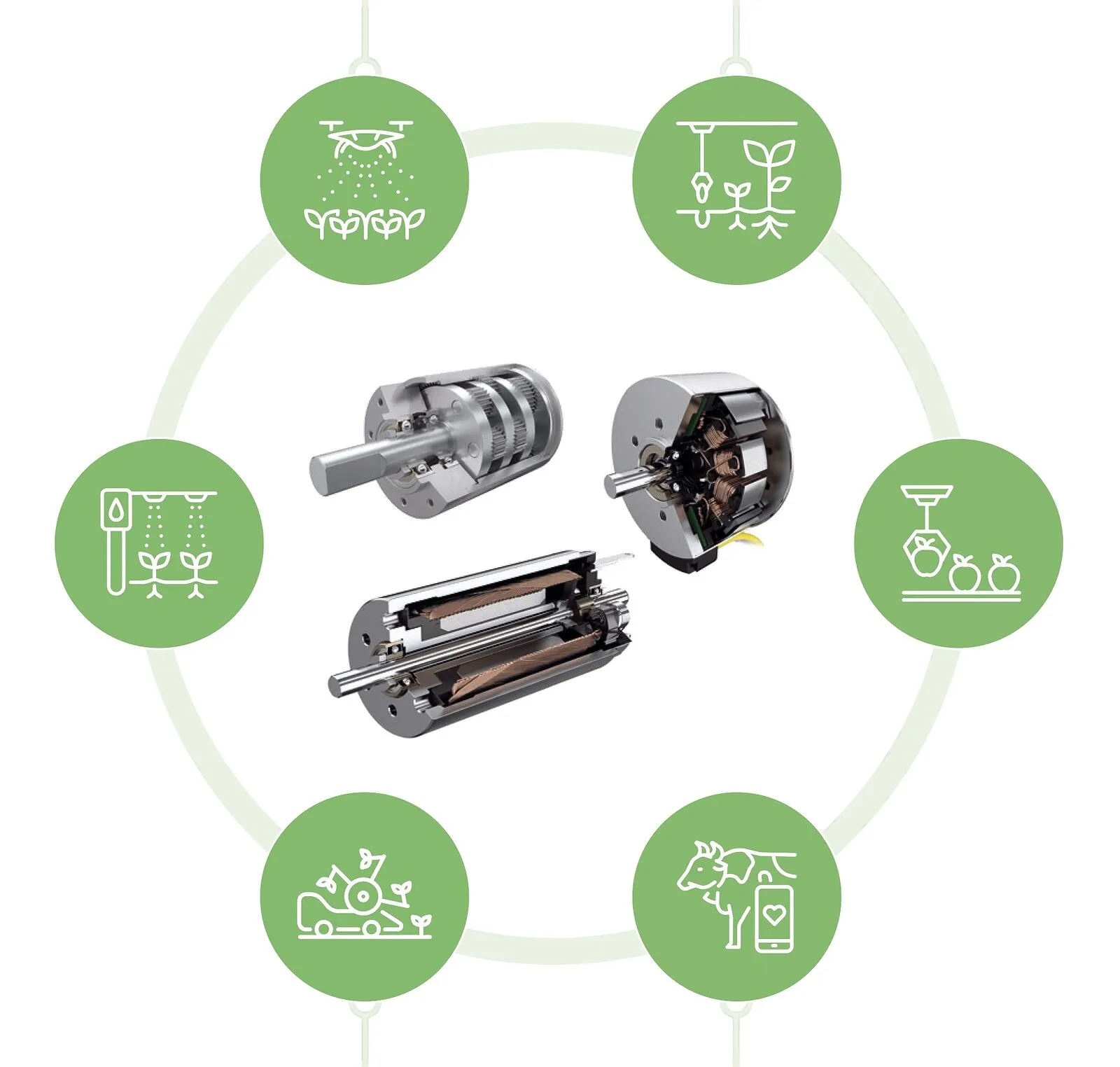
The requirements are met by the extremely compact, maintenance-free, brushless flat DC micromotors in the BXT series, as well as the particularly robust and cost-effective copper-graphite commutated motors in the CXR range. The gearheads in the new GPT series are ideally suited to transmitting high torques in harsh conditions. Their high efficiency and robust design also make them suitable for agricultural applications. Optional incremental encoders enable highly precise positioning. Various controllers are available for networking drive systems, including models with a CANopen interface. “FAULHABER drives are already being used in smart farming,” says Kevin Moser. “They will continue to play an important role in demanding applications in this sector.”
Question about this story? Ask your question
Keep following this
Get an email when a new story is published. No account needed.
- ThemeAutomating and connecting production
- SubjectTechnology