Cybersecurity matters to every food business
Texte Valérie Couplez | Photos DNV & iStock
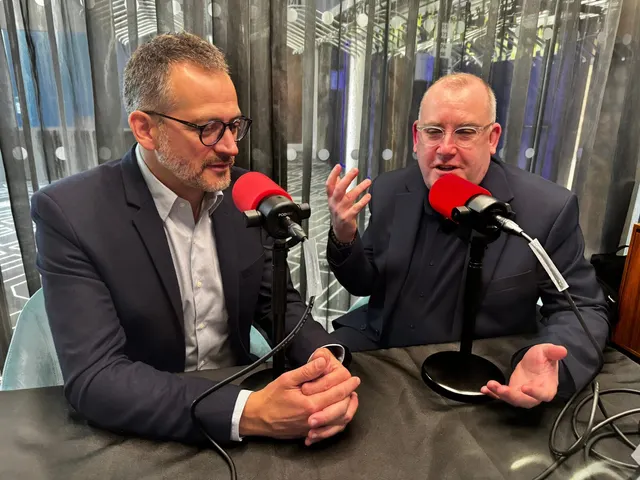
The NIS 2 legislation came into force in 2024. It was introduced to ensure that a cyberattack on one company does not bring the entire supply chain, or even the whole country, to a standstill. The food industry is also among the sectors covered by NIS 2, as the authorities have designated it a critical sector. Filip Van Himbeeck and Marleen Opsomer of DNV explain the key points to bear in mind.
“Cybersecurity is an issue that concerns everyone,” says Filip Van Himbeeck, Lead Auditor ISO/IEC 27001 at DNV. “NIS stands for Network & Information System. The word ‘network’ is precisely what makes this legislation so important. For the authorities, it is not a major issue if a cyberattack brings a single company to a standstill. But the situation becomes serious when one attack triggers a chain reaction across the sector because companies are not properly prepared.” Filip Van Himbeeck cites the cyberattack that brought Brussels Airport to a standstill as an example. “The attackers had managed to get in through a vulnerability in a supplier’s software.”

Suppliers must also comply with the NIS 2 Directive
In principle, only companies above a certain size (50 FTEs, annual turnover of at least €10 million, annual balance sheet total of at least €10 million) are required to meet all the NIS 2 Directive’s requirements. However, Filip Van Himbeeck believes its scope is broader. “For example, some retail chains require their suppliers to be organised in such a way as to guarantee deliveries, whatever problems may arise. This falls under business continuity management (ISO 22301) and covers anything that could go wrong across the entire production chain. There is no doubt that cybersecurity is an important part of this.”
Routes to cybersecurity
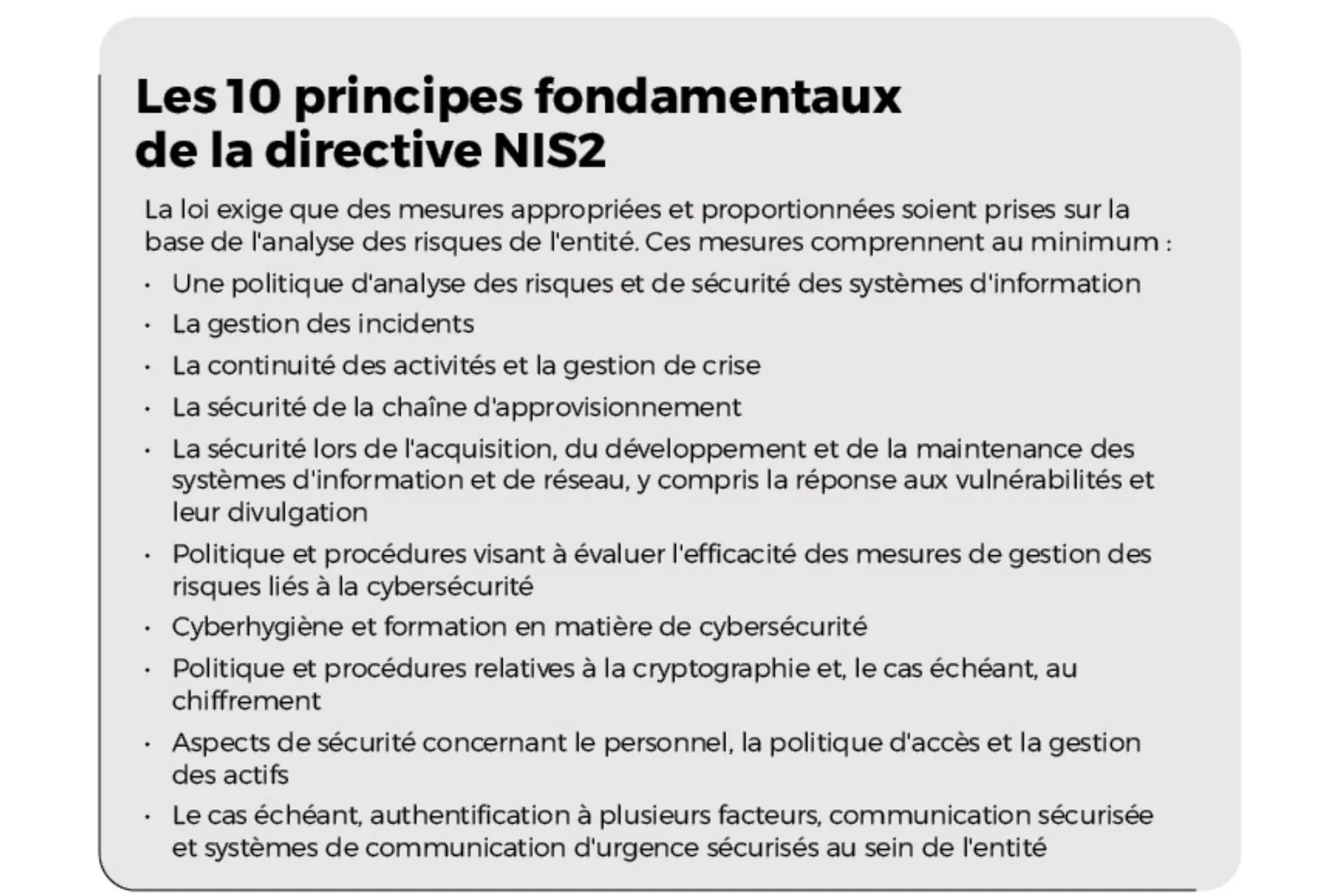
So what must food businesses do to comply with the NIS 2 Directive? “In practice, the legislation sets out just ten guiding principles (see box). These represent the minimum requirements. Food businesses fall into the ‘important’ category. This means they must take the necessary measures, but do not have to prove their compliance in advance. It is only in the event of an incident that they need to demonstrate that they have taken the necessary measures, for example by having their processes certified or verified. They then benefit from the presumption of innocence,” Filip Van Himbeeck continues. In Belgium, there are two ways to do this. One option is ISO/IEC 27001 certification. An alternative is certification under the Cyberfundamentals framework developed by the CCB (Center for Cybersecurity Belgium).
A culture of cybersecurity
Food businesses will therefore need to take steps to protect themselves, as cybersecurity can no longer be ignored. Filip Van Himbeeck says: “The CCB can impose fines or even shut down a company completely if ongoing problems continue to pose a risk to others. It is important that senior management can be held personally liable.” However, the path to achieving this is not straightforward. “Whatever certification route a company chooses, everyone in the business needs to be on board. From senior management allocating the budget to the operator who has to set up passwords on their machine. Just as with food safety, you need to build a culture of cybersecurity,” explains Marleen Opsomer.
With support from DNV
Fortunately, food businesses are not left to fend for themselves. “As part of the certification preparation process, DNV offers its own ISO/IEC 27001 ‘self-assessment tool’. This enables companies to assess how prepared they are. DNV also offers the option of a pre-audit, giving the company an affordable assessment of its progress. In addition, DNV has highly experienced staff who can deliver the appropriate cybersecurity training,” Marleen Opsomer concludes, listing some of the benefits.
Question about this story? Ask your question
Keep following this
Get an email when a new story is published. No account needed.
- ThemeManaging food safety risks
- SubjectTechnology