From material choices to recycling: how packaging determines food’s carbon footprint
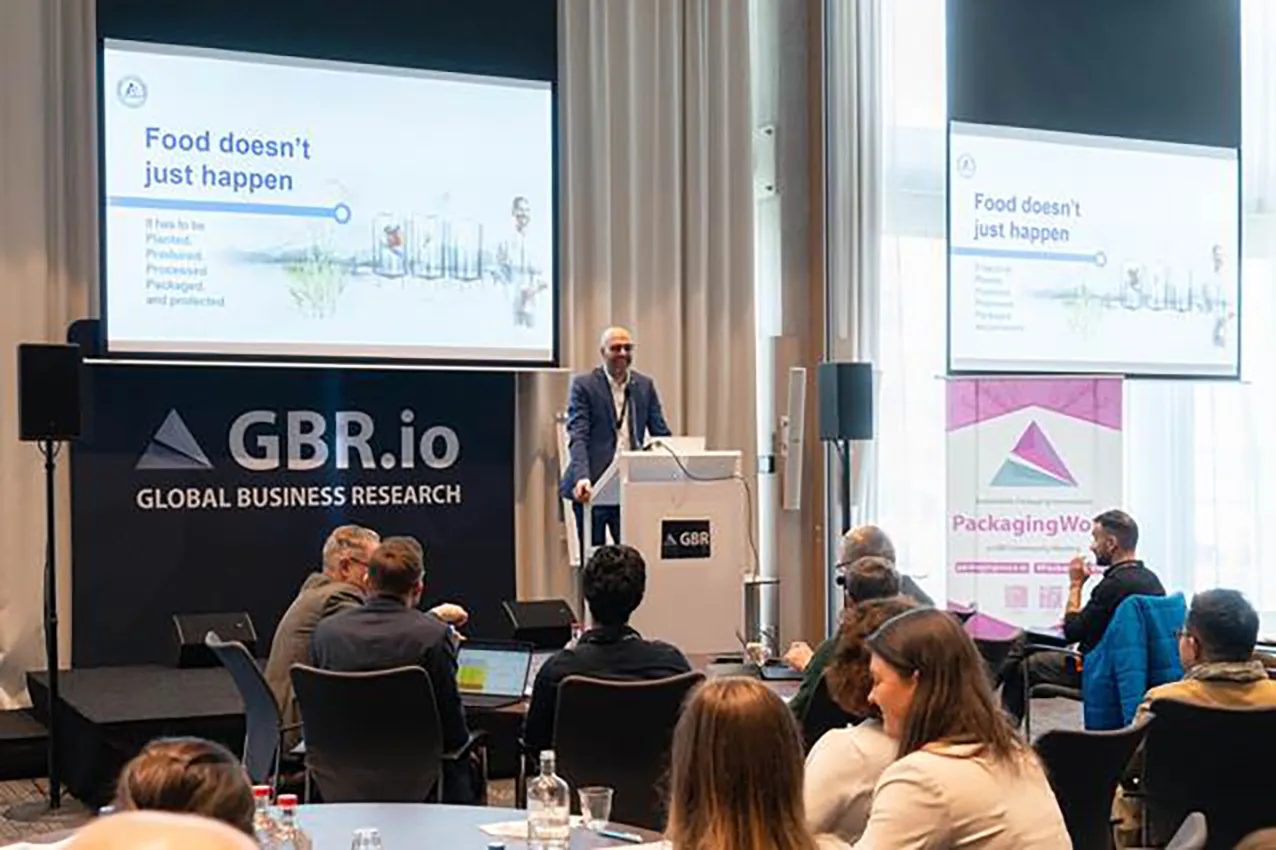
The packaging choices made by food companies today will partly determine the sustainability and resilience of tomorrow’s food system. Cutting waste, reducing CO₂ emissions and increasing recycling are high on the European agenda. By 2040, packaging waste per capita in Europe must therefore fall by 15%. At the same time, consumers expect greater transparency about the true sustainability of packaging. At the fifth edition of PackagingWorX in Amsterdam, Ashkan Danaei, Sales Director at Tetra Pak France & Benelux, explained how packaging design is evolving from a purely protective function into a key factor in climate impact. He also cited the Netherlands as an example of how renewable materials and collaboration can accelerate the transition.
On 9 and 10 March 2026, Amsterdam hosted the fifth edition of PackagingWorX, organised in collaboration with the Global Business Research community. The event brings together public-sector decision-makers, industry and NGOs to address one central question: how can the entire packaging life cycle be made circular and future-ready?
Packaging influences the climate impact of food
At the event, Ashkan Danaei, Sales Director at Tetra Pak France and Benelux, discussed the changing role of packaging. “Packaging does more than protect a product; it also has a direct influence on the carbon and material footprint of food,” he said. Reducing food waste, cutting CO₂ emissions and improving recycling all start with design choices. Decisions made by the sector today will have an impact across the value chain for years to come. More paper-based materials, simpler structures and packaging designed for recycling from the outset are central to this shift.
One practical example is aseptic beverage cartons with a paper-based barrier. “They almost completely replace the traditional aluminium layer, contain up to 90% renewable materials and reduce the carbon footprint by around a third compared with conventional alternatives,” says Ashkan Danaei. “At Tetra Pak, we continue to invest in these future-ready packs, together with partners across the value chain. Tetra Pak has already invested around three million euros with Yellow Dreams in a new recycling plant in Ittervoort, and one million euros in Recon Polymers in Roosendaal. This company turns PolyAl from beverage cartons into reusable raw materials for the plastics industry.” Independent studies also show that, in several European markets, fibre-based beverage cartons often have a lower climate impact than alternatives.
The Netherlands leads the way in renewable materials
Reducing the climate impact of a beverage pack involves more than the carton. Closures and protective layers also play a role. And this is precisely where the Netherlands stands out. In the Benelux and Western Europe, the use of plant-based polymers for closures and protective layers is growing rapidly. These materials reduce reliance on fossil-based raw materials and increase the renewable content of packaging, without compromising food safety or functionality.
“When brands, suppliers and retailers work together to choose renewable materials, new packaging can reach the market faster,” he explains. “Globally, Tetra Pak has already supplied 12.3 billion plant-based caps and more than 11 billion packs containing plant-based polymers. This has avoided around 47 kilotonnes of CO₂ compared with fossil-based alternatives. The Dutch market has played an important role in this early adoption.”
Circularity requires collaboration across the entire value chain
However, choosing more sustainable materials is not enough. Without collection, sorting and recycling, circularity remains an ambition on paper. Action is needed across the value chain to limit the effects of climate change.
That is why Tetra Pak focuses on collaboration with recycling companies, local authorities and its customers. Co-investing in recycling infrastructure and simplifying packaging design to improve recyclability increases the likelihood that materials will actually be reused. The more aligned the links in the chain are, the faster circular solutions can be rolled out at scale. “Tomorrow’s packaging must protect more than products,” Ashkan concludes. “It must ensure food safety while reducing climate impact. That is only possible if the entire chain is committed.”
Question about this story? Ask your question
Keep following this
Get an email when a new story is published. No account needed.
- ThemePackaging and tracing products
- SubjectSustainability