Rigorous coordination and preparation make all the difference in a piping project
Texte Valérie Couplez | Photos Hyline
The potato sector is booming. Last year, a manufacturer of potato products decided to increase capacity at one of its Belgian sites. An old production hall is being converted into a completely new space for “specialities”: not chips, but other delicacies such as duchess potatoes. Hyline was brought in to install the pipework for the new line’s utility systems. Its experience with projects of this scale and the synergies with sister company Collignon, responsible for electrical cabling and control systems, proved to be clear advantages.
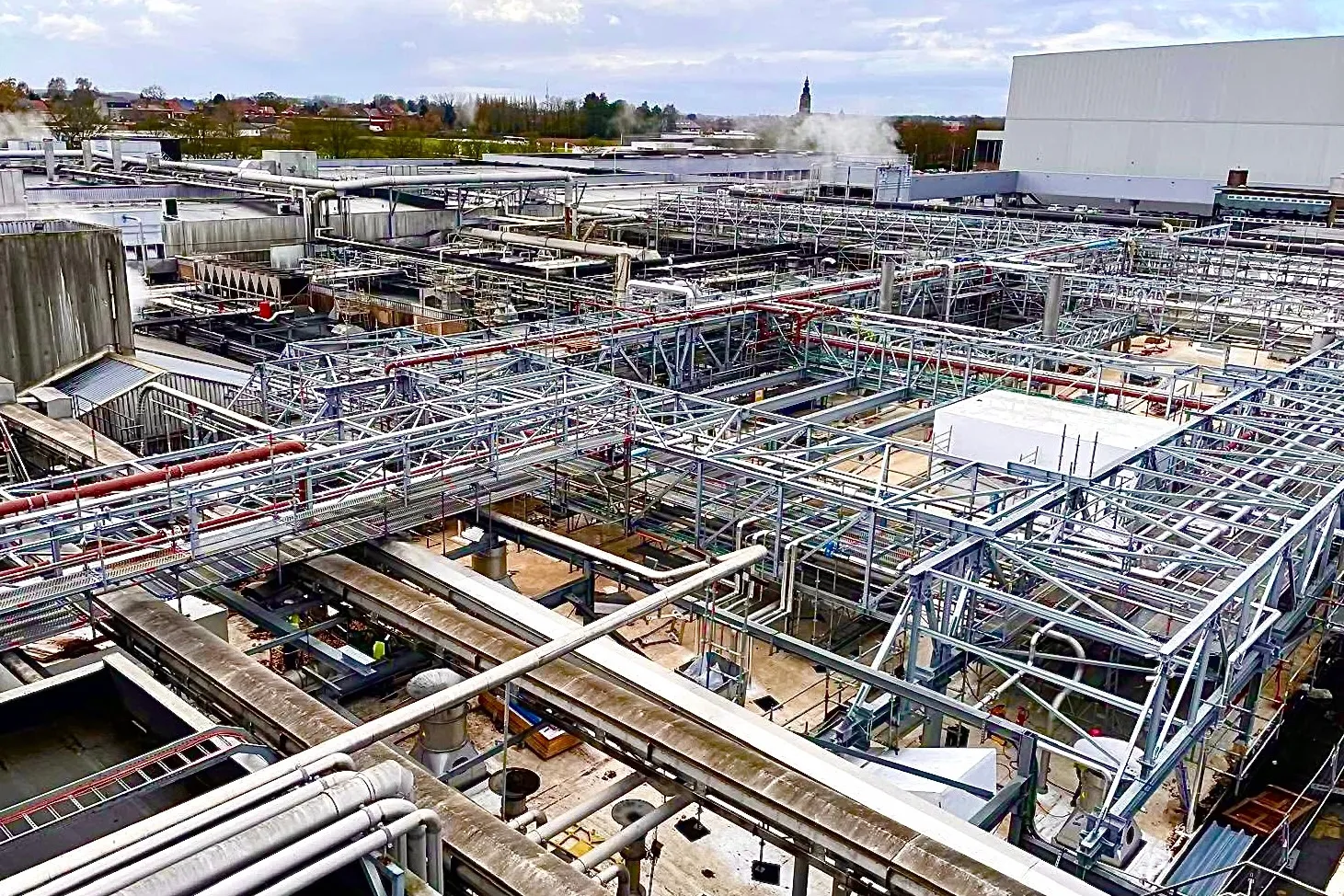
Sometimes the figures speak for themselves. For the new speciality line, Hyline’s project involved no fewer than 10 km of pipework, a 150-tonne pipe rack and the installation of 1,000 components. The challenge lay not so much in the technical complexity, which Hyline is fully equipped to handle, as in the tight schedule and the need for coordination. Bram Gevaert, Sales Manager at Hyline: “That is why the client asked for an action plan and schedule as early as the tender stage. An investment of this scale brings together many different contractors on one site, making good coordination crucial.” The pipe rack, for example, was also intended to help support the roof structure, increasing its stability and load-bearing capacity. “We could only start work once the roof was in place. In addition, the work had to avoid disrupting existing production at the site.”
Flexibility as an asset
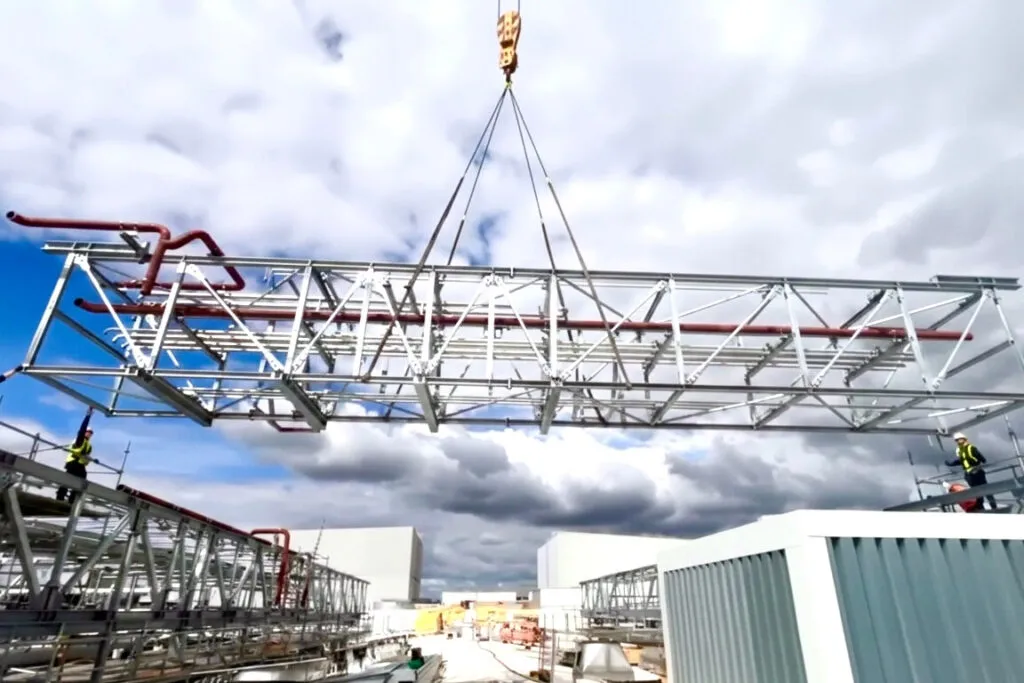
By adapting quickly and working through every setback with the client, Hyline was able to keep construction of the new line on track. One decision was to build the pipe rack in the workshop rather than on site, where there was more space and, above all, better equipment. “The pipe rack was divided into different sections and carefully finished. We then worked on a just-in-time basis: as soon as the civil engineering work had progressed far enough, a section was shipped to the site,” explains Project Manager Adil Lamrini. Easy? Far from it. Given the size of the sections, each 5 m wide and 20 m long, they required an abnormal load transport. Once again, Hyline successfully handled this for the client. Moving the sections around the site also proved challenging. The tower crane there could not deliver all of them to their final positions. “We brought in an additional crane.”
Check everything twice
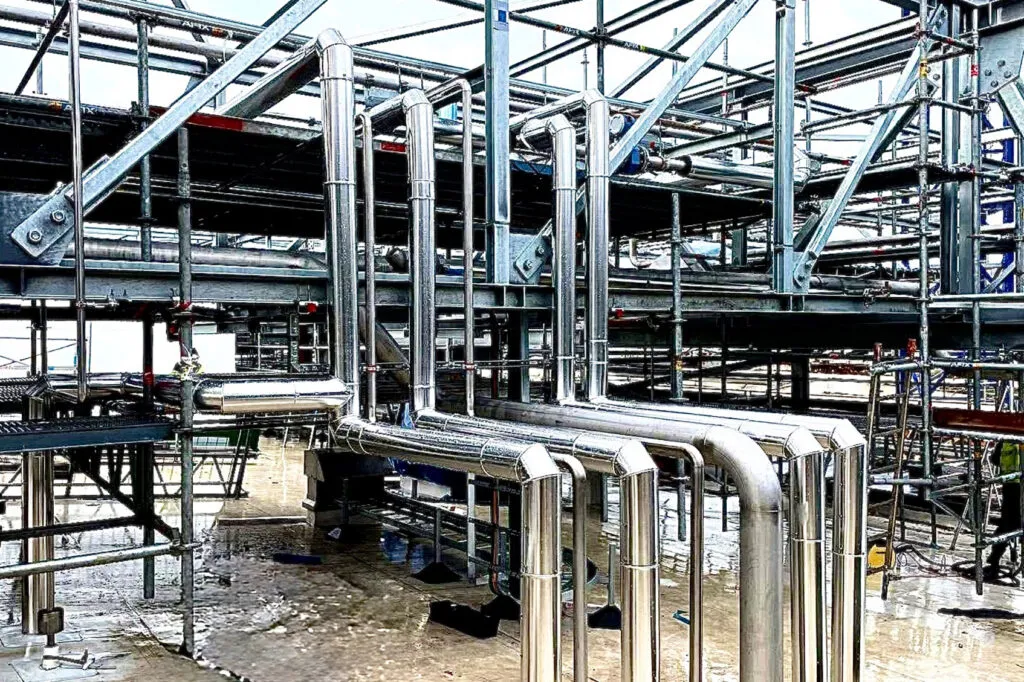
Before the pipe rack was erected, all the pipes were installed on it at ground level. They will carry steam, glycol, process water, condensate, compressed air, hot water, wastewater and the heat recovery system. The pipework was made from carbon steel or stainless steel, according to the client’s specifications. Adil Lamrini: “A few adjustments to the piping and instrumentation diagram (P&ID) were needed. But that is actually common on a project of this scale. You only know exactly where the pipework needs to end up once all the machines have been installed in the production hall. Here too, we aim to be an extra pair of eyes for the client: checking everything twice and resolving potential problems in advance. That is how we work.”
Scale up the workforce when needed
On average, 25 to 30 Hyline employees were on site at all times to keep the work progressing smoothly. “But whenever we were able to move ahead, we brought in additional staff. That is also one of our company’s strengths. We believe in the end-to-end solutions we can offer through our different companies. In this case, three entities from the Eiffage group were involved, making coordination easier for the client,” concludes Bram Gevaert.
Een zakelijke vraag aan Hyline? Get in touch
Companies in this story
Keep following this
Get an email when a new story is published. No account needed.
- ThemeDesigning hygienic factories
- SubjectSolutions
- CompanyHyline