Better cleaning with enzymes
Texte & photos Christeyns
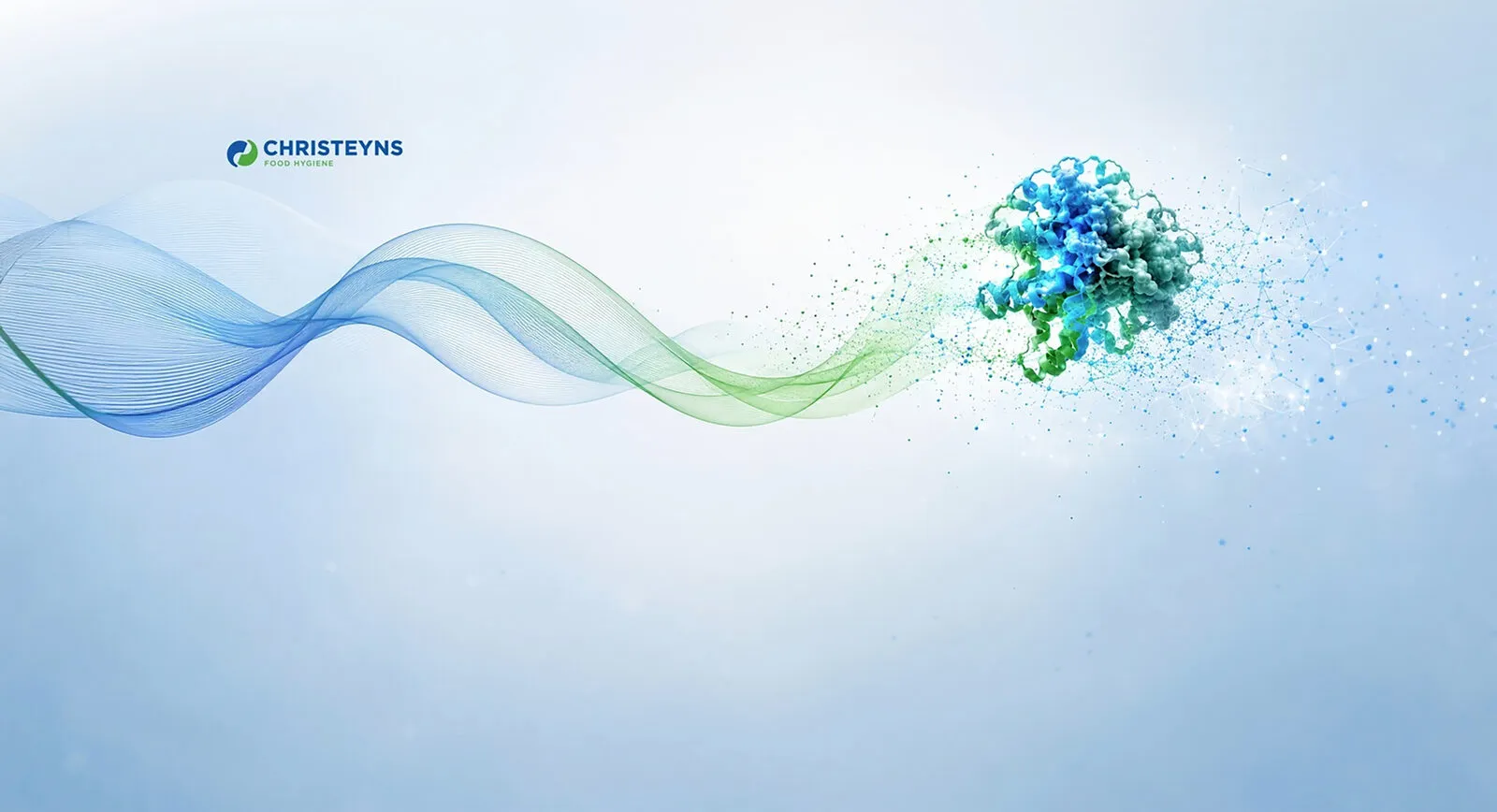
Why use enzymes when conventional cleaning already delivers the expected results? Because they target organic soils. This makes them an alternative when high temperatures, less sustainable chemicals or intensive mechanical action are undesirable or insufficient. The aim is to strengthen the existing protocol at certain critical stages.
Enzymes are proteins that act as biological catalysts. They bind to organic matter, such as proteins, fats or starch, and break it down into smaller fragments. Surfactants in enzymatic cleaning products help the enzymes come into contact with residues, then make it easier to remove them during rinsing.
Three keys to effective cleaning
To get the most from enzymes, three points are essential.
1. Identify the residues to be removed
Enzymes act only on organic matter, including food or biological residues, certain polymer matrices, fats, natural oils and other organic deposits.
2. Choose the right enzymes
Enzymes are highly selective: each acts on a specific type of residue. Proteases break down proteins, amylases break down starch, and lipases act on fats and oils. The choice of enzymes therefore depends directly on the nature of the residues to be removed.
In the food industry, residues are generally complex. They often comprise proteins, fats, sugars, starch and other components. Multi-enzyme formulations make it easier to remove these complex matrices while preserving materials.
3. Control the application conditions
Each enzyme, or enzyme blend, works optimally within a defined pH and temperature range. Maintaining these parameters optimises enzymatic activity and keeps it going for as long as possible. However, enzymes generally require longer contact times than conventional cleaning products.
Practical applications
Enzymatic cleaning is particularly useful in many food industry applications. It can be used to treat complex or stubborn residues when conditions limit the use of conventional methods, due to temperatures that are too low, reduced mechanical action, constraints specific to the installation or the sensitivity of materials.
Biofilms: supporting disinfection
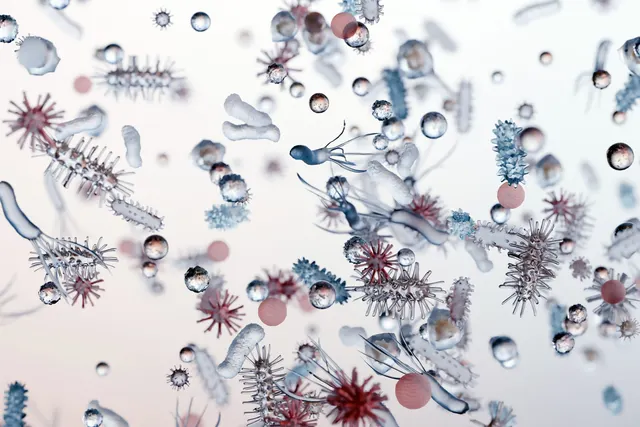
Enzymatic cleaning effectively targets the extracellular polymeric substance (EPS) matrix of biofilms while preserving materials. Enzymes can break down several of its components, including proteins, polysaccharides, lipids and extracellular DNA. The bacteria sheltered within this matrix are then more exposed to disinfectants during the next stage.
Several treatments may be needed to deal with an established biofilm. As a preventive measure, periodic enzymatic cleaning can also help limit its reformation.
Membranes: maintaining flow rates and filtration performance
Enzymes are also increasingly used to clean membranes. During filtration, organic residues accumulate on their surface and in their pores, reducing flow rates and filtration performance.
Because membranes are sensitive to pH, temperature and aggressive chemicals, enzymatic cleaning can be a gentler alternative. Enzymes help break down deposits while limiting stress on the membranes. This helps protect these costly components from wear and damage.
Specialists tailor the cleaning programme to the type of membrane, the nature of the residues and the manufacturer’s specifications.
Allergens: targeting allergenic proteins
Enzymes can also act on allergens. Proteases break down allergenic proteins and can therefore support effective cleaning under gentler conditions.
Strengthening existing protocols
The strength of enzymatic cleaning lies in its targeted use as a complement to a conventional protocol. The technology is most effective when it targets a clearly identified organic residue as part of a complete, validated cleaning and disinfection protocol. It is particularly useful when operating conditions and material sensitivity significantly limit the use of conventional cleaning products.
Een zakelijke vraag aan Christeyns NV? Get in touch
Companies in this story
Keep following this
Get an email when a new story is published. No account needed.
- ThemeCleaning and protecting facilities
- SubjectFood safety
- CompanyChristeyns NV