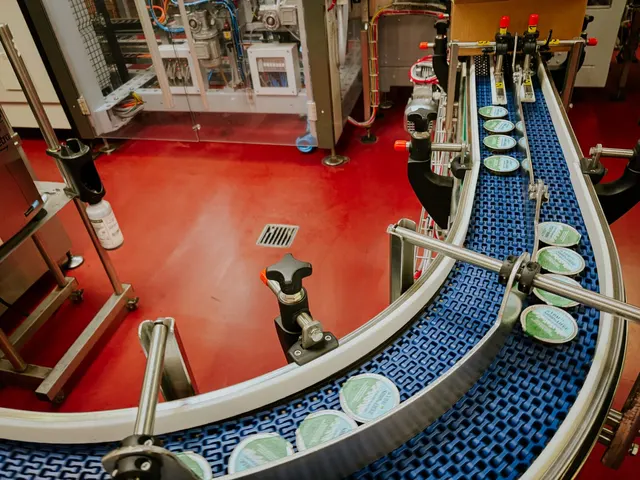
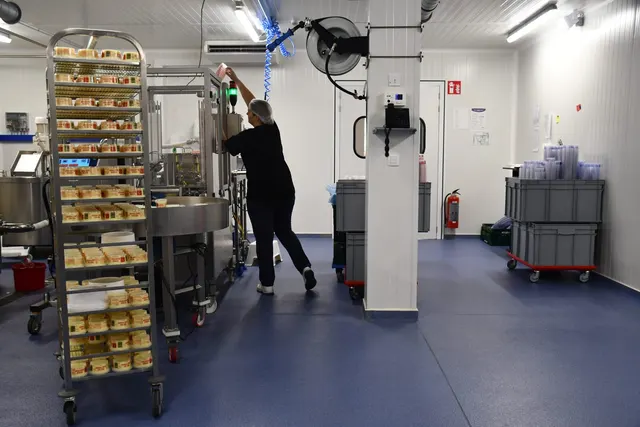
Belt conveyors are essential to food production
Texte Valérie Couplez | Photos iStock
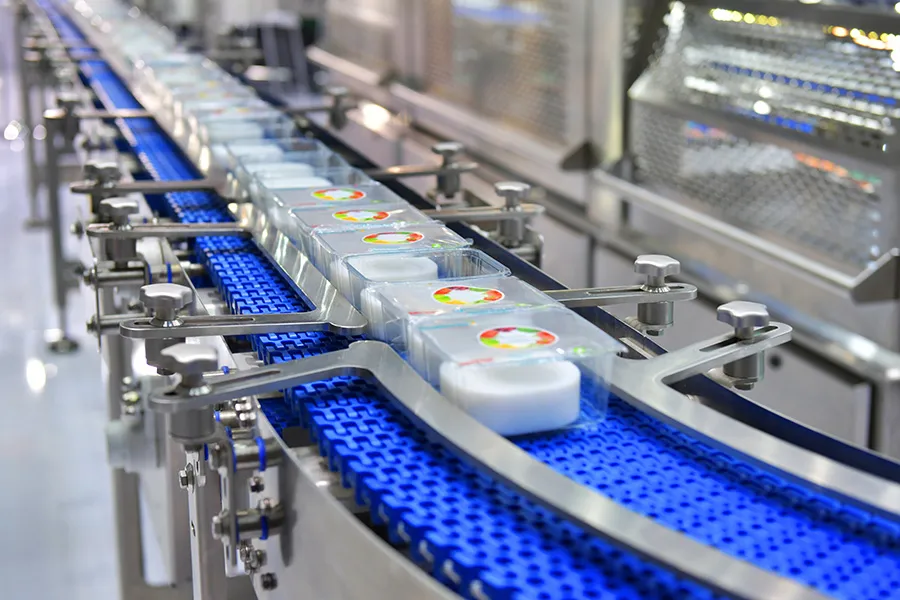
Products are transported in every shape and size. When they were introduced, belt conveyors revolutionised the food industry. For the first time, production could run at full capacity. Products reached their destination without human intervention. It was faster and more hygienic than anything that had come before. Even today, their role is far from over.
Belt conveyors date back to 1795. They were still primitive, admittedly, consisting of a wooden frame and a leather belt, and were driven by hand. But the (first) Industrial Revolution was about to change things. The military led the way. From 1804, the British Navy began using steam-powered belt conveyors to load its ships. Soon afterwards, they could be found in every industrial sector. Their capabilities expanded steadily: wood was replaced by steel, leather by rubber and fabric, and eventually by a combination of synthetic materials. Looking at how they have evolved since then, we can see that mechanical belt conveyors used in food businesses help improve efficiency, productivity, quality and safety. More than 80 types have already been defined. Today’s technology also allows them to be customised to suit the distance, speed and type of product. They move products smoothly and seamlessly from starting point to final destination.
Minimising manual labour
Manual labour was once the obvious way to move materials from one level to another. But even before labour costs became exorbitant, investing in belt conveyors had already proved more worthwhile. Automating the internal transport of products made it possible to cover long distances and different levels with ease.
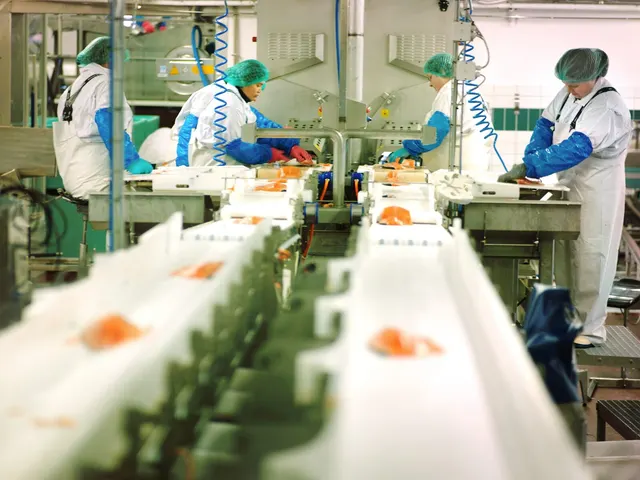
Choosing the right system for your specific application can still save money by reducing manual labour. Belt conveyors can transport raw materials from storage to the production line, or finished products to the packaging line and from there to dispatch. Introducing belt conveyors also improves safety. Staff can focus on their tasks without having to make frequent trips back and forth across the production area.
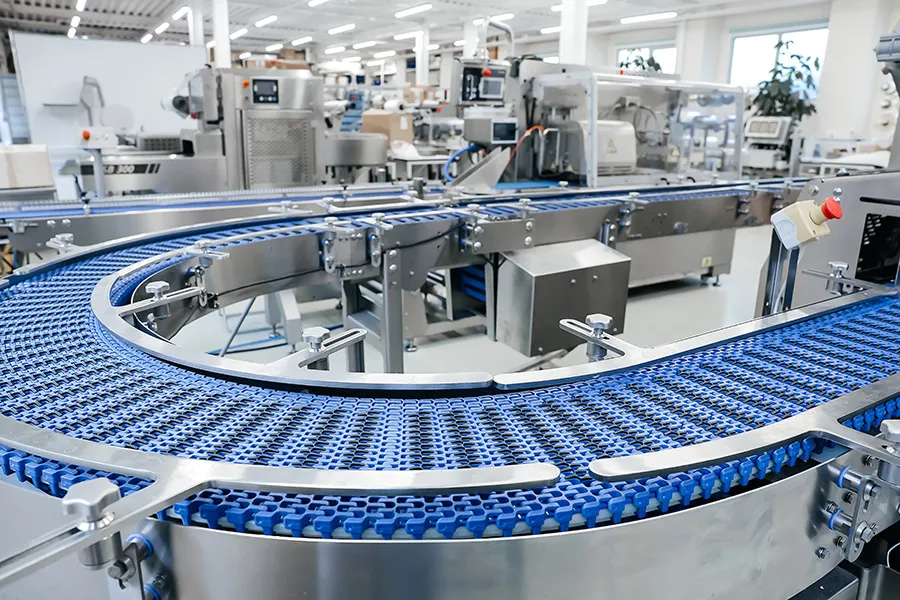
Greater efficiency and productivity
Above all, belt conveyors save a great deal of time by moving materials quickly from one level to another. They can also transport products in any direction, even from the far end of a food factory to the opposite side. This saves a great deal of time-consuming manual work. One of the best-known examples is the first moving assembly line, installed by Henry Ford in 1913. It cut the time needed to build a car from 12 hours to half an hour. The key is to think carefully about how best to integrate a conveyor into your production process. Thanks to the modern technology now available for controlling belt conveyors, you can ensure optimum speed on every section, so that no food is lost.
Food safety comes first
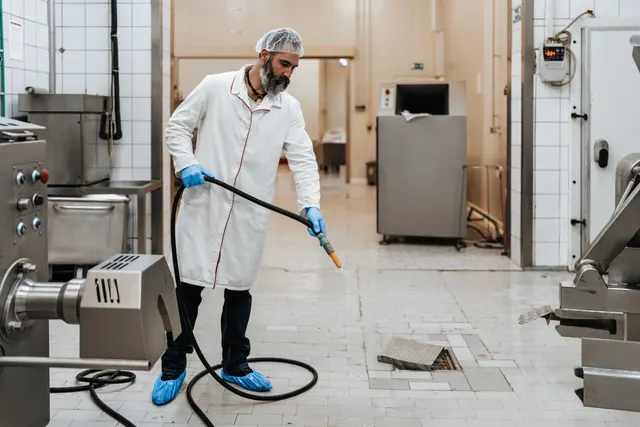
The higher level of hygiene is an additional benefit. A belt conveyor is far safer for food than manual handling, provided the right hygienic choices are made for the application. Some types are better suited than others to direct contact with food. There are many materials available that are certified as food-grade. Cleaning is, of course, another key consideration. Make sure there are not too many corners and crevices that are difficult to clean, or choose additional options such as scrapers to remove any adhering dirt. ■
Question about this story? Ask your question
Keep following this
Get an email when a new story is published. No account needed.
- ThemeImproving production process reliability
- SubjectFood safety