Digital hygiene can deliver big returns
Texte Valérie Couplez | Photos iStock
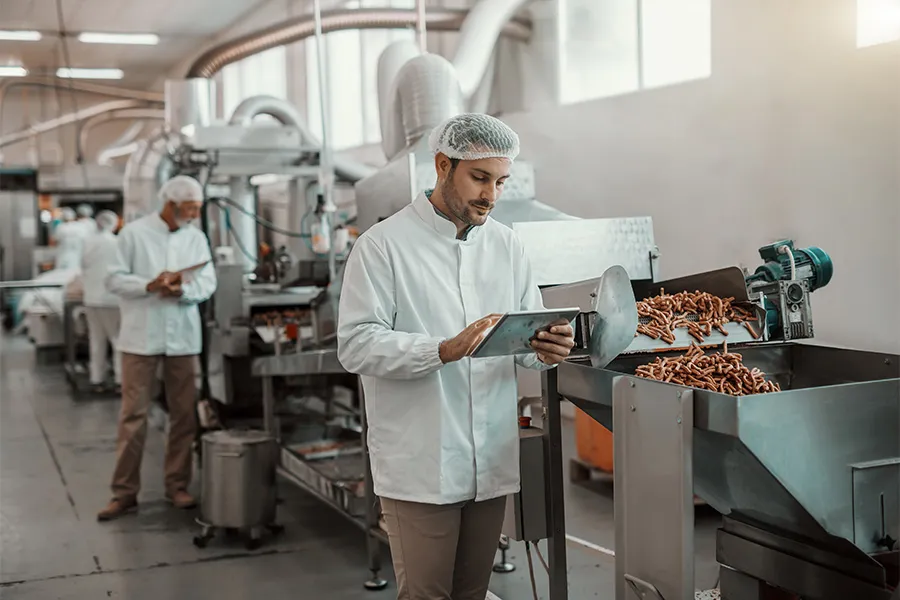
It goes without saying that complying with all the legal requirements for food safety is no small undertaking. Especially if you are still trying to keep track of everything manually. Investing in digital solutions to manage all aspects of hygiene and food safety can therefore prove highly profitable. Here are the main benefits.
The time and money saved through digital hygiene management in a food business can be measured. However, it is harder to predict exactly how much you will save, as this depends on a number of factors. These include the size of your business, its food safety risk factors and your current approach. But you can expect to reduce, or even eliminate altogether, costs in a number of key areas by investing in a digital solution to manage hygiene and food safety.
Less stock wastage
On average, a typical food business experiences this twice a year: a production line breaks down. The breakdown not only incurs costs for the machinery, but in most cases also results in lost production. And that comes at a price. Digitising production means that immediate action can be taken more quickly when an incident occurs. If the right employees receive real-time notifications and can quickly take the necessary action, not everything has to be lost. Digital technology can, for example, confirm that the correct temperature conditions were maintained throughout and that food safety was not compromised. What is more, digitisation can clearly be valuable in assessing predictive maintenance and even preventing such production stoppages altogether.
Audit-ready
Food businesses face no shortage of administrative requirements. With sensors and data loggers, employees no longer waste time recording everything manually, and paper disappears from production. This practice is already well established, but these solutions can be enhanced further by linking them, for example, to an ERP system or other software systems, or by opting for dedicated quality control solutions. The entire production chain is then monitored digitally, ensuring greater efficiency, better quality and a clearer overview. With these digital solutions, there is no longer any need to search through dusty archive rooms for the right documents to submit for audits. Everything is stored digitally, in real time, on a local server or in the cloud. In just a few clicks, all the documents you need to submit are at your fingertips. Convenient, especially if you work across several production sites.
Maintain an impeccable reputation
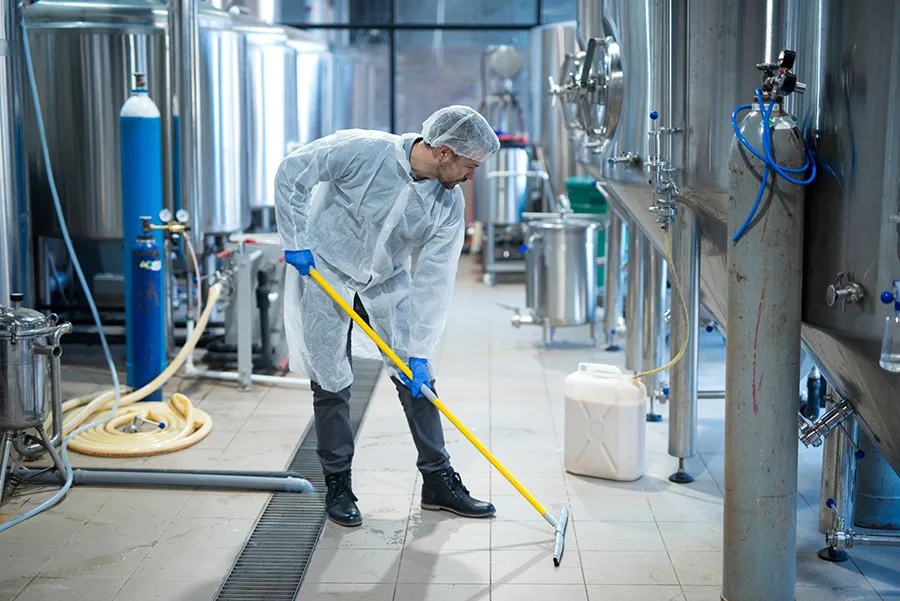
Food safety failures obviously damage your reputation as a food producer. If you cannot deliver because of production stoppages, or if you offer products that do not meet quality standards, you risk tarnishing your image and losing customers. Today, production quality control can also be carried out entirely digitally. Apps can provide employees with checklists to complete, helping to ensure, for example, that no quality control step is missed and that hygiene earns five stars. You can also extend these practices to external partners. Many cleaning companies, for example, already digitally monitor their employees’ performance on the factory floor. This data can in turn provide the basis for further production optimisation, taking quality to the next level. ■
Question about this story? Ask your question
Keep following this
Get an email when a new story is published. No account needed.
- ThemeManaging food safety risks
- SubjectFood safety