Everything you need to know about biofilm control
Texte & photos Christeyns
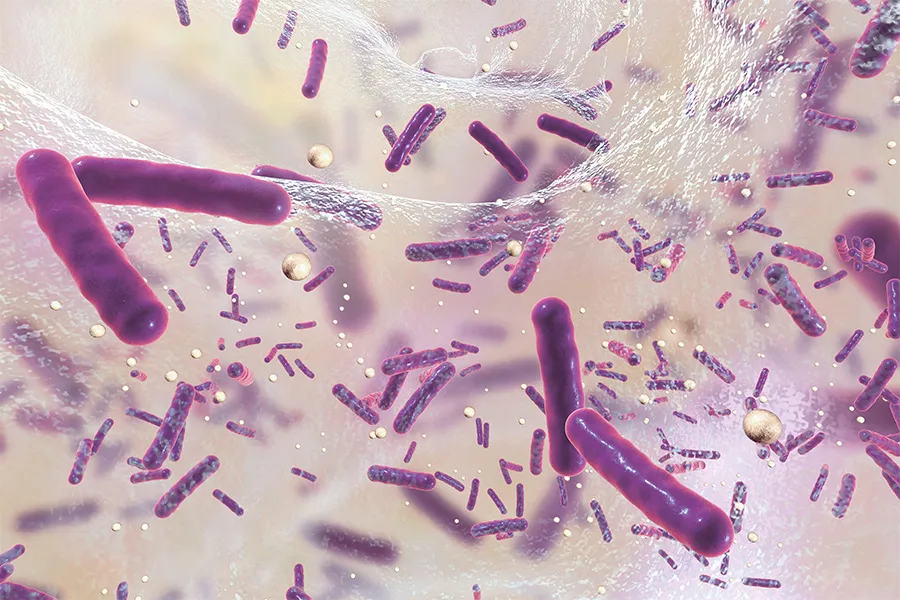
Biofilms in the food industry pose a major food safety risk and can also cause equipment operating problems. They protect the microorganisms they contain, reducing the effectiveness of disinfection treatments. Christeyns has brought together its knowledge and experience in this area in an effective, multi-step approach.
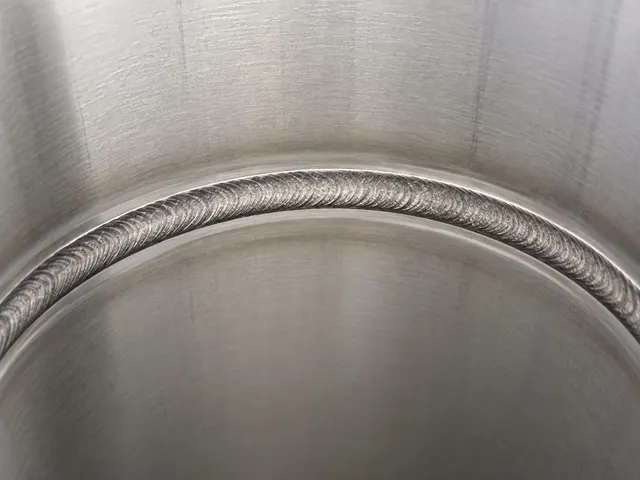
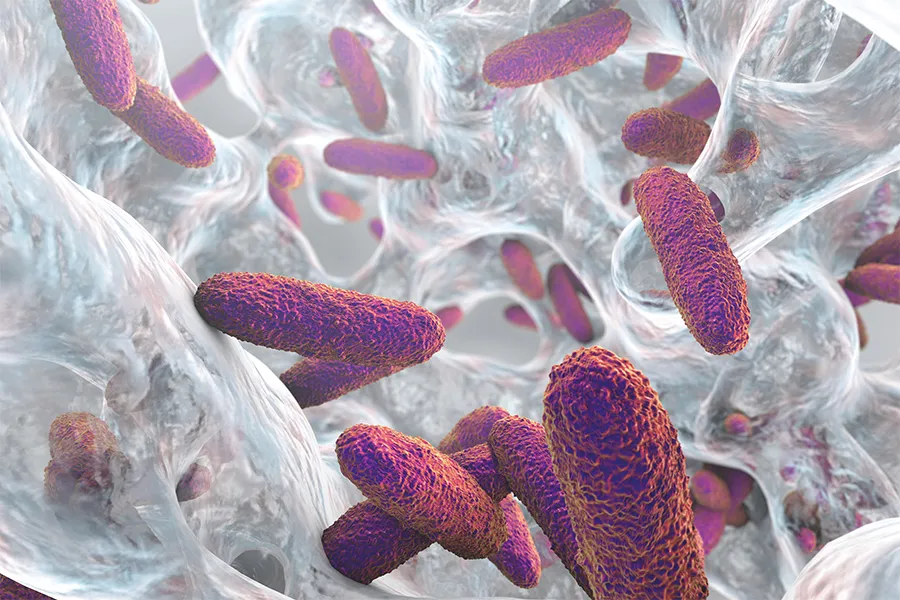
A biofilm consists of colonies of interconnected microorganisms attached to a solid surface, which provides them with stability, nutrients and protection. It is made up of microbial cells surrounded by a matrix of extracellular polymeric substances (EPS), such as proteins and polysaccharides. A biofilm supports the growth of microorganisms by providing a protected, moist and nutrient-rich environment. Its sticky, dense and highly viscous matrix effectively protects microorganisms from external influences. Biofilms are often formed by different microbial species, such as bacteria and fungi. They develop on surfaces that favour attachment, such as porous, scratched or rough surfaces, and that have not been cleaned and disinfected optimally.
Combating biofilms
Using methods to monitor the presence of microbiological contamination is essential in the food industry. Obtaining rapid results is also important, so that action protocols can be put in place quickly if necessary. Christeyns has developed a multi-step method for removing biofilms.
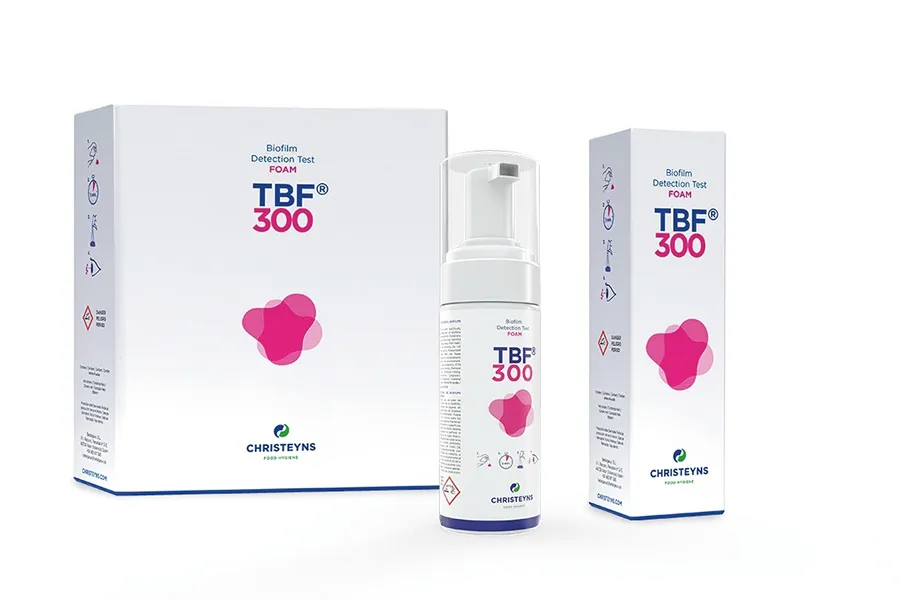
Detection: Christeyns offers the TBF® 300, a patented rapid test for detecting any type of biofilm on surfaces. The TBF® 300 was developed by Christeyns in collaboration with the Complutense University of Madrid. Users receive their results within minutes, without the need for specialist staff or complex equipment. The reagent selectively interacts with the biofilm’s polymer matrix, avoiding the risk of false-positive results.
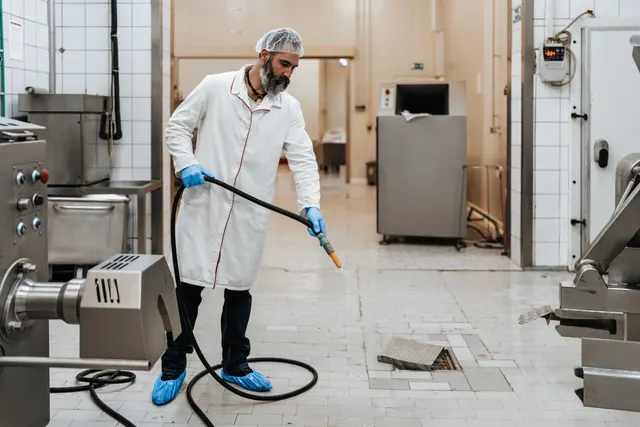
Removal: Removing a biofilm from a surface is complex, but possible with the right approach. Specific enzymatic detergents can break down and disintegrate the polymer matrix. The active compound in a broad-spectrum biocide can then penetrate the viscous mass and kill the different microbial species present. Once the biofilm matrix has been broken down, disinfection is required. The Christeyns team will be pleased to advise you on the solution best suited to your specific situation.
Verification and prevention: Christeyns also provides support in monitoring and preventing biofilm formation. Christeyns implements a preventive protocol, evaluates the results and maintains records of control measures.
More information
Christeyns places great importance on R&D and is also focusing its efforts on tackling all types of biofilm. Contact Christeyns for more information or a tailored solution. ■
Een zakelijke vraag aan Christeyns NV? Get in touch
Companies in this story

Keep following this
Get an email when a new story is published. No account needed.
- ThemeManaging food safety risks
- SubjectFood safety
- CompanyChristeyns NV