Fast, hygienic dosing, even in challenging applications
Texte Valérie Couplez | Photos Atlantic Engineering
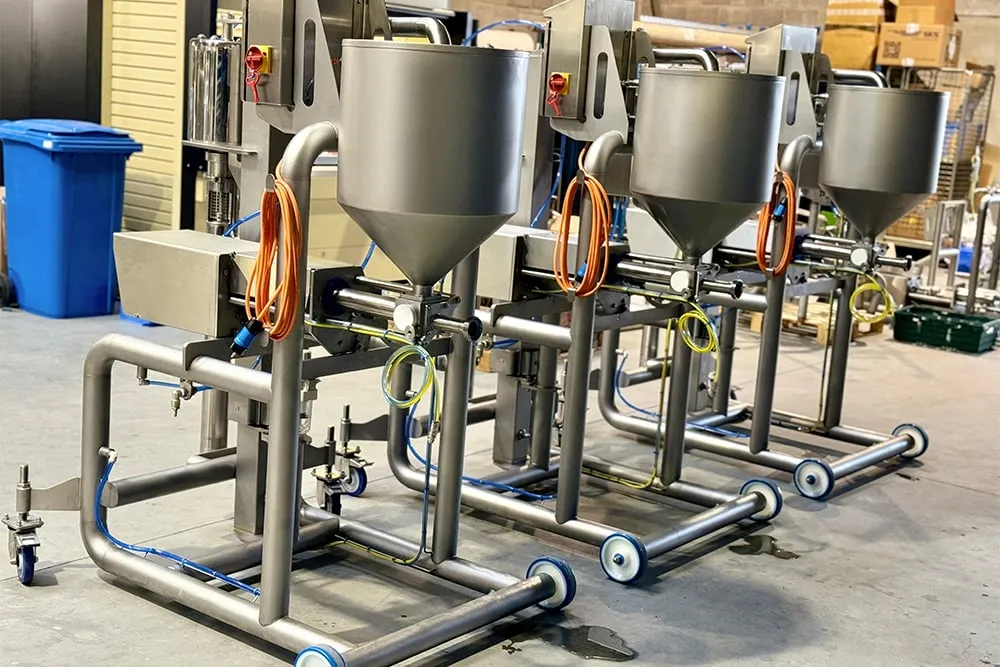
The days when your production lines could turn out the same product over successive shifts are over. Responding to changing consumer demand means making many more changes during production. This calls for flexible machinery. FillFast by Atlantic Engineering’s dosing technology is perfectly suited to this requirement. The mobile machines are particularly easy to integrate into existing lines and excel in terms of hygiene and ease of use, helping to minimise changeover times. What’s more, dosing is tailored to your needs, as the machine concept can be adapted entirely to your requirements.
Atlantic Engineering has specialised in dosing technology for the food industry for 25 years. If a product can be pumped, the 10-strong team can design a suitable solution for a wide range of products and packaging. Its success extends beyond national borders. Managing director Cedric De Bleye explains: “A large share of our turnover comes from exports. That’s why we were looking for a name that better reflects the reach of our activities, so everyone immediately understands what we do.” The company opted for FillFast by Atlantic Engineering. “On the one hand, we wanted to continue benefiting from the strong reputation we’ve built up for service. On the other, we could just as easily have chosen efficiency or hygiene,” Cedric De Bleye continues, “because that’s what really sets us apart.”
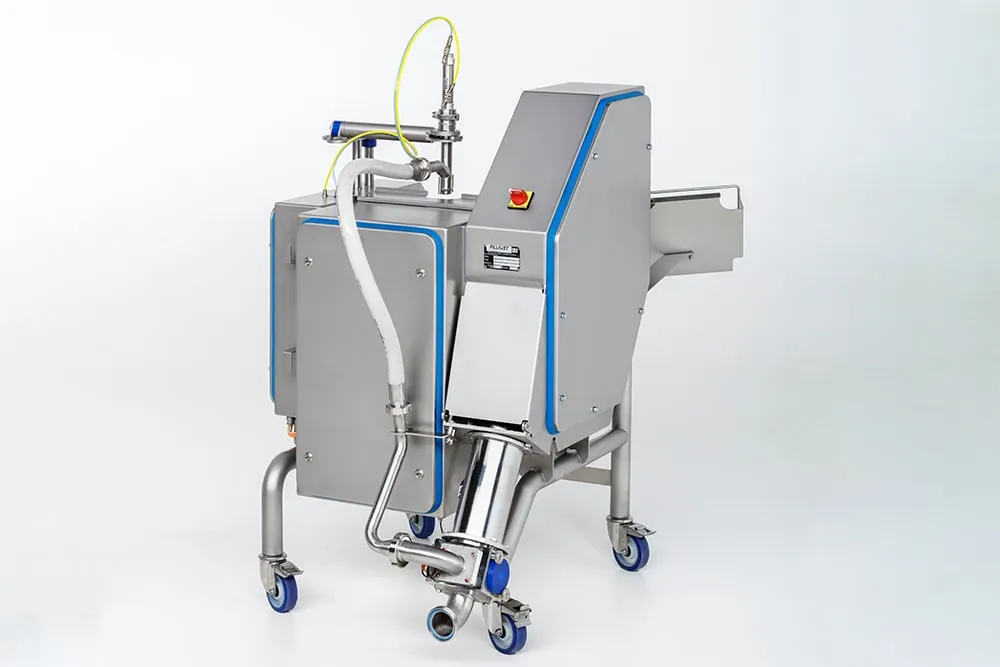
FILLFAST VOLUMETRIC: easy-to-use, easy-to-clean piston fillers
The heart of the filler, the so-called “wet section”, is the same across all FillFast machines. It has been designed with the operator in mind. The piston, which draws in and doses the product, simply detaches without the need for any additional tools. “Anyone can do it,” says Cedric De Bleye. “It can therefore be inspected and thoroughly cleaned. What differs is the solution built around it to fill the product, depending on factors such as the required output speed, temperature and fill weight… The solution can be pneumatic or servo-driven, with one or more filling heads, manual, semi-automatic or fully automatic, horizontal or vertical… “Modularity is the key to our production. Every product presents its own challenges, as does each packaging material, along with the way each customer works and the environment in which they operate. We only assemble the components the customer needs, like pieces of a puzzle. It’s completely bespoke, but built from standard equipment so that lead times and prices remain competitive.” An automatic cleaning module can also be selected, for example. “Simply connect the water and detergent, and the rest happens automatically, at the right intensity for the product.”
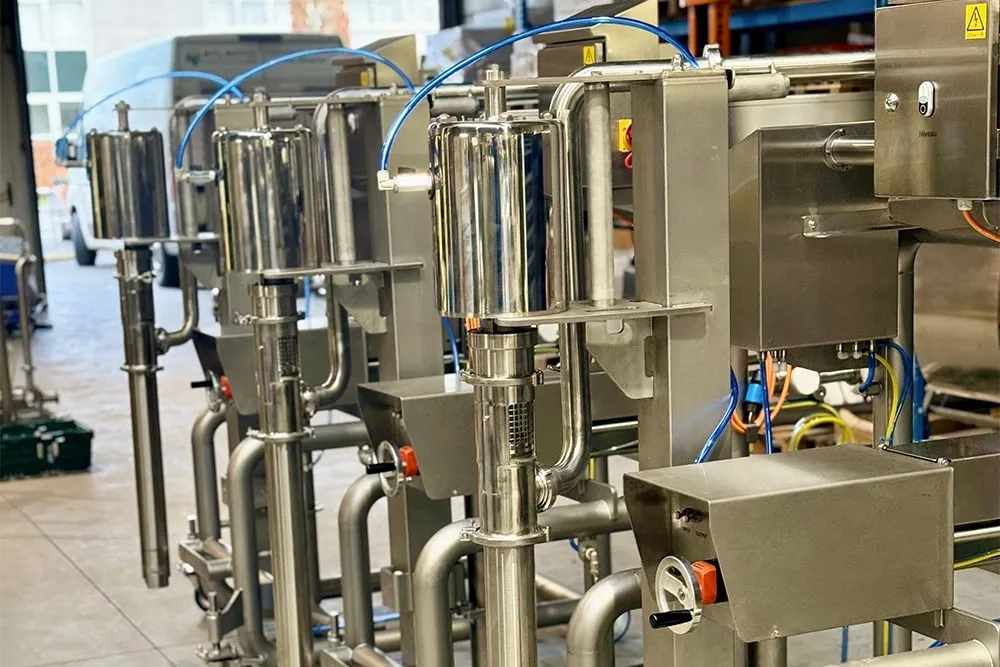
FILLFAST LIQUIPACKER: a filling and packaging concept for in-pack pasteurisation
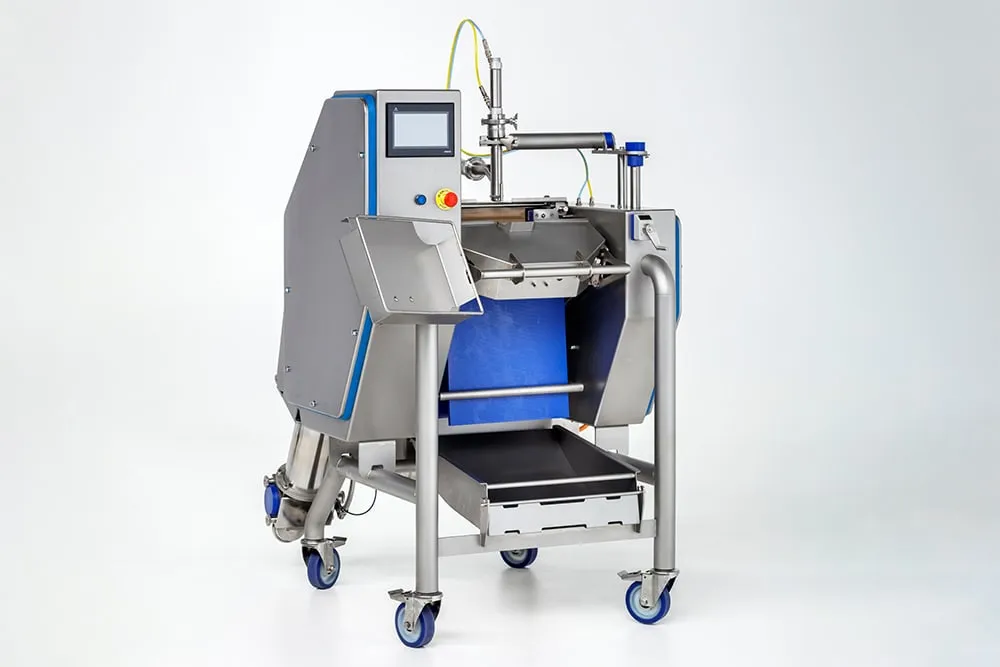
In this respect, Atlantic Engineering is highly responsive to market demand. “Today, the focus is on food safety, automation and more natural preservation techniques. We address this with mobile, flexible machines that minimise changeover times between batches.” The only standard machine in the FillFast by Atlantic Engineering range, the FILLFAST LIQUPACKER, is a good example. “It combines filling and packaging in a single machine,” explains Cedric De Bleye. “It meets growing demand for in-pack pasteurisation. Products are drawn from the cooking vessel through the pump and into the packaging machine at 85 °C, then packed in 3, 5 or 10-litre plastic bags with as little air as possible and sent directly to the cooling area. Their flat shape gives the bags better cooling properties, which can double the shelf life of the packaged food.” The patented concept has already proved particularly popular in large-scale kitchens, but it also offers food companies significant potential to better meet consumer preferences, save energy during cooking and cooling, and use less plastic. For soups, sauces, desserts, ready meals…
An added digital layer
The machines supplied by FillFast by Atlantic Engineering are technical gems, but the company is also looking ahead. “Data is becoming increasingly important. Process data can already be easily extracted from our machines via USB or in real time. We are now looking to add another layer of digitalisation to our machines: a portal where customers can view the technical identity card for their system, including all the certificates they need, as well as an overview of when wear-sensitive components need replacing. This makes it possible to schedule maintenance more efficiently and reduce downtime even further.”
Question about this story? Ask your question
Keep following this
Get an email when a new story is published. No account needed.
- ThemeImproving production process reliability
- SubjectFood safety