Paper validation or real-world validation, and what it can do for you
Texte Valérie Couplez | Photos Normec
Validating every stage of the process is crucial to ensuring food safety in your production. Today, this is largely based on scientific literature, and therefore on assumptions rather than on what actually happens in your process. This can sometimes lead to unexpected outbreaks. BRC and IFS have therefore tightened their requirements to ensure that validation is also demonstrated in practice. But where do you start? With Normec, of course! Aldo Evers, Technical Director for Microbiology, explains how it works.
The importance of real-world validation, rather than paper-based validation, is growing all the time. “It is a trend food businesses will not be able to avoid. At present, there is no legal requirement to carry out validation tests in practice. However, they are already mentioned in the requirements of retail chains. Think, for example, of BRC and IFS. Ghent University is also currently working on a research model to develop a method for calculating risk. Once this is ready, the legislator will also introduce new requirements,” predicts Aldo Evers.
Take a critical look at the results
Normec, however, has already built up extensive experience in validation testing. “Usually, a client comes to us when they are faced with an outbreak they cannot explain. But often, you will already have had enough warning signs. You simply need to be prepared to take a critical look at your results. If bacteria are still present after a pasteurisation step, this could be due to an error during sampling or in the laboratory. If it happens consistently, the problem is more serious. There could, for example, be a dead leg in your complex pipework. If you cannot eliminate the microbe completely, it may eventually adapt. There are already many scientific publications on this subject.”
Reproducing the process
Practical tests can teach you much more than paper-based validation. But how do you go about it? “It is best not to carry out these validation tests at your own plant. In 95% of cases, we can reproduce the process in the laboratory under the same conditions and using the same quantities.”
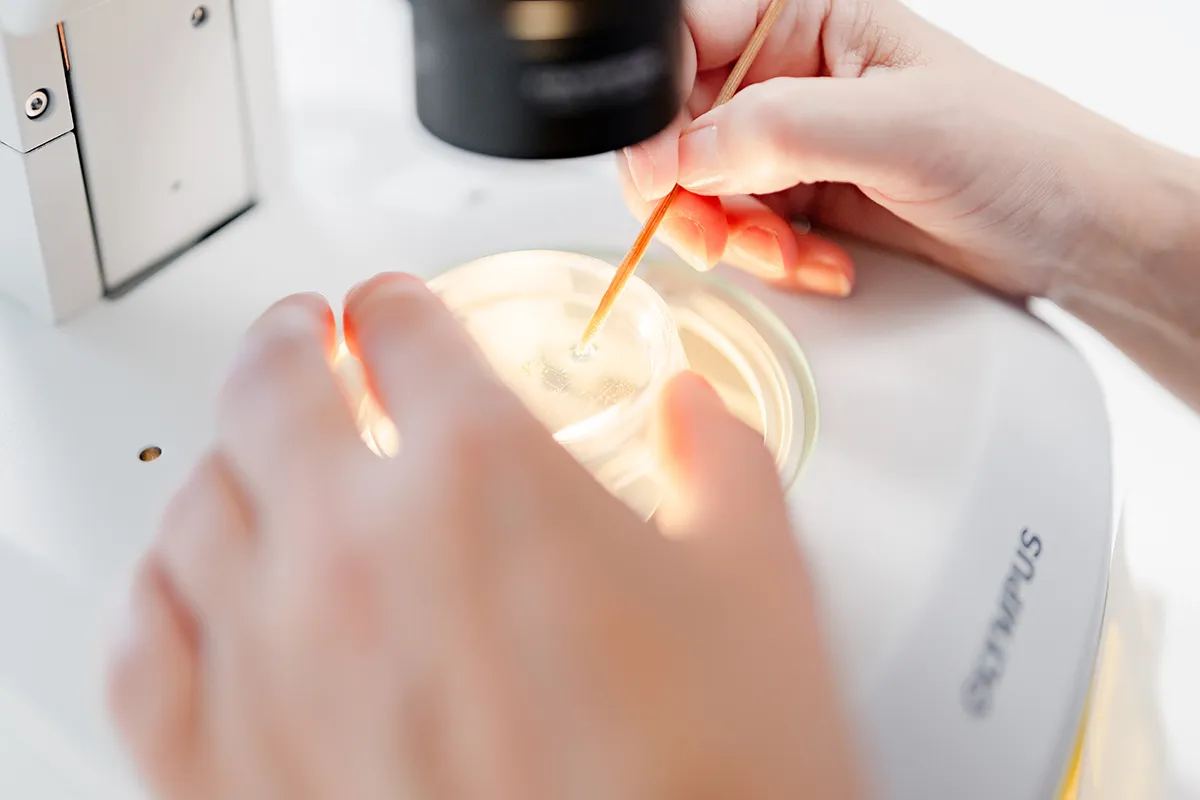
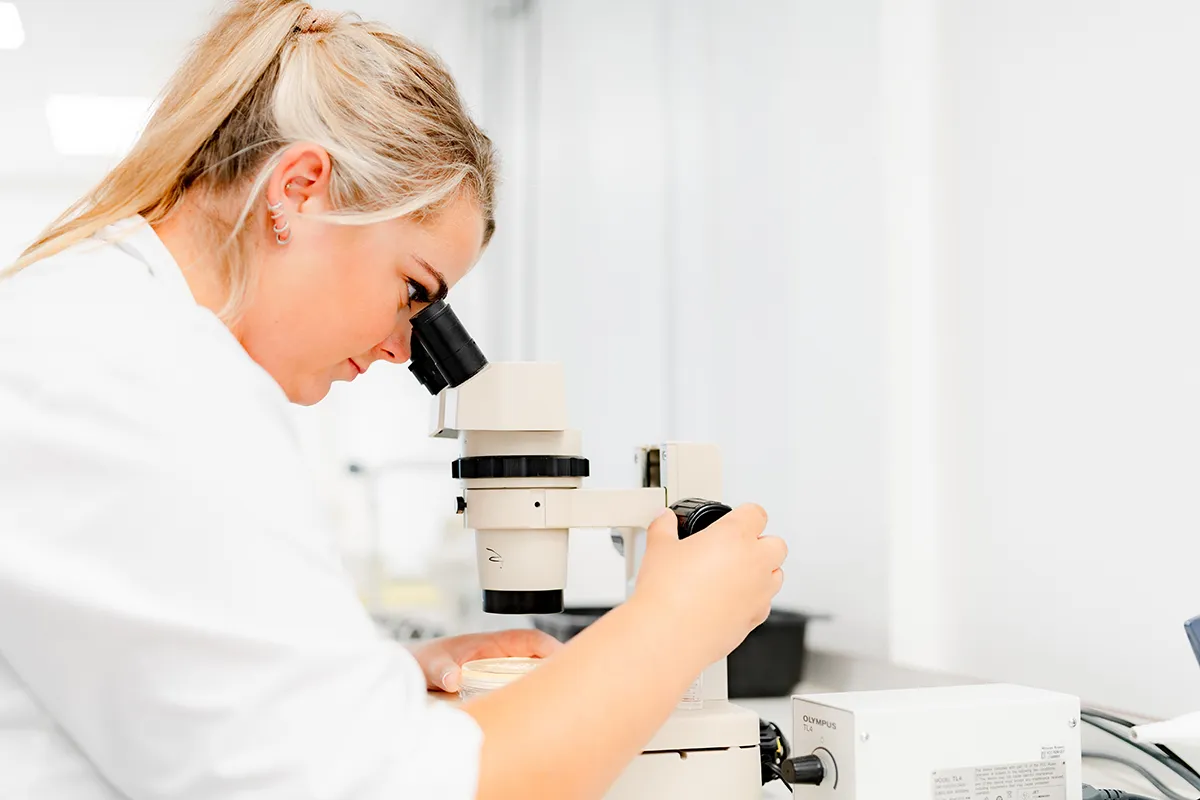
For the past three years, Normec has had a laboratory dedicated to this type of process, where it recreates a pilot plant. “Our main strength lies in the combination of our laboratory and our people. A team made up of laboratory technicians, process technologists and quality consultants works best. What assumptions were made during paper-based validation? How can we best simulate them in practice? By putting all the pieces of the puzzle together, you get the best results. In the exceptional cases where we do carry out tests in a client’s production facility, we often use a surrogate organism. Enterococci, for example, behave in the same way as salmonella, but are not as dangerous.”
Relevant information
But what information can these tests provide? Aldo Evers gives the example of UV tunnels. “On paper, they work very well if your packaging remains in the tunnel for long enough. In practice, it turns out that there are shadowed areas where UV light cannot exert its disinfecting effect. The tests always bring useful data to light that can help improve food safety in your production process. That is what it is all about.”
Take an honest approach to challenge tests
In this context, Aldo Evers also emphasises that challenge tests go hand in hand with practical validation tests. “As consumers, we want ‘clean label’ products. That means less fat, salt and additives, yet these are precisely the things that help prevent bacteria from growing. So if you change the recipe, it is a good idea to carry out another challenge test, just as you would for new products. This test assesses how well a microorganism can grow in your product, helping to justify its shelf life. This is already done for Listeria monocytogenes, but could be extended to other microorganisms. We are seeing Bacillus cereus more and more often in food businesses.” But even with challenge tests, it is worth taking an honest look at what actually happens to your product. “The temperature assumptions for storage, retail and the consumer do not always reflect reality. For example, they do not take into account the journey from the shop to the fridge at home. If you base your decisions on real-world conditions, you can still change your packaging or gas flushing to ensure the same shelf life, rather than risk a product recall.”
Een zakelijke vraag aan Normec Foodcare BV? Get in touch
Companies in this story
Keep following this
Get an email when a new story is published. No account needed.
- ThemeManaging food safety risks
- SubjectFood safety
- CompanyNormec Foodcare BV