The right cleaning procedure is the starting point for a perfect production process
Thoroughly cleaning all equipment, work surfaces, the production environment and tools is essential to prevent contamination, including cross-contamination. But what does “thorough cleaning” mean, and are there procedures to ensure it is done correctly?
To answer this, let’s go back to the basic principles of cleaning. In the food industry, its primary aim is to remove dirt so that waste does not contaminate food. It also helps prevent chemical contamination and microbiological spoilage. Cleaning also extends the service life and supports the effective operation of production equipment, while ensuring workers have a healthy, clean working environment.
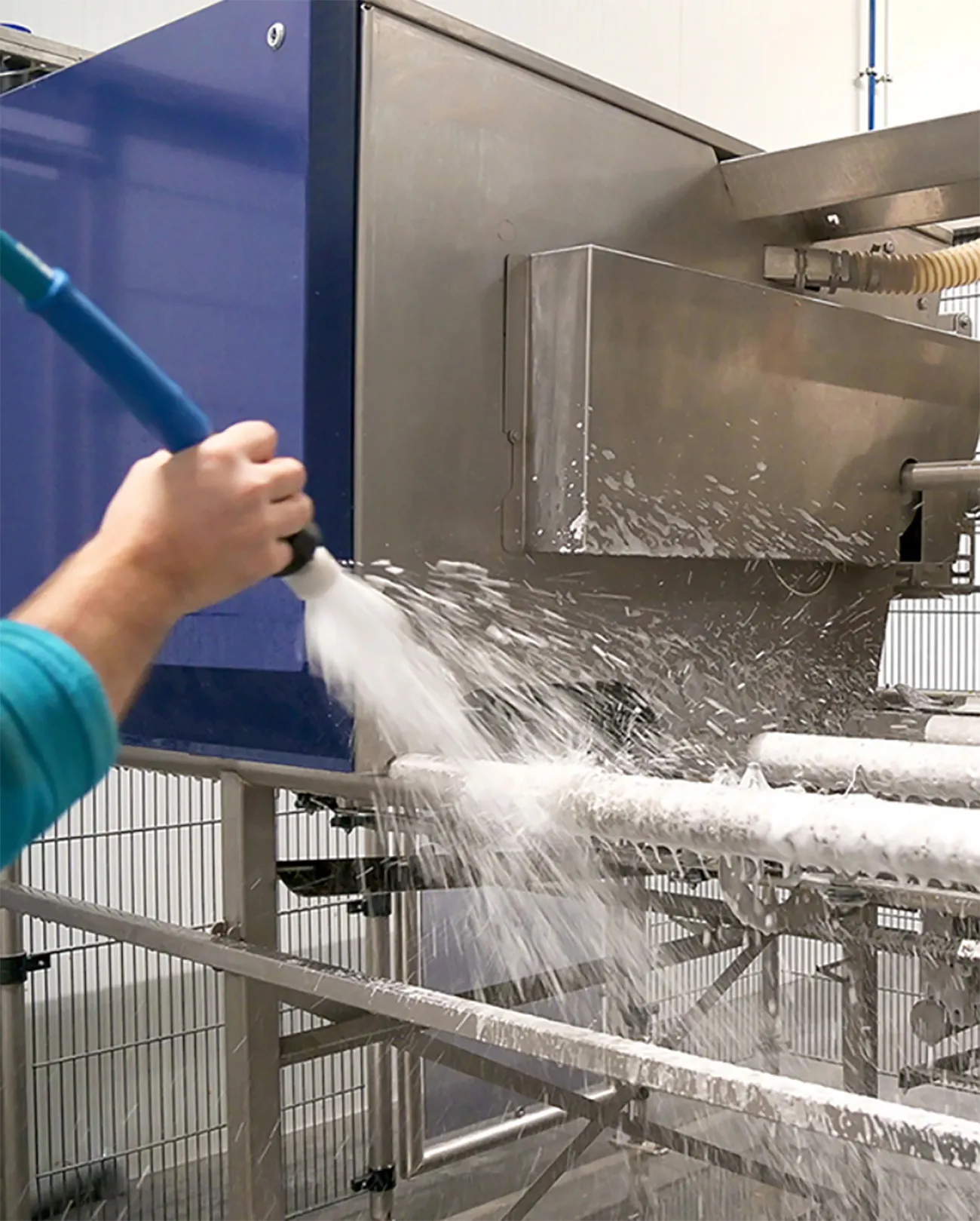
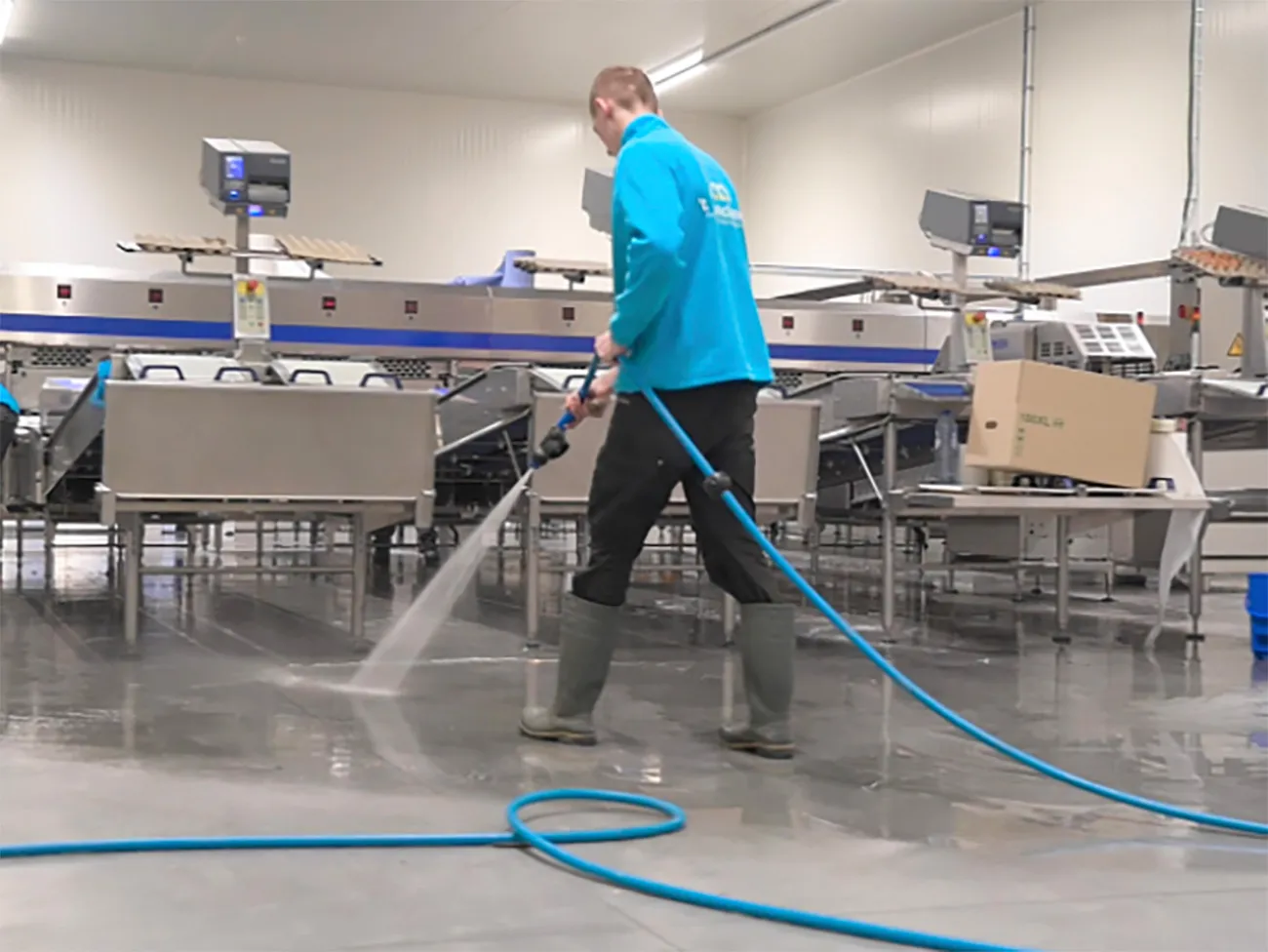
We can already distinguish between 2 important elements: cleaning and disinfection.
Cleaning
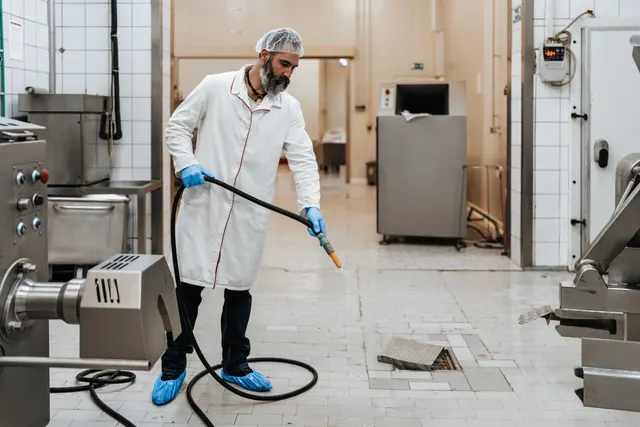
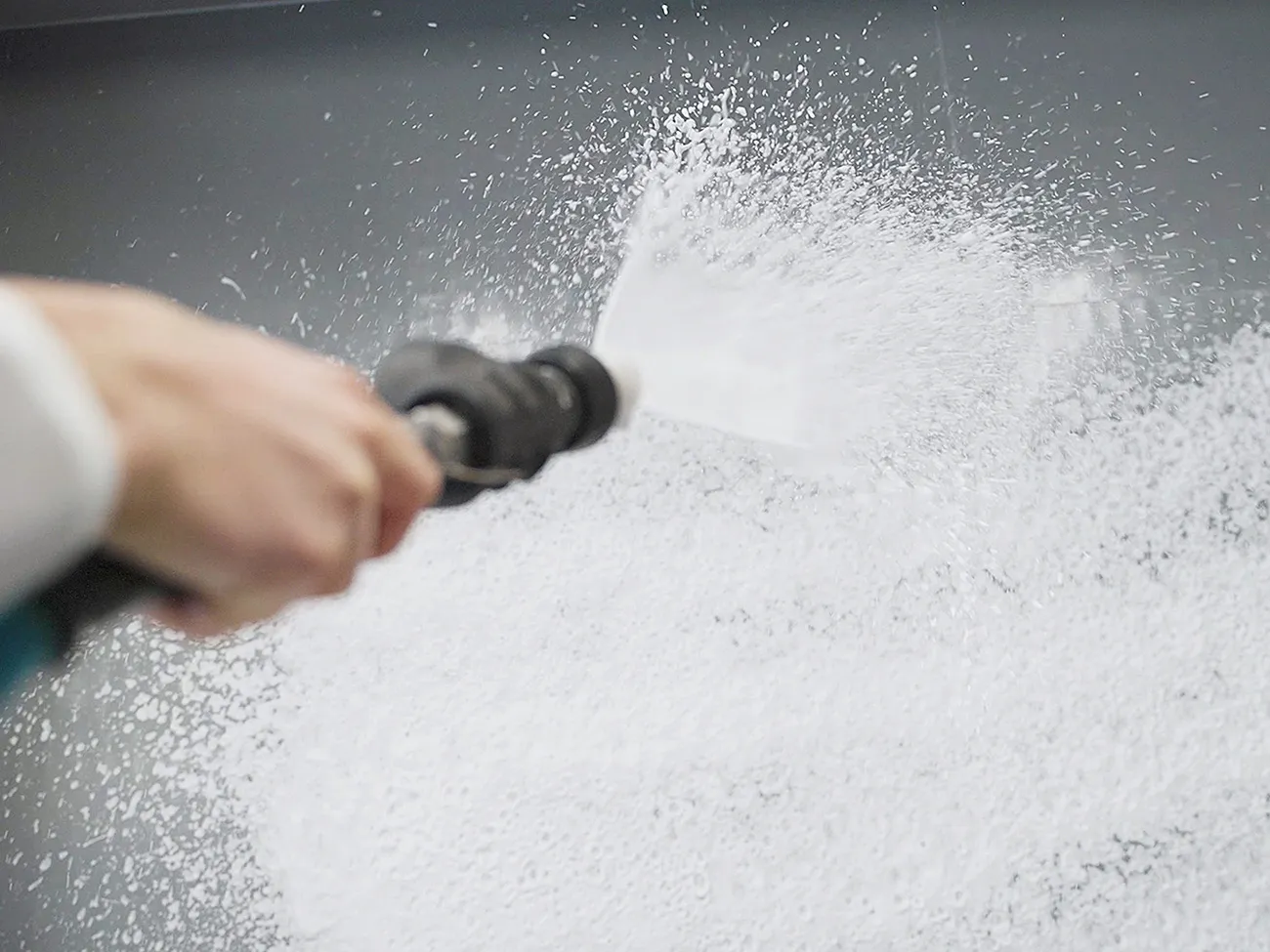
The first stage of cleaning in the food industry is to remove all visible product residues and dirt. A cleaning agent is then applied using one or more hose reels and spray guns, preferably as foam. The foam clings to the parts and surfaces being cleaned for longer, increasing the time the cleaning agent has to work. This dwell time can be set in advance for each production run. The cleaning agent is then rinsed off with clean water.
Disinfection
A disinfectant is applied to the parts and surfaces after they have been cleaned. Here too, the required contact time must be observed. Everything is then rinsed with clean water. Cleaning staff can easily select the right function using the selector on BOONS FIS equipment: foaming, rinsing or disinfection. There is no need to worry, because BOONS FIS cleaning systems are controlled by a pressure system that supplies the right product, pressure and flow rate for every cleaning function. All in a matter of seconds!
High-pressure cleaning often creates the mistaken impression that it “cleans better”. Effective cleaning depends on several factors and how they interact, particularly in the food industry.
The “Sinner’s Circle”
The four universal factors in a cleaning cycle are brought together in the “Sinner’s Circle”: time, temperature, chemical action and mechanical action. Increasing one of them improves the cleaning result or allows another to be reduced.
For a particular type of cleaning, one factor may be prioritised, which means adjusting one or more of the others.
Time is the period required for the cleaning agent to work and break down the dirt. Naturally, chemicals need time to adhere. BOONS FIS therefore places great importance on using high-quality components in the Venturi system and pneumatic section, enabling chemicals to be used under optimum conditions.
Temperature is very important in every cleaning process. A rule of thumb is that the higher the temperature, the better the cleaning result. However, there are also constraints relating to safety, corrosion, protein coagulation and damage to materials such as seals. As standard, BOONS FIS systems are designed to withstand temperatures of up to 70°C. High-temperature applications are also available as an option.
Chemical action depends on the effectiveness of the product used and its concentration relative to the level of soiling.
Mechanical action comes from achieving the right balance between pressure and flow rate. It is generally assumed that cleaning effectiveness increases as the mechanical action applied increases, but this does not always mean using higher pressure. In the food industry, for example, cleaning is far more effective when lower pressure (around 20, 25 or 40 bars) is combined with a higher flow rate.
“Procedures” are an additional, fifth element. They set out the cleaning or disinfection protocol in detail. In principle, a good cleaning and disinfection procedure is the ideal starting point for every production process in the food industry. These procedures describe every cleaning requirement down to the last detail, every time: the products, the steps, the timings to be observed, the equipment used, and so on.
The risk of an incorrect cleaning procedure: biofilm formation!
If cleaning procedures are not followed or carried out correctly, or are not effective enough, micro-organisms can adhere to equipment, conveyor belts or surfaces, along with dirt and product residues. This leads to the formation of a biofilm. Biofilms are difficult to remove and can be a source of contamination in the production process and in food products.
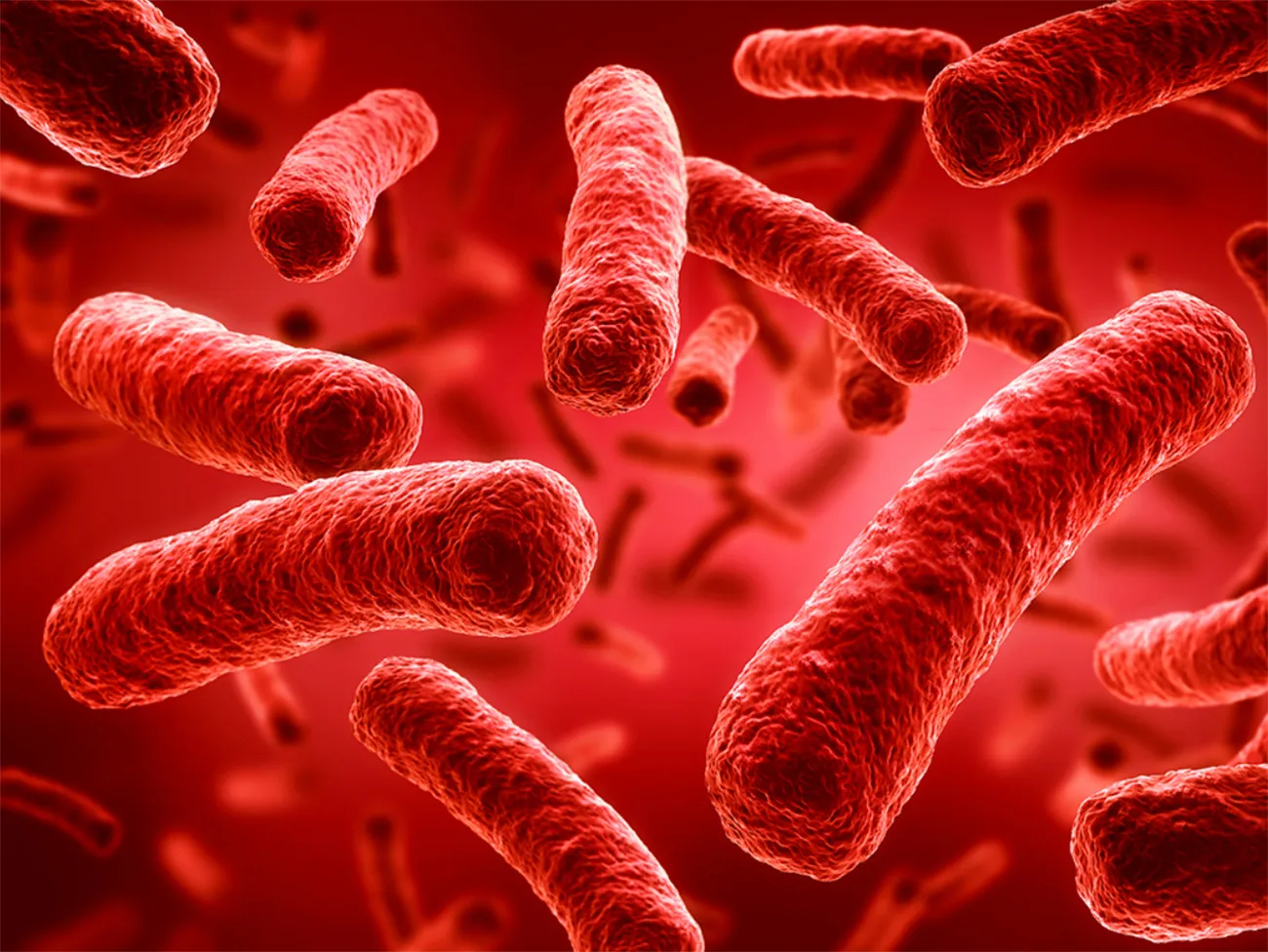
One strategy for tackling established biofilms is to combine enzymes with a disinfectant. Disinfectants specifically designed to combat biofilms are also used. One example is chlorine dioxide (ClO2), a fast-acting, broad-spectrum antimicrobial agent that can be used in the food industry, subject to the necessary certificates and authorisations.
Question about this story? Ask your question
Keep following this
Get an email when a new story is published. No account needed.
- ThemeManaging food safety risks
- SubjectFood safety