Workwear, impeccably clean and as sustainable as possible
Texte & photos Valérie Couplez
Washing has a huge environmental impact: water, high temperatures and chemicals. As an industrial laundry, Klaratex is fully aware of this. That is why sustainability has been a priority for years. It is at the cutting edge of technology, with a self-learning wastewater treatment plant, for example, which will eventually purify water so that it can be discharged. But Klaratex is not stopping there: it is also exploring how to electrify its fleet and how adding a smart chip can further improve traceability.
“When we wash our workwear at home, we use an average of 40 litres of water per 1 kg of laundry. I do it with 3 litres of fresh water,” explains managing director Karel Dermaux. “The rest is reused. But we do more than just wash: we repair garments when needed, replace them after 120 washes and send them for recycling. We are constantly talking to our partners to find ways to make all of this more recyclable. For high-visibility clothing, no solution has yet been found to make the entire chain circular. But Klaratex is confident that it can do so for white garments: recycle them completely and make new white workwear from them,” says Karel Dermaux with conviction.
Purified water reaches surface-water quality
In other words, Klaratex is doing everything it can to make life easier for its customers, provide their employees with immaculate clothing and make the most sustainable choices possible. The Wevelgem-based company is taking this commitment further still. It now has a thousand solar panels spread across its three roofs and collects rainwater everywhere. “54% of our energy comes from the sun, and 74% of our water comes from rain,” says Karel Dermaux. In 2019, Klaratex had already invested heavily in a state-of-the-art water treatment plant. “The water we discharge today is as pure as rainwater. And its quality improves every year, as the plant continually adjusts itself. When the bridge linking the Seine and the Scheldt is built, a separate sewer system will be installed in the street. We are confident that by then we will be able to discharge the water as surface water instead of sending it into the sewer. We are also looking into using enzymes instead of soap to achieve the same impeccable quality with a smaller carbon footprint.”
Testing an electric fleet
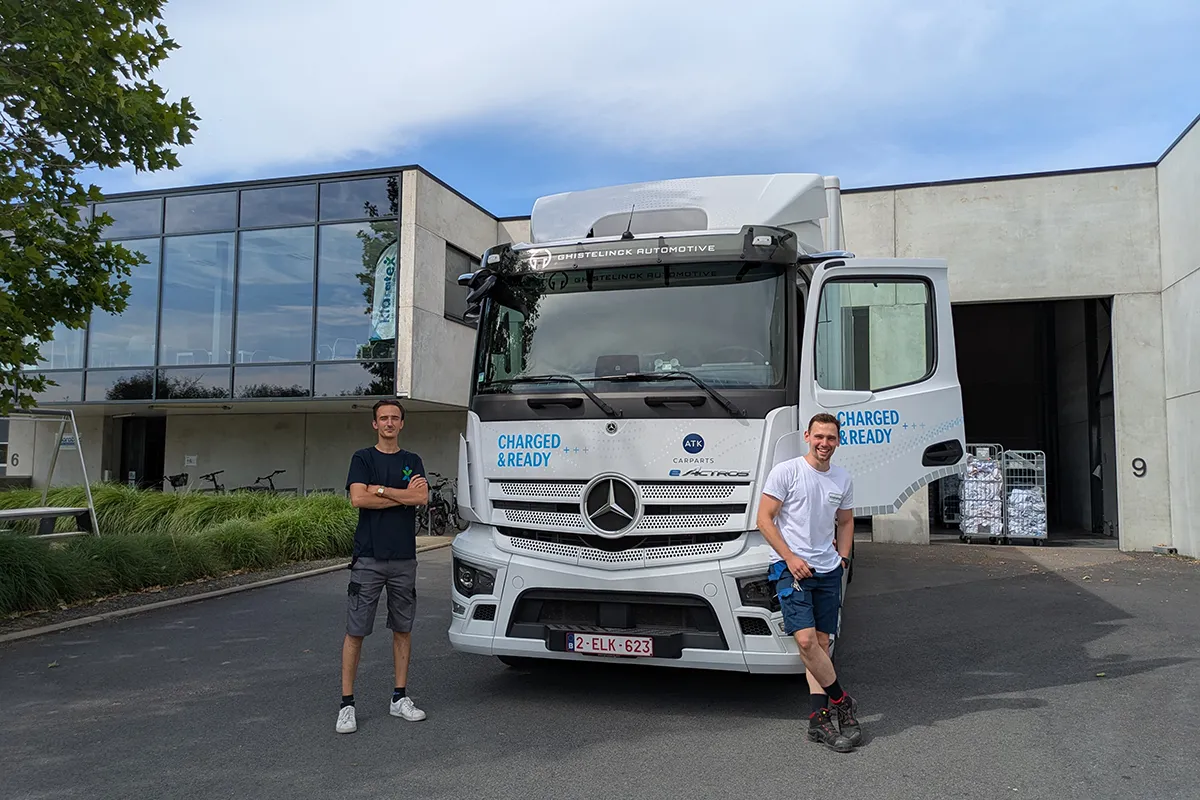
When we visit Klaratex in Wevelgem, a striking newcomer is parked outside: an electric lorry. “It’s a pilot project,” explains Karel Dermaux. “Given the number of kilometres our drivers cover every day, with most of our customers located within a 100 km radius of Wevelgem, switching to electric makes sense. But it means rethinking how we organise things. Can the vehicles still recharge sufficiently using solar power when they return from their rounds, or do we need to reorganise, or even invest in battery technology? What’s more, manufacturers do not yet offer many options for an electric drive suitable for the type of lorry we use. This one is a little too big.”
RFID chips and QR codes
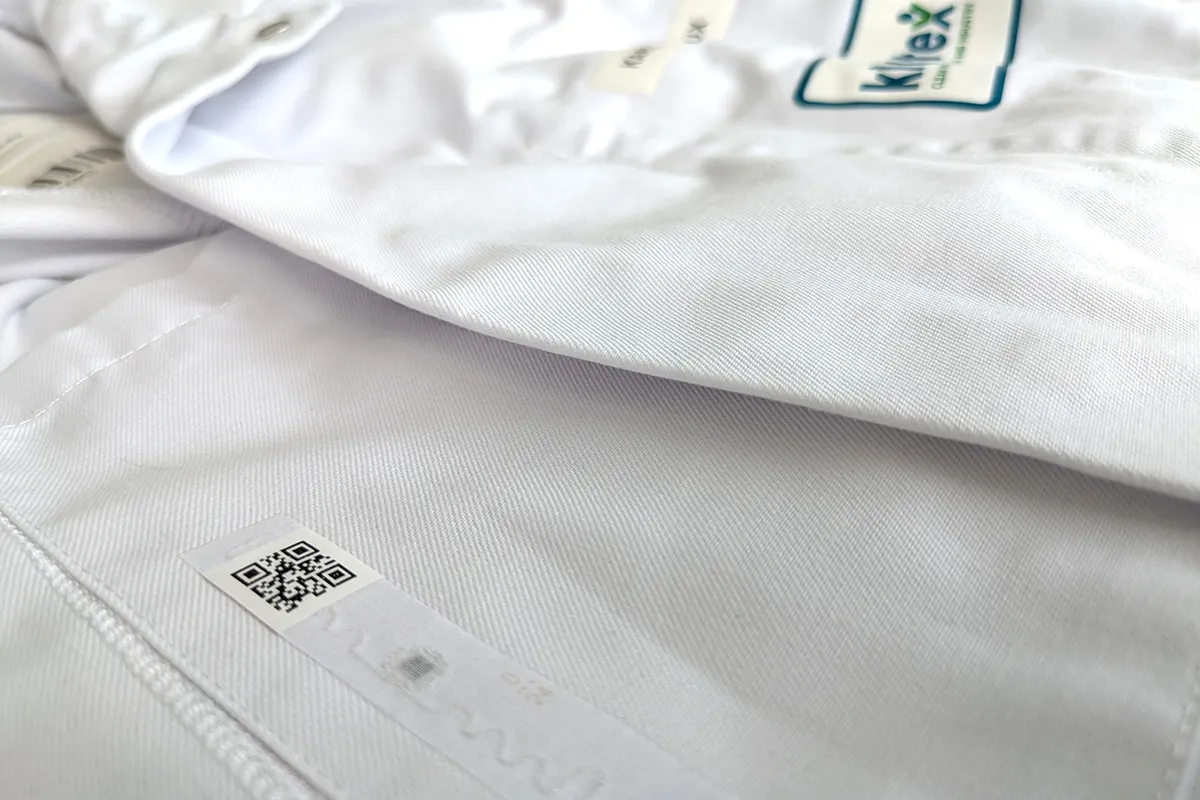
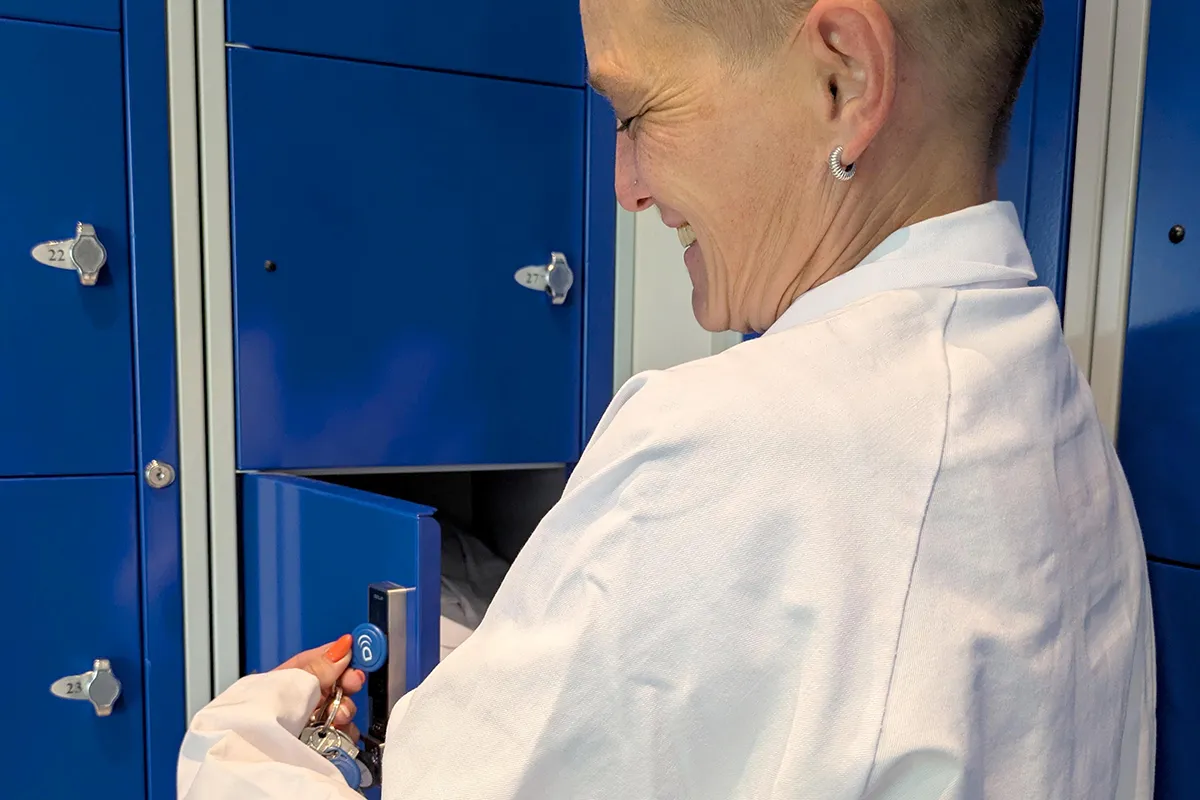
Innovation is not limited to logistics. KLaratex is rolling out a new garment identification system: “We deliver around 5,000 garments to our customers every day. But many more are in circulation. To improve traceability, we are now switching to an RFID chip and a QR code instead of the barcode our customers are familiar with. When a container of soiled laundry arrives, we can read everything at once instead of having to scan each item individually. It also gives customers a better overview of their stock management. For example, they can see which employee put a dirty apron in the container and is entitled to a new one.” Klaratex is also responding to the growing degree of automation and digitisation among its customers with its new lockers. “If the customer wishes, we deliver our garments to the locker. We have our own locker systems for this, which can now also be linked to an access badge. A development that meets customer demand,” adds Karel Dermaux.
Een zakelijke vraag aan Klaratex? Get in touch
Companies in this story
Keep following this
Get an email when a new story is published. No account needed.
- SubjectFood safety
- CompanyKlaratex