Stock
Texte & photos Dexis Belgium
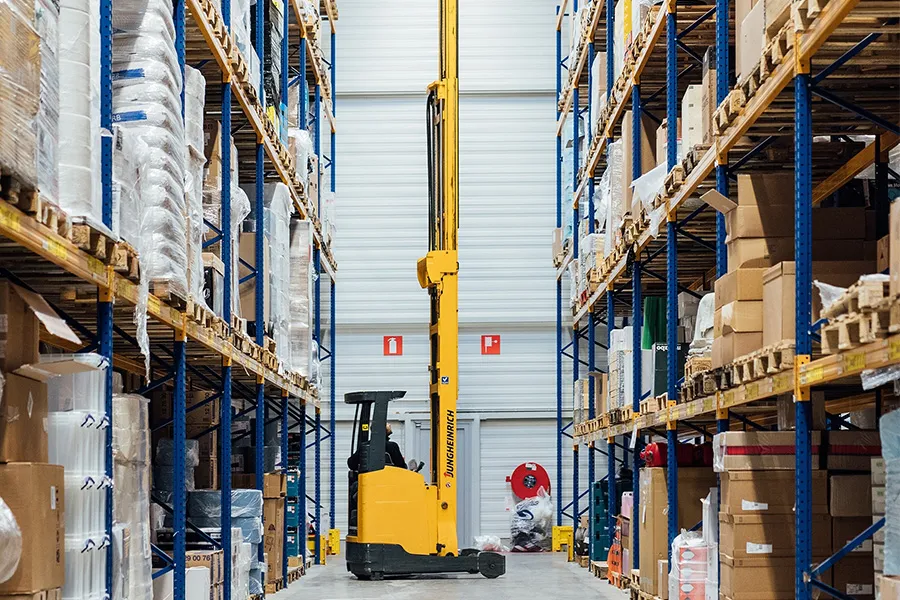
Imagine one of your machines suddenly breaks down and you do not have the parts needed to repair it. Time is of the essence, as your food product is cooling or solidifying in the meantime. Needless to say, losing batches is unthinkable. This is why it pays to keep the necessary parts in stock or work with a partner who can deliver quickly.
Spare parts management: cut costs through effective stock management
A well-planned approach to spare parts management ensures that essential parts are available for repairs while avoiding excessive stock build-up. By managing your parts efficiently and buying more intelligently, you can make significant savings. That matters in a highly competitive sector such as the food industry. Spare parts management aims to ensure that the right parts, of the right quality and in the right quantities, are available in the right place at the right time. A warehouse full of unused stock will cost you dearly. At the same time, you want to avoid running out of stock when you urgently need a part. Spare parts management helps you strike the right balance. It is a form of risk management that reduces the risk of downtime by ensuring spare parts are available at the lowest possible cost.
Knowing your parts is essential
While your machine is under warranty, it makes sense to buy maintenance parts from the machine manufacturer. The spare parts list you receive from the manufacturer tells you which components to keep in stock.
However, each machine manufacturer uses its own codes or item numbers for certain parts, and you have a different spare parts list for each of your machines. Some parts may even be identical, leaving you with duplicates in your warehouse. The situation becomes even more complex once the warranty has expired. Which standard components can replace the ‘original’ factory parts? Given the different names machine manufacturers use for parts, it is difficult to answer this question. Finding the right spare parts for new machines still under warranty and older machines no longer covered by a warranty therefore requires in-depth knowledge of all the parts.
Which parts are critical?
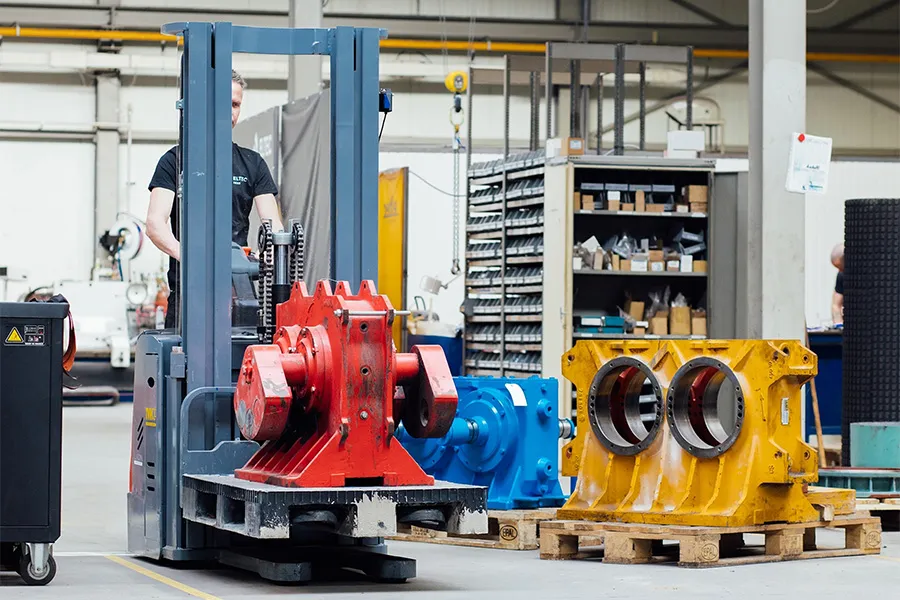
To manage spare parts effectively, you need to consider questions such as: what is the cost of a given machine being out of operation? How important is a particular part to the process? How quickly can I repair a machine, and how quickly can a supplier deliver an item? If it takes you 24 hours to identify the faulty part and a supplier can deliver the replacement within that time, there is no need to keep it in stock yourself. However, if you can replace the part in half an hour, it is better to have it in stock. Only once you have answered these questions can you determine the maintenance strategy that best suits your needs.
Corrective maintenance: you only replace a part when the machine breaks down. You should therefore keep as much stock as possible so that you can act quickly.
Preventive maintenance: you schedule regular maintenance, replacing certain parts as standard. You therefore need less stock than under a corrective maintenance plan. You also choose to replace parts that may not yet need replacing.
Predictive maintenance: sensors installed on your machines detect a problem before it occurs, allowing you to schedule maintenance in good time. Your stock therefore contains only parts that wear quickly or are critical. All other parts can be purchased or scheduled in good time and do not need to be kept in stock.
Streamline processes
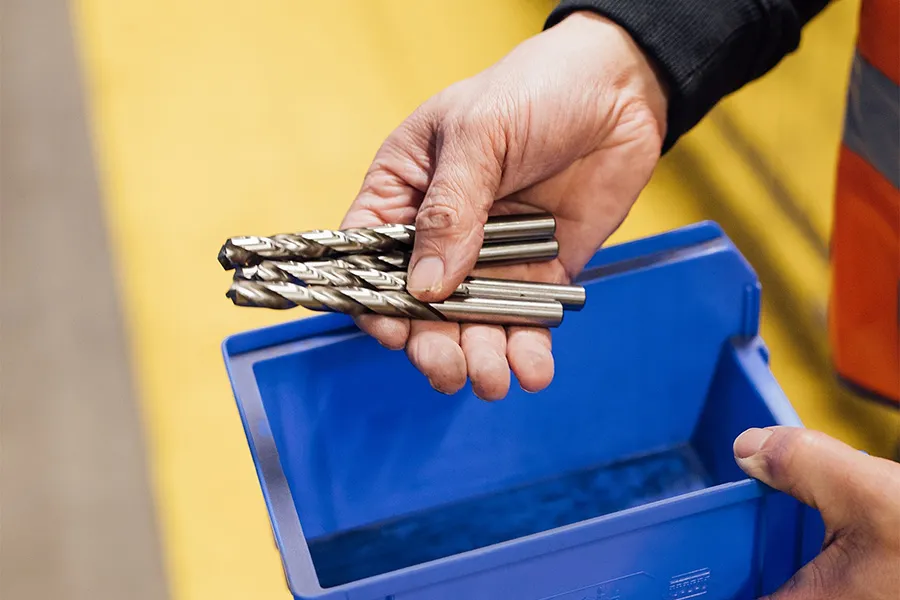
As well as your suppliers’ delivery times, it is worth looking at how many suppliers you work with. Reducing the number of suppliers can simplify the ordering process. Centralising purchasing also clarifies the ordering process and makes it easier to manage. A decentralised ordering system, on the other hand, offers greater flexibility. Will parts be delivered to a single warehouse or to several sites? Effective stock management also involves analysing and optimising your processes. You can also review who has access to the warehouse and who does not. If everyone can access all spare parts, it will not take long for errors to creep into your inventory. By making smart use of a digital stock management system, you can manage your parts more accurately. Finally, detailed location data for each item gives you a clearer overview. ■
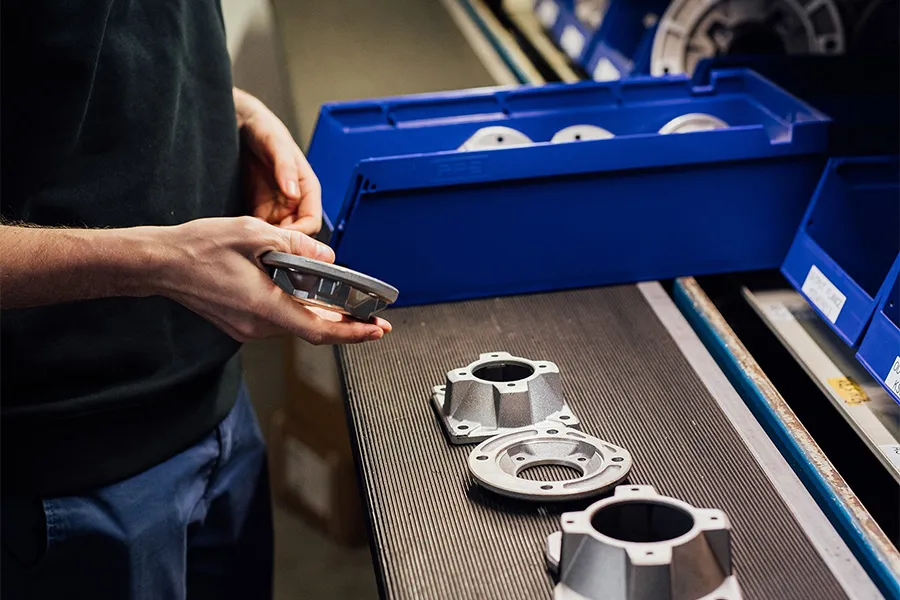
A spare parts management partner
Our in-depth knowledge of machine parts and warehouse equipment enables us to help you review and optimise your spare parts management. We help you identify parts so you can order them more quickly and at a lower cost. We also hold a large range of standard items ourselves. We can help you move towards preventive or predictive maintenance. In short, we give you greater visibility and control over your stock.
Results
Increased productivity: a sound maintenance plan means machines spend less time out of operation.
Lower costs: no unnecessary stock, no unnecessary costs.
Safer working: predictive maintenance helps you avoid safety risks that arise when you have to intervene unexpectedly on a machine.
Smaller footprint: lower stock levels mean fewer orders and less goods transport.
The benefits of universal mounting
Many gearmotor manufacturers opt for integrated assemblies, matching components with great precision. Universal mounting uses the same gearboxes, but fits a standard IEC motor via an adaptor. As spare parts are easier to replace than integrated systems, your maintenance costs are also lower.
Standard motors are also available more quickly, which is good news if a critical production line breaks down. Brands such as Hydro-Mec, SEW-Eurodrive and NIDEC (Leroy-Somer) manufacture highly modular gearboxes to which we can quickly fit our IEC-compliant motors if a motor fails. Dexis Belgium has all the equipment needed in-house to keep a wide range of machines running continuously. This allows you to optimise your stock.
The right O-ring and the right certificate
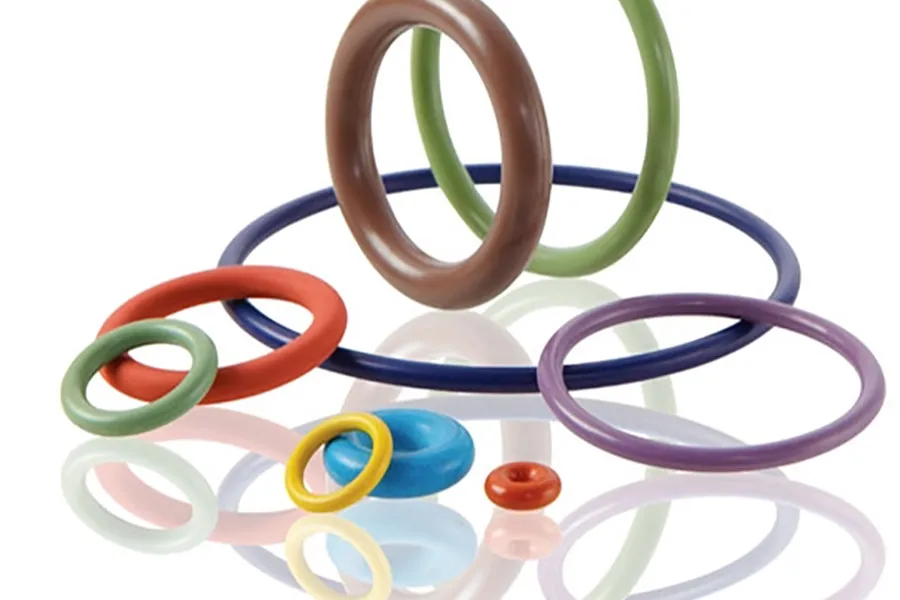
Every O-ring in a food processing machine must have the appropriate certificate: CFR 21§177.2600 under FDA regulations, or CE 1935/2004 under European legislation. Each product can have only one of the two certificates and must carry its own label. Managing this process correctly requires a great deal of knowledge and time. If you want to replace an O-ring, you need to know exactly which certificate is required, or work with a partner who oversees the inspection. Dexis Belgium ensures that you use the right O-rings with the appropriate certificate. This gives you the assurance that the food process and finished product meet all the standards. In addition to FDA and CE certifications, we work to DIN ISO 3601, which enables you to identify every O-ring quickly and accurately. We hold a substantial stock, allowing us to deliver the right item immediately. If the O-ring is in stock, we deliver it within 24 h, or within 3 h in an emergency.
Outsource your asset management
If you entrust Dexis Belgium with the full management of your assets, we will analyse every machine down to the smallest spare part. With accurate monitoring, we can schedule the necessary maintenance in good time and forecast when, for example, a motor will need replacing. This helps you avoid unexpected downtime at your facilities. If a breakdown occurs, you can rely on our stock of spare parts. With effective asset management, your machines perform better, last longer and cost you less.
Een zakelijke vraag aan Dexis Belgium NV? Get in touch
Companies in this story

Keep following this
Get an email when a new story is published. No account needed.
- SubjectNews
- CompanyDexis Belgium NV