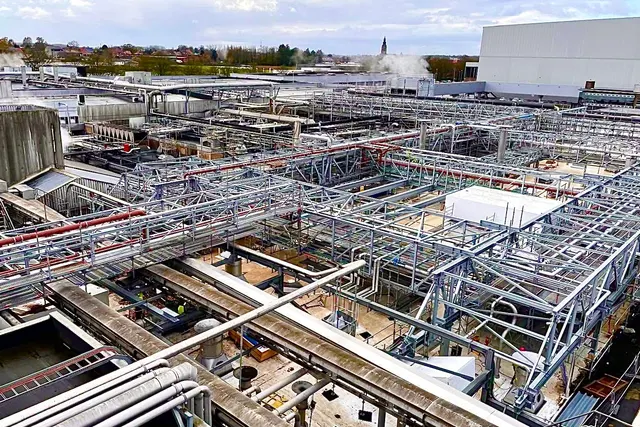
Air humidification and dehumidification are important in the food industry
Texte Condair, Evi Husson | Photos Condair
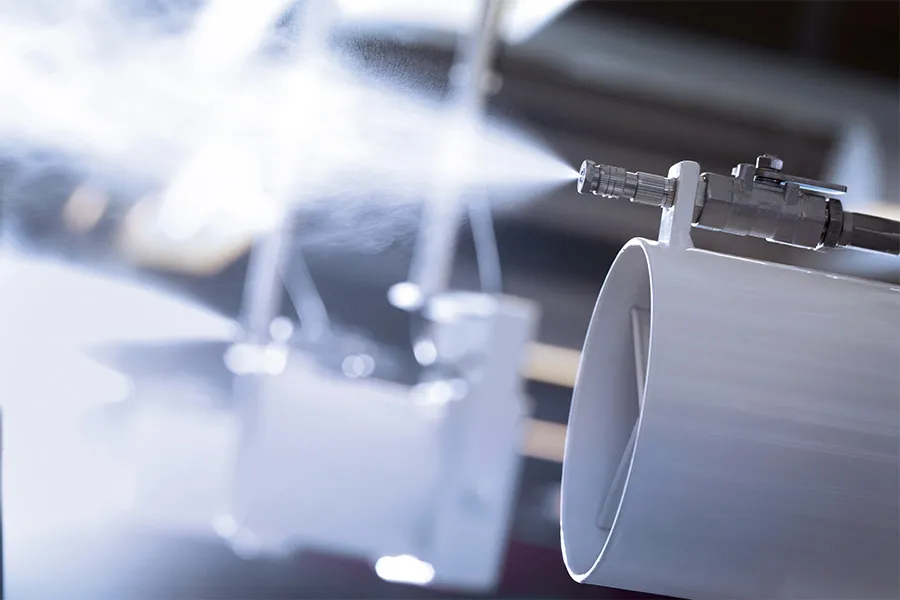
Air humidity plays an important role in the food industry, for example in food storage and maturation. But in bakeries too, air humidity affects product quality and the efficiency of the baking process. Condair, a specialist in commercial and industrial air humidification, advises businesses on their choice.

When a (production) area is heated to a temperature above that of the outside air, the relative humidity indoors immediately falls. This is because cold air can hold less moisture than warm air. Opening windows or doors, or providing additional ventilation, has no effect on indoor relative humidity as long as the indoor temperature is higher than the outdoor temperature. The dry air then draws moisture from all the food, materials, packaging, people and machinery in the (storage) area, drying them out further. This results in production losses and reduced quality.
Cooling
When food containing moisture is chilled, moisture is also drawn out of the product, potentially causing a loss of quality and weight, which is highly undesirable. To prevent this, moisture needs to be returned to food products through air humidification. From an energy perspective, it is better to humidify when cooling is not active. Air humidification then creates a mist in the room, allowing the food to absorb moisture from the air and leaving enough moisture in the air to prevent moisture loss during the cooling process.

Cold stores
By contrast, significant ice formation can occur in cold stores or freezers when doors are opened and the (outside) air entering the room condenses. Air dehumidification can prevent ice from forming in cold stores and freezers, reducing the need to defrost the room. By combining air humidification and dehumidification, businesses can avoid many problems.
Warehouses and production halls
The air can also be too dry in heated warehouses or production halls. Food products dry out and lose quality and weight. Air humidification reduces material losses, so the investment pays for itself quickly. In unheated warehouses and production halls, humidity levels can be too high, potentially leading to mould, bacterial growth or problems with food packaging. Dehumidifiers or humidifiers can help keep humidity in these areas within acceptable limits. A uniform temperature and consistent relative humidity are essential to ensure the quality of finished products.

Bakeries
The right air humidity is also important in bakeries. It helps improve presentation, quality and production speed. For example, bakeries need to maintain a high production rate because bread and other baked goods generally have a short shelf life. Air humidification speeds up the baking process, enhances quality, extends shelf life and improves the appearance of finishes and decorations. With adiabatic humidification, working conditions are also significantly improved thanks to the cooling effect and reduced airborne dust. Dehumidifiers can be installed to prevent the air from becoming too humid at the end of the production day, which could lead to mould growth.
Condair can advise businesses on choosing the right solution for their needs in terms of energy consumption, hygiene, and investment and maintenance costs. Whether a business is small or large, there is a solution to suit every production environment. ■
Question about this story? Ask your question
Keep following this
Get an email when a new story is published. No account needed.
- SubjectSolutions