“Seasoning” policy for a sustainable future
With local, regional, federal and European elections approaching, Fevia presents its memorandum: 15 proposals for a sustainable future built on a strong food industry. The country’s largest industrial sector has had a tough time in recent years and is calling for four concrete measures: fair competition with foreign countries, consistency, feasibility and legal certainty. These ingredients should secure a long-term future for the tastiest sector in our country and for its food supply.
As a small country, Belgium has to take account of its neighbours’ policies. When German, French and Dutch companies receive subsidies or state aid, this immediately affects competition with our businesses. Fevia is calling for our food companies to receive the same support as companies in neighbouring countries. The same applies to taxes: if products are taxed more heavily in Belgium than in neighbouring countries, cross-border shopping immediately increases. This is a loss for our food companies and their employees, for Belgian consumers (who shop elsewhere) AND for the government (which loses revenue). The same reasoning applies to labour costs. In 2023, Belgium’s labour cost disadvantage compared with neighbouring countries averaged no less than 29.1%. For every hour worked, we are therefore nearly 30% more expensive on average than our neighbours. This drives investors away rather than attracting them and makes it much harder for our businesses to compete. Fevia is therefore calling for the labour cost disadvantage to be eliminated and taxes to be reduced, bringing them into line with levels in neighbouring countries.
The fragmentation of responsibilities across and within different levels of government creates complexity, inconsistency and inefficiency. This stifles entrepreneurship, particularly in industry, the backbone of our economy. Fevia is calling for an “industry minister” to oversee all areas of responsibility, as well as closer cooperation and structured consultation with industry federations. In this way, we must develop a truly forward-looking industrial policy, tailored to our food industry too, with competitiveness, innovation and sustainability at its heart.
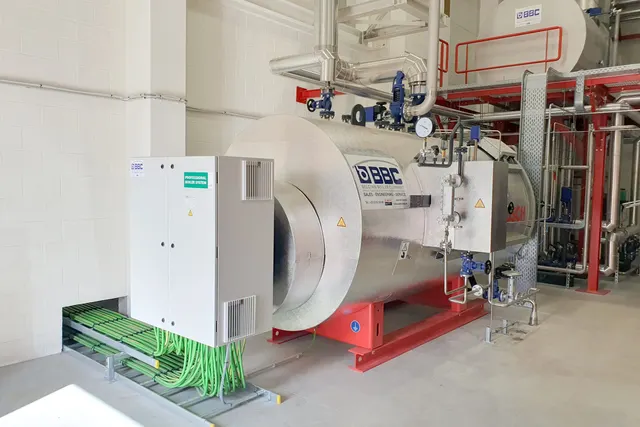
All our companies recognise the need to make the green transition and are very concerned about their energy consumption. 90% of Fevia members are SMEs. SMEs do not always know how to approach this transition. In fact, they see a tsunami of regulations, initiatives and obligations coming their way. We are therefore asking policymakers to make energy specialists available to support SMEs in implementing energy efficiency measures.
Finally, legal certainty and a stable framework are also essential, so that companies know clearly which investments and actions will be in line with future policy. It is important that they can reap the benefits of their investments, which often take several years to come to fruition. To achieve this, they must not only obtain the necessary permits quickly, but also be able to count on continuity. A “stop-start” policy holds back businesses and investment. Take the reuse of water for irrigation, for example: a clear legal framework is needed to reassure the various stakeholders and enable them to invest in major projects with confidence.
Consistent policy with a vision for the future should provide our businesses with prospects and stability. To safeguard our food supply in the future and avoid becoming dependent on foreign countries, we must focus on embedding a strong food industry and agri-food chain locally. We are sending a strong message to our policymakers and setting out concrete ways to create a framework in which Belgium’s food industry can thrive. We can be proud of our Belgian culinary heritage. The food industry not only supplies high-quality, innovative and sustainable food and drink, it also creates jobs, prosperity and wellbeing for our country. Let’s cherish this and secure it for the long term!
Bart Buysse
CEO of Fevia
Question about this story? Ask your question
Keep following this
Get an email when a new story is published. No account needed.
- SubjectSustainability