Substantial reduction in lubricant costs and improved environmental footprint
Texte & photos Igus
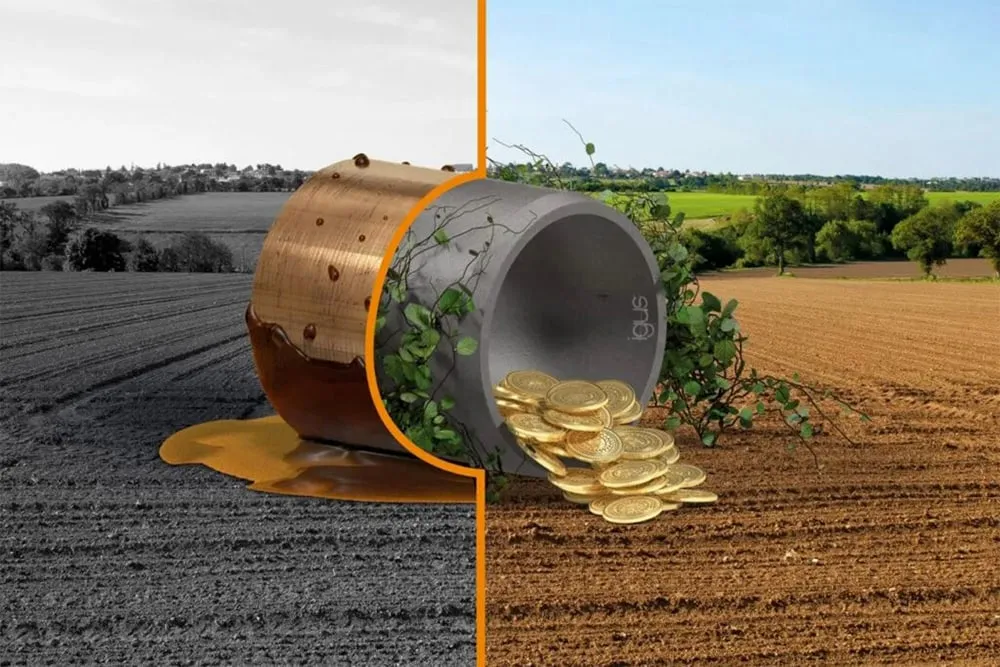
A joint study by scientists from RWTH Aachen University and igus shows for the first time how much applications can save by using igus lubricant-free polymer bearings instead of conventional metal bearings: up to 14 million euros per year. The study also breaks new ground by calculating the environmental impact, including at Heineken’s brewery.
Conventional metal bearings need to be greased constantly. igus’ high-quality polymer plain bearings do not, thanks to their integrated solid lubricants. This saves the cost of purchasing lubricants. Depending on the application, the savings amount to between 7,000 and 14 million euros per year, according to the RWTH study. In addition, between 8,000 and 2 million hours of work are saved each year by avoiding the manual re-lubrication of bearings. “The figures clearly show that an apparently minor change can ultimately save huge amounts of money and resources,” says Stefan Loockman-Rittich, head of the iglidur plain bearings business unit at igus. One of the study participants, Heineken Brasil, for example, would save 20 tonnes of lubricant per year, worth 450 478 euros, as well as 5.4 million euros in personnel costs, by switching to polymer bearings on all the conveyor belts at its 160 sites worldwide.
Heineken brewery: polymer bearings cut CO2 emissions by 28 814 kg
For the first time, the RWTH study also calculates the positive environmental impact of igus’ high-performance polymer bearings. Heineken Brasil, for example, saves 180 kg of CO2 equivalents per year by replacing metal bearings with polymer ones at 600 bearing positions. “If all Heineken sites switched to polymer bearings, the company could save 28 814 kg of CO2 equivalents. That is a substantial figure for such a minor change,” says Stefan Loockman-Rittich. By way of comparison, a vehicle emits around 2.37 kg of CO2 when it uses one litre of petrol. The savings would therefore be equivalent to more than 12 000 litres of petrol. “More and more manufacturers of machines, systems and vehicles feel obliged to disclose the carbon footprint of their products. Our customers are therefore pleased to be able to draw on a scientifically verified assessment of the environmental benefits of our plain bearings’ self-lubricating properties.”
About the RWTH study
WBA Werkzeugbau was commissioned to carry out this independent study. The research company works with the Laboratory for Machine Tools and Production Engineering (WZL) and the Fraunhofer Institute for Production Technology (IPT) on the RWTH Aachen campus, which is home to one of Europe’s largest research facilities for production technology. The results are based on interviews with nine companies in the fields of automation technology, construction machinery, agriculture, food, packaging and bottling.
Een zakelijke vraag aan igus? Get in touch
Companies in this story

Keep following this
Get an email when a new story is published. No account needed.
- ThemeImproving production process reliability
- SubjectSustainability
- Companyigus