Compressed air quality: know what you are measuring
Texte Marjolein de Wit-Blok | Photos BEKO Technologies

Compressed air is widely used in the food industry. It is important for this air to be free of dust, oil and water particles. The only way to check and validate this is to take measurements. BEKO Technologies has been helping hundreds of companies monitor compressed air quality for years and knows exactly where the pitfalls and solutions lie. For example, how oil-free is compressed air from an oil-free compressor? And how can the last trace of moisture be removed from the air?
To achieve a high level of compressed air quality, companies generally invest in the correct design of the system required. In doing so, not everyone realises that the system is not the only factor determining compressed air quality.
Measurement is essential
Sara Deckers is Focus Industry Manager at BEKO Technologies and has extensive experience in this field. “Compressed air quality is determined by the presence of dust particles, moisture and oil. Or rather, their absence,” she explains. “This has everything to do with food safety. While the presence of water in compressed air increases the risk of microbiological contamination, dust particles and oil directly contaminate food. So, if you want to ensure that your company uses good-quality compressed air, it is essential to monitor all three. The lack of clear legislation makes things difficult, but there are ways to classify and therefore measure the desired quality. Today, many technical solutions are available, and they can be used for continuous or occasional monitoring. Sara Deckers: ‘Only by measuring can you maximise compressed air quality’.”
Moisture
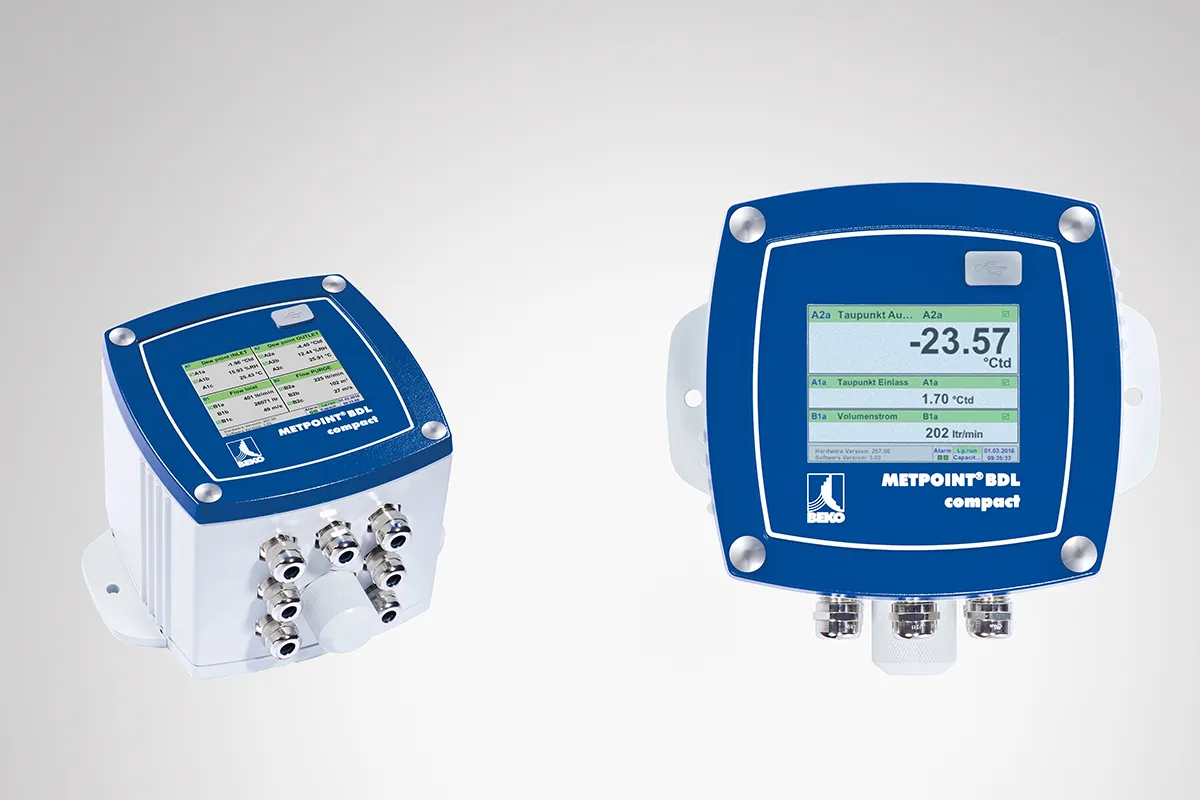
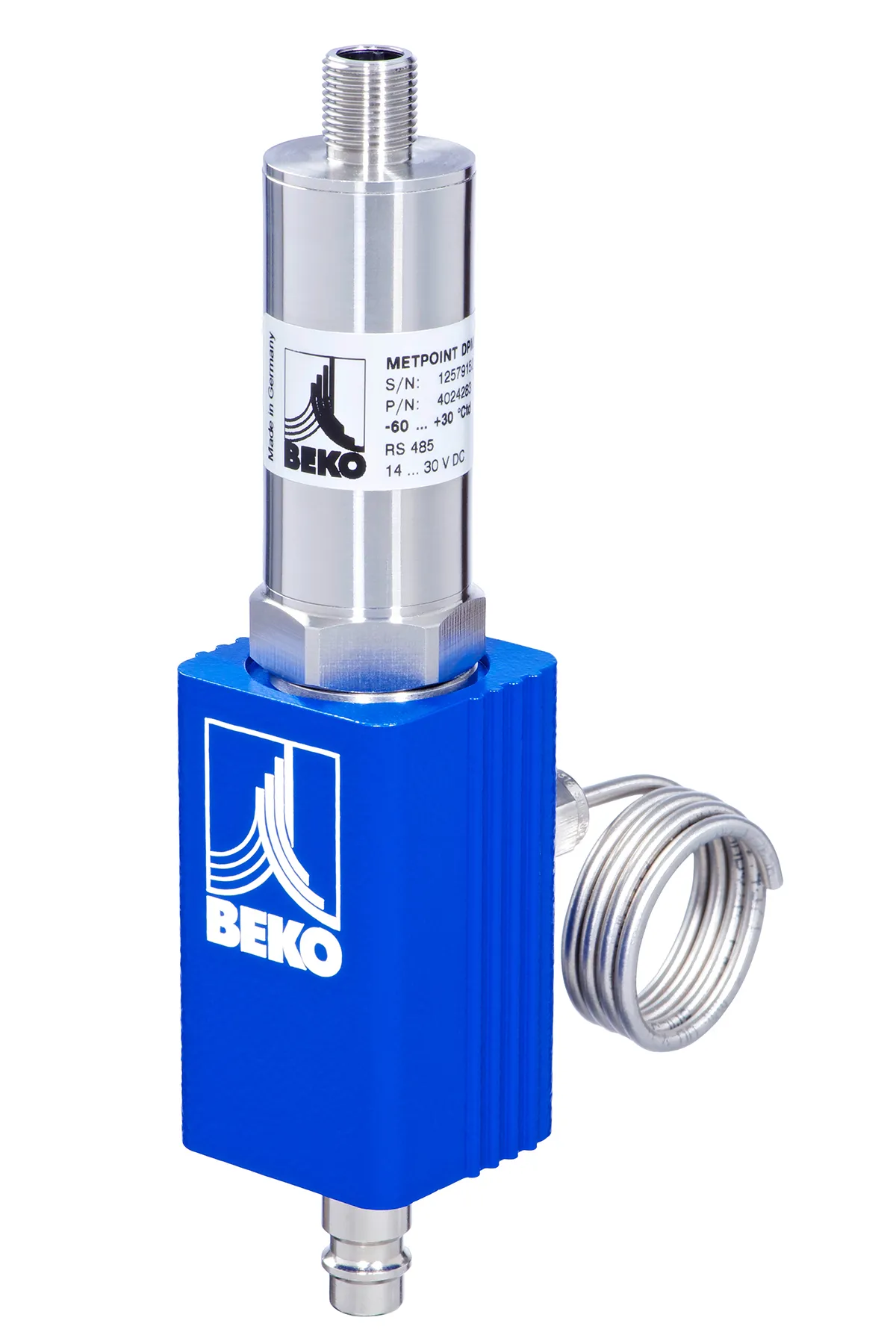
The amount of moisture in compressed air can be monitored using a sensor that measures the dew point. The desired value depends primarily on the application: while an average value is adequate for standard industrial use, the food industry requires compressed air to be as dry as possible to prevent bacteria from multiplying. Measurements are necessary because the compressed air dryer’s specifications alone are not enough. It can also break down or become saturated. Compressor rooms facing south can also heat up considerably around midday.
Oil and dust particles
Using an oil-free compressor is not enough to produce oil-free compressed air. Even if the compressor itself does not use oil internally, the air drawn in from the surrounding environment may contain this type of contaminant. Sara Deckers: “If your company is located near a motorway or in an industrial area, there is a good chance that the intake air contains oil particles. A compressor will not remove them. You will therefore need to use a filter or catalyst, preferably positioned as close as possible to the point of use to minimise the risk of contamination in your pipework. A filter also removes any dust and dirt particles.”
Another misconception is that using food-grade oil means users are no longer responsible for preventing oil from getting into the compressed air. Sara Deckers: “Food-grade oil should only come into contact with food ‘by accident’, and preferably not at all. Now ask yourself this: would you take a sip of that food-grade oil?

Create your own orange warning light
On paper, the system is perfect. In practice, several hazards can arise, but they are relatively easy to manage. Sara Deckers: “Think of your system like a car: there too, an orange warning light comes on when action is needed. Create your own orange warning light in your compressed air system by taking the right measurements, helping to prevent unexpected downtime and disasters.
A business enquiry for Beko Technologies? Get in touch
Companies in this story

Keep following this
Get an email when a new story is published. No account needed.
- ThemeImproving production process reliability
- SubjectTechnology
- CompanyBeko Technologies