Industrial automation reinvented
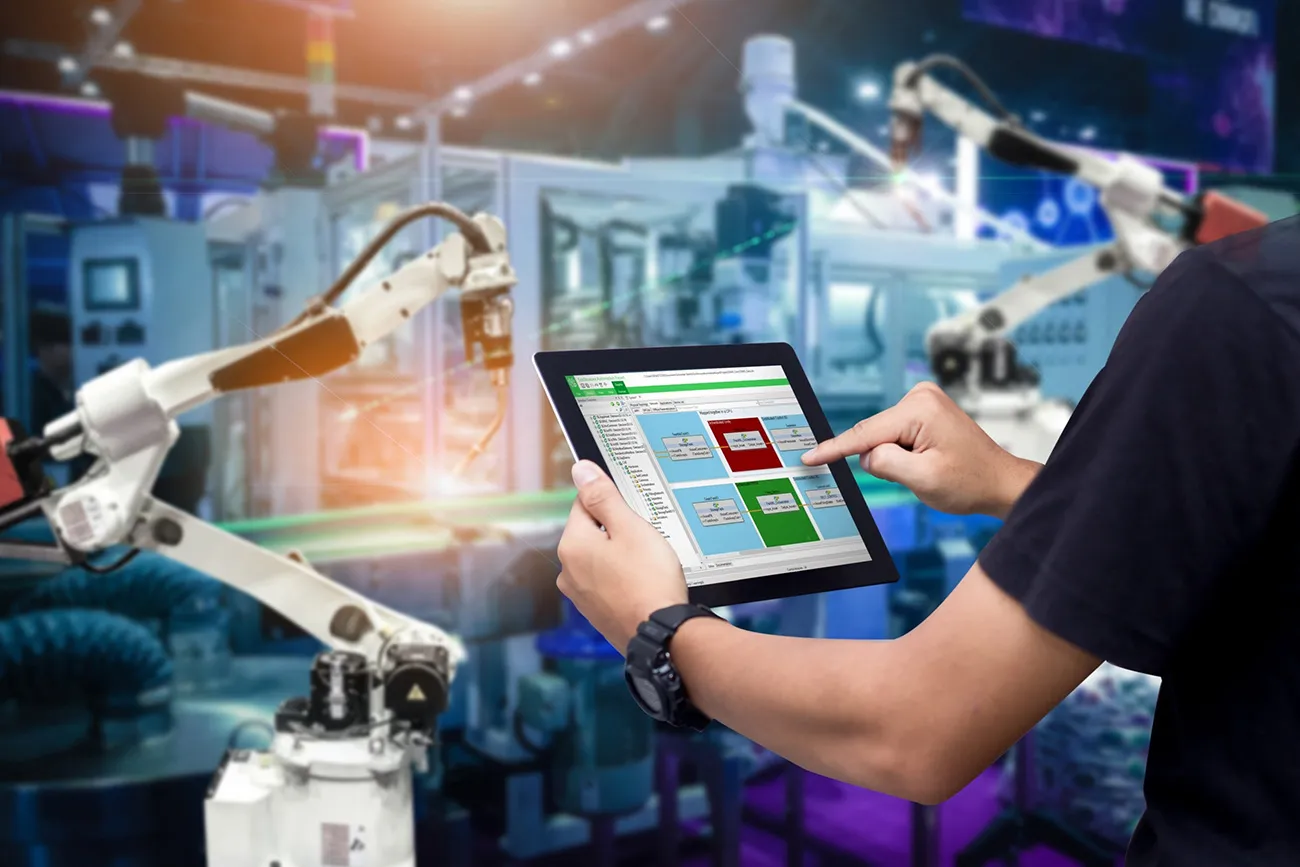
Universal automation. Can you hear the thunder rumbling in Cologne? Then you’d better hold on to these pages, because this concept, made possible by the IEC 61499 standard, is taking industrial automation in a whole new direction. One that is no longer limited by hardware constraints, but where plug-and-produce software components pave the way for open automation and limitless possibilities. At a webinar on 24 May, Schneider Electric will explain in detail what this looks like and how the manufacturer is responding with its EcoStruxure Automation Expert.
Today, we live in a truly digital economy. Technological innovations and the internet have changed the way we do business and manufacture products for good. A few years ago, the launch of the IEC 61499 standard gave rise to a new automation concept that meets the aspirations of manufacturing companies in this new world: universal automation.
For greater efficiency and flexibility
A world in which software now sets the rules, because it delivers the benefits that are needed.
“In the past, an automation solution was often a black box: a closed combination of hardware components and a PLC controller that did what it was supposed to do. Making changes was not straightforward. In recent years, more and more standards have emerged to move beyond this model and enable greater interoperability. Think of Namur or OPC UA,” says John Coppens, Industry Marketing Manager at Schneider Electric. “Today, the focus is increasingly on software as the basis for automation processes. It no longer matters how many different brands are present in the machine or production line. You become hardware-independent. This is already happening in practice today, but with much greater complexity and more workarounds. In the future, automation projects will become open ecosystems offering far greater flexibility, for example when it comes to reconfiguration, and enabling much greater efficiency because everything works together. Naturally, this will also result in substantial savings on engineering costs.”
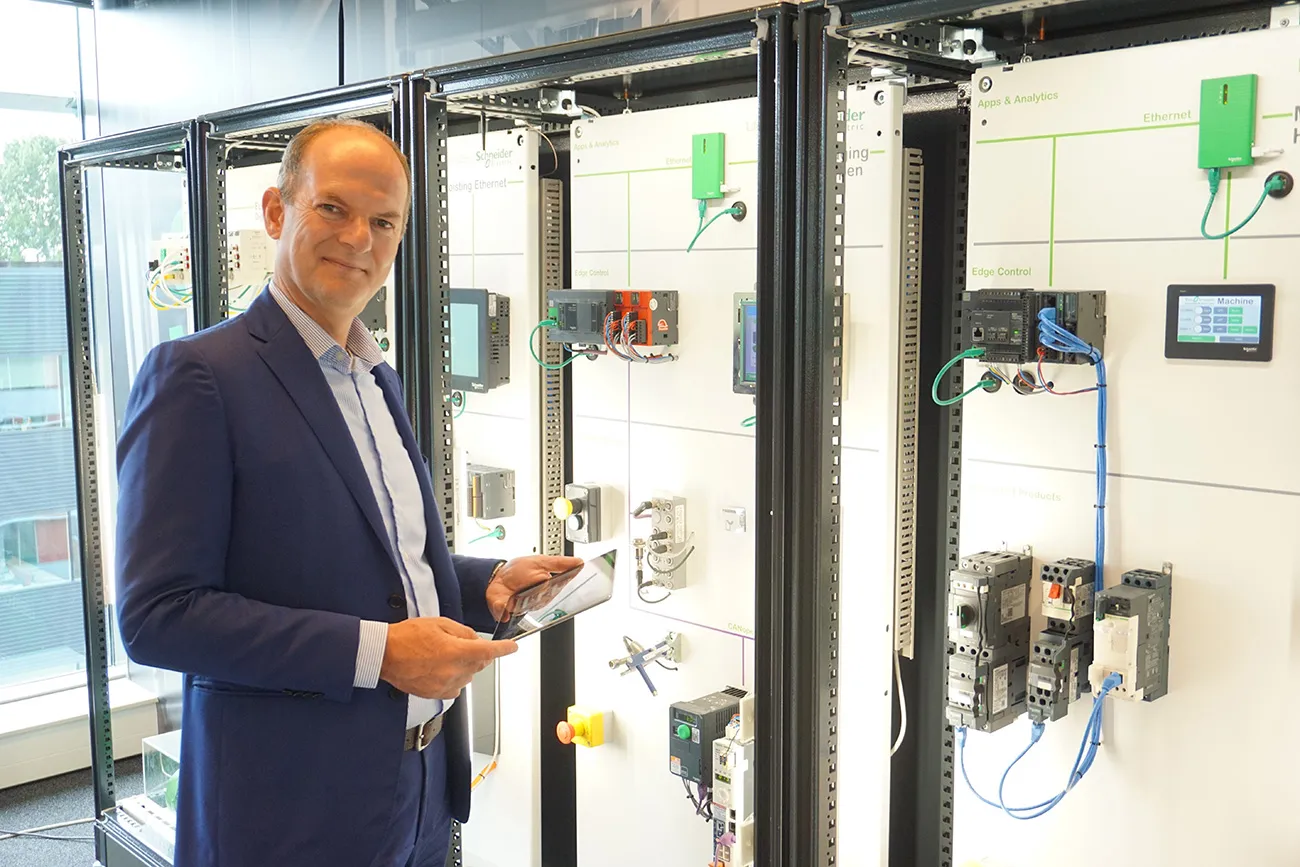
A webinar shows what it is and what it can do
Where the PLC has so far acted as the conductor, that role will in future be taken by software.
Coppens: “Everything can then be programmed in a familiar software environment and distributed from there to the hardware components. This calls for a completely new way of thinking. For machine builders and system integrators, as well as end customers, because it opens up many more possibilities. At the same time, though, this concept is close to what we all know today; it simply adds another layer. The first small-scale pilot projects show its potential. In the next phase, we want to roll them out at pilot scale.”
On 24 May, Schneider Electric is hosting a webinar on the subject. “The only obstacle is really the change in mindset that is needed. Wherever we go and explain the concept, you can feel curiosity bubbling away. Universal automation offers an answer to many of the challenges we face today in industrial automation. During the webinar, we will explain exactly what universal automation entails, what it could mean in practice, and how we are responding with EcoStruxure Automation Expert.”
EcoStruxure Automation Expert
EcoStruxure Automation Expert is Schneider Electric’s fully developed response to this universal automation trend.
“It consists of software that lets you automate, plus certain hardware components that are already prepared for this, so you can start building applications very easily. This is something we will continue to develop and extend in the future, distributing the runtime across the hardware. You can then get started very easily with programming and controlling each dedicated component in a specific way, using only the function blocks relevant to that part of the hardware. Programming will become child’s play,” Coppens predicts.
Een zakelijke vraag aan Schneider Electric? Get in touch
Companies in this story
Keep following this
Get an email when a new story is published. No account needed.
- ThemeAutomating and connecting production
- SubjectTechnology
- CompanySchneider Electric