Optimise your CIP processes
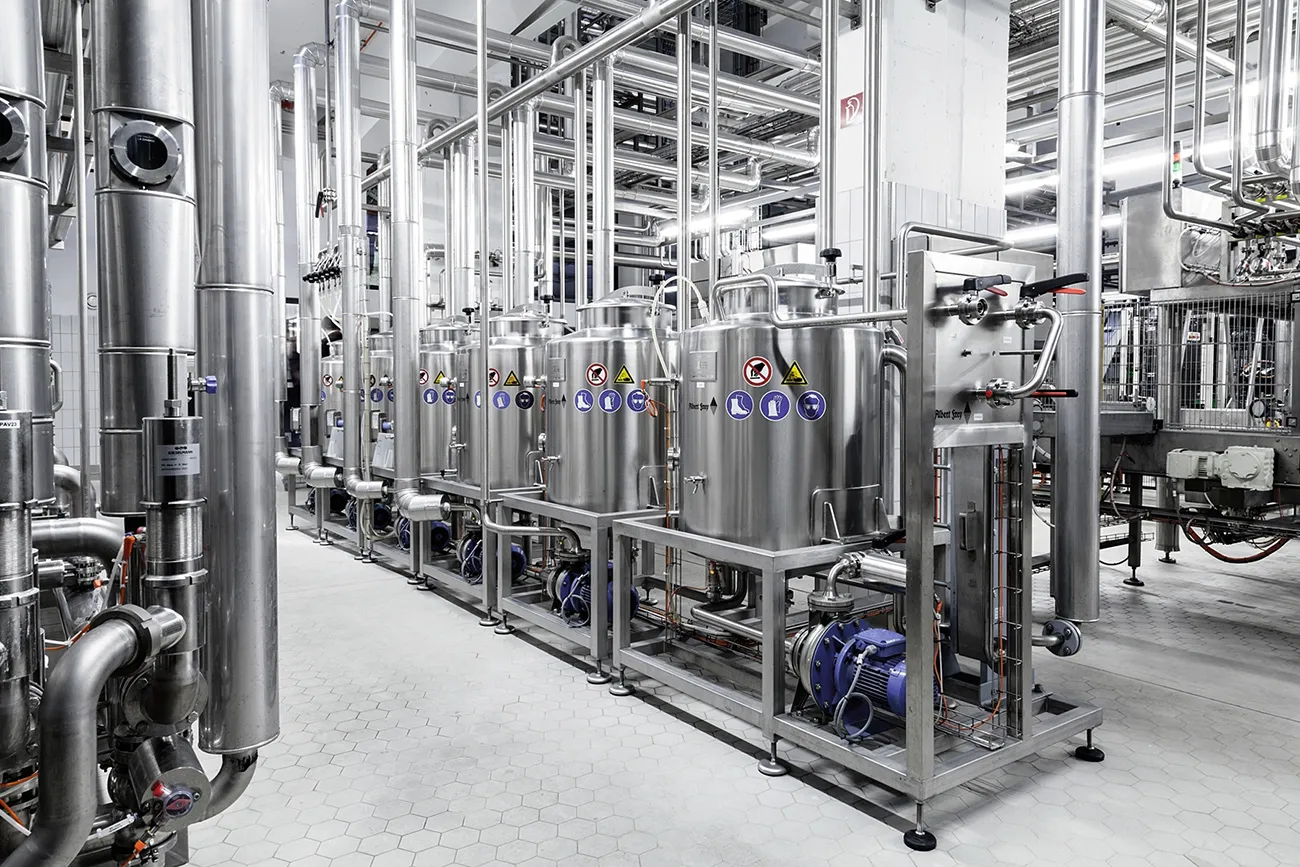
Food safety is the cornerstone of food production. For pipes and closed systems, CIP and SIP (Cleaning and Sterilising in Place) play an important role in ensuring hygiene. The CIP/SIP process carefully balances mechanical forces, time, temperature and chemicals. With ifm electronic’s solutions, you can precisely monitor and optimise CIP/SIP cleaning to save on costs (energy, water and cleaning agents).
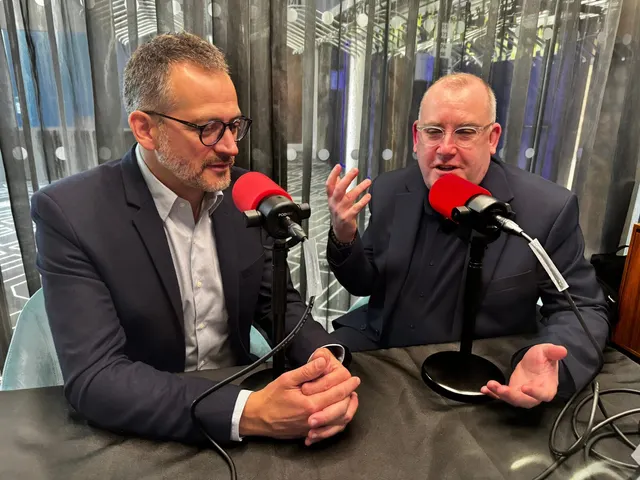
CIP and SIP are very similar processes, each consisting of several steps designed to clean pipes and closed process systems thoroughly. This is achieved by alternating cleaning with alkaline and acidic solutions with rinsing in hot water. SIP adds a thermal or chemical disinfection step. Philippe Briers, Smart Factory Project Manager at ifm: “Four factors determine the effectiveness of CIP/SIP processes: mechanical forces, temperature, chemicals and time. The longer the first three factors act, the more effective the cleaning process. However, it is important for businesses to keep this period as short as possible so that production can resume quickly. Finding the optimal balance is therefore crucial.” ifm electronic has the right sensor technology to precisely control this interaction. By bringing all the signals together in moneo, users have access to clear, plug-and-play dashboards that immediately show them where further optimisation is possible, and can also be used to document cleaning operations retrospectively.
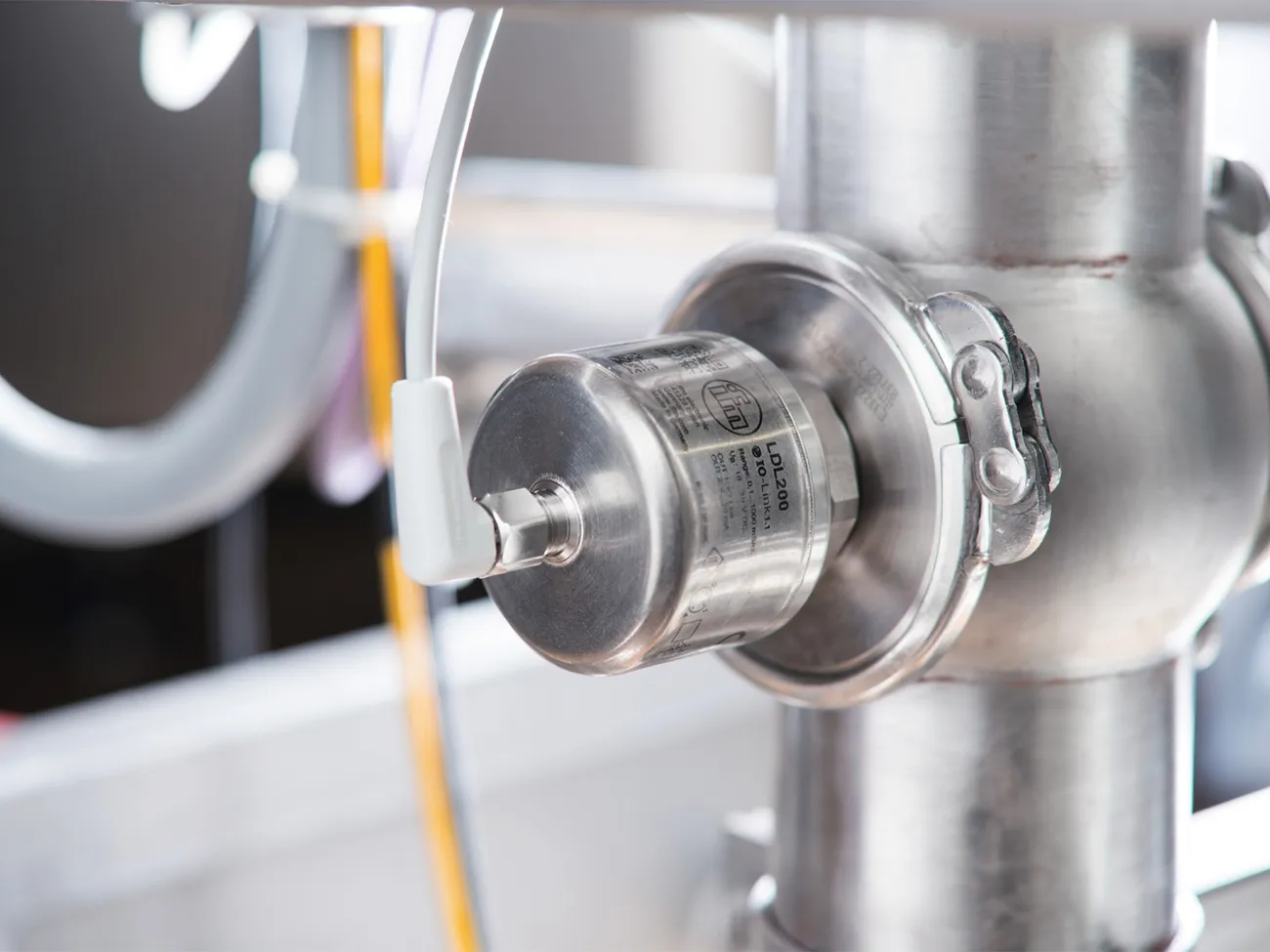
Optimising flow rate
The first factor we look at is mechanical forces. Water or chemicals must flow at a sufficiently high rate to remove any contaminants from the pipes. “Flow sensors are the traditional way to address this. They measure the flow rate, which should ideally be between 1.5 m/s and 2.1 m/s. If the flow rate is too low, there is too little turbulence, resulting in inadequate cleaning. A higher flow rate does not improve cleaning results and therefore leads to unnecessarily high energy consumption,” explains Philippe Briers. With a wide range of magnetic-inductive flow meters, ifm can meet users’ needs. Their benefits include a digital IO-Link signal, which makes it possible to convert the flow rate in l/min into a value in m/s. Those still using analogue signals can connect them to the DP2200 module for reliable conversion to IO-Link.
Always the right temperature
A specific temperature is required for each cleaning stage. Philippe Briers: “Temperature is therefore a key factor in cleaning quality. What matters here is knowing the temperature throughout the tank. By measuring at both the inlet and outlet, we know the absolute and relative values, so users can be sure that the correct temperatures were reached for the required periods.” A standout in this field is the TCC231 sensor, which combines two measurement principles (PTC and NTC) and two independent probes in a single sensor housing. “You always get a clear and reliable value in parallel. If drift starts to occur, you know immediately and can intervene before a shutdown occurs.”
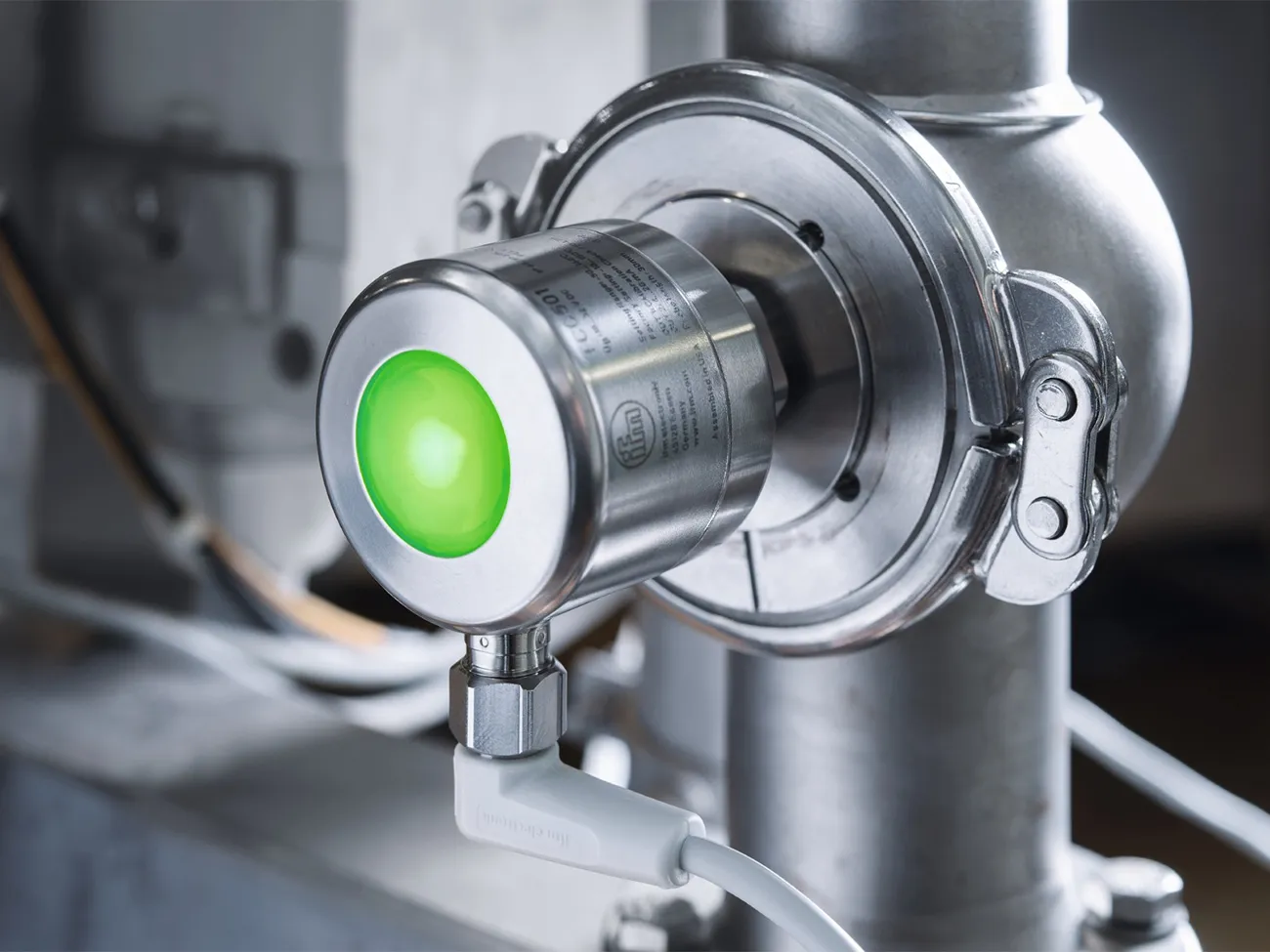
Dosing chemicals correctly
Finally, chemicals play their part. Here too, correct dosing is important to avoid unnecessary costs. “Conductivity measurements are used to measure the concentration of cleaning agents and determine the quality of the rinse water required.” With its LDL sensors, ifm electronic has added conductivity sensors specifically developed for this type of application to its range. “For example, they can also measure temperature. As with temperature sensors, it is useful to check the tank inlet and outlet. This helps ensure that the chemicals have done their job and shows when there are no longer any particles in the rinse water,” says Philippe Briers. The new LDL 101 can also detect very low concentrations, for example in demineralised water applications.
Easy to use with moneo
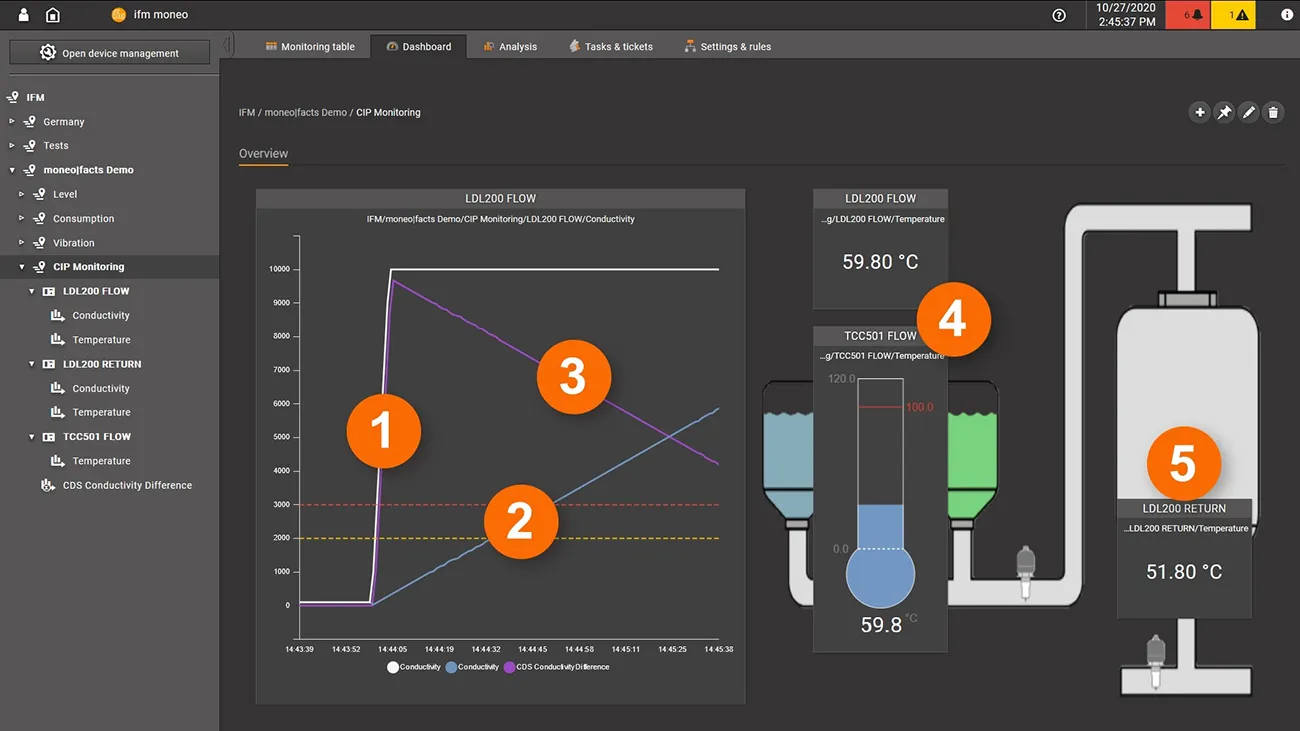
But what can you learn from the values captured by these sensors? That is where moneo comes in. Philippe Briers: “Measurement data is recorded continuously for historical data analysis. This makes it possible to identify optimisation and savings potential. Sensor data is thus transformed into relevant process information. Integrated alarm management also enables users to respond quickly to changes in process parameters. Ease of use really is the priority here.” It is also worth highlighting the “calculated values” produced by moneo from the raw values. Users can convert the values into the right unit themselves in no time. “This involves some programming in a PLC, but with moneo, it’s just drag and drop.”
Een zakelijke vraag aan ifm Electronic? Get in touch
Companies in this story
Keep following this
Get an email when a new story is published. No account needed.
- ThemeCleaning and protecting facilities
- SubjectTechnology
- Companyifm Electronic