Pest control goes digital and sustainable
Texte Valérie Couplez | Photos Rentokil
Becoming and remaining the world leader in pest control does not happen overnight. Rentokil draws on its accumulated knowledge and experience to keep developing new products and services. The aim is to protect people and the environment better. An interview with managing director Giuseppe Bica and sales manager Peggy De Clercq of Rentokil Pest Control Belgium on the major trends in pest control.
Let us start with a few figures. In Belgium, Rentokil Pest Control has three offices and 300 employees, who carry out more than 150,000 interventions a year for around 18,000 customers. It comes as no surprise that digitalisation and sustainability are the keywords, as they are in your own food business. "We are close to our customers," says Giuseppe Bica. "To put forward the right solutions, you have to understand the whole value chain and the customers' needs. You have to know the hazards and the risks in order to help. Pest control is a matter of expertise, and technology is there to support us as much as possible. With future regulation in mind, we take the most sustainable approach we can for people and animals. For example, fumigation is no longer practised in Belgium. We offer alternatives, such as heat treatment."
A global presence as a source of knowledge
The value chain is global. "On the one hand, we have customers operating on several continents. They need a uniform approach across all their subsidiaries, one that complies with local legislation and the highest quality standards. On the other hand, we can learn a great deal from other parts of the world. Our global presence is an absolute asset. One example: until recently, mosquitoes were not a threat to the food chain in Belgium. Today, with global warming, they are. Because we know how other regions deal with them, we can quickly offer our customers effective solutions. Sharing knowledge and experience allows us to make the difference."
A 360° approach and continuous improvement
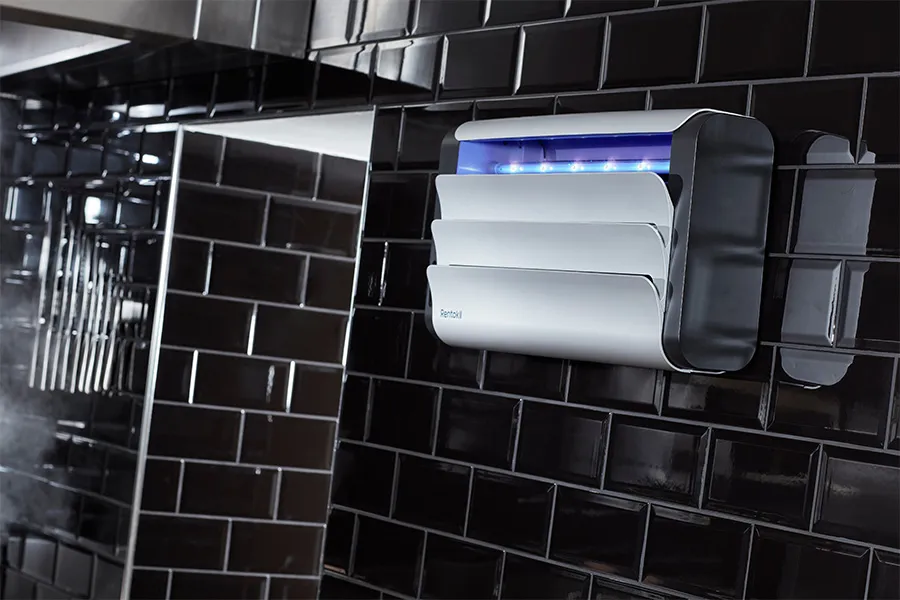
Rentokil's uniform approach consists of a four-step methodology: exclude, restrict, destroy, monitor. "It all starts with identifying the risks at a production site," explains Peggy De Clercq. On the basis of this analysis, we make recommendations to the customer, for example on hygiene, by cleaning or by making the environment unfavourable to any potential development of pests. We also discuss ways of limiting the movement and reproduction of pests. In addition, we take appropriate measures to keep pests out of production altogether, relying on our own range of repellent solutions.
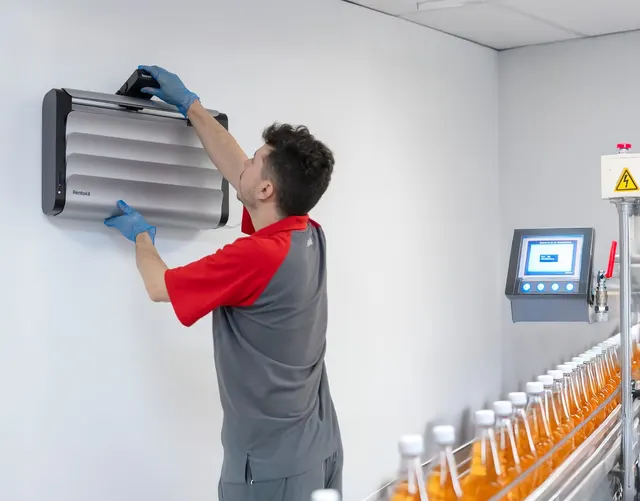
It is not just about plugging holes; we work with pest-proof products developed from our expertise." The final control consists of two further steps: restricting movement, for example through the use of lamps (economical LED technology) and traps (made from 100% recycled material), and then eliminating the pests. For Peggy De Clercq, this is a 360° approach. "The steps are repeated to improve food quality and safety. Monitoring is carried out according to the customer's needs, from once a year to 24/7."

Connected devices for greater efficiency
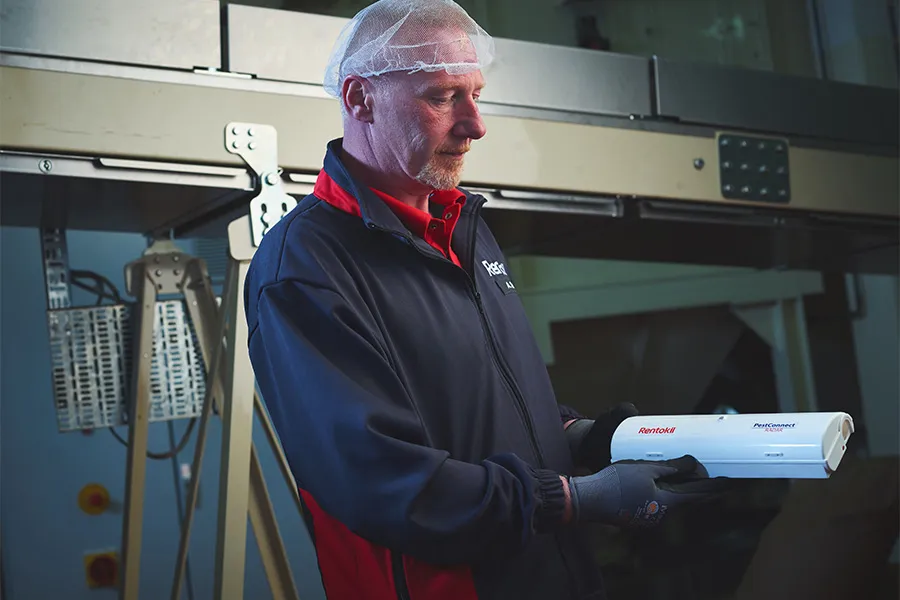
Rentokil's technicians are not alone in the fight against pests. They can count on numerous digital tools. "Connected devices send a signal when the technician needs to intervene. If a mouse is caught in a trap, the technician receives an alarm to go on site. This solution, which already works with rodents, will be extended to flying insects next year. It is a way of optimising efficiency," stresses Peggy De Clercq. Once on site, the technician assesses the situation: where did the mouse come from? … "Our customers can then react quickly. Is there, for example, a problem with incoming raw materials? Or did an employee leave a door open? Thanks to our connected devices, we offer our customers the guarantee of non-toxic monitoring 24 hours a day, 7 days a week, which removes the need for weekly or monthly checks in the future. We really engage in dialogue with our customers to arrive at an effective strategy. That is our 360° approach," adds Giuseppe Bica.
MyRentokil
Digitalisation makes it possible to gather information on the MyRentokil portal. Peggy De Clercq: "Reporting is important in the food industry. Customers can follow interventions and recommendations easily and in real time. Lessons can also be learned from the data. We carry out trend analyses so that customers can see how our collaboration is paying off. But they also have everything to hand in the event of an audit, such as technical data sheets, certificates, recommendations and so on. There is also a direct link to the audit report on the customer portal."
Your pest control partner is an essential element of your HACCP compliance and can play an active role in the inspection, auditing, identification and prevention of potential situations that could cause damage, contamination or illness. By adopting an integrated digital approach focused on inspection, recommendations, pest exclusion and continuous monitoring, food processing companies can also act with greater flexibility. ■
A business question for Rentokil? Get in touch
Companies in this story
Keep following this
Get an email when a new story is published. No account needed.
- ThemeCleaning and protecting facilities
- SubjectFood safety
- CompanyRentokil