The steam plant: the quiet driver of food safety
Texte & photos Belgian Boiler Company
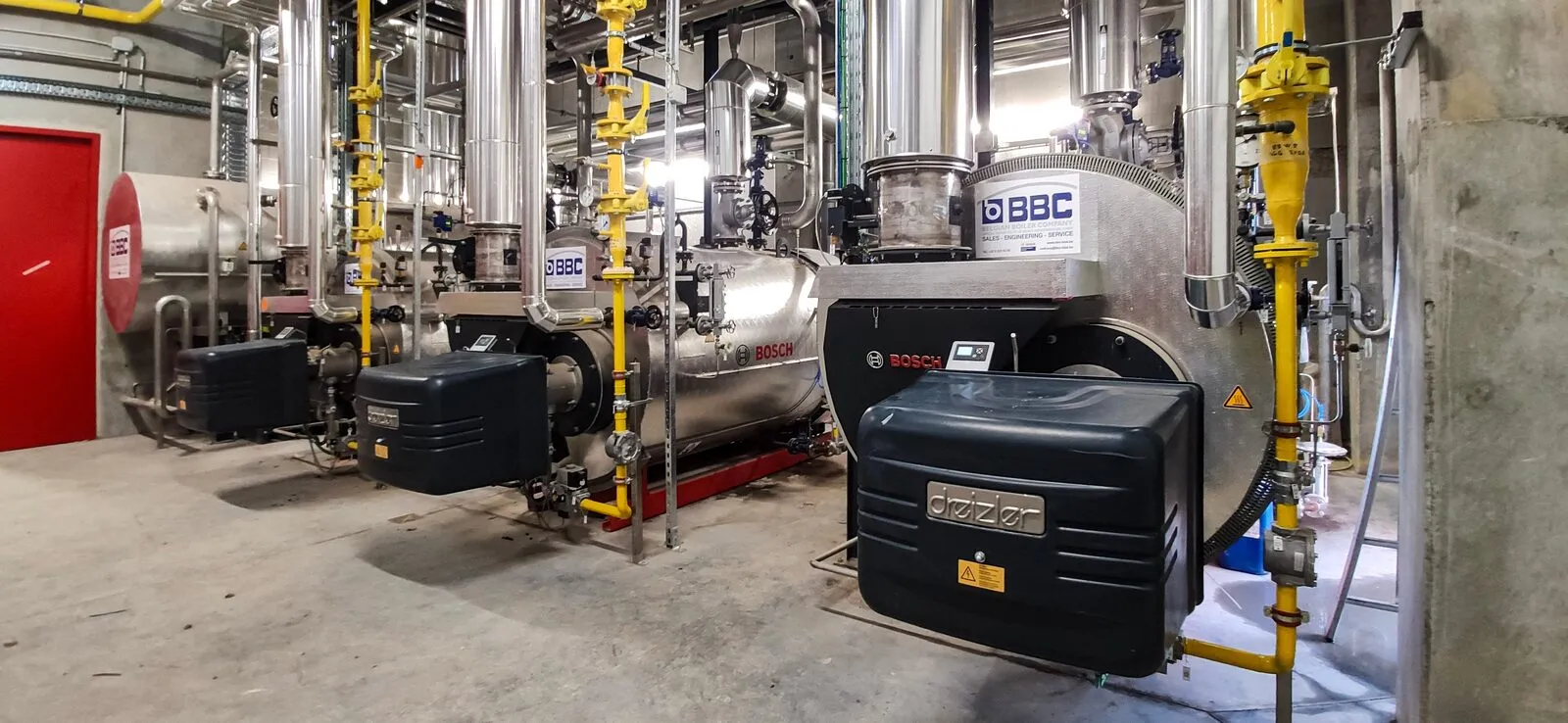
In many food companies, steam is taken for granted. It must be available every day, at the right moment, at the required pressure and with sufficient capacity. It is only when the pressure drops, a cleaning cycle fails to reach the required temperature or the plant breaks down unexpectedly that people realise how closely production and steam supply are linked. "A problem in the boiler house can immediately translate into a production stoppage, delayed cleaning or a complex restart. That is why it is not enough for the boiler to be reliable. The installation as a whole must be viewed as a single system," explains Edwin Van Cleemput, sales & project engineer at Belgian Boiler Company.
Correct sizing goes beyond simply adding up the capacities of the connected consumers. The boiler house must also be able to cope with peak demand, rapid load fluctuations and the simultaneity of production and cleaning processes. A boiler that is too large is not automatically a good solution either. When a burner starts and stops frequently or runs for long periods at an unfavourable partial-load point, this can have a negative effect on the efficiency and service life of the installation.
Steam quality starts with a properly designed system
Finding the right solution therefore requires a good understanding of the actual load profile. The piping network, pressure control and steam distribution must also be matched to that profile. "Steam quality is not a detail, and it is not determined solely in the boiler," stresses Dr. ir. Marnix Van Belleghem of Belgian Boiler Company. "Pressure stability, steam dryness, pipe sizing, drainage, water quality and condensate management together determine the reliability and reproducibility of a process." Belgian Boiler Company can support food companies in analysing the entire chain: from boiler capacity and burner control to the piping network, including pressure levels and the characteristics of the individual steam consumers. The analysis does not stop at the available output, but also takes into account what actually feeds the process.
Maintenance must go beyond the statutory boiler inspection
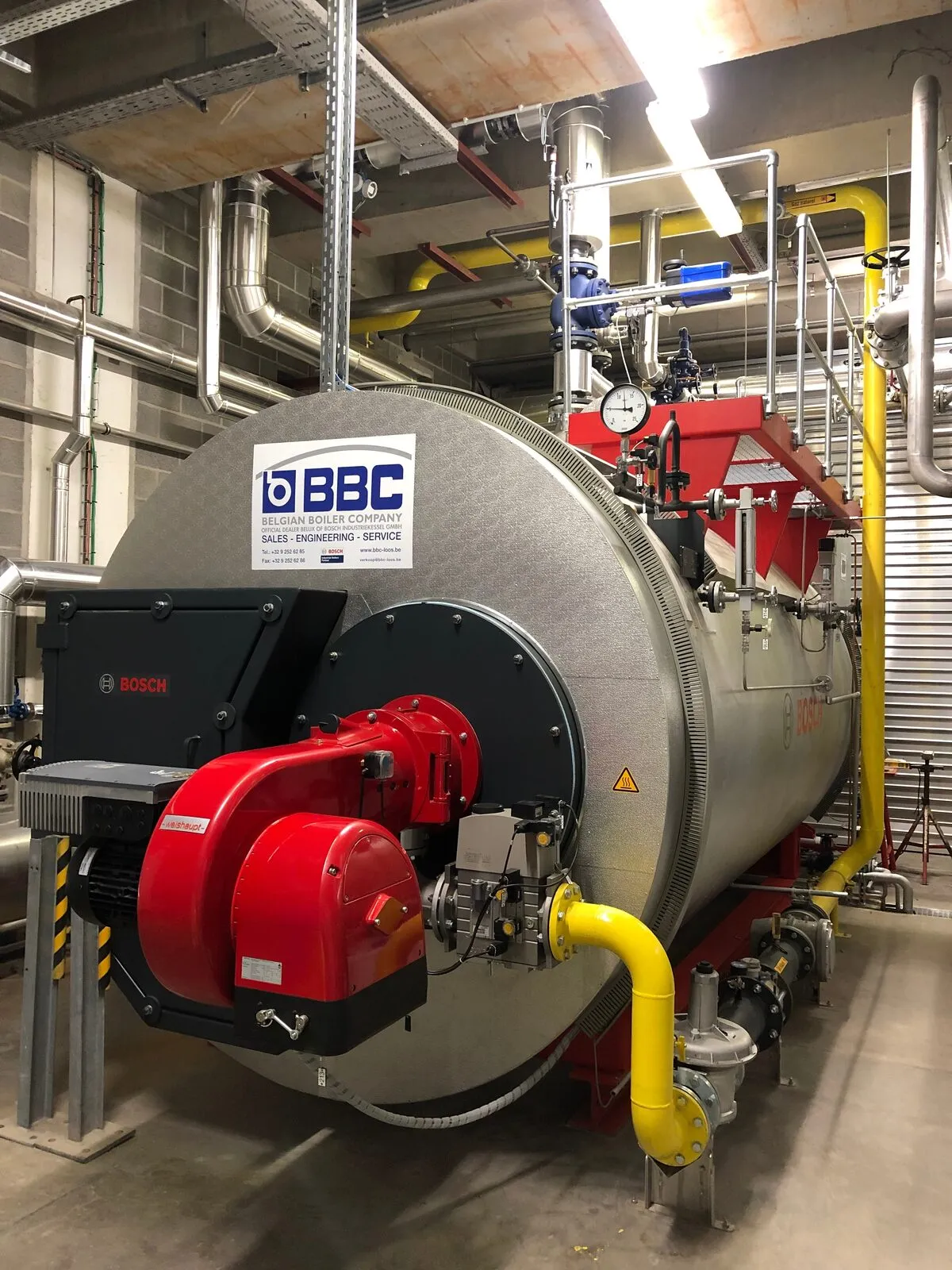
Statutory inspections and periodic checks are indispensable, but they are no substitute for a technical maintenance programme. An installation can be formally compliant and still suffer from energy losses, unstable operation or gradually declining reliability. Targeted maintenance is therefore not limited to the boiler alone. The burner, safety devices, pumps, level controller, water treatment, blowdown system, shut-off valves, control valves, steam traps and measuring instruments must also be checked periodically. The long-term availability of suitable spare parts and knowledge of the installation as a whole are just as important as the maintenance work itself. "Good maintenance is about more than fixing breakdowns," explains Edwin Van Cleemput. "The aim is to detect anomalies before they lead to production problems. That requires knowledge of the history, load and technical design of the installation."
Water treatment, blowdown and condensate
The quality of the boiler feedwater is decisive for the safety, efficiency and service life of the installation. Insufficiently treated water can lead to scale formation and corrosion. As water evaporates in the boiler, the dissolved substances remain in the water. Without sufficient blowdown, their concentration rises. Insufficient blowdown increases the risk of foaming, fouling and carry-over of water. Excessive blowdown causes an unnecessary loss of hot boiler water, chemicals and energy.
Heat recovery from blowdown water can also be worthwhile. BBC can assess how the water treatment and blowdown control work in conjunction with the boiler installation. The analysis does not stop at isolated measured values, but looks at the interdependence between make-up water, condensate return, feedwater temperature, boiler water quality and blowdown losses.
Condensate also offers potential: after giving up its heat, it retains a relatively high temperature and consists of treated water. By returning usable condensate to the boiler house, the demand for cold make-up water is reduced. This lowers the consumption of fuel, water and treatment chemicals. However, a condensate system should not be designed solely with maximum recovery in mind. The quality and reliability of the return flow matter as well. BBC maps the condensate network, locates potential leaks and assesses which flows can be recovered safely and economically. The biggest gain sometimes lies not in a single major investment, but in a combination of repaired leaks, better insulation, steam traps in good working order and a higher return temperature.
Overall management of the boiler house is a single responsibility
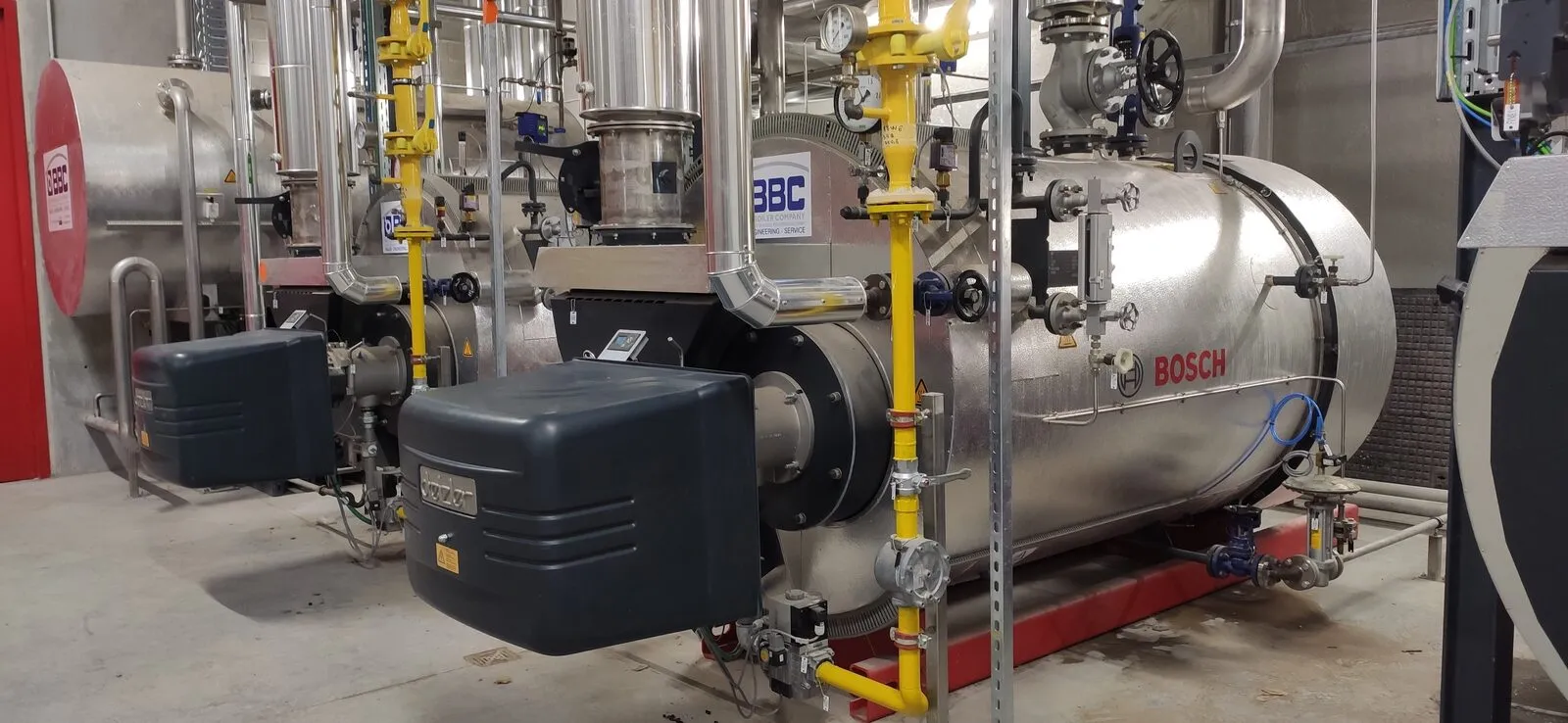
The greatest added value is achieved when the boiler, burner, water treatment, steam network, condensate return, control system and maintenance are not treated as separate elements. A change to one component often has repercussions for the rest of the system. That is why Belgian Boiler Company supports food companies throughout the full life cycle of their steam installation: from analysis and engineering to installation, commissioning, training, maintenance, technical optimisation, steam trap inspection, temporary steam supply and a service available 24/7 (24 hours a day, 7 days a week). A good boiler house ultimately delivers more than sufficient pressure and capacity. It ensures the stability of the production process, exposes energy losses and keeps technical risks under control.
Question about this story? Ask your question
Keep following this
Get an email when a new story is published. No account needed.
- ThemeManaging food safety risks
- SubjectTechnology