Minimal downtime thanks to an exemplary upgrade
Texte Joy Augustin / Alexandra Semenescu / Kerstin Schweimer / Christina Jones | Photos Siemens
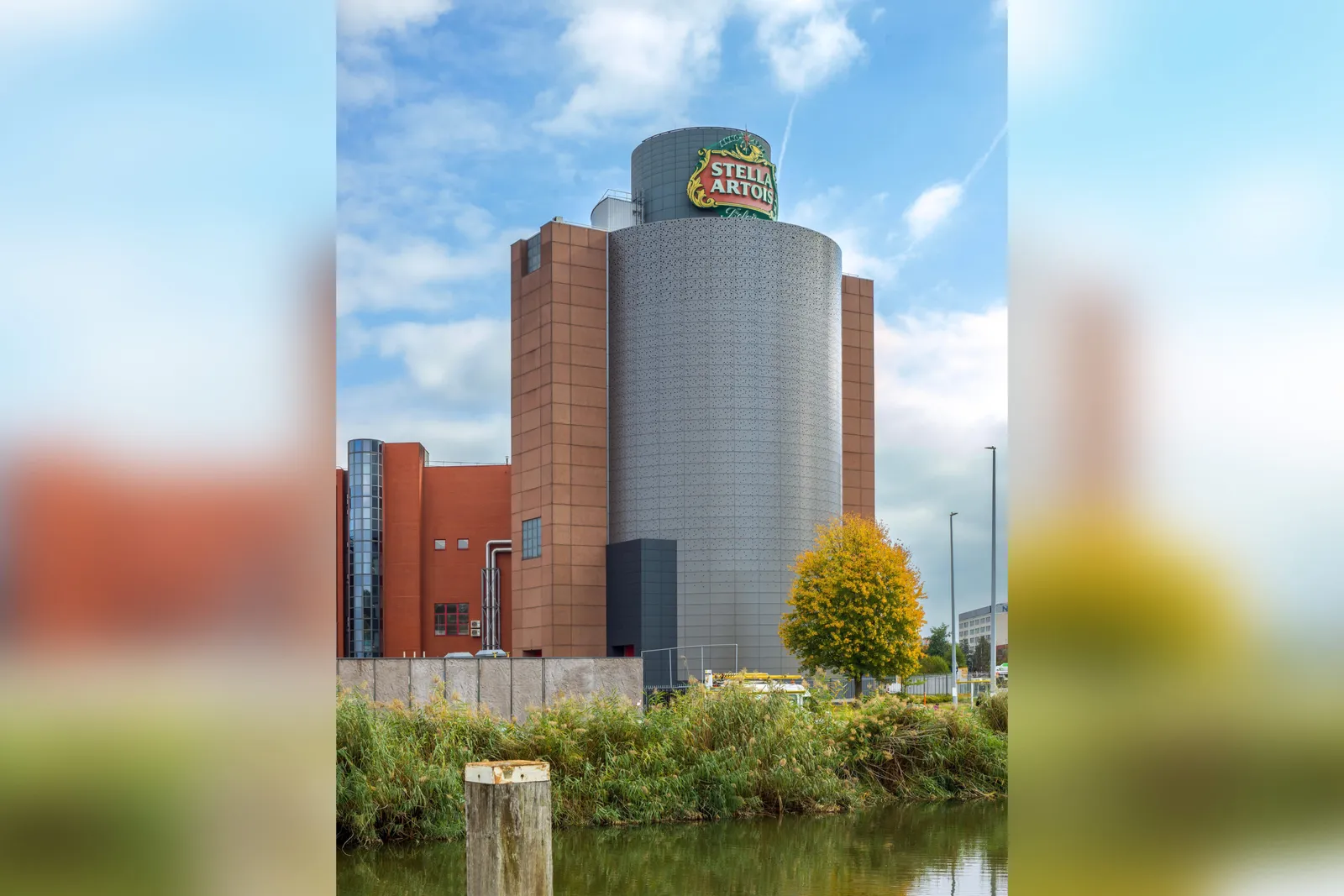
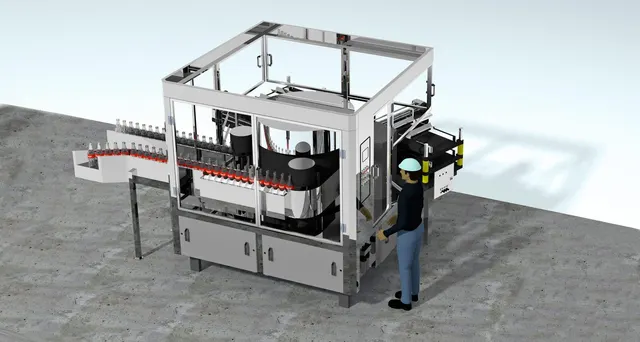
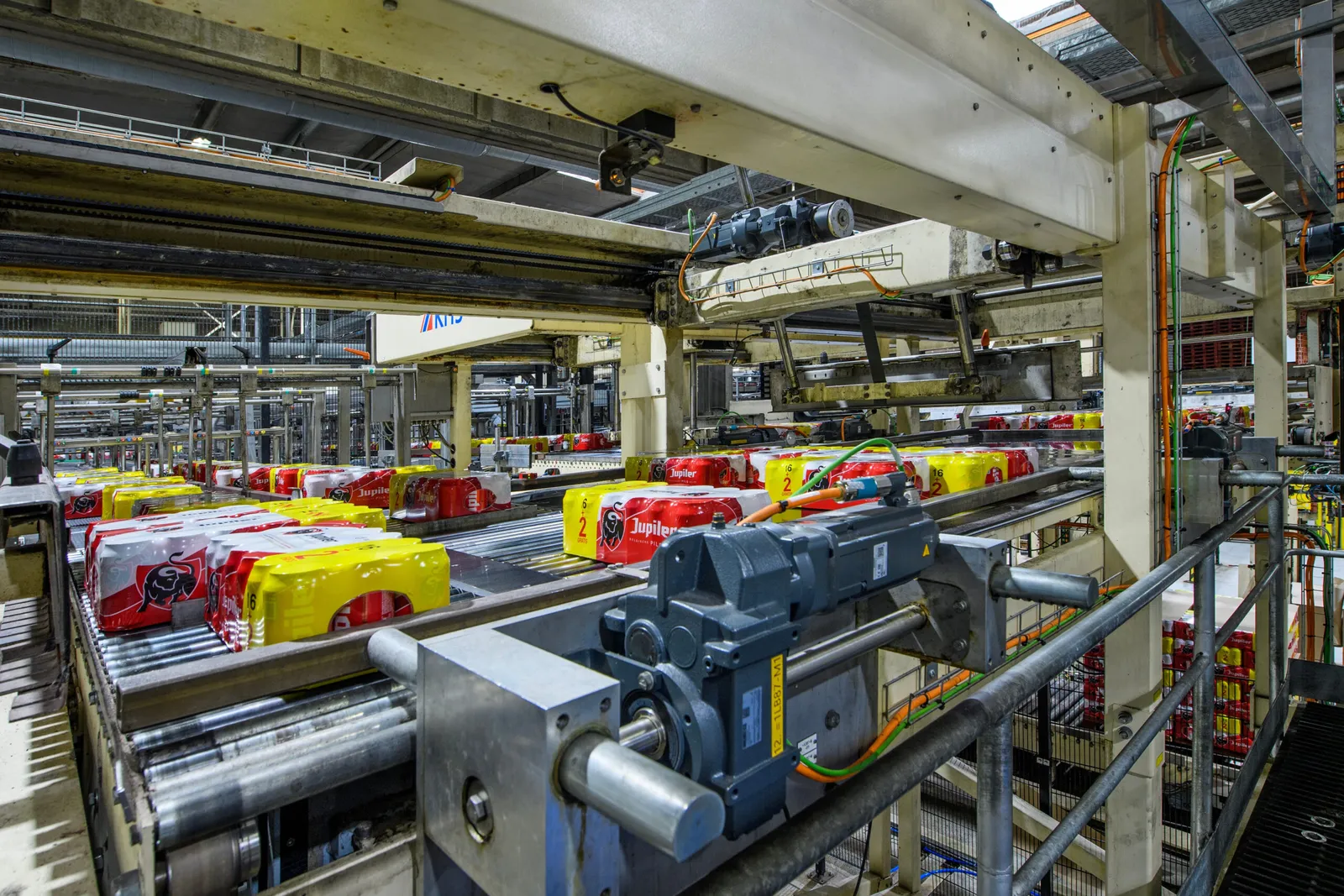
AB InBev is considered the largest brewer in the world. After twenty years of loyal service, one of the palletising lines handling 50,000 litres of beer a day at the Leuven site had to be replaced. Siemens took on the task. Thanks to efficient planning and the use of a digital twin, the company completed the modernisation in seven days (instead of the ten originally planned). The simulation also brought many other benefits during the upgrade, including technical improvements, the introduction of new stacking patterns and thorough operator training.
The food and beverage sector faces enormous production challenges: margins are slim, quality standards are high and the time available for maintenance between production batches is limited. No company can afford to have its machines standing idle for long, so when maintenance is required, it must be carried out as quickly as possible. Simulation software, particularly that using digital twins, is a valuable aid in achieving this. AB InBev needs no introduction in this sector, with iconic brands such as Stella Artois, Budweiser and Corona. Its headquarters are still in Leuven. In 2024, the world leader in the brewing industry brewed 576 million hectolitres of beer, spread across more than 200 breweries in over 50 countries. With a portfolio of more than 500 brands, the company stands for long-term partnerships, high quality and scalable solutions with which it serves more than 2 billion customers worldwide.
Ensuring continuity
"A ticking time bomb" is how line manager Tom Verslype describes the state of the palletising line at AB InBev in Leuven. "It dates from 2004 and consists of components that are no longer available today. In 2022, for example, a faulty drive prevented us from producing for several weeks. That is what motivated us to look for a way to modernise the line with a minimum loss of production time," Tom Verslype recalls. This challenge quickly put AB InBev's automation engineers in touch with Siemens, which offers comprehensive modernisation solutions with minimal disruption to production. The line therefore does not need to be replaced entirely, which reduces downtime. Moreover, modernisation costs less and is considerably more sustainable.
Farewell to the black box
AB InBev took advantage of this momentum to add a further requirement: more scope for customising the stacking patterns for its beer cans. AB InBev has to renew its patterns regularly, for example when the can format changes. On the old line, it had no access to the automation software: every time a change was needed, it had to go to the manufacturer. "That is an expensive way of updating the software regularly. That is why our new solution had to be open, so that we could programme new patterns ourselves," Tom Verslype continues.
The benefits for the customer
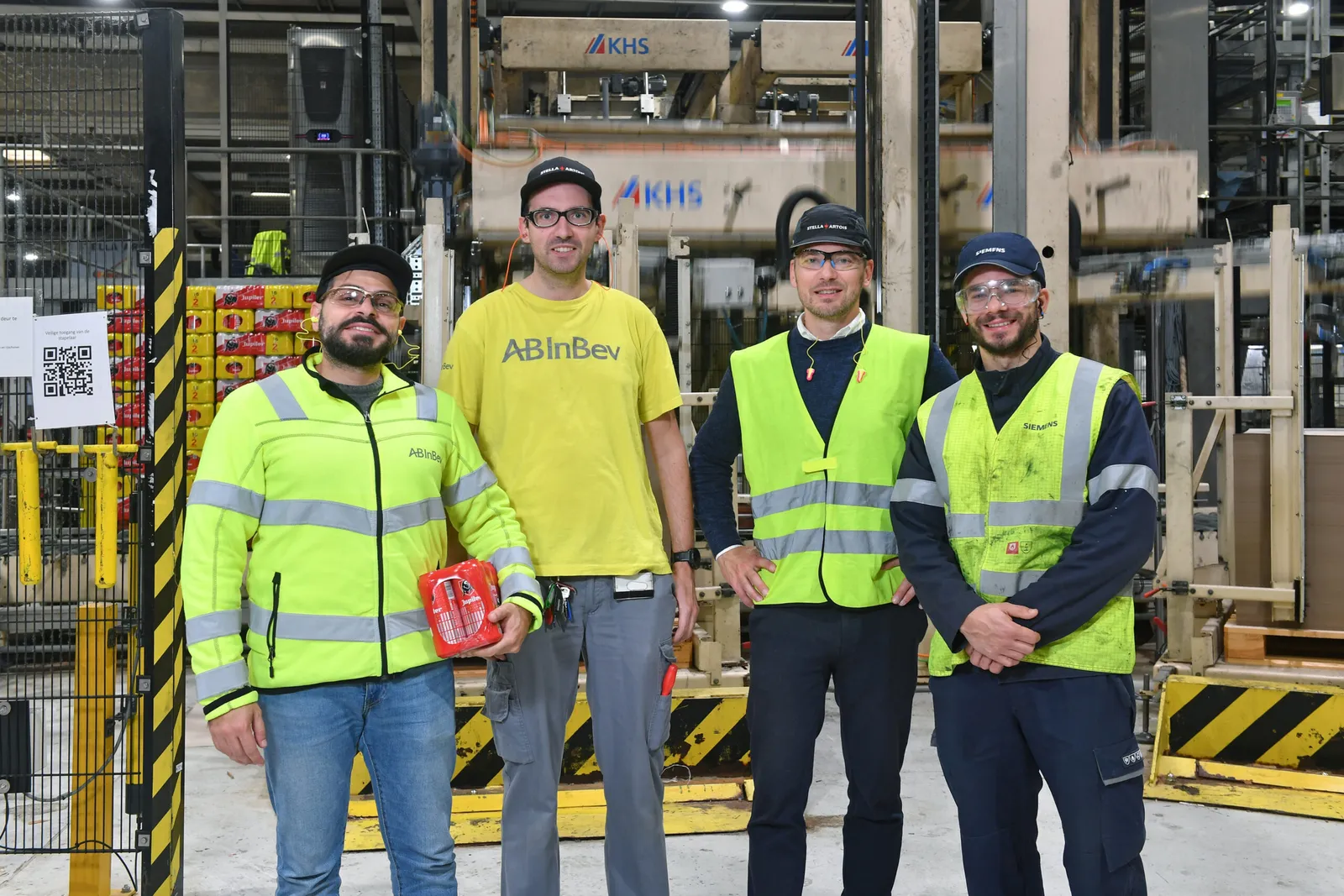
Siemens' aftersales experts meet customers' expectations of greater efficiency and reliability from their production lines with a comprehensive range of "modernisation and upgrade services", combined with digital twin simulation.
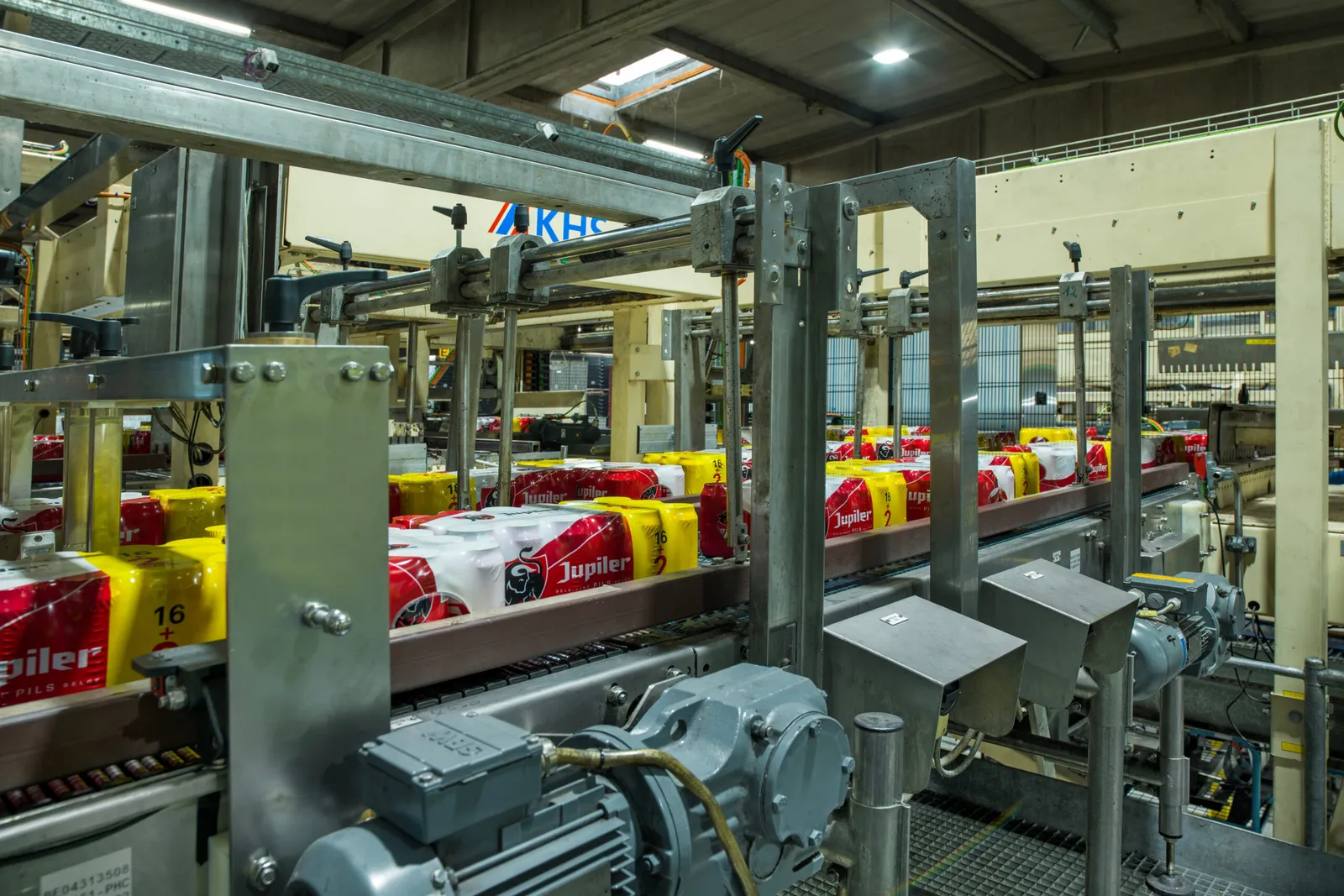
Fast, efficient modernisation: the modernisation solution consisted of installing new electrical cabinets, components, HMI panels, drives, motors and programmable logic controllers. The result is a production line running on modern, efficient and reliable technology. Thanks to shorter delivery times, production downtime was considerably reduced;
Better skills for staff: thanks to the digital twin, AB InBev now has a virtual training environment for its operators. They can thus gain hands-on experience in a risk-free setting. By upskilling the operators beforehand, the transition to the modernised system went smoothly;
Greater flexibility and adaptability: the new solution provides the flexibility needed to configure and implement customised stacking patterns. The customer thus benefits from greater adaptability and better control over its production processes;
Towards predictive maintenance: the digital twin makes it possible to test and refine production processes virtually in order to optimise performance and minimise downtime. It also lays the foundations for the future integration of predictive maintenance solutions. By comparing real-time data with the simulation's reference values, potential problems can be detected at an early stage and addressed proactively.
600 additional pallets handled
The complete modernisation of the production line took only seven days. Siemens was thus three days ahead of schedule. Thanks to this rapid implementation, AB InBev saw its downtime reduced by 30% and was able to resume production earlier than planned. "Thanks to the three days we gained, we were able to stack an additional 600 pallets, which is of course a net benefit for us," said Tom Verslype. Thanks to this modernisation, AB InBev ultimately no longer needs an entirely new line, making it a cost-effective and sustainable alternative. Modernising the existing installation, rather than replacing it completely, enabled the customer to extend the life of its previous investments while safeguarding its production for the future.
A business enquiry for Siemens? Get in touch
Companies in this story
Keep following this
Get an email when a new story is published. No account needed.
- SubjectSolutions
- CompanySiemens