Robot automatically makes fruit drinks
Texte Johan Debaere | Photos igus
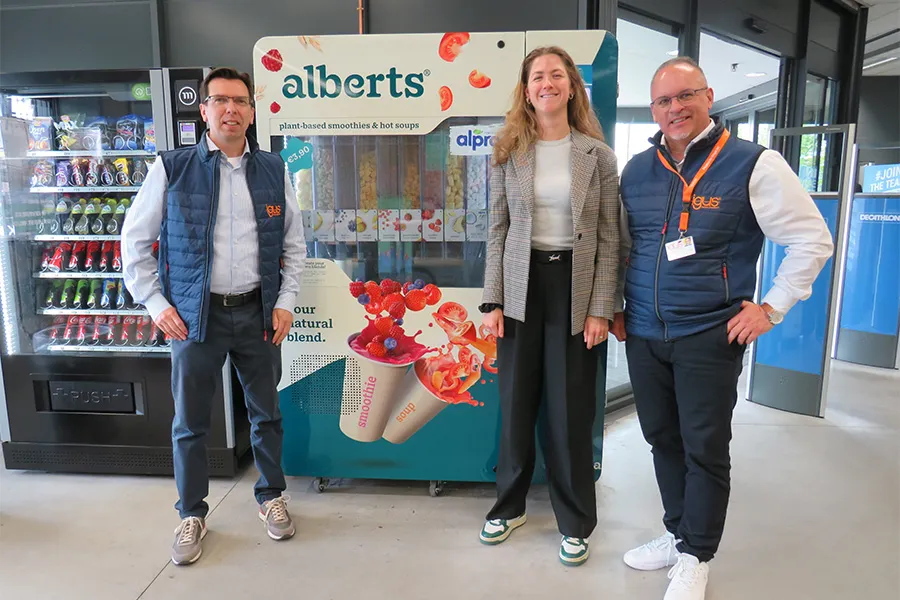
Fancy a refreshing smoothie? Head to Decathlon in Antwerp. A fresh smoothie vending machine, designed by Alberts of Wijnegem, the company specialising in the development and manufacture of food robots, has just been installed there. The robot prepares fresh drinks automatically. Hygienic, quiet and fast thanks to igus linear modules, it takes only 90 seconds to serve fruit drinks to customers.
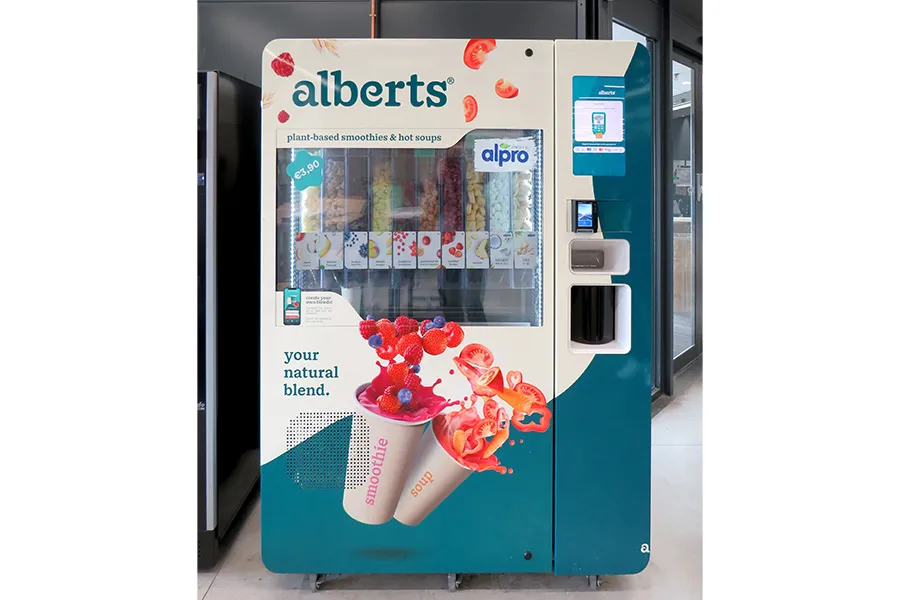
Let us go back for a moment to the first sunny days of June. Judging by the faces of the customers walking into Decathlon, it was hot. A cold drink would not have gone amiss. The sports retail chain therefore looked for a way to offer them healthier refreshments than conventional drinks. It invested in a food robot from the Belgian manufacturer Alberts that automatically prepares fresh, personalised blends. Behind the glass of the machine, ten transparent vertical containers are filled with frozen ingredients. These include passion fruit, mango and banana, but also oats from Alpro, the Belgian food brand belonging to the Danone group. Using the touchscreen or the smartphone app, customers can combine the ingredients as they wish. The system provides nutritional information and the calorie count. A few clicks later, the machine starts preparing the smoothie.
90 seconds is all it takes
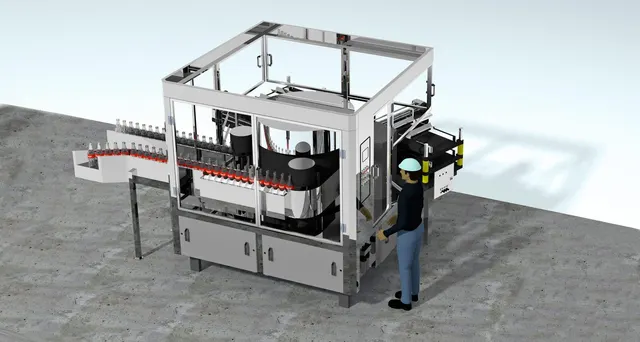
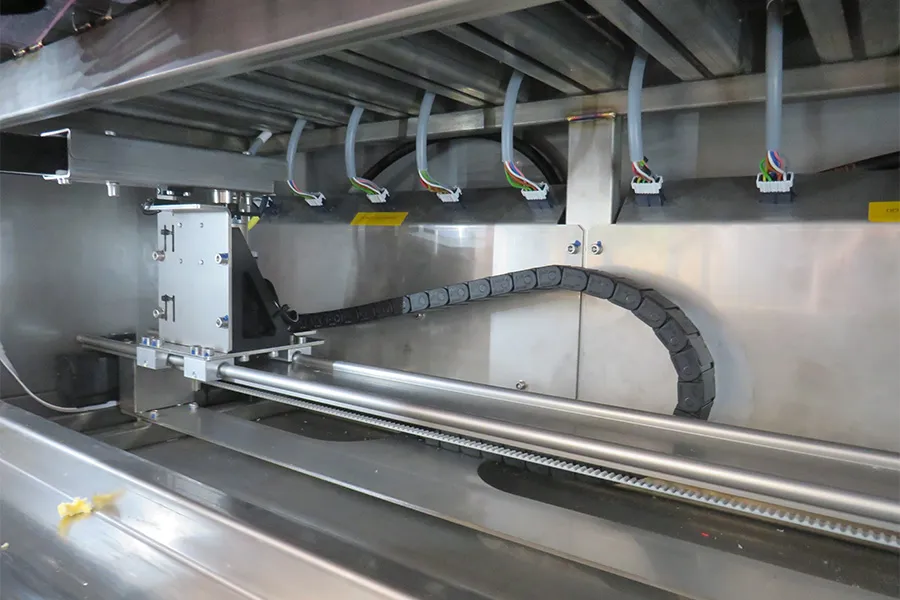
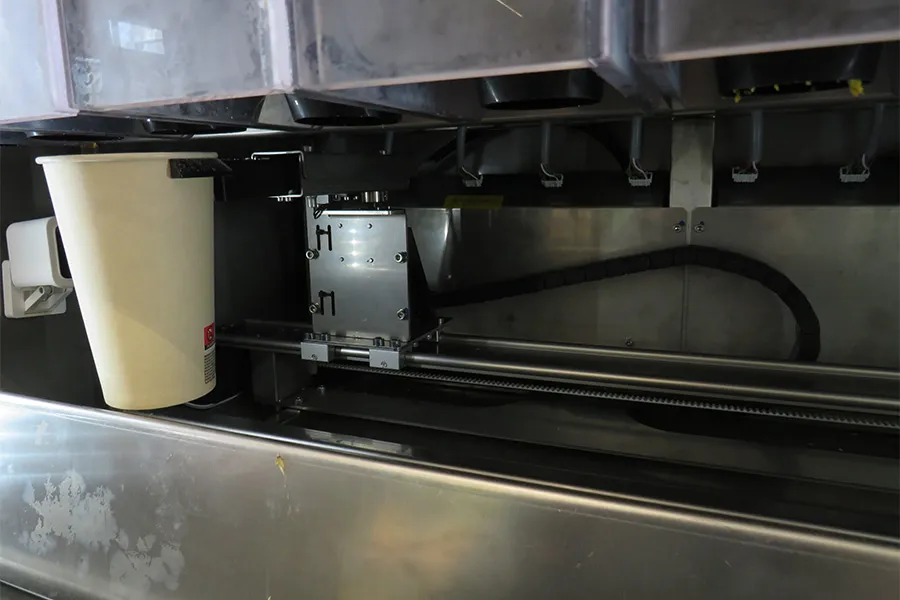
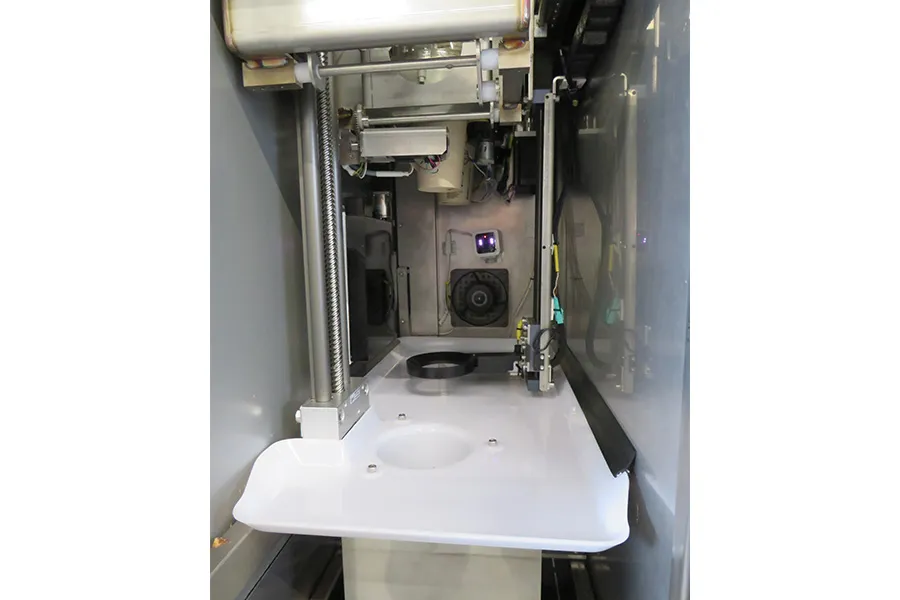
The robotic arm picks up a cardboard cup and moves it from container to container along the horizontal drylin W linear guide. At each stop, crushed frozen ingredients drop into the cup. After dosing, the arm moves to the right-hand edge of the machine, rotates 90° to the left and hands the cup to the second gripper. This travels along the vertically mounted drylin SLW-1660 linear module to the blender, which turns the frozen fruit into a smoothie at speeds of up to 25,000 rpm while hot water is added. The smoothie is then cooled to -5°C. After a minute and a half, the customer can take the smoothie from the machine. This type of preparation is quick, simple and additive-free, and is becoming increasingly popular. Alberts robots can be found in offices, universities, colleges, hospitals and other busy places, such as Antwerp Central Station. By swapping the ingredients, the machine can also prepare soup. "A combination that exists nowhere else in the world," says Cilia Van Vaerenbergh, innovation project manager at Alberts.
The long development path to the first smoothie
In a sports and leisure store, an office or a hospital, the smoothie machine has to work flawlessly and cause owners as little trouble as possible. The machine's components are subject to demanding requirements. This applies in particular to the linear modules on which the robotic arm and the blender travel. "We were looking for compact, quiet, low-maintenance guides that were temperature-resistant, hygienic and easy to clean," explains Cilia Van Vaerenbergh. The solution was found at igus in Germany. The robotic arm moves horizontally on a WS-10-80 linear rail from the drylin-W series, made of corrosion-resistant anodised aluminium. It features a flat design and a torsion-resistant double-axis geometry. The arm is mounted on a drylin W linear carriage driven by a toothed belt. A CF99 chainflex® control cable with a small bending radius follows the movement inside a high-quality plastic tube.
In its test laboratory, the German specialist demonstrated that this solution was durable and perfectly suited to such a demanding installation. During the test, a carriage travelled back and forth along a 1,000 mm linear rail, under a load of 250 N, for 24 hours. That corresponds to a distance of 2,500 km, the equivalent of the journey from Munich to Cairo.
Highly hygienic, lubrication-free linear guides
Another advantage is that, unlike metal ball bearings, this system requires no external lubrication. Microscopic solid lubricants grease the plastic plain bearings on which the carriage runs along the rail. They are released over time and ensure hygienic, low-friction, dry operation. "In rolling systems, impurities can mix with the lubricant, which impairs the smooth running of the installation and increases the risk of contamination," explains Michael Hornung, product manager for drylin linear guides and drive technology at igus. "With drylin linear modules and linear axes, there is no such danger. What is more, the system can be cleaned in a few simple steps because dirt is pushed out of the rail. Finally, the plastic bearings are easy to replace." Cilia Van Vaerenbergh adds: "We stated from the outset that we wanted to minimise maintenance for the owners of our systems. We built in automatic cleaning cycles, which limits maintenance to 10 minutes a day, including cleaning and refilling."
Long service life and limited vibration
To position the cup in the second part of the machine, the engineers chose the ZLW-1040 toothed-belt linear module. For the vertical adjustment of the blender, no toothed belt is used but an SLW-1660 lead screw linear module from the dryspin series. When developing the drive, igus's R&D department abandoned the conventional trapezoidal thread, a classic in mechanical engineering, without introducing other elements in its place. In traditional systems, the flanks of the spindle and the nut form an isosceles trapezium. They are symmetrical, virtually identical in shape and size. That symmetry has now been broken, as igus has enlarged the threaded flanks of the plastic nut, as well as the thread width of the spindle, by a factor of 1.3. A small adjustment with major consequences. Because the components are larger, more plastic is used and the material is optimised for friction and wear. Service life is around 30% longer than that of trapezoidal-thread installations. Flattening the flank angles of the spindle and nut achieves an unprecedented efficiency of 82%. "Finally, the rounded tooth flanks produce a vibration-free system. This reduces the risk of screws and other components working loose," says Michael Hornung. "The system is practically silent. Anyone working near the machine has no need to worry about noise."
A productive collaboration between specialists in their field
Alberts is delighted with the igus components and with the collaboration between its designers and the specialists at the family-owned company from Cologne. "The ambient temperature was a major challenge in this project. Inside the machine, it is -20°C. When the doors are open, condensation can form on the linear guides, which then freezes when the doors close and hinders the movement of the carriage," explains Cilia Van Vaerenbergh. "igus advised us to use a preloaded drylin W linear module. The springs ensure that the plain bearings of the carriage always adapt to the diameter of the rail." "For this kind of problem, the experts get together and devise a hygienic, low-maintenance and functional solution together, a productive collaboration between specialists in their field," conclude the managers of the two companies. ■
A business enquiry for igus? Get in touch
Companies in this story

Keep following this
Get an email when a new story is published. No account needed.
- ThemeAutomating and connecting production
- SubjectSolutions
- Companyigus