












4 trends shaping the future of food safety
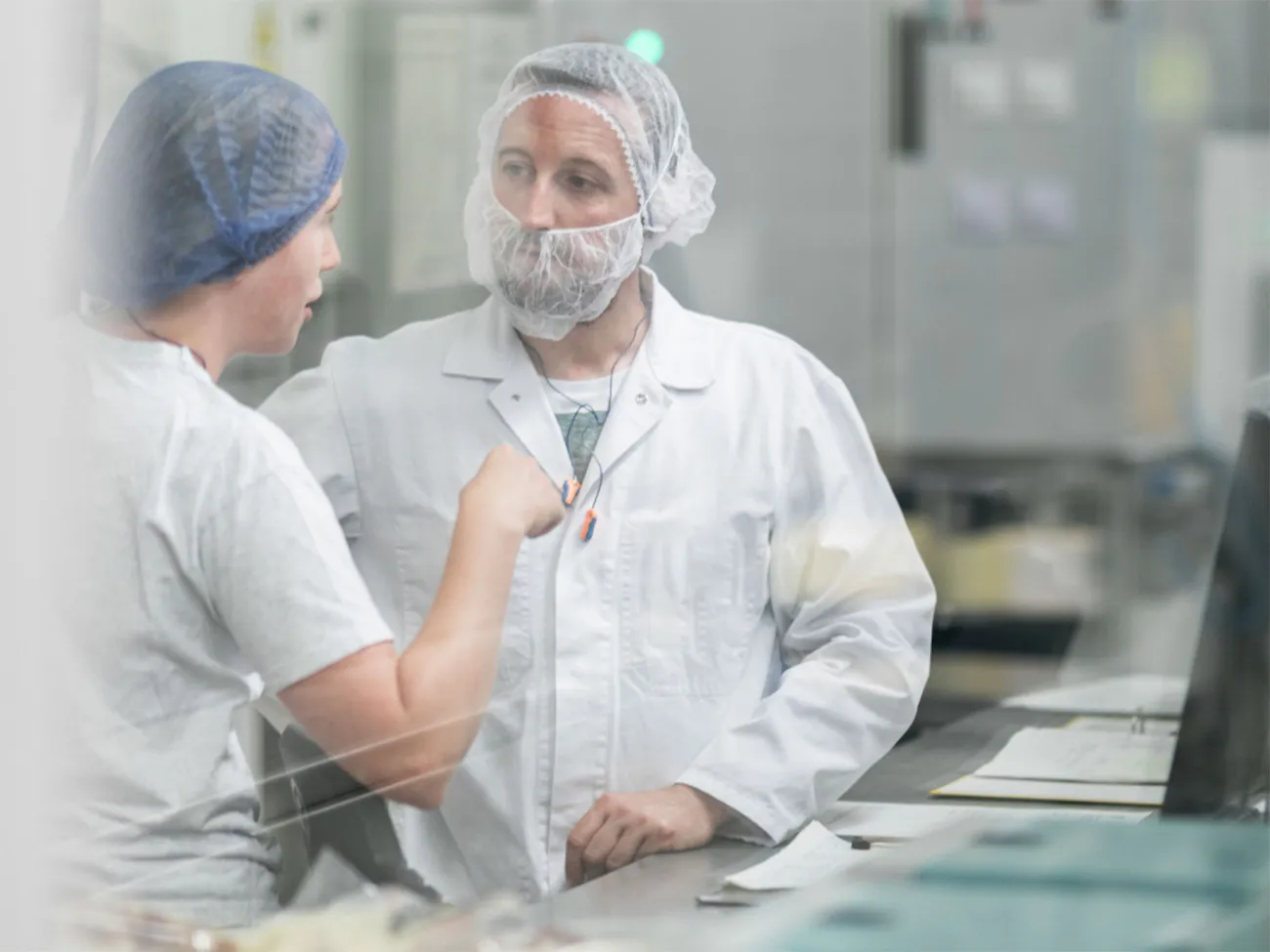
Our food safety system enjoys a strong reputation at home and abroad, and we want to maintain it in the future. Food businesses are gearing up for the challenges ahead. How will we deal with new foods and advanced technologies that bring greater transparency across the supply chain? These 4 trends could each be a game-changer for the food safety system of tomorrow.
Building a stronger food safety culture
Belgium’s self-checking system, introduced after the dioxin crisis in 1999, has made our food businesses highly reliable trading partners when it comes to producing safe food. They can now take another step forward to remain best in class in food safety. “I still see a lot of potential for developing a food safety culture in food businesses,” says Kristien Neyts, quality coach at Quality Coaching.
“Quality and food safety are not just the responsibility of the quality department. Everyone in the business, from operators to marketers, directors and the CEO, must make food safety a priority and communicate proactively about it. We need to break down the silos between departments and ensure that communication and awareness of food safety flow throughout the entire organisation. Management engagement is key.”
To help businesses do this, academics and the food sector are joining forces through the Q-DNA innovation project
New foods, new challenges
Cultivated meat, yellow mealworms and algae are just a few examples of new foods or ingredients that will feature more often on our plates in the future. But developing these new foods poses challenges for the current food safety system. Businesses looking to bring a new food product to market must demonstrate that it is safe for human consumption. This is why the European novel food legislation was introduced, says Lore Knaepen, programme manager for New and Shifting Resources at Flanders’ FOOD.
“Submitting an application is often a lengthy and costly process, which can cost up to half a million euros or more. Once a product has been approved as a novel food, and the application contains data covered by exclusive property rights, authorisation is exclusive to the applicant for 5 years. Fortunately, a few years ago the application procedure was simplified and centralised to some extent,” Lore adds.
The protein transition is one of the drivers behind food businesses’ efforts to innovate with new types of protein sources. According to Wim Geeraerts, Food Policy Advisor at Fevia, insects also offer increasing potential as alternative proteins. Following the yellow mealworm and the migratory locust, the house cricket was also approved as a novel food in March.
“Insects are rich in essential amino acids, minerals, vitamins and fibre. They offer the food industry a wide range of possibilities and applications. In practice, insects can be used as a protein source in a variety of products, such as biscuits, pasta and sauces. EFSA is also currently assessing several other insect products. After all, variety is the spice of life!”
Blockchain technology offers greater transparency
You may know blockchain from the digital currency Bitcoin, but did you know the technology also has potential in our sector? Blockchain uses a decentralised, chronological ‘ledger’ to record all transactions. This makes it possible to certify an entire supply chain, from raw material to finished product, without involving third parties. Blockchain technology can therefore help combat food fraud, predict food incidents and boost consumer confidence.
This means greater transparency throughout the production chain: you can trace a product’s journey and see who was responsible at each link in the chain. “Businesses have an ever-growing volume of data to process. They can use artificial intelligence (AI) to analyse this data and identify connections that humans are unable to detect,” says Régis Coli, manager at the Walloon innovation cluster Wagralim.
To facilitate data sharing across the agri-food chain, ILVO, the Institute for Agricultural, Fisheries and Food Research, has a data-sharing platform, DjustConnect. “Through DjustConnect, businesses in the agri-food sector can discover and harness the many opportunities of the data economy without losing control of their data,” says Stephanie van Weyenberg of ILVO.
Read more about blockchain in our sector
Stamp out pathogens faster with WGS
Whole genome sequencing (WGS) is a technique that maps the complete DNA of an organism. “The technique is not yet a legal requirement, but it can provide the food industry with a wealth of information,” says quality coach Kristien Neyts.
“For example, by adding the results of WGS analyses of bacteria to a database, you can detect an outbreak sooner and establish a link between contaminated food, a human infection and the source of the contamination in the food chain. Detecting and analysing the problem is the first step towards taking targeted action and preventing escalation. The technique also makes it possible to respond appropriately during environmental monitoring: is routine cleaning and disinfection enough, or are we dealing with a pathogen that has become established and requires a different approach?”
WGS is a powerful tool that will undoubtedly become the preferred method for bacterial food safety testing in the future. However, it is important to exercise great caution when drawing conclusions from such a large database, especially when determining responsibility in the event of an outbreak.
“I find that food businesses are reluctant to use this technology and share data. But it brings us benefits: more targeted risk analysis, early detection of a problem and the prevention of outbreaks. It all starts with the right mindset and transparent communication from both food business operators and the authorities.”
Question about this story? Ask your question
Keep following this
Get an email when a new story is published. No account needed.
- ThemeFood safety from design to audit
- SubjectFood safety







