












GS1 Digital Link and smart packaging: the future of traceability in food production
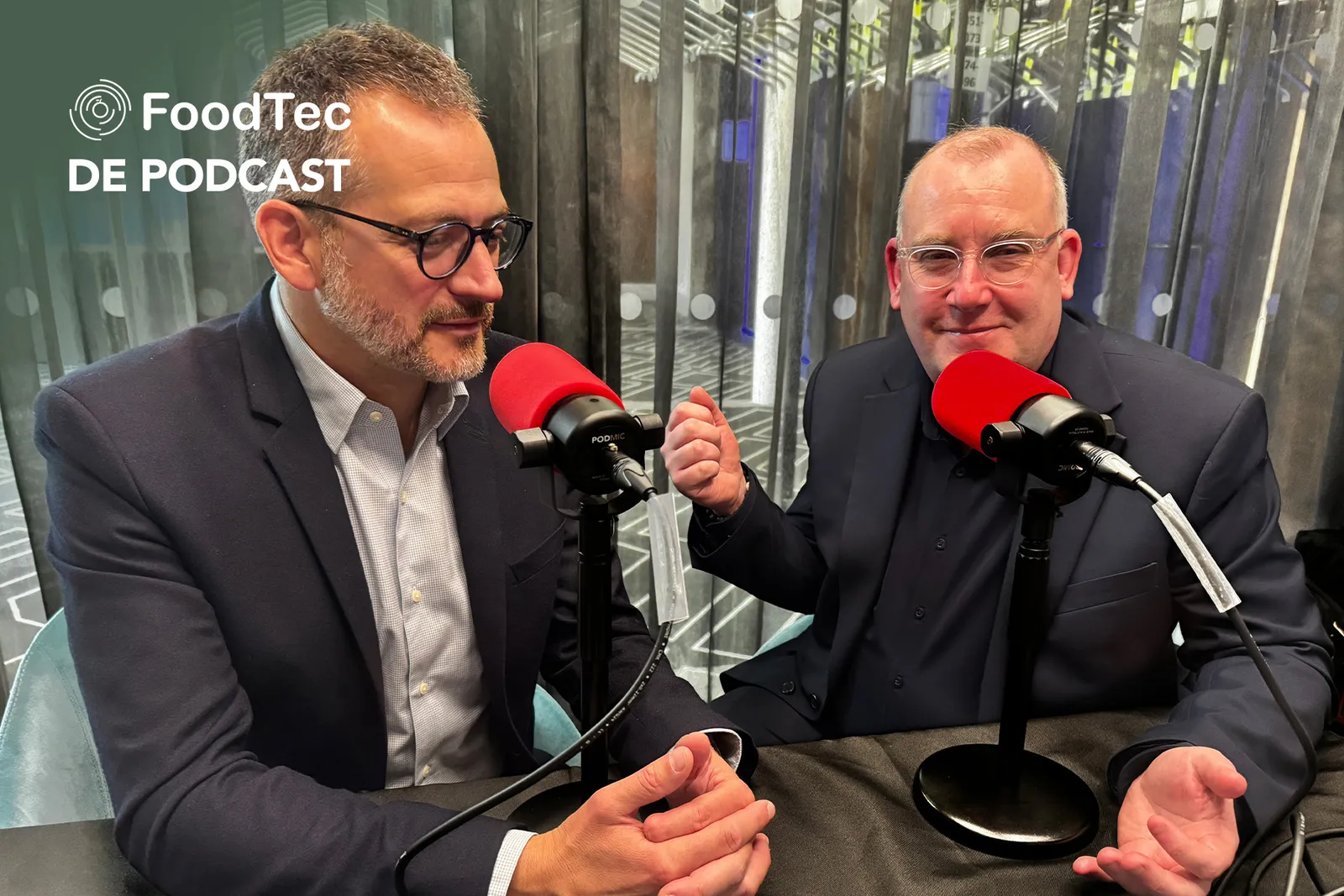
How can one 2D code change food production? In this episode of the Foodtec Podcast, host Jerry Helmers talks to Rémy Fontanet, Solutions Business Development Manager, and Stephen Tagg, Software Solutions Manager at Markem-Imaje. They discuss how GS1 Digital Link, smart packaging and connected data are transforming the food industry. From end-to-end traceability and food safety to digital transformation, automation, product recalls and consumer engagement, find out how intelligent packaging and reliable data help manufacturers create more efficient, compliant and future-ready production and supply chain operations.
A business enquiry for Markem-Imaje NV? Get in touch
Full transcript
Alle hoofdstukken (66)
- Welcome to the Foodtec Podcast
- What can listeners expect?
- Opening statements
- Who is Rémy Fontanet?
- Who is Stephen Tagg?
- A different way of looking at packaging
- Why is everyone talking about 2D codes?
- What is GS1 Digital Link?
- More than just printing a code
- Why manufacturers need to prepare now
- What changes on the production line?
- Traceability in practice
- Engaging consumers
- Data quality becomes crucial
- Is the technology already available?
- Getting ready for the transition
- The role of regulation
- The Digital Product Passport
- Managing production data
- Cutting waste
- What about SMEs?
- Why standards matter
- Cybersecurity
- Artificial Intelligence
- Looking to the future
- What role does Markem-Imaje play?
- The importance of software
- Quality assurance
- Managing recalls more efficiently
- The food industry is evolving rapidly
- Advice for manufacturers
- Final thoughts
- Closing
- Welcome to the Foodtec Podcast
- What can listeners expect?
- The opening statements
- Who is Rémy Fontanet?
- Who is Stephen Tagg?
- Looking at packaging differently
- Why is everyone talking about 2D codes?
- What is GS1 Digital Link?
- More than just printing a code
- Why producers need to start now
- What changes on the production line?
- Traceability in practice
- Consumer interaction
- Data quality becomes essential
- Is the technology available today?
- Preparing for the transition
- The role of legislation and regulation
- The Digital Product Passport
- Managing production data
- Reducing waste
- What about SMEs?
- The importance of standards
- Cybersecurity
- Artificial Intelligence
- Looking ahead
- What role does Markem-Imaje play?
- The importance of software
- Quality assurance
- Managing recalls more efficiently
- The food industry is changing at breakneck speed
- Advice for producers
- Final message
- Closing
Welcome to the Foodtec Podcast
Jerry Helmers Welcome to the Foodtec Podcast, for professionals keen to understand the direction of food production, technology, packaging and data. I’m Jerry Helmers, and I’ll be your host today.
Today’s focus is something small on the surface but potentially significant in its impact: the code on a product’s packaging. Barcodes have been quietly doing their job for decades, helping products pass through factories, warehouses, retail systems and checkouts.
That familiar code is now changing. It is becoming smarter, more informative and better connected. With GS1 Digital Link, a straightforward 2D code can open the door to traceability, compliance, product information, consumer engagement and operational efficiency. Put simply, packaging is no longer just packaging; it can serve as a digital platform.
To find out what this means in practical terms for food and beverage production, I’m joined by two Markem-Imaje experts, Rémy Fontanet and Stephen Tagg. We’ll discuss connected packaging, automation, data, production lines, quality control and the practical steps businesses can take now. Gentlemen, welcome to the Foodtec Podcast.
Stephen Tagg Thank you very much.
Jerry Helmers It’s great to have you here. We’re recording this podcast in Amsterdam, and I’m delighted you’ve travelled here. Steven, you live in the Netherlands, while Rémy has made the trip from Valence in southern France.
Rémy Fontanet That’s right.
Jerry Helmers Rémy, are you enjoying Amsterdam?
Rémy Fontanet So far, so good. I’m looking forward to the weekend.
Jerry Helmers Whatever happens during this podcast?
What can listeners expect?
Jerry Helmers Before we introduce you in more detail, I have two straightforward questions. What can we promise our listeners? Who’d like to go first?
Rémy Fontanet I’ll go first. This podcast is definitely for anyone working in a manufacturing plant. Manufacturers will take away plenty of insights, and brand owners will also get a picture of what the next generation of packaging could look like. Anyone interested in traceability and retail will also learn a lot about what’s ahead for product identification, traceability and packaging digitalisation.
Jerry Helmers So, quality managers, brand managers, marketing managers…
Rémy Fontanet That’s right. This change to 2D barcodes, or what we call the 2D journey, touches many different roles in a business: quality managers, marketing teams, packaging engineers, engineering teams and plenty of others. There are many people who should tune in.
Jerry Helmers Steven, anything you’d like to add, or has Rémy already covered it perfectly?
Stephen Tagg I’d add a point from the software and technology side. People interested in developments in manufacturing, and in using digital transformation to improve operations, will find this useful too. There’s a great deal of new technology out there, and we can talk about what we’ve learned from putting it into practice.
Jerry Helmers We’ve set aside around forty minutes. Is that enough time?
Stephen Tagg We’ll see.
Jerry Helmers We’ll see.
Read the full transcriptCollapse transcriptnog 64 hoofdstukken
Opening statements
Jerry Helmers I like to open my podcasts with a few statements. You can answer only “agree” or “disagree”. The interesting thing is that you both work for the same company. If you don’t see eye to eye, the conversation will get more interesting straight away.
Stephen Tagg We’ll do our best.
Jerry Helmers First statement, Steven. For most food producers, the traditional barcode still works perfectly well. Agree or disagree?
Stephen Tagg I agree, in the situation we have today. It still does the job. But if you’re asking whether it provides everything businesses will need in the future, my answer is no.
Jerry Helmers So, in a way, you both agree and disagree.
Stephen Tagg We’ve used it for fifty years. New coding technologies now offer so many opportunities that businesses should make the most of them.
Jerry Helmers Rémy?
Rémy Fontanet I disagree.
Jerry Helmers Good. We’ll come back to that later.
Jerry Helmers Second statement: consumers don’t really care if a product carries a traditional barcode or a 2D code.
Rémy Fontanet I’m inclined to agree, but I also disagree.
Jerry Helmers Steven?
Stephen Tagg I agree.
Jerry Helmers Third statement: GS1 Digital Link is simply another printing project.
Rémy Fontanet I disagree.
Jerry Helmers That’s what I thought you’d say.
Jerry Helmers Next statement: digital transformation in packaging is primarily an IT project.
Stephen Tagg Disagree.
Rémy Fontanet I disagree too.
Jerry Helmers Final statement: ultimately, GS1 Digital Link isn’t about the code, it’s about trust. On the count of three. One, two, three.
Rémy Fontanet Agree.
Stephen Tagg Disagree. I think it’s more about the data.
Jerry Helmers Excellent. We’ve already uncovered a few topics worth discussing.
Who is Rémy Fontanet?
Jerry Helmers Rémy, could you tell us a little about yourself? Who are you, and what’s your role at Markem-Imaje?
Rémy Fontanet I’m Rémy Fontanet, I’m French and I work at Markem-Imaje as a Solutions Business Development Manager. My job is to help customers transition to 2D barcodes. It brings together marketing, technical expertise, sales support and training for our sales organisation. My work is all about connected products and 2D barcodes. That’s my particular area of expertise.
Jerry Helmers What led you to this role? What did you do before?
Rémy Fontanet I trained as an engineer and later completed a postgraduate business degree. My career actually began in the energy industry, where I worked on nuclear power plant projects.
Jerry Helmers Quite a change of direction.
Rémy Fontanet It certainly was. I joined Markem-Imaje eight years ago. These days, I can genuinely say it’s a passion job, because our work has an impact on everyday life. My wife probably gets the worst of it: whenever we go shopping, I spend the whole time looking at product packaging.
Jerry Helmers Rather than paying attention to what she’s buying?
Rémy Fontanet Exactly. Although it’s mainly food products that catch my eye.
Who is Stephen Tagg?
Jerry Helmers Steven, tell us a little about yourself.
Stephen Tagg I’m a control systems engineer by training. I worked at Rockwell Automation, commissioning large manufacturing sites, including automotive plants and Coca-Cola factories. After that, I moved into software solution sales and worked for businesses including Rockwell Automation, Siemens, Wonderware and AVEVA. I’ve lived in five countries, travelled to around sixty and spent the past twenty-five years in international software sales.
Markem-Imaje eventually headhunted me when I was living in Dubai. I wanted to move back to Europe and return to manufacturing too, as that’s where my real passion is. I’ve been with the company for about nine years now.
Jerry Helmers What is it about manufacturing that appeals to you?
Stephen Tagg I love manufacturing and software, and above all I enjoy meeting customers. Visiting factories, speaking to people and helping them improve their operations is the best part of my job. Whether I’m in Angola, Pakistan or India, people are fundamentally alike everywhere. It’s fascinating to see how they work and how their factories run.
Jerry Helmers When you’re in a factory, are you always on the lookout for ways to improve things?
Stephen Tagg Absolutely. Even though I work in solution sales, I always start from the customer’s operational needs. I’m not interested in selling software just for the sake of it. Customers aren’t looking for technology; they want to improve their business. They want solutions.
A different way of looking at packaging
Jerry Helmers Let’s get practical. When a food producer looks at a pack today, they see a barcode, a date code, a batch number or perhaps a QR code. What do you see when you look at that same pack?
Rémy Fontanet The first details I usually notice are the batch number and the expiry or best-before date, since that’s exactly the information our solutions provide. But these days I take a much wider view too. Is there already a QR code on the pack? Does it offer any consumer engagement? Are there promotions linked to the packaging? I automatically start thinking about how the brand intends to connect with consumers.
Jerry Helmers So you’re already thinking about what else the packaging could do.
Rémy Fontanet Exactly. Particularly now, as we move towards 2D barcodes. It’s about more than the production line. Packaging artwork, branding and production are becoming connected.
Jerry Helmers Steven, what do you see?
Stephen Tagg I see the finished product as the culmination of everything the manufacturer has put into it: its people, production process, marketing and money. My mind immediately works backwards. How was it made? How did the data get to the production line? How was quality checked? Did the product get the right code? I know from experience that coding mistakes, missing codes and incorrect labels are still far too common. So I always start by asking how we can help manufacturers get more products on the shelf, with fewer errors and less waste.
Why is everyone talking about 2D codes?
Jerry Helmers Let’s begin with the basics. It seems everyone is talking about 2D codes. Why now? What’s different?
Rémy Fontanet The main difference is that a traditional barcode identifies a product and little more. It contains a product number, but that’s about all. A 2D code can hold much more. It can include the GTIN, a serial number, batch number, expiry date and many other data elements. More importantly, GS1 Digital Link connects the code to online information. It acts as a link between the physical product and the digital world.
Jerry Helmers So it’s about more than identification now.
Rémy Fontanet Exactly. It’s about connectivity. Consumers, retailers, manufacturers and regulators can all use the same code to access different information.
Jerry Helmers Steven, from a software point of view, would you call this a revolution?
Stephen Tagg I would. The technology itself isn’t revolutionary, since QR codes have been around for a long time. What’s revolutionary is that we now have a globally agreed standard. That matters enormously: everyone is speaking the same language. Once manufacturers put the standard in place correctly, they create a digital thread running through the entire supply chain.
What is GS1 Digital Link?
Jerry Helmers Let’s describe GS1 Digital Link in plain English. Say I run a medium-sized food business. What is it, exactly?
Rémy Fontanet Imagine a product carrying a single QR code. A consumer who scans it might see nutritional details, recipes or sustainability information. A retailer scanning that very same code would get logistics data, while an inspector would see compliance information. The code itself never changes, but the information shown depends on who scans it and why.
Jerry Helmers So the intelligence isn’t contained in the code itself.
Rémy Fontanet That’s right. The code links to information managed digitally. That’s the reason for the name Digital Link.
Jerry Helmers That’s a very different proposition from today’s barcode.
Rémy Fontanet It’s completely different.
More than just printing a code
Jerry Helmers Many people probably assume this is simply a matter of printing a different kind of code.
Stephen Tagg That’s one of the biggest misunderstandings. Printing the code is actually the straightforward bit. The real challenge is getting the correct data to the printer at precisely the right time. That means integrating with business systems such as ERP, MES and quality systems. Incorrect data means an incorrect code.
Jerry Helmers So it’s a manufacturing project, not a printing project.
Stephen Tagg Exactly. We always stress that it isn’t an IT project either. Production, quality, operations, packaging, marketing and IT all need to work together.
Why manufacturers need to prepare now
Jerry Helmers Some manufacturers might think this is still a future concern. Why should they start now?
Rémy Fontanet Because transformations of this kind take time. You can’t change every production line overnight. First, companies need to understand their data, processes and infrastructure. They can then run pilot projects before rolling things out more widely.
Jerry Helmers There’s no need to panic, then.
Rémy Fontanet Absolutely not. But leaving it until the last minute isn’t a good strategy either.
Stephen Tagg I’d also say companies shouldn’t see this solely as a compliance issue. Regulation is one driver, but there are business opportunities too. Improved traceability, fewer recalls, better visibility of production and stronger consumer engagement all deliver value.
What changes on the production line?
Jerry Helmers Let’s focus on the production line. What actually changes there?
Stephen Tagg Data management is the biggest change. Many production lines still depend on operators entering data manually. Someone types in a batch number or selects the wrong product. Human error happens every day. With connected systems, the information comes directly from the business systems, so operators no longer have to enter it by hand.
Jerry Helmers Which immediately reduces the chance of errors.
Stephen Tagg Exactly. The likelihood of incorrect codes, expiry dates or batch numbers drops considerably.
Rémy Fontanet And giving each product its own unique identity also brings a huge improvement in traceability.
Traceability in practice
Jerry Helmers Everyone talks about traceability. What does it actually mean in practice?
Rémy Fontanet Suppose a quality issue affects a particular production batch. Many manufacturers still have to recall far more product than that because they don’t know exactly where each individual item has gone. Better identification and serialisation can make recalls much more precise. That saves money and protects consumers.
Jerry Helmers So fewer products are destroyed unnecessarily.
Rémy Fontanet Exactly. Better traceability leads to smarter recalls.
Engaging consumers
Jerry Helmers Consumers can scan these codes too. What will they see?
Rémy Fontanet That’s entirely up to the brand owner. Some companies might share recipes, allergen details or nutritional values. Others could offer promotions, sustainability information or loyalty schemes. The key point is that manufacturers are no longer constrained by the space available on the pack.
Jerry Helmers Because the pack suddenly becomes digital.
Rémy Fontanet Exactly.
Data quality becomes crucial
Jerry Helmers Does this mean companies need to get much better at managing their data?
Stephen Tagg Without a doubt. Poor data quality becomes apparent straight away. If incorrect information goes into the system, it will eventually appear on the product. That makes data governance increasingly important. Companies need reliable master data and clear processes to keep it accurate.
Jerry Helmers So digital transformation really begins well before the production line.
Stephen Tagg Absolutely. It begins with the data.
Is the technology already available?
Jerry Helmers Some listeners may be wondering whether this technology already exists, or whether we’re talking about future developments.
Stephen Tagg The technology is already available. The printers, software and standards are all here. Companies are now gradually bringing those separate building blocks together.
Rémy Fontanet That’s why we describe it as a journey. It isn’t one huge project with a single finish line. It’s a gradual transformation, which companies can tackle step by step while keeping normal production running.
Getting ready for the transition
Jerry Helmers If I’m a food manufacturer listening today, what should I do first? Where do I start?
Stephen Tagg Start by understanding where you are now. Which systems do you already use? Where does your product data originate? How does that information reach the production line? Once you understand your current processes, you can identify the gaps and work out what needs to change.
Jerry Helmers So don’t rush out and buy new technology.
Stephen Tagg Exactly. Technology should address a business problem, not become an end in itself.
Rémy Fontanet I completely agree. Companies should also bring all stakeholders into the process from the outset. This isn’t just a production project. Marketing, IT, quality, packaging and operations all have a part to play.
The role of regulation
Jerry Helmers Regulation is often seen as the main force behind these developments. Is that a fair assessment?
Rémy Fontanet Regulation certainly matters. Initiatives on traceability, sustainability and product transparency are encouraging companies to prepare. But I don’t believe they should treat this purely as a compliance exercise. There are plenty of business benefits beyond meeting regulatory requirements.
Jerry Helmers Such as?
Rémy Fontanet Better consumer engagement, greater visibility across the supply chain, more efficient recalls and stronger brand protection, to name just a few.
The Digital Product Passport
Jerry Helmers We also hear a lot about the Digital Product Passport. Is it closely linked to what we’re discussing today?
Rémy Fontanet Very much so. The Digital Product Passport, often shortened to DPP, is another example of products becoming digitally connected. Depending on the product category, companies will increasingly need to provide information on origin, composition, sustainability and lifecycle. The technologies we’re discussing today make that possible.
Jerry Helmers So companies investing now are preparing for several future developments at the same time.
Rémy Fontanet Exactly.
Managing production data
Jerry Helmers Steven, what would you say is the biggest challenge inside factories?
Stephen Tagg Keeping data consistent. Many companies still store information in separate systems that don’t communicate properly. The ERP has one version, production another, and quality may have a third. When those systems aren’t synchronised, mistakes are inevitable.
Jerry Helmers So integration is critical.
Stephen Tagg Absolutely. Integration is probably one of the most important factors in achieving success.
Cutting waste
Jerry Helmers Does this also help with sustainability?
Stephen Tagg Definitely. Every product with an incorrect code creates waste. Sometimes products have to be destroyed purely because of a coding error, even though the food itself is completely safe. Better data and coding can significantly reduce that waste.
Rémy Fontanet And recalls are another factor. If you can pinpoint the products affected, you avoid destroying perfectly good items that aren’t part of the affected batch.
What about SMEs?
Jerry Helmers Large multinational companies often have substantial IT departments. What about smaller manufacturers?
Rémy Fontanet They can make the transition too. In some cases, it may even be easier because they have fewer legacy systems. What matters isn’t the size of the company, but having a clear roadmap.
Jerry Helmers So it isn’t just for global brands.
Rémy Fontanet Not at all. In time, every manufacturer will be affected.
Why standards matter
Jerry Helmers We keep referring to GS1. Why do standards matter so much?
Rémy Fontanet Standards enable every link in the supply chain to understand the same information. Manufacturers, retailers, logistics providers and regulators all use the same digital language. Without standards, everyone would create their own solution, making interoperability almost impossible.
Jerry Helmers So standards actually help drive innovation.
Rémy Fontanet Exactly. They provide the shared foundation that allows innovation to happen.
Cybersecurity
Jerry Helmers As soon as everything is connected, people start thinking about cybersecurity. Should manufacturers be concerned?
Stephen Tagg Cybersecurity must always be taken seriously. Every connected system needs proper protection. Fortunately, the manufacturing industry has become far more mature in this area. Modern architectures are designed with cybersecurity in mind from the outset.
Jerry Helmers So digitalisation doesn’t automatically bring more risk.
Stephen Tagg Not when it’s implemented properly. Good architecture and governance make all the difference.
Artificial Intelligence
Jerry Helmers These days, no podcast seems complete without a mention of AI. What part does Artificial Intelligence play in this story?
Stephen Tagg AI becomes useful once you have reliable data. If your data quality is poor, AI won’t fix the problem. But accurate, consistent production data lets AI help optimise production, predict maintenance needs, spot anomalies and support better decisions.
Jerry Helmers So AI follows digitalisation.
Stephen Tagg Exactly. Data first, AI second.
Rémy Fontanet That’s an important point. Many companies want to move straight to AI, but without sound product identification and reliable data, there’s no solid foundation.
Looking to the future
Jerry Helmers If we meet again in five years, what will have changed the most?
Rémy Fontanet I think scanning products with a 2D code will have become completely routine. Consumers won’t give it a second thought. They’ll simply expect products to offer more information.
Stephen Tagg On the manufacturing side, I expect to see much better connected factories. Data will move far more smoothly between business systems, production equipment and supply chains. Companies that start preparing now will have a significant advantage.
What role does Markem-Imaje play?
Jerry Helmers We’ve discussed standards, data and digital transformation at length. What role does Markem-Imaje play?
Rémy Fontanet Markem-Imaje has traditionally been known for industrial coding and marking solutions, and that remains an important part of our work. But our role now goes much further. We help manufacturers connect production lines to business systems, ensuring the right information reaches the right product at precisely the right time.
Jerry Helmers So you’re no longer simply supplying printers.
Rémy Fontanet Exactly. We help customers manage the entire coding process, from business data right through to the code printed on the package.
Stephen Tagg And beyond that, too. Once a product leaves the factory, its information can continue to create value throughout the supply chain.
The importance of software
Jerry Helmers Steven, you’ve spent most of your career in software. Has software become more important than the hardware itself?
Stephen Tagg They’re equally important, but software has certainly become much more strategic. The printer still has to print perfectly every time, but today an increasing share of the value comes from connecting systems. Software enables manufacturers to automate data flows, reduce manual intervention and improve quality.
Jerry Helmers So software creates consistency.
Stephen Tagg Exactly. It helps ensure that every product receives the correct information every time.
Quality assurance
Jerry Helmers Quality assurance is obviously critical in food manufacturing. How does connected coding contribute?
Stephen Tagg One of the biggest advantages is verification. You don’t just print a code; you also verify that it is correct and readable. Modern systems can automatically detect coding errors before products leave the production line.
Jerry Helmers So mistakes are caught immediately.
Stephen Tagg Exactly. That’s much better than discovering a problem after thousands of products have already been shipped.
Rémy Fontanet It also gives manufacturers confidence. They know that every product leaving the factory has been correctly identified.
Managing recalls more efficiently
Jerry Helmers Earlier you mentioned recalls. Nobody wants a recall, of course.
Rémy Fontanet Absolutely not. But if one becomes necessary, manufacturers want to know exactly which products are affected. Better identification allows companies to respond much faster and more precisely.
Jerry Helmers Which also protects consumers.
Rémy Fontanet Exactly. Consumer safety remains the top priority.
The food industry is evolving rapidly
Jerry Helmers Looking at the food industry as a whole, do you feel change is accelerating?
Stephen Tagg Definitely. Customer expectations are rising. Regulatory requirements are increasing. Sustainability requirements are increasing. Manufacturers are expected to do much more with the same resources. Digitalisation helps them achieve that.
Jerry Helmers So the pressure is coming from every direction.
Stephen Tagg Exactly.
Advice for manufacturers
Jerry Helmers If a food manufacturer listening today remembers only one thing from this podcast, what should it be?
Rémy Fontanet Don’t see this as a barcode replacement project. See it as an opportunity to improve your business. Companies that take this perspective will gain much more value than those that focus solely on compliance.
Jerry Helmers Steven?
Stephen Tagg Start preparing now. You don’t have to implement everything tomorrow, but you should start understanding your systems, your data and your roadmap. The earlier you start, the easier the transition will be.
Final thoughts
Jerry Helmers Gentlemen, before we wrap up, I’d like to give each of you the opportunity to leave our listeners with one final message.
Rémy Fontanet The transition to 2D codes is happening. It’s no longer a question of whether, but when. Manufacturers that prepare early will not only meet future requirements, but also unlock many new business opportunities.
Stephen Tagg I would add that digital transformation should always start with business value. Technology is only successful when it solves real operational challenges and makes life easier for the people working in manufacturing every day.
Closing
Jerry Helmers Rémy Fontanet, Stephen Tagg, thank you both very much for joining us today and sharing your expertise.
Rémy Fontanet Thank you.
Stephen Tagg Thank you very much.
Jerry Helmers And thanks to all of you for listening to the Foodtec Podcast. If you enjoyed this episode, don’t forget to subscribe so you don’t miss future conversations about innovation, manufacturing and technology in the food industry. My name is Jerry Helmers. Thanks for listening, and see you next time.
GS1 Digital Link and smart packaging: the future of traceability in the food industry
How can a single 2D code transform the food industry? In this episode of the Foodtec Podcast, host Jerry Helmers talks to Rémy Fontanet, Solutions Business Development Manager, and Stephen Tagg, Software Solutions Manager at Markem-Imaje. Together, they discuss how GS1 Digital Link, smart packaging and connected data are transforming the food industry. From end-to-end traceability and food safety to digital transformation, automation, product recalls and consumer information, discover how intelligent packaging and reliable data help manufacturers work more efficiently, comply with legislation and regulations, and future-proof their production and supply chain processes.
Welcome to the Foodtec Podcast
Jerry Helmers Welcome to the Foodtec Podcast, the podcast for professionals who want to understand where food production, technology, packaging and data are heading. My name is Jerry Helmers, and I’m your host for today’s podcast.
Today we’re talking about something that looks very small on the outside, but can have a huge impact: the code on a product’s packaging. For decades, barcodes have quietly done their job, helping products make their way through factories, warehouses, retail systems and checkouts.
But that familiar code is now evolving. It is becoming smarter, more informative and better connected. With GS1 Digital Link, a simple 2D code can provide access to traceability, compliance, product information, consumer engagement and operational efficiency. In other words, packaging is no longer just packaging; it can become a digital platform.
To discuss what this means in practice for food and drink manufacturing, I’m joined today by two experts from Markem-Imaje: Rémy Fontanet and Stephen Tagg. We’ll be talking about connected packaging, automation, data, production lines, quality control and the practical steps companies can take today. Gentlemen, welcome to the Foodtec Podcast.
Stephen Tagg Thank you very much.
Jerry Helmers A very warm welcome. We’re recording this podcast in Amsterdam. I’m very glad you’ve come here. Steven, you live in the Netherlands, but Rémy, you’ve travelled all the way from Valence in the south of France.
Rémy Fontanet That’s right.
Jerry Helmers Rémy, are you enjoying Amsterdam?
Rémy Fontanet So far, definitely. I’m looking forward to the weekend.
Jerry Helmers Whatever happens during this podcast?
What can listeners expect?
Jerry Helmers Before we introduce you in more detail, I’d like to ask two straightforward questions. What can we promise listeners? Who’d like to answer first?
Rémy Fontanet I’ll start. This podcast is definitely for anyone working in a manufacturing environment. Manufacturers will take away plenty of insights from this conversation, but brand owners will also get a good idea of what the next generation of packaging looks like. I also think that anyone interested in traceability and retail will learn a lot about what’s coming in product identification, traceability and the digitalisation of packaging.
Jerry Helmers So, quality managers, brand managers, marketing managers...
Rémy Fontanet Exactly. This transition to 2D barcodes, or what we call the 2D journey, affects many different roles within an organisation: quality managers, marketing teams, packaging engineers, engineering teams and many others. So there are plenty of people who should listen to this podcast.
Jerry Helmers Steven, would you like to add anything, or has Rémy already given the perfect answer?
Stephen Tagg I’d add something from a software and technology perspective. People interested in the changes taking place in manufacturing environments, and in improving their processes through digital transformation, will also get a lot out of this. There’s a huge amount of new technology available, and we can share what we’ve learnt from implementing it in practice.
Jerry Helmers We’ve set aside about forty minutes. Is that enough?
Stephen Tagg We’ll find out.
Jerry Helmers We’ll find out.
The opening statements
Jerry Helmers I always like to start my podcasts with a few statements. You can only answer ‘agree’ or ‘disagree’. The interesting thing is that you both work for the same company. If you disagree with each other, this conversation will get a lot more interesting straight away.
Stephen Tagg We’ll do our best.
Jerry Helmers First statement, Steven. For most food manufacturers, the traditional barcode still works perfectly well. Agree or disagree?
Stephen Tagg I agree for the current situation. It still does what it needs to do. But if you ask whether it will also provide everything companies need in the future, my answer is no.
Jerry Helmers So you’re really saying both agree and disagree.
Stephen Tagg We’ve been using the barcode for fifty years now. There are so many possibilities with new coding technologies today that companies should really be making use of them.
Jerry Helmers Rémy?
Rémy Fontanet Disagree.
Jerry Helmers Good. We’ll definitely come back to that later.
Jerry Helmers Second statement: consumers don’t really care whether a product has a traditional barcode or a 2D code.
Rémy Fontanet I partly agree, but I also partly disagree.
Jerry Helmers Steven?
Stephen Tagg Agree.
Jerry Helmers Third statement: GS1 Digital Link is just another printing project.
Rémy Fontanet Disagree.
Jerry Helmers I expected that answer.
Jerry Helmers Next statement: the digital transformation of packaging is primarily an IT project.
Stephen Tagg Disagree.
Rémy Fontanet I disagree too.
Jerry Helmers Last statement: ultimately, GS1 Digital Link is not about the code, but about trust. On three. One, two, three.
Rémy Fontanet Agree.
Stephen Tagg Disagree. For me, it’s much more about the data.
Jerry Helmers Excellent. I think we’ve already got a few interesting discussions under way.
Who is Rémy Fontanet?
Jerry Helmers Rémy, tell us a little about yourself. Who are you, and what do you do at Markem-Imaje?
Rémy Fontanet I’m Rémy Fontanet. I’m French and I work as Solutions Business Development Manager at Markem-Imaje. My role involves guiding customers through the transition to 2D barcodes. My work combines marketing, technical expertise, commercial support and training our sales organisation. It’s all about connected products and 2D barcodes. That’s really my area of expertise.
Jerry Helmers What attracted you to this role? What’s your background?
Rémy Fontanet I trained as an engineer and later completed a postgraduate qualification in business administration. I actually began my career in the energy sector, working on nuclear power plant projects.
Jerry Helmers That’s quite a change.
Rémy Fontanet Absolutely. I joined Markem-Imaje eight years ago. I can honestly say that it has become a real passion, because what we do has an impact on everyday life. My wife probably suffers the most, because whenever we go shopping, I’m constantly looking at packaging.
Jerry Helmers Instead of looking at what she’s buying?
Rémy Fontanet Exactly. Although I mainly focus on food products.
Who is Stephen Tagg?
Jerry Helmers Steven, tell us a bit about yourself too.
Stephen Tagg I originally trained as a control systems engineer. I worked for Rockwell Automation, commissioning large production facilities, including car plants and Coca-Cola factories. I then moved into sales of software solutions and worked for companies such as Rockwell Automation, Siemens, Wonderware and AVEVA. I have lived in five countries, visited around sixty, and spent the past twenty-five years working in international software sales.
I was eventually approached by Markem-Imaje while living in Dubai. I wanted to return to Europe and to manufacturing, because that is where my real passion lies. I have now been with the company for about nine years.
Jerry Helmers What is it about manufacturing that fascinates you?
Stephen Tagg I love manufacturing, software and, above all, working with customers. Visiting factories, talking to people and helping them improve their processes is the part of my job I enjoy most. Whether I am in Angola, Pakistan or India, people are fundamentally the same everywhere. It is fascinating to see how they work and how their factories operate.
Jerry Helmers When you visit a factory, are you constantly looking for ways to improve things?
Stephen Tagg Absolutely. Although I work in solution sales, I always look at a customer from an operational perspective. I am not interested in selling software for its own sake. Customers do not want technology; they want to improve their operations. They want solutions.
Looking at packaging differently
Jerry Helmers Let’s make this practical. When a food producer looks at a pack today, they see a barcode, a date code, a batch number or perhaps a QR code. What do you see when you look at exactly the same pack?
Rémy Fontanet The first things I usually notice are the batch number and the best-before date, because that is precisely the information our solutions apply. But these days I look much further. Is there already a QR code on the pack? Is there any consumer interaction? Are promotional campaigns linked to the packaging? I automatically start thinking about how a brand wants to connect with its consumers.
Jerry Helmers So you are already looking ahead to what might be possible.
Rémy Fontanet Exactly. Especially now that we are in the middle of the transition to 2D barcodes. It is no longer just about the production line. Packaging design, branding and production are becoming increasingly interconnected.
Jerry Helmers Steven, what do you see?
Stephen Tagg I see the finished product as the result of everything a producer has invested in: people, the production process, marketing and money. Then I immediately think back to the beginning. How was this product made? How did the data get onto the production line? How was quality control carried out? Was the product given the correct code? From experience, I know that coding errors, missing codes and incorrect labels still happen far too often. So my first thought is always: how can we help producers get more error-free products onto shop shelves, with less waste?
Why is everyone talking about 2D codes?
Jerry Helmers Let’s start at the beginning. Everyone seems to be talking about 2D codes these days. Why now? What is changing?
Rémy Fontanet The biggest change is that a traditional barcode only identifies the product. It contains a product number, and that is all. A 2D code can hold much more information. Think of the GTIN, a serial number, batch number, best-before date and much more. More importantly, thanks to GS1 Digital Link, the code is connected to online information. It creates a bridge between the physical product and the digital world.
Jerry Helmers So it is no longer just about identification.
Rémy Fontanet Exactly. It is about connectivity. Consumers, retailers, producers and regulators can all access different information through the same code.
Jerry Helmers Steven, is this a revolution from a software perspective?
Stephen Tagg I think so. The technology itself is not revolutionary, because QR codes have been around for a long time. The real revolution is that we now have a globally agreed standard. That is hugely important. Everyone speaks the same language. Once producers implement the standard correctly, they create a digital connection throughout the entire supply chain.
What is GS1 Digital Link?
Jerry Helmers Let’s explain GS1 Digital Link in simple terms. Suppose I run a medium-sized food business. What exactly is it?
Rémy Fontanet Imagine you have one product with one QR code. When a consumer scans it, they might see nutritional information, recipes or sustainability information. When a retailer scans exactly the same code, they get logistics information. And when an inspector scans it, they get compliance information. The code stays exactly the same, but the information shown depends on who scans it and for what purpose.
Jerry Helmers So the intelligence is not in the code itself.
Rémy Fontanet That’s right. The code points to information managed digitally. That is why it is called Digital Link.
Jerry Helmers So that is fundamentally different from today’s barcode.
Rémy Fontanet Completely different.
More than just printing a code
Jerry Helmers Many people will think it simply means printing a different type of code.
Stephen Tagg That is one of the biggest misconceptions. Printing the code is actually the easiest part. The real challenge is making sure the right data reaches the printer at the right time. That requires integration with business systems such as ERP, MES and quality systems. If the data is wrong, so is the code.
Jerry Helmers So it is more of a production project than a printing project.
Stephen Tagg Exactly. That is why we always say it is not purely an IT project. Production, quality, operations, packaging, marketing and IT all need to work together.
Why producers need to start now
Jerry Helmers Some producers may think this is still a long way off. Why should they start today?
Rémy Fontanet Because transformations of this kind always take time. No one changes all their production lines overnight. Companies first need to understand their data, processes and infrastructure. They can then start with pilot projects and scale up from there.
Jerry Helmers So there is no need to panic.
Rémy Fontanet Absolutely not. But waiting until the very last moment is not a good strategy either.
Stephen Tagg I would add that companies should not look at this purely in terms of compliance. There are, of course, regulatory drivers, but there are also many business benefits. Better traceability, fewer recalls, greater visibility into production and stronger consumer engagement all add value.
What changes on the production line?
Jerry Helmers Let’s stay on the production line. What changes in practical terms?
Stephen Tagg The biggest change is in data management. Many production lines still rely on operators entering data manually. Someone types in a batch number or selects the wrong product. Human errors happen every day. With connected systems, that information comes automatically from business systems. Operators no longer need to enter data manually.
Jerry Helmers And that immediately reduces the number of errors.
Stephen Tagg Exactly. Incorrect codes, wrong best-before dates and incorrect batch numbers become much less common.
Rémy Fontanet And once every product has a unique identity, traceability improves enormously too.
Traceability in practice
Jerry Helmers Everyone talks about traceability. But what does that mean in practical terms?
Rémy Fontanet Suppose a quality issue arises within a specific production batch. Today, many producers still have to recall much larger quantities of product because they do not know exactly where each individual product has ended up. Better identification and serialisation make it possible to target recalls much more precisely. That saves money and protects consumers.
Jerry Helmers So fewer products are destroyed unnecessarily.
Rémy Fontanet Exactly. Better traceability means smarter recalls.
Consumer interaction
Jerry Helmers Consumers can scan these codes too. What exactly will they see?
Rémy Fontanet That is entirely up to the brand owner. Some companies show recipes, allergen information or nutritional values. Others opt for promotional campaigns, sustainability information or loyalty programmes. Most importantly, producers are no longer limited by the space available on the packaging.
Jerry Helmers Because the packaging suddenly becomes digital.
Rémy Fontanet Exactly.
Data quality becomes essential
Jerry Helmers Does this also mean that companies need to manage their data much better?
Stephen Tagg Without a doubt. Poor data quality becomes visible immediately. If incorrect information enters the system, it eventually ends up on the product too. That is why data governance is becoming increasingly important. Companies need reliable master data and clear processes to keep that information accurate.
Jerry Helmers So digital transformation starts long before the production line.
Stephen Tagg Absolutely. It all starts with the data.
Is the technology available today?
Jerry Helmers Some listeners may be wondering whether all this technology is available today, or whether we are talking about future developments.
Stephen Tagg The technology is already here. The printers exist. The software exists. The standards exist. What is happening now is that companies are gradually connecting all these building blocks.
Rémy Fontanet That is why we talk about a journey. It is not one big project with a single end point. It is a gradual transformation that allows companies to evolve step by step while keeping production running.
Preparing for the transition
Jerry Helmers Suppose I am a food producer listening to this podcast today. What should I do first? Where do I start?
Stephen Tagg The first step is to understand your current situation. What systems do you already have? Where does your product data come from? How is that data sent to the production line? Once you understand your existing processes, you can identify the gaps and determine what needs to change.
Jerry Helmers So not rushing out to buy new technology straight away.
Stephen Tagg Exactly. Technology should solve a business problem. It should never become an end in itself.
Rémy Fontanet I completely agree. Companies should also involve all the relevant stakeholders from the outset. This is not just a production project. Marketing, IT, quality, packaging and operations all have a part to play.
The role of legislation and regulation
Jerry Helmers Legislation and regulation are often seen as the main drivers behind these developments. Is that right?
Rémy Fontanet Legislation and regulation certainly play an important role. There are initiatives around traceability, sustainability and product transparency that encourage companies to prepare. But I don’t think companies should approach this purely as a compliance exercise. There are many business benefits that go beyond simply meeting regulatory requirements.
Jerry Helmers Such as?
Rémy Fontanet Better consumer engagement, greater supply chain visibility, more efficient recalls and better brand protection, to name just a few.
The Digital Product Passport
Jerry Helmers We’re also hearing more and more about the Digital Product Passport. Is it closely linked to everything we’ve been discussing today?
Rémy Fontanet Absolutely. The Digital Product Passport, often shortened to DPP, is another example of how products are becoming digitally connected. Depending on the product category, companies will increasingly have to provide information about a product’s origin, composition, sustainability and entire lifecycle. The technologies we’re discussing today make that possible.
Jerry Helmers So companies investing now are effectively preparing for several future developments at the same time.
Rémy Fontanet Exactly.
Managing production data
Jerry Helmers Steven, from your perspective, what is the biggest challenge in factories today?
Stephen Tagg Data consistency. At many companies, information is still spread across different systems that don’t communicate well with one another. The ERP system contains one version, production another and quality perhaps a third. When these systems aren’t synchronised, errors are inevitable.
Jerry Helmers So integration is crucial.
Stephen Tagg Absolutely. Integration is probably one of the most important success factors.
Reducing waste
Jerry Helmers Does this also contribute to sustainability?
Stephen Tagg Certainly. Every product that is coded incorrectly creates waste. Sometimes products have to be destroyed even though the food itself is perfectly safe, simply because of a coding error. Better data and better coding significantly reduce this waste.
Rémy Fontanet And don’t forget recalls. If you can pinpoint exactly which products are affected, you don’t have to destroy perfectly good products that aren’t part of the affected batch at all.
What about SMEs?
Jerry Helmers Large multinationals often have extensive IT departments. But what about smaller producers?
Rémy Fontanet They can make this transition too. In some cases, it’s even easier because they have fewer legacy systems. What matters isn’t the size of the company, but having a clear roadmap.
Jerry Helmers So this isn’t just for global brands.
Rémy Fontanet Not at all. Ultimately, every producer will have to deal with this.
The importance of standards
Jerry Helmers We keep talking about GS1. Why are standards so important?
Rémy Fontanet Standards enable every link in the supply chain to understand the same information. Producers, retailers, logistics providers and regulators all speak the same digital language. Without standards, every party would develop its own solution, making interoperability virtually impossible.
Jerry Helmers So standards actually accelerate innovation.
Rémy Fontanet Exactly. They provide the common foundation on which innovation can take place.
Cybersecurity
Jerry Helmers As soon as everything becomes connected, people immediately think about cybersecurity. Should producers be concerned?
Stephen Tagg Cybersecurity must always be taken seriously. Every connected system needs to be properly secured. Fortunately, the manufacturing industry has become much more mature in this area over the past few years. Modern architectures are designed with cybersecurity built in from the outset.
Jerry Helmers So digitalisation doesn’t automatically mean greater risk.
Stephen Tagg Not when it’s implemented properly. Good architecture and good data management make all the difference.
Artificial Intelligence
Jerry Helmers These days, it’s almost impossible to record a podcast without mentioning AI. What role does Artificial Intelligence play in this story?
Stephen Tagg AI only becomes truly valuable when you have reliable data. If your data quality isn’t good, AI won’t solve your problems. But once your production data are accurate and consistent, AI can help optimise production processes, predict maintenance needs, detect anomalies and support better decision-making.
Jerry Helmers So AI comes after digitalisation.
Stephen Tagg Exactly. Data first, then AI.
Rémy Fontanet That’s an important point. Many companies want to jump straight to AI, but without good product identification and reliable data, the foundation simply isn’t there.
Looking ahead
Jerry Helmers Suppose we speak again in five years. What will have changed the most?
Rémy Fontanet I think scanning products with a 2D code will have become completely normal by then. Consumers won’t even give it a second thought. They’ll simply expect products to provide more information.
Stephen Tagg From a manufacturing perspective, I expect factories to be much better connected. Data will flow much more smoothly between business systems, production equipment and the entire supply chain. Companies that start preparing today will have a clear advantage by then.
What role does Markem-Imaje play?
Jerry Helmers We’ve talked a lot about standards, data and digital transformation. Where exactly does Markem-Imaje fit into this picture?
Rémy Fontanet Traditionally, most people know Markem-Imaje as a supplier of industrial coding and marking solutions. That remains an important part of what we do. But our role today goes much further. We help producers connect their production lines to their business systems, so that the right information reaches the right product at the right time.
Jerry Helmers So you’ve long been doing much more than supplying printers.
Rémy Fontanet Exactly. We help customers manage the entire coding process, from business data through to the code that is ultimately printed on the packaging.
Stephen Tagg And beyond that, too. Once a product leaves the factory, that information can continue to create value throughout the supply chain.
The importance of software
Jerry Helmers Steven, you’ve spent most of your career in the software world. Has software become more important than the hardware itself?
Stephen Tagg They’re both equally important, but software has undoubtedly become much more strategic. The printer still has to print perfectly every time, but today more and more of the added value lies in connecting systems. Software enables producers to automate data flows, reduce manual tasks and improve quality.
Jerry Helmers So software ensures consistency.
Stephen Tagg Exactly. It helps ensure that every product gets the right information, every time.
Quality assurance
Jerry Helmers Quality assurance is, of course, crucial in the food industry. How does connected coding contribute to it?
Stephen Tagg One of the biggest benefits is verification. You don’t just print a code, you also automatically check that it’s correct and readable. Modern systems can automatically detect coding errors before products leave the production line.
Jerry Helmers So errors are caught straight away.
Stephen Tagg Exactly. That’s much better than discovering there’s a problem after thousands of products have already been shipped.
Rémy Fontanet It also gives producers confidence. They know that every product leaving the factory has been correctly identified.
Managing recalls more efficiently
Jerry Helmers We talked earlier about recalls. Of course, nobody wants a recall.
Rémy Fontanet Absolutely not. But if a recall is necessary, producers need to know exactly which products are affected. Better identification enables companies to respond much faster and more precisely.
Jerry Helmers And that also protects consumers, of course.
Rémy Fontanet Exactly. Consumer safety always remains the top priority.
The food industry is changing at breakneck speed
Jerry Helmers Looking at the food industry as a whole, do you feel that change is accelerating?
Stephen Tagg Absolutely. Customer expectations are rising. Regulations are becoming stricter. Sustainability requirements are also increasing. Producers are expected to achieve more with the same resources. Digitalisation helps them do that.
Jerry Helmers So the pressure is increasing from all sides.
Stephen Tagg Exactly.
Advice for producers
Jerry Helmers Suppose a food producer listening today remembers just one message from this podcast. What should it be?
Rémy Fontanet Don’t see this as a project to replace the barcode and nothing more. See it as an opportunity to improve your business. Companies that take this approach will get much more value from it than organisations focused solely on compliance.
Jerry Helmers Steven?
Stephen Tagg Start preparing today. You don’t have to implement everything tomorrow, but you do need to understand your systems, your data and your roadmap. The sooner you start, the easier the transition will be.
Final message
Jerry Helmers Gentlemen, before we wrap up, I’d like to give you both the chance to share one final message with our listeners.
Rémy Fontanet The transition to 2D codes is well under way. The question isn’t whether it will happen, but when. Producers who prepare in good time will not only meet future requirements, but also create many new business opportunities.
Stephen Tagg I’d add that digital transformation should always start with business value. Technology is only successful when it solves real operational challenges and makes the day-to-day work of people in production easier.
Closing
Jerry Helmers Rémy Fontanet, Stephen Tagg, thank you very much for joining us today and sharing your expertise.
Rémy Fontanet Thank you.
Stephen Tagg Thank you very much.
Jerry Helmers And of course, thanks to all our listeners for tuning in to the Foodtec Podcast. If you found this episode interesting, don’t forget to subscribe so you don’t miss future conversations about innovation, production and technology in the food industry. My name is Jerry Helmers. Thanks for listening, and see you next time.
ARTICLE
From barcode to digital gateway
2D codes connect products, data and consumers
The familiar barcode has been a fixture in the food industry for decades, but it is on the cusp of a fundamental evolution. With 2D codes and GS1 Digital Link, a single code can do much more than simply identify a product. It can link information about batches, shelf life, logistics, compliance, sustainability and consumer information. According to Rémy Fontanet and Stephen Tagg of Markem-Imaje, that is where the major shift lies: not in the code itself, but in the data and systems behind it.
A traditional barcode essentially contains a product number. A 2D code can also contain a GTIN, serial number, batch number and expiry date, among other data. GS1 Digital Link also connects that same code to online information. Depending on their role, people who scan the code can see different data. For example, a consumer can access recipes, nutritional information or sustainability information, while a retailer receives logistics data and a regulator receives compliance information.
“Printing the code is actually the easiest part,” says Stephen Tagg. The real challenge, he says, lies in supplying the right data at the right time and in the right way. This requires integration with ERP, MES and quality systems, among others. This makes the transition to 2D codes much more than a printing or IT project. Production, quality, operations, packaging, marketing and IT teams must work together.
Fewer errors on the production line
Many production lines still rely on manual data entry. An incorrect batch number, a wrong expiry date or selecting the wrong product can quickly lead to errors. By connecting systems, this information can be sent automatically from business systems to the production line.
This also has implications for quality assurance. Modern systems can not only print a code, but also automatically check that it is correct and legible before a product leaves the line. This means errors can be caught before thousands of products have been shipped.
Traceability also becomes much more precise. When each product has a unique identity, it is possible to determine much more accurately which products are affected by a quality issue. Producers no longer need to recall or destroy larger quantities than necessary. “Better traceability means smarter recalls,” says Fontanet.
Data as the foundation
A common standard is essential. GS1 ensures that producers, retailers, logistics service providers and regulators speak the same digital language. Without this shared foundation, every party would develop its own solution, making interoperability virtually impossible.
The technological building blocks are already available: printers, software and standards are all in place. The main challenge is connecting them. Data quality and consistency are crucial. When ERP, production and quality systems each use a different version of the same information, errors are almost inevitable.
That is why, according to Tagg, digital transformation begins not on the production line, but with reliable master data and clear processes. The same applies to applications involving artificial intelligence. AI can optimise production, help predict maintenance needs and detect anomalies, but only when the underlying data is accurate and consistent. “Data first, then AI.”
The message for producers, then, is not that everything has to change tomorrow. Fontanet and Tagg recommend first mapping existing systems, data flows and processes, identifying gaps, and then scaling up step by step through pilots. Those who see the transition only as a mandatory barcode project, they say, are missing a significant part of its potential value: better traceability, less waste, more efficient recalls, greater supply chain visibility and new opportunities for consumer engagement.
‘Digital transformation begins not on the production line, but with reliable master data and clear processes’
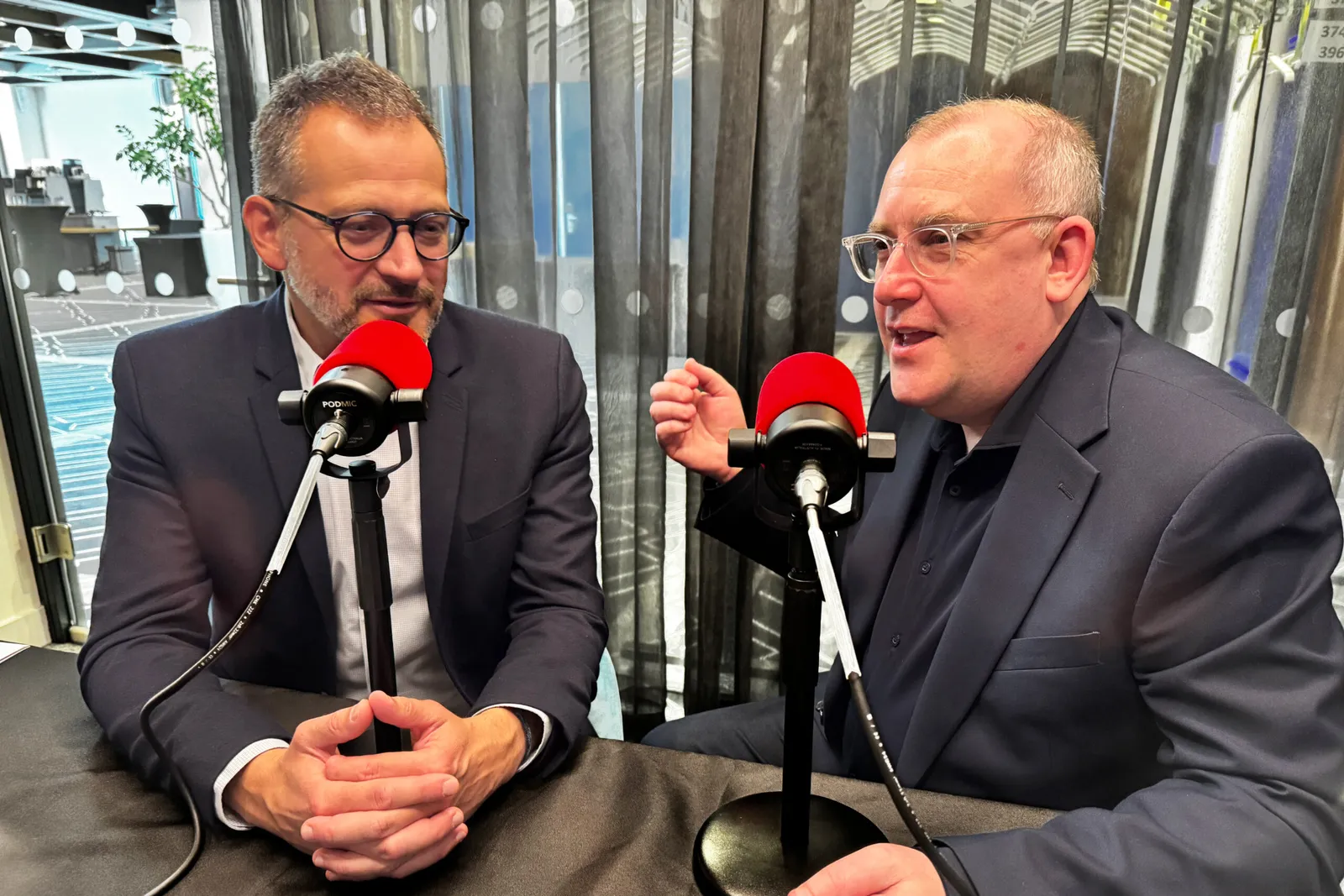
GS1 ensures that producers, retailers, logistics service providers and regulators speak the same digital language. (Image: Photo 21-05-2026, 16 14 01)
Fontanet and Tagg recommend first mapping existing systems, data flows and processes, identifying gaps, and then scaling up step by step through pilots. (Image: Photo 21-05-2026, 16 14 20)
Companies in this story
Keep following this
Get an email when a new story is published. No account needed.
- ThemePackaging and product traceability
- SubjectSolutions
- CompanyMarkem-Imaje NV
- CompanySiemens







