Reusing heat without stopping production
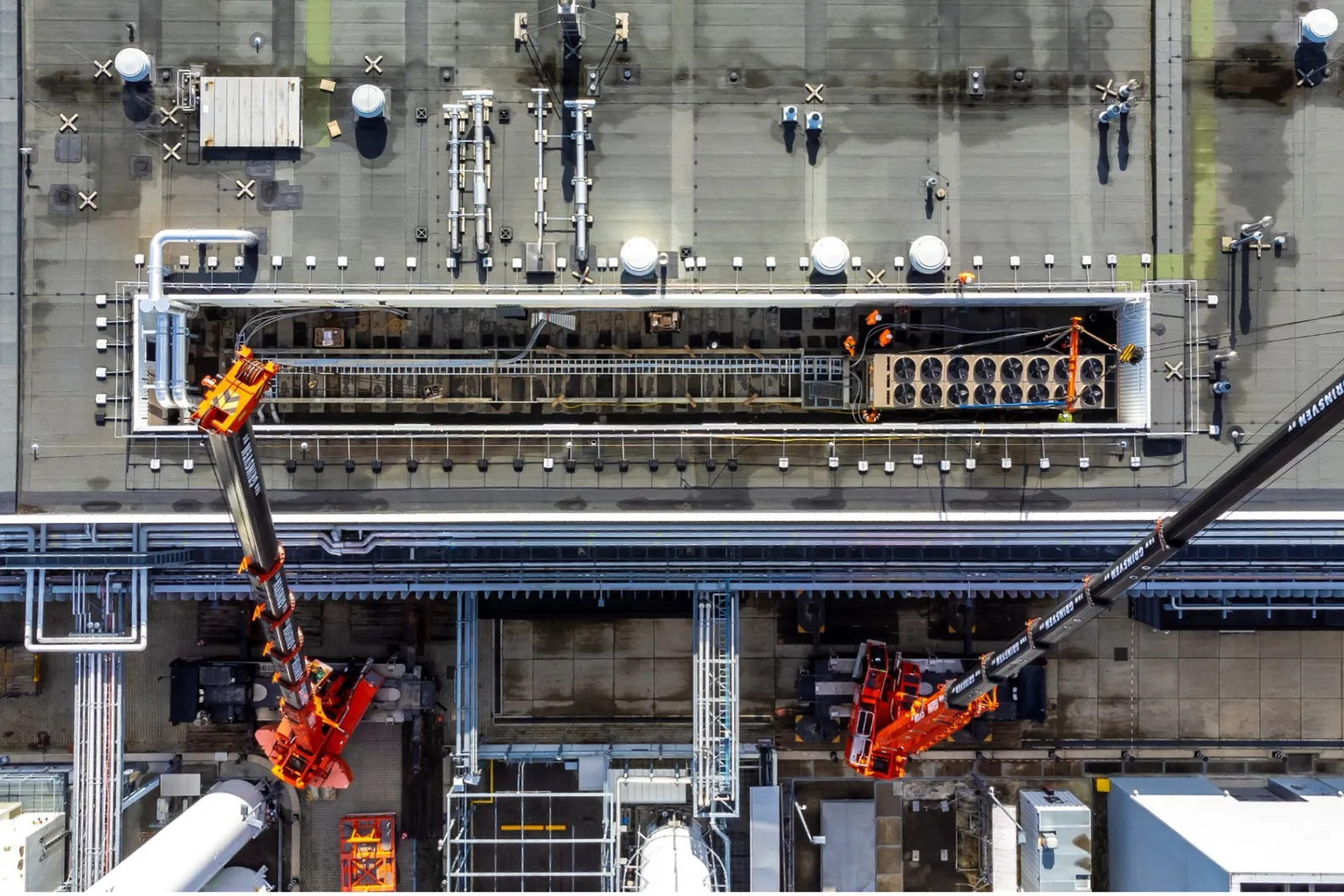
Cooling systems reject heat, while boilers elsewhere on the same site run to produce it. According to Stefan Timmers, Consultant Building Services at Haskoning, this combination offers opportunities to improve sustainability. For food companies, a considered approach to heat pumps therefore starts with understanding current heat and cooling demand, and, where possible, future demand too. The next challenge is just as important: making the transition while production continues.
Haskoning supports companies from calculating their carbon footprint and developing an energy strategy through to implementing technical changes. Timmers focuses mainly on applying these plans to existing sites. What installations are in place? How do they work together? And how can you improve sustainability step by step without disrupting day-to-day operations? According to him, this continuity is an essential requirement for industrial clients.
Start with the required temperature
One initial consideration is the temperature at which heat is supplied. Timmers sees many industrial sites where, historically, a large number of users have been connected to steam simply because it was available. Yet not every application requires heat of that quality. Examining the temperature actually needed for each process reveals where it may be possible to switch to hot water.
This assessment is relevant to the use of heat pumps. The smaller the temperature difference a heat pump has to bridge, the better its efficiency tends to be. The question, then, is which users can operate at a lower temperature and how available heat can meet their needs. Processes with specific temperature requirements remain the starting point, and the installation must be designed to suit them.
Make the most of replacement cycles
For existing factories, the best approach depends heavily on the installations already in place. A steam boiler that has been running for only two years calls for a different assessment from one that is due for replacement. The same applies to chillers, pipework and other technical infrastructure. Timmers therefore looks for opportunities to align necessary upgrades with sustainability improvements.
An increase in capacity or the end of a chiller’s service life can be a logical time to reorganise the energy supply. This allows the investment to be assessed alongside expenditure that is already required. According to Timmers, this often produces a different business case from looking only at the cost of an individual sustainability measure. At the same time, carrying out work on an operational site requires extra planning and sometimes temporary facilities. These costs must also be included in the assessment.
An energy loop between buildings
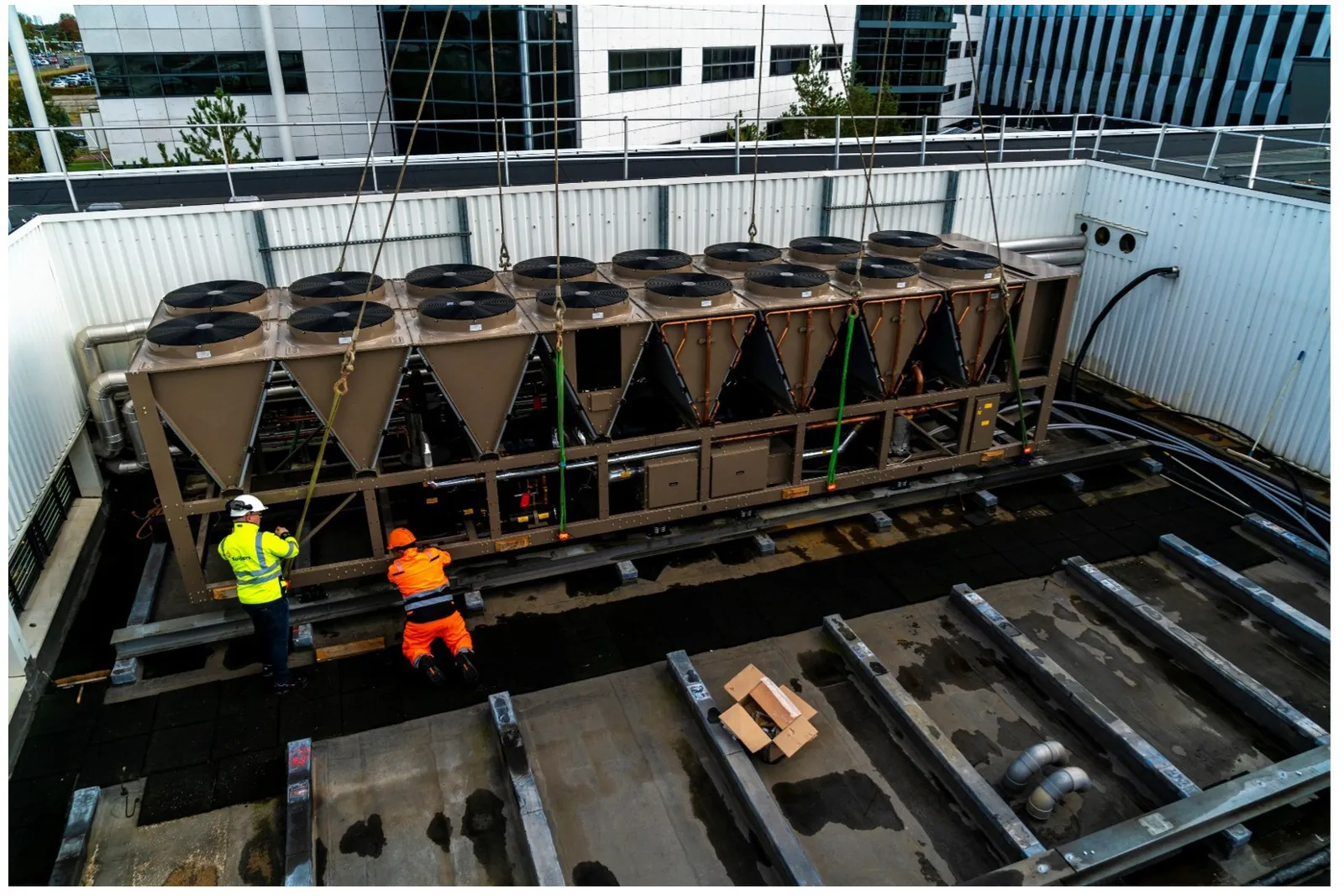
A project on an industrial campus outside the food sector illustrates this approach. Chillers there were rejecting heat, while central heating boilers elsewhere on the site met the demand for heat. Several chiller plants were also due for replacement. Haskoning therefore explored ways to connect the buildings and their energy systems.
The solution was a ring network using water to carry thermal energy. A cold-water pipe and a warmer-water pipe connect production buildings and offices. The water absorbs heat from the production facilities. Heat pumps then use that energy to heat the buildings. The cooled water returns and can absorb heat from production again. In summer, the network can also cool the offices using the industrial cooling systems.
According to Timmers, the heat pumps on this site meet around 80% of cooling demand in winter. This demonstrates how heating and cooling can complement each other. For a food company, the underlying question is especially relevant: where do heat and cooling demand coincide, and do the required temperatures allow these flows to be linked?
Upgrading while the site stays operational
The ring network also made it possible to replace cooling systems in phases. Because the plants were interconnected, other parts of the system could support cooling while a plant was being upgraded. According to Timmers, this shared backup capacity improves availability and makes it possible to carry out work while operations continue.
This was where a significant economic benefit lay. Replacing each system separately would have required temporary chillers, along with temporary power supplies. By installing the ring first, much of that hire cost could be avoided. According to Timmers, savings on temporary facilities largely covered the cost of the ring network. The budget thus paid for infrastructure that remained useful for energy exchange between buildings after the replacement work was complete.
Measure where the energy goes
Identifying opportunities of this kind requires insight into consumption beyond the main meter. At existing sites, Timmers is often shown an energy bill or an overall gas and electricity consumption profile. This tells you how much energy a company uses, but not which processes consume it or when.
Submetering makes that breakdown visible. By linking consumption data to temperatures, operating hours and production activities, promising combinations can be explored. Timmers emphasises that process knowledge is also essential for data analysis and AI. A consumption curve without context reveals too little about the links between heat, steam and cooling at a particular site.
Look beyond the building boundary
According to Timmers, the biggest barrier is sometimes the scale at which companies view their installations. Technical managers know their own building or installation well, but opportunities between buildings are more easily overlooked. Sites that have evolved over time may even have several boiler houses, with little consideration given to how they could work together.
For food producers, a practical starting point is to map heat and cooling demand together and compare it with maintenance, replacement and expansion plans. This helps identify where a heat pump could fit and what infrastructure it would require. The campus example shows how taking a joined-up view of the energy supply and business continuity can reveal opportunities that remain hidden when each installation is assessed separately.
Would you like to improve the sustainability of your food company’s energy supply? Find out how Uticon, now part of Haskoning, can support you.
Een zakelijke vraag aan Haskoning (Consulting & Engineering Services)? Get in touch
Companies in this story
Keep following this
Get an email when a new story is published. No account needed.
- SubjectSustainability
- CompanyHaskoning (Consulting & Engineering Services)