












The steam plant, the silent engine of food safety
Text and images Belgian Boiler Company
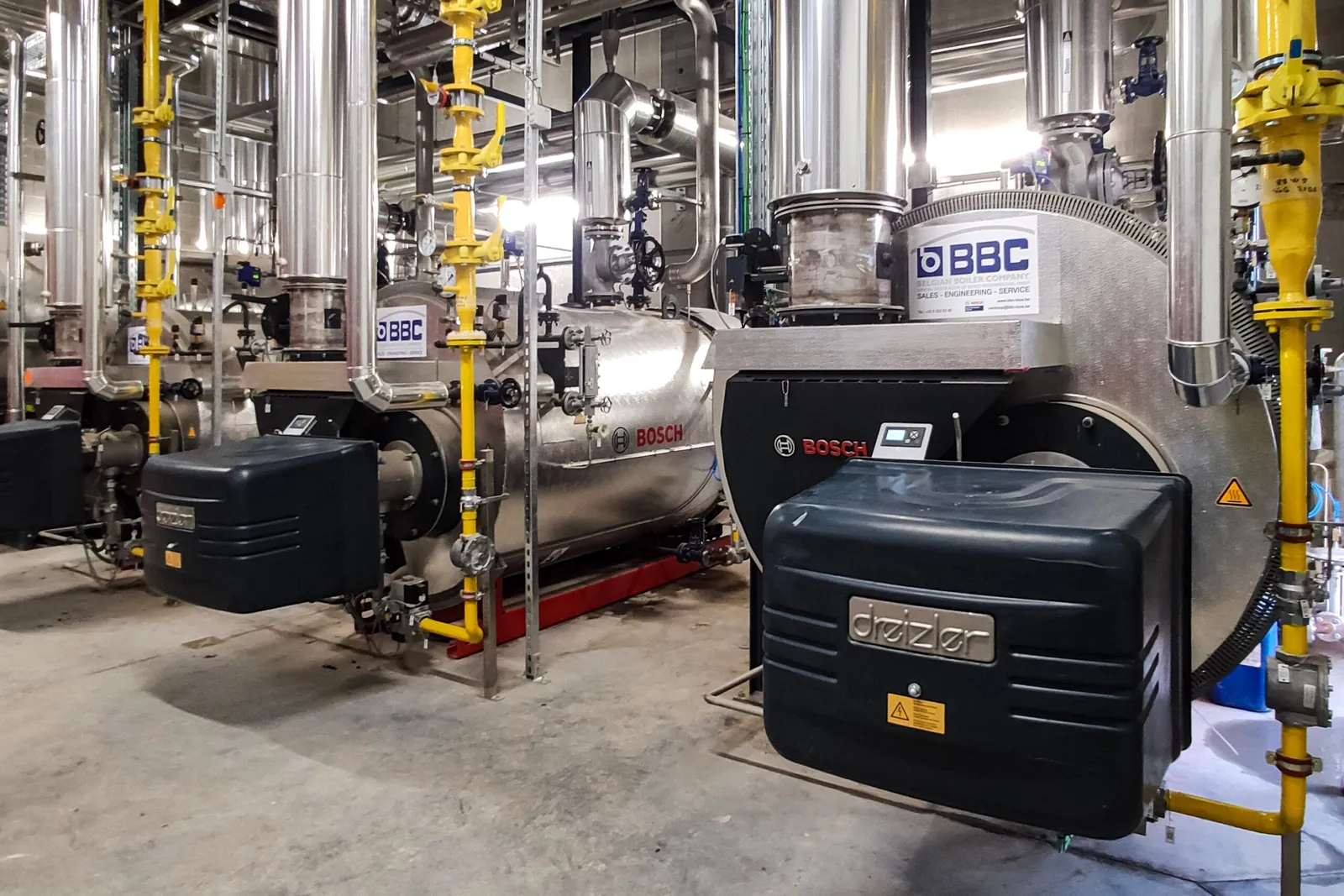
Steam is a given in many food businesses. It must be available every day, at the right time, at the required pressure and with sufficient capacity. Only when pressure drops, a cleaning cycle fails to reach its target temperature or the plant unexpectedly shuts down does it become clear how closely production and steam supply are connected. “A problem in the boiler house can immediately lead to production stoppages, delayed cleaning or a complex restart. That is why it is not just the boiler that needs to be reliable. The entire plant must be considered as one system,” says Edwin Van Cleemput, sales & project engineer at Belgian Boiler Company.
Correct sizing involves more than adding together the power ratings of the connected users. The boiler house must also be able to respond to peak demand, rapid load changes and the simultaneous operation of production and cleaning processes. An oversized boiler is not automatically a good solution either. If a burner frequently starts and stops or runs for long periods at an unfavourable part-load point, this can adversely affect the plant’s efficiency and service life.
Steam quality starts with a well-designed system
The right solution therefore requires an understanding of the actual load profile. The pipework, pressure control and steam distribution must also be matched to that profile. “Steam quality is not a detail, and it is not determined by the boiler alone,” stresses Dr. ir. Marnix Van Belleghem of Belgian Boiler Company. “Pressure stability, steam dryness, pipe sizing, drainage, water quality and condensate management together determine whether a process runs reliably and consistently.” Belgian Boiler Company can support food businesses in analysing the entire chain, from boiler capacity and burner control to the pipework, pressure levels and requirements of the various steam users. This means looking not only at the available capacity, but also at what actually reaches the process.
Maintenance must go beyond statutory boiler inspections
Statutory checks and periodic inspections are essential, but they are no substitute for a technical maintenance programme. A plant can be formally compliant and still waste energy, operate with unstable control or gradually become less reliable. Targeted maintenance therefore covers more than the boiler alone. The burner, safety systems, pumps, level control, water treatment, blowdown system, valves, control valves, steam traps and instruments must also be checked periodically. The long-term availability of suitable spare parts and knowledge of the entire plant are at least as important as the maintenance work itself. “Good maintenance is not just about fixing faults,” says Van Cleemput. “The aim is to identify deviations before they cause production problems. To do that, you need to understand the plant’s history, load and technical design.”
Water treatment, blowdown and condensate
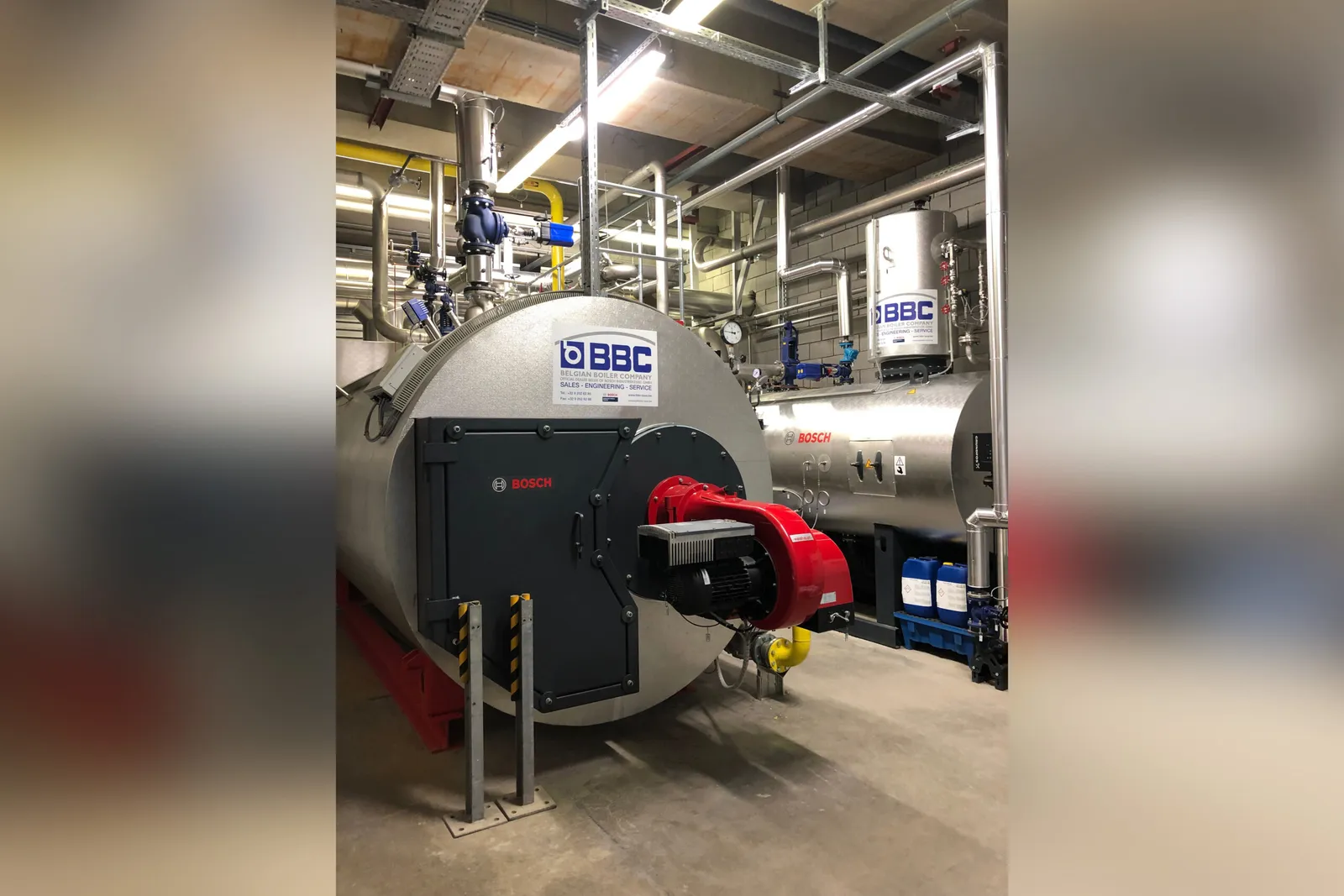
The quality of boiler feedwater is crucial to the safety, efficiency and service life of the plant. Inadequately treated water can cause scaling and corrosion. As water evaporates in the boiler, dissolved substances are left behind. Without sufficient blowdown, their concentration rises. Too little blowdown increases the risk of foaming, contamination and carryover. Too much blowdown causes unnecessary losses of hot boiler water, chemicals and energy. Heat recovery from blowdown water may also be worthwhile. BBC can assess the operation of water treatment and blowdown control alongside the boiler plant. This involves looking not just at individual readings, but at the links between make-up water, condensate return, feedwater temperature, boiler water quality and blowdown losses. Condensate also offers further potential: after releasing heat, it is still relatively hot and consists of treated water. Returning usable condensate to the boiler house reduces the need for cold make-up water. This in turn cuts the need for fuel, water and treatment chemicals. However, a condensate system should not be designed solely to maximise recovery. The quality and reliability of the return flow matter too. BBC maps the condensate network, identifies potential losses and assesses which flows can be recovered safely and economically. The greatest gains sometimes come not from one major investment, but from a combination of repaired leaks, improved insulation, functioning steam traps and a higher return temperature.
The entire boiler house as one responsibility
The greatest value is created when the boiler, burner, water treatment, steam network, condensate return, controls and maintenance are not treated as separate components. An adjustment to one component often affects the rest of the system. Belgian Boiler Company therefore supports food businesses throughout the entire life cycle of their steam plant, from analysis and engineering to installation, commissioning, training, maintenance, technical optimisation, steam trap inspections, temporary steam supply and 24/7 service. Ultimately, a well-run boiler house delivers more than sufficient pressure and capacity. It helps keep the production process running steadily, makes energy losses visible and keeps technical risks under control.
Question about this story? Ask your question
Keep following this
Get an email when a new story is published. No account needed.
- ThemeFood safety from design to audit
- SubjectFood safety







