More and more Customized Options installed digitally
Digital solutions tailored to customers’ needs are on the rise
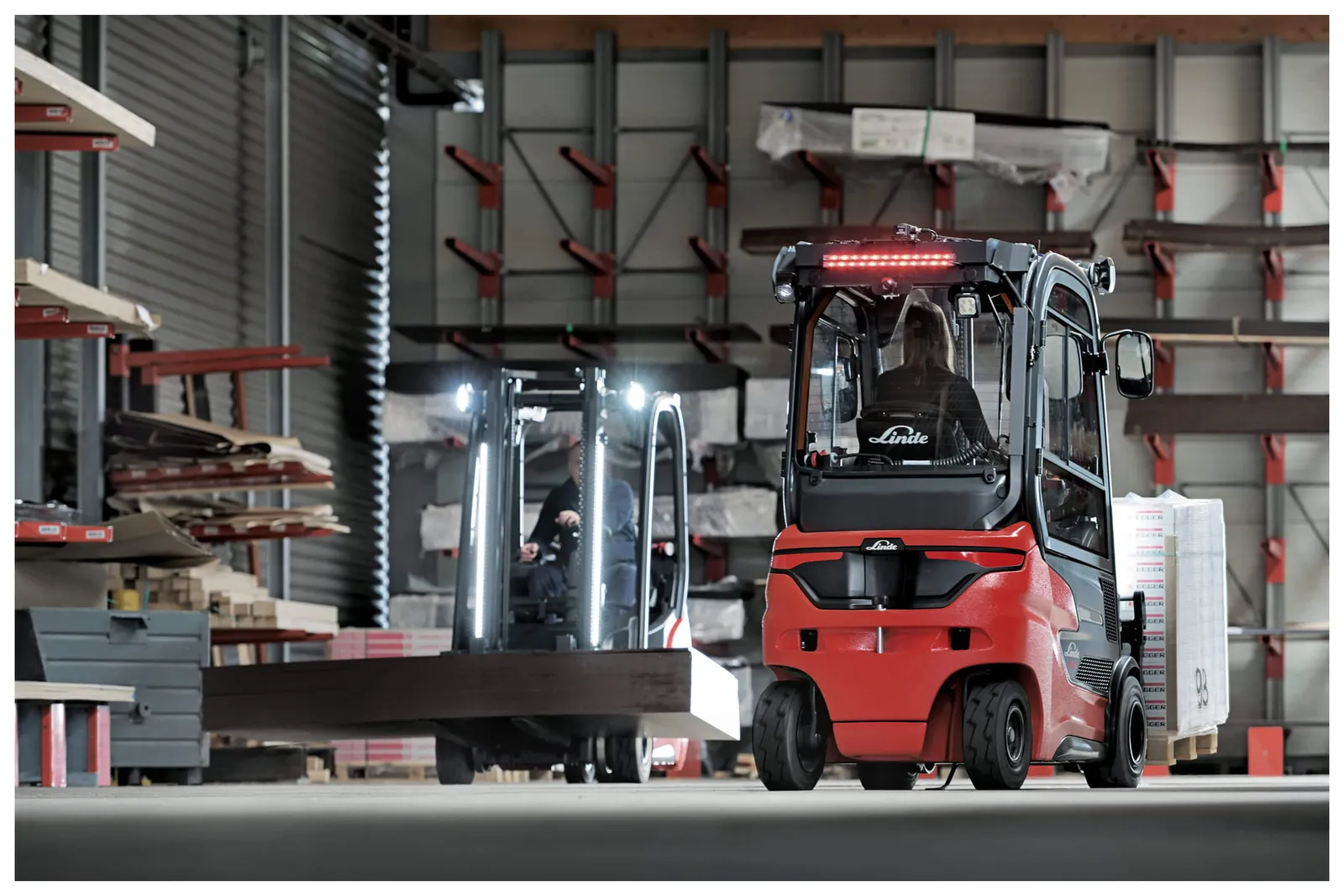
Intralogistics specialist Linde MH says a growing proportion of COs are being installed digitally. Whereas these Customized Options, or tailored solutions, were previously implemented mainly through hardware components, they are now increasingly delivered via software updates. The major advantage is that new digital COs can be integrated into vehicles throughout their entire lifecycle, providing a high degree of investment certainty.
Significant added value for businesses
More than a third of all Linde forklifts and warehouse trucks are equipped with a CO, or Customized Option. ‘These are tailor-made solutions that play an important role in the internal flow of materials at many businesses. By adapting the truck more closely to the customer’s needs, they make industrial trucks safer, more efficient and more productive to use. In some cases, they even make it possible to use the truck at the business in the first place,’ explains Stefan Prokosch, Senior Vice President Customized Solutions at Linde MH.
Previously, these COs were mainly mechanical in nature. Examples include trucks made entirely of stainless steel, heat-resistant joysticks, controls adapted for drivers with physical impairments, and vehicles with a so-called ‘Pinocchio nose’ for transporting rolls in the paper industry. Digital COs are also becoming increasingly popular, such as automatically lowering the radio volume when reversing, a flashing beacon indicating whether the driver has fastened their seat belt, or automatic speed reduction when the truck is heavily loaded and/or the forks are raised high.
‘As we cannot know today what requirements intralogistics will have to meet tomorrow, or what technical possibilities will then be available, it is important that trucks can be equipped with new functions throughout their entire lifecycle,’ says Prokosch. This is made possible by the modern electrical/electronic (E/E) architecture and digital twins, which are linked to the physical trucks during production. This allows new vehicle functions to be uploaded to the trucks ‘over the air’, while meeting the highest safety standards.
Question about this story? Ask your question
Keep following this
Get an email when a new story is published. No account needed.
- ThemeSmart production with data
- SubjectTechnology