Why sea salt is a sustainable, high-quality choice for the food industry
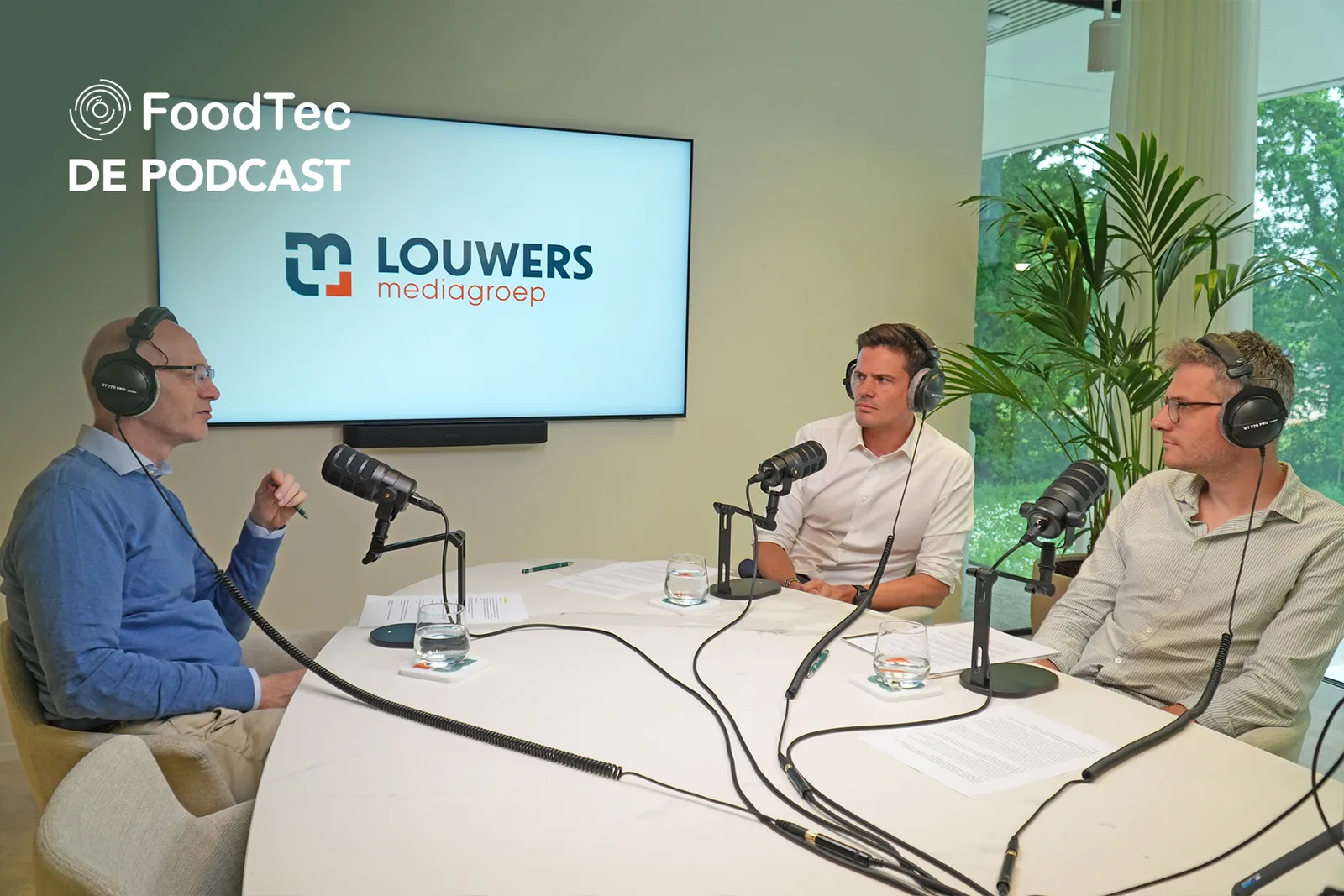
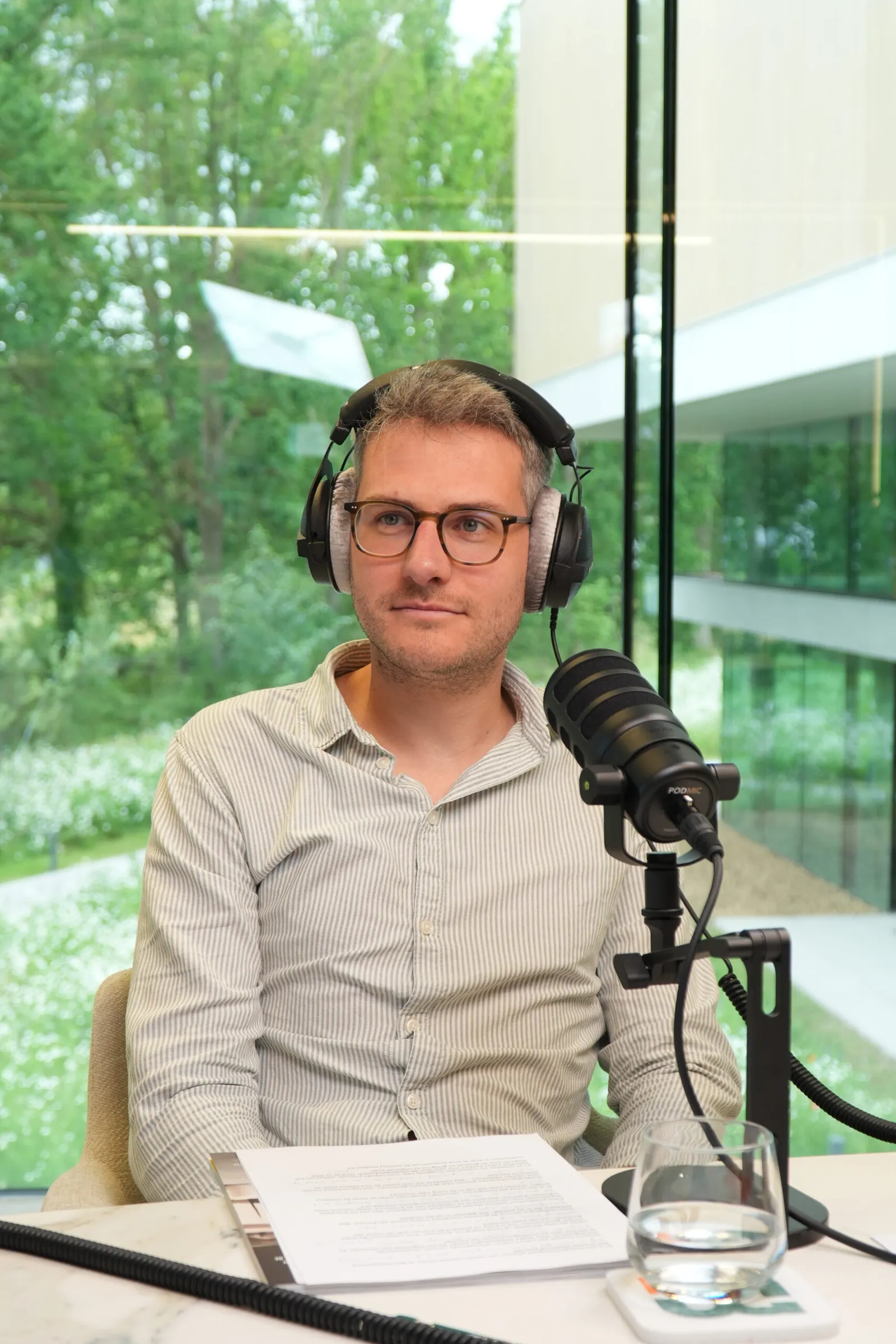
Where does salt come from, what is the difference between sea salt and vacuum salt, and why does the right grain size play such an important role in the food industry? In this FoodTec podcast, host Björn Crul talks to Thidrek Van Grunderbeeck and Maarten Delbaere of ZOUTMAN about harvesting and processing sea salt, its uses in food and the differences between rock salt and vacuum salt. Other topics include purity, salt reduction, additives, iodine and the environmental footprint of salt production.
Een zakelijke vraag aan ZOUTMAN? Get in touch
Full transcript
All chapters (14)
- Introduction and welcome
- Different types of salt
- Where sea salt comes from and how it is harvested
- Processing raw sea salt
- Vacuum salt production
- Differences between vacuum salt and sea salt
- Sea salt purity
- Grain size and applications
- ZOUTMAN and the international market
- The salt terminal in Ghent
- Environmental footprint
- Demand for natural products
- Fewer additives and salt reduction
- Iodine and closing remarks
Introduction and welcome
Björn Crul Welcome, listeners, to this new FoodTec podcast, produced in partnership with ZOUTMAN. In this three-part series, we’re taking you into the world of salt. It’s a product we use every day, but rarely stop to think about. My name is Björn Crul, and in this first episode I’m talking to Thidrek Van Grunderbeeck and Maarten Delbaere of ZOUTMAN about why sea salt is the best choice in terms of quality and the environment, what it is used for and what their company, Belgium’s largest sea salt supplier, is working on. Gentlemen, welcome. Thidrek, let me start with you.
Björn Crul Salt is found in every kitchen and used in a great many food products, yet the average consumer knows very little about it. We know that salt has been commonly used in our food for centuries. Why is that?
Thidrek Van Grunderbeeck Yes, it’s surprising how few people stop to think about where salt comes from. As you say, I didn’t know myself before I started working at ZOUTMAN. I had no idea where salt came from. But I soon learned that salt mining is said to be the second oldest profession in the world. The joke is that the proceeds were used to pay for the world’s oldest profession. In the past, going back to Roman times and earlier, salt was a very important raw material for preserving food. People didn’t have fridges or the technology to keep food for a long time. Salt was essential for getting through the winter on food harvested in summer or autumn. It was so valuable that people were paid in salt. The word ‘salary’, for example, comes from the word ‘salt’. So salt was originally a preservative. But people soon discovered it was also a very good flavour enhancer. Salt brings out the existing flavours in food, and it still plays that role today. So it has a dual function: helping food keep for longer, and enhancing its flavour.
Read the full transcriptCollapse transcript13 more chapters
Different types of salt
Björn Crul Salt is not just salt. That may sound obvious, but it isn’t, because there are different types. Could you list them and explain where they come from?
Thidrek Van Grunderbeeck There are all sorts of terms for salt. The best known are, of course, cooking salt, table salt, sea salt, Himalayan salt and fleur de sel. At their core, they are all sodium chloride. Chemically, there is very little difference between them. The main distinction between these names is how the salt is extracted. Broadly speaking, because there are many ways of extracting salt, including many niche methods, salt can be obtained from the ground and from water. Ancient seas dried up and became saline, forming salt layers deep underground over millions of years.
Björn Crul So it has to be extracted chemically?
Thidrek Van Grunderbeeck Not necessarily chemically. It has to be mined, and there are various techniques for that too. With rock salt, for example, conventional mining methods are used to break the salt out of the rock. That’s what we call rock salt. In our neighbouring countries, for example, there are deposits close to the ancient Zechstein Sea, an ancient dried-up sea. The salt layer is drilled into through a very deep borehole, and water is pumped in to dissolve the salt underground. The resulting brine is then pumped back up. This process is called vacuum salt, or the product that comes out of it is called vacuum salt. That covers mined salts. On the other hand, in many parts of the world where it is warm enough, there is sea salt, which is extracted from seawater. For the sake of clarity, this can also come from salt lakes, but mainly it comes from the sea. Above all, it needs to be warm enough.
Where sea salt comes from and how it is harvested
Björn Crul Maarten, I’d like to hear from you about that. Focusing on sea salt, where do you source yours today?
Maarten Delbaere I think most Belgians might think of the south of France when they think of sea salt. But that isn’t our main source. We source our raw material mainly from Australia and the Caribbean. That has to do with the grain size and purity of the salt. We’re looking for a specific raw material that we can process effectively in our production. In particular, that means the hardness of the grains, because of the minerals they contain, as well as their purity. It really comes down to temperature. Sea salt is harvested using solar energy, essentially. The water evaporates in the salt pans. So it is a genuinely natural raw material, which is why we use it.
Björn Crul You say it’s a natural raw material. Is it inexhaustible?
Maarten Delbaere In principle, yes. There is no shortage of salt water in the world. And the original Zechstein Sea that Thidrek referred to was, in fact, the source of all the salt in the world. Salt originally comes from the sea. Some layers simply evaporated. We source our salt directly from the sea.
Processing raw sea salt
Björn Crul You harvest it from the sea, but before it gets to our tables, so to speak, there are a few steps involved. Could you explain how the production process works?
Maarten Delbaere The raw sea salt is harvested mechanically on site and then loaded onto large seagoing vessels. We import it through the port of Ghent, in North Sea Port. The raw material is stored there and then processed. So we’re not simply a salt distributor, we actually process it. We wash it twice, using brine and fresh water. The salt doesn’t dissolve. It’s important that the salt remains intact. The process involves purely physical treatments, with no chemical treatment. That may be another important difference between vacuum salt and sea salt. Vacuum salt is chemically purified to remove certain accompanying minerals. Ours still contains them. So what do we do? We crush and sieve the salt, and we have also installed a number of cameras to remove natural impurities from it.
Vacuum salt production
Björn Crul As well as processing natural sea salt, you’ve mentioned vacuum salt, which involves a chemical process. How is it produced?
Thidrek Van Grunderbeeck It is quite an ingenious process. In practice, for example in the Netherlands, small boreholes are drilled down to the salt layer, deep underground. Brine forms in the salt layer and, of course, has to be pumped back up. This effectively gives you seawater again, so to speak. But the Netherlands isn’t warm enough to simply let the brine evaporate in the open air. So it has to be heated artificially using fossil fuels, to crystallise the brine into dry salt. The process we can carry out with sea salt using pure solar energy in warm regions has to be replicated using fossil fuels. You can imagine that producing it is very energy-intensive.
Differences between vacuum salt and sea salt
Björn Crul Comparing chemical vacuum salt with sea salt, what are the differences, and does it taste different, for example?
Thidrek Van Grunderbeeck Because of the specific production process, vacuum salt is by definition always fine salt, an extremely fine and pure salt.
Björn Crul The salt we sprinkle on our chips, then.
Thidrek Van Grunderbeeck Yes. Most of the traditional cooking salt you’ll find in Flemish kitchens will be mined salt, vacuum salt, and fine cooking salt. Because of the proximity of the ancient Zechstein Sea, it is very common in our part of the world. Sea salt often has larger, coarser, irregular crystals. That can be useful for creating particular textures in food. For example, coarse salt can be used to make delicious salted caramel sea salt chocolate, with little bursts of flavour in your mouth. You can’t do that with vacuum salt, unless you compact it as well. But that’s hardly feasible for food.
Björn Crul For use in a restaurant?
Thidrek Van Grunderbeeck Sea salt offers real gastronomic value. Chefs really do distinguish between sea salt and vacuum salt.
Sea salt purity
Björn Crul Maarten, there’s a perception that sea salt is naturally less pure than purified vacuum salt. What’s your response to that?
Maarten Delbaere We know that perception exists, and it may not be entirely wrong. That’s why we’ve been investing for years in production equipment designed and refined to purify sea salt. We take every possible measure to purify the salt. It’s not necessarily about where it comes from or anything like that. It is a natural product, so we have to be honest about that. But we process it in such a way that we can supply our industrial customers with consistent quality. I think that’s the main thing.
Thidrek Van Grunderbeeck Yes, if I can add something to that. The purity we achieve through our sea salt production process is really something special. We’re playing in the Champions League of salt worldwide. I mean, I happened to have some Korean salt experts visiting last week, and they were amazed by how pure our sea salt was. In their country, it’s common to wash sea salt bought in a shop before using it in the kitchen, because it still contains sand and all sorts of other things. They saw the output from our factory last week: sea salt that is packed straight into bags. They don’t see that back home. So, with decades of experience refining our production process to create pure, white, clear sea salt, what we produce really is unique in the world.
Maarten Delbaere Yes, the industry also challenges us on this. The industry is used to working with mined salt, and its machinery is set up for it. So we have always set ourselves a very high bar. We offer sea salt with the quality of vacuum salt, while retaining all the gastronomic advantages of sea salt, as well as its natural grain size distribution. That is a real strength.
Grain size and applications
Björn Crul So we said that grain size is something chefs find very interesting to work with in the kitchen. Does grain size also play a role in the food industry, Maarten?
Maarten Delbaere It’s a very important factor. We offer ten different grain sizes, depending on the application. You wouldn’t want to find grains of up to 6 mm in your bread, for example. Fine salt is used for that because it dissolves easily. But we also specialise in coarse sea salt. For salt mills, for example, we supply a coarse fraction that can then be processed into fine salt. There are also specific applications in snacks, such as salting nuts or pretzels. Those require grains. For dry-salting salmon, for example, the grains must not be too fine, or they will fall off or simply fail to dry the fish. If they are too coarse, they damage the fish’s texture. So we supply the food industry with grain sizes tailored to specific applications.
ZOUTMAN and the international market
Björn Crul Thidrek, let’s talk about your company now. ZOUTMAN, based in Roeselare and Ghent. What is your role, and how far does ZOUTMAN’s market reach? Who are your customers?
Thidrek Van Grunderbeeck Yes, there can be some confusion about what ZOUTMAN actually does. We don’t harvest sea salt ourselves. We buy raw sea salt from a handful of partners around the world. It’s a very limited group of suppliers, because, as Maarten said earlier, we have to identify specific regions where we can source good-quality grains. So the choice of regions, and therefore the options, is very limited. ZOUTMAN adds value by refining this natural product into a food-grade product through a very extensive production process. Our market is global. That is quite striking, because salt is a very cheap raw material. We’re talking about a few hundred euros per tonne. It really is very cheap, so it has little monetary value. But clearly it does for our customers, because we export this low-cost raw material as far afield as the United States and Australia. I sometimes wonder whether there isn’t a local supplier who could provide the salt. Apparently not. Our highly specialised production process gives us a truly unique position in the world.
Björn Crul And I assume your many years of experience play a part too, as ZOUTMAN has been around for a while.
Thidrek Van Grunderbeeck ZOUTMAN has been around for 30 years. It was founded by Bart and Peter Sobry, who are also known for DESOTEC, for example, and a number of other companies. They quickly recognised the potential of sea salt compared with mined salt, and that is what we are still building on today.
The salt terminal in Ghent
Björn Crul You’re a global company. Looking at your site in Ghent, which has Europe’s largest covered salt terminal, I think that says a lot in itself. But what does that mean in practice? What happens there?
Maarten Delbaere In practical terms, it gives us a year’s worth of buffer stock, which is important for ensuring we can supply our customers. We need to be able to guarantee continuity of supply. The sea-going vessels we buy from are also fairly large. They can carry up to 80,000 tonnes of sea salt in one shipment, and we need somewhere to unload and store it. That happens at the terminal in Ghent. It holds large stocks, essentially. And it’s not a luxury. We really need that stock as a buffer.
Environmental footprint
Björn Crul I hear you talking about transporting the sea salt. One of the traditional arguments for vacuum salt is that production takes place very close to where the salt is processed. Sea salt requires more logistics. So does that mean it has a larger environmental footprint?
Maarten Delbaere That’s a very interesting question, and it’s one we often discuss with our customers. But in this case, the message is that local isn’t always better. We’re aware of the distance this salt has to travel, but we also have detailed CO2 calculations. These show that, despite the transport, our sea salt actually performs better in terms of CO2 emissions than locally produced mined salt, by the time it reaches customers. It’s about more than CO2 emissions. It’s also about water consumption. As Thidrek mentioned earlier, vacuum salt production requires a lot of water. We try to explain to customers that this also has an impact. It’s about CO2, water consumption, but also land use and the effect on the soil when salt is extracted from the ground for years.
Demand for natural products
Björn Crul There’s a growing demand for natural products. I imagine that gives sea salt another advantage. Are you seeing that in demand for sea salt?
Thidrek Van Grunderbeeck Yes, absolutely. Demand for organic, natural and clean-label ingredients was one of the reasons we had to build a new production tower in Ghent a few years ago. Demand had grown so much that our factory in Roeselare could no longer meet it. So we quickly looked into building a new production tower. Consumers perceive sea salt as more natural, and even as healthier. Market research backs this up. For example, putting ‘made with sea salt’ on the front of a pack improves sales. And if food producers name sea salt specifically in the ingredients list, rather than simply saying salt, that also has a positive impact on sales.
Fewer additives and salt reduction
Björn Crul Maarten, another trend is that food producers are aiming to make healthier products with less salt and fewer additives. What does that mean for you, and can you help food producers with this?
Maarten Delbaere There are two parts to that question. I’ll start with food producers’ expectation that salt should be supplied without additives. We can fully support them in that. We use specific types of crushers and sieves so that, after processing, the salt contains very little dust. Salt will eventually cake, so some customers expect us to add an E-number, E535, which is an anti-caking agent. But we are equipped to supply all our grain sizes without this additive as standard. That’s one way we support our customers in the food industry. As for salt reduction, that’s a very interesting question in its own right. We’re certainly not against it. As a salt producer, we understand the demand and are aware of salt’s impact on people’s health. But we also advise our customers: perhaps use a little less salt, but make sure it’s the right natural sea salt.
Iodine and closing remarks
Björn Crul And that’s quite common nowadays, too?
Thidrek Van Grunderbeeck Yes, absolutely. Iodine is already very common in table salt sold to consumers in shops. But there is still huge potential for it in the food industry. Most of the food we eat, and the salt we consume, comes in products from the food industry. So food producers using iodised sea salt can offer their customers a real advantage. That’s how I see it, from the consumer’s point of view.
Björn Crul Gentlemen, I’m afraid we’ve run out of time. Thank you for the conversation. We’ve already made a nice segue, dear listeners, into the second podcast. There we’ll take a closer look at what salt can mean for the food industry, and specifically at dissolved salt in the form of brine. Thidrek and Maarten, thank you. And thank you for listening. You can find all our podcasts on the foodtec.be website. Until next time.
Companies in this story

Keep following this
Get an email when a new story is published. No account needed.
- ThemeDeveloping new foods
- SubjectSustainability
- CompanyZOUTMAN