Cleaning as a strategic factor in the food industry
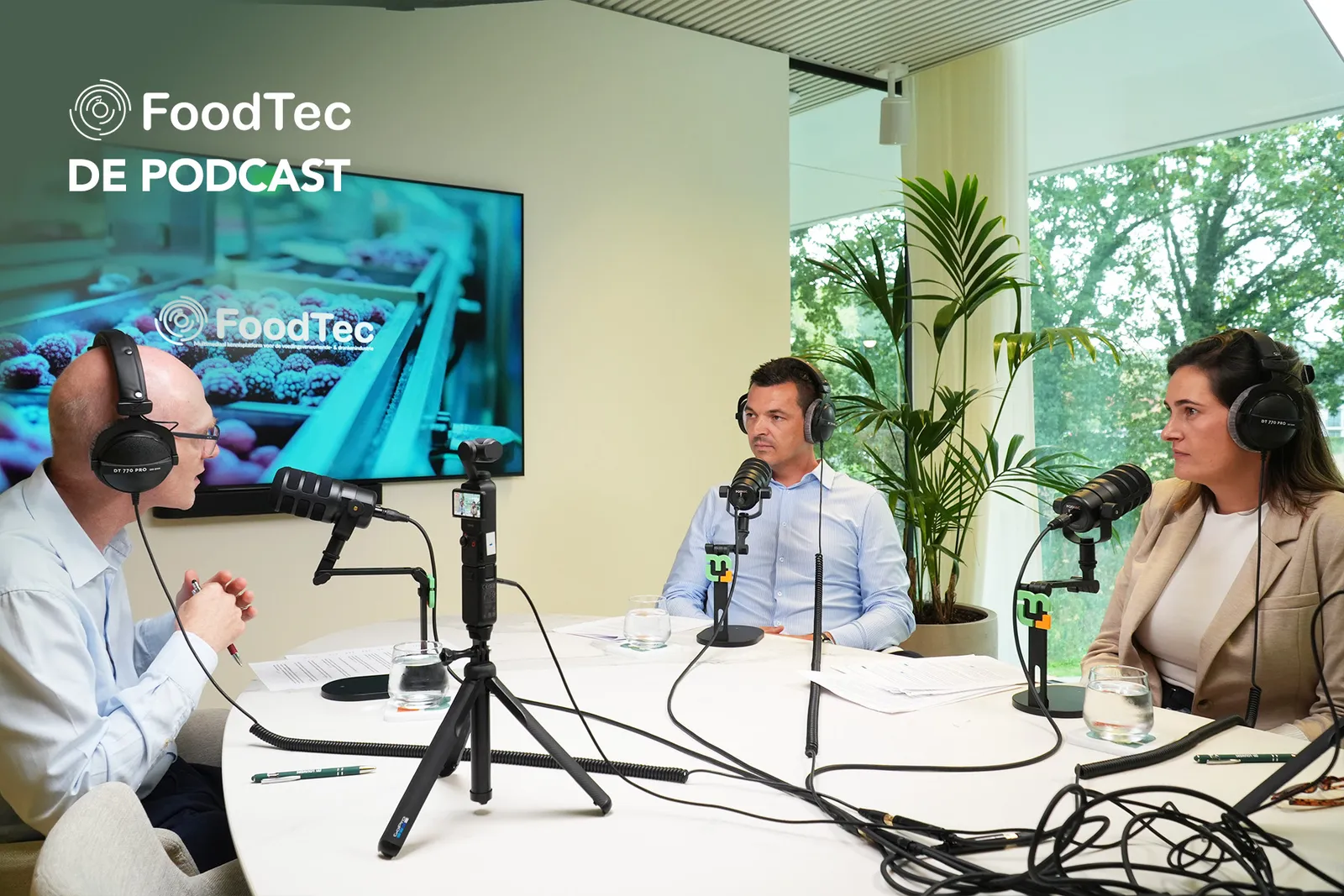
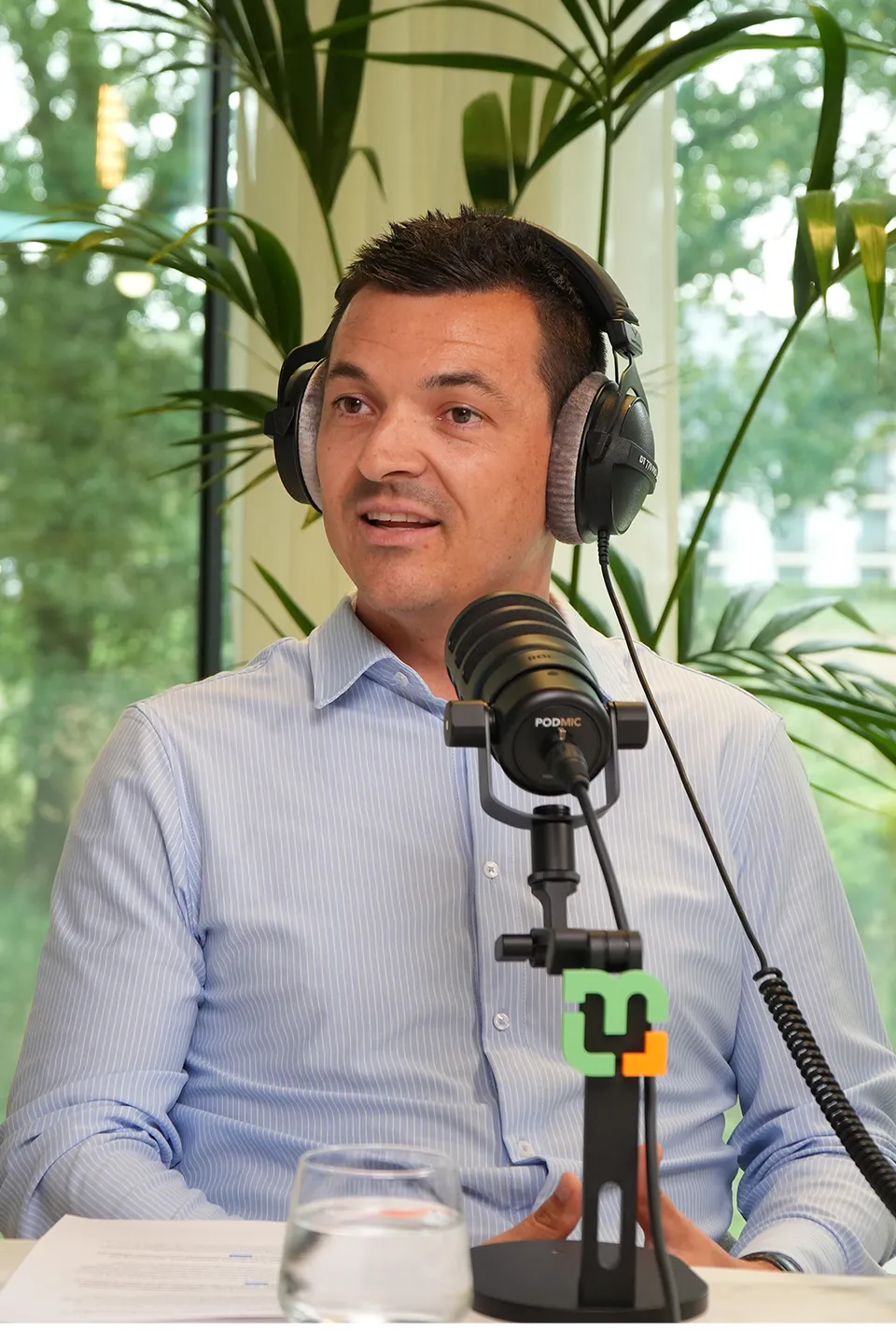
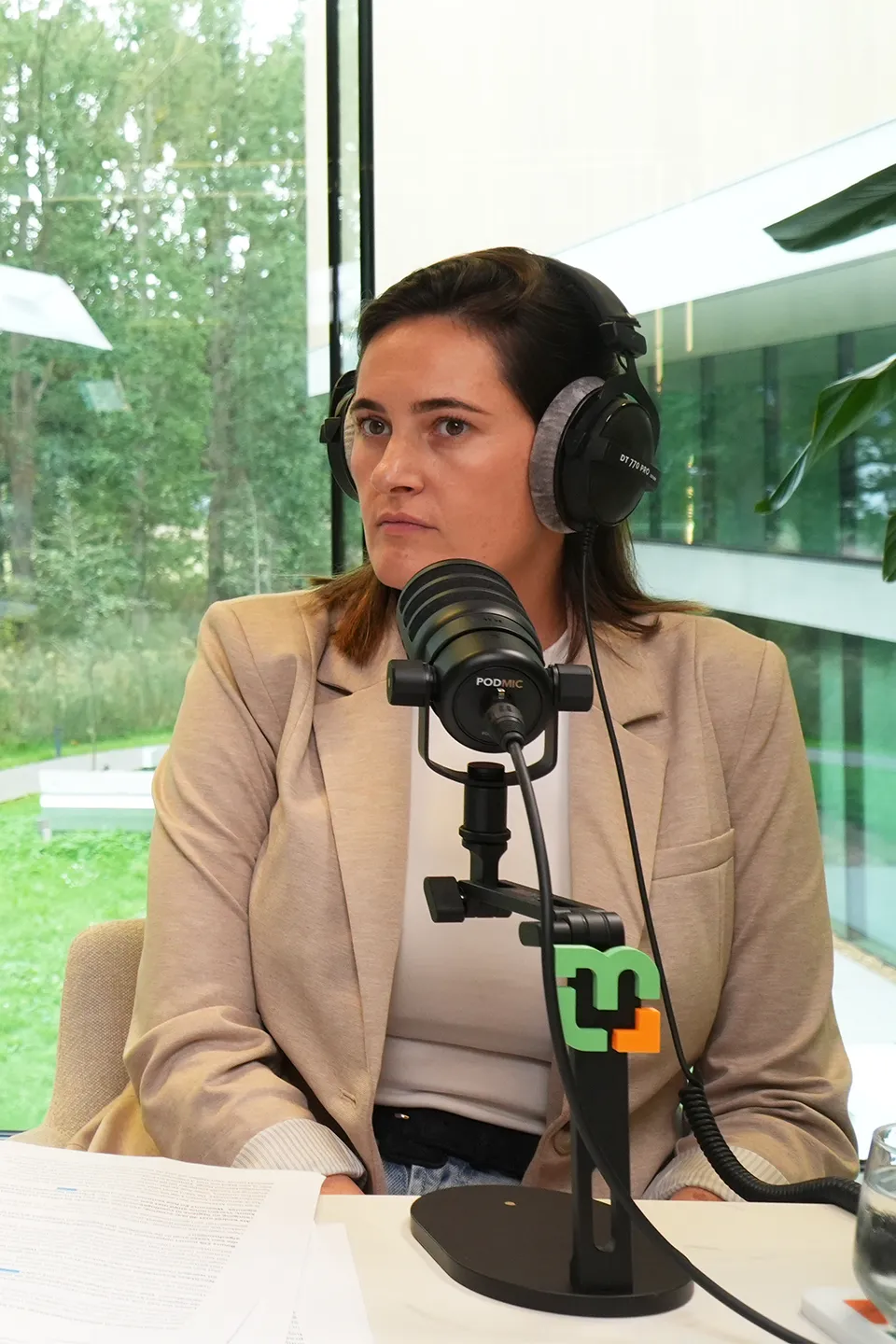
Speakers: Liesbeth and Simon Boons (BOONS FIS) | Moderator: Björn Crul
Cleaning in the food industry is much more than a cleaning task. It has a direct impact on product quality, food safety, operating costs and sustainability. Yet cleaning is still too often viewed separately from the production process.
In this episode of the FoodTec podcast, moderator Björn Crul talks to Liesbeth and Simon Boons, who are building on the family business BOONS FIS as its second generation. They discuss why cleaning needs to be considered at the design stage of production lines, the opportunities offered by automation and preventive maintenance, and how companies can optimise their hygiene processes.
They also discuss the human factor, the importance of hygiene barriers, the differences between new-build and renovation projects, and the opportunities for tailor-made solutions. Finally, they look ahead to the role of data and artificial intelligence in the further development of cleaning and hygiene in the food industry.
Een zakelijke vraag aan Boons Fis? Get in touch
Full transcript
Alle hoofdstukken (19)
- Introduction: Cleaning as a strategic factor in the food industry
- The evolution of cleaning and hygiene in the food industry
- Integrating cleaning into the production process
- Risks when cleaning is separate from production
- From reactive cleaning to proactive process management
- Regulations, traceability and food safety standards
- The difference between new-build and renovation projects
- Automation and semi-automation of cleaning processes
- Predictive maintenance and preventing downtime
- Growing demand for preventive maintenance and remote monitoring
- The human factor and personal hygiene
- Why hygiene procedures are sometimes not followed
- Enforcing hygiene with intuitive equipment
- The analysis phase for new projects
- In-house engineering, production and technical expertise
- A different approach for multinationals and SMEs
- Standard equipment and custom solutions for specific cleaning needs
- The impact of digitalisation, data and artificial intelligence
- Closing remarks and a look ahead to data-driven cleaning
Introduction: Cleaning as a strategic factor in the food industry
Björn Crul Hello, listeners, and welcome to a new episode of the FoodTec podcast. This time, we’re focusing on cleaning. It has a major impact in the food industry, directly affecting product quality, food safety, operating costs and sustainability. So we’re not talking about cleaning up at the end of the working day, but about cleaning as a strategic factor that is an integral part of the production process. The family business BOONS FIS specialises in industrial cleaning equipment and hygiene solutions. My guests today are Liesbeth and Simon Boons, who are building on the family business as its second generation. Welcome to the studio, both of you. Liesbeth Boons: Thank you.
The evolution of cleaning and hygiene in the food industry
Björn Crul Liesbeth, let me start with you. BOONS FIS is a well-established name in the sector, with a great deal of experience. We’ve seen our industry make huge strides in automation, productivity and food safety. Has there been similar progress in cleaning and hygiene?
Liesbeth Boons Yes, definitely. Ten to fifteen years ago, everything was done using a single application, namely a high-pressure cleaner, and that was it. Over the last ten to fifteen years, we’ve seen a range of applications, such as medium-pressure and low-pressure systems, foam and disinfection applications, and looking to the future, all the possibilities offered by data, automation and AI. A lot of progress has been made. But we still see a difference between the industry’s frontrunners and companies that still have some catching up to do. So there are still quite a few opportunities. I’ve always felt that production lines and the like are often highly automated and receive a great deal of attention, while cleaning sometimes still lags behind a little, so to speak.
Read the full transcriptCollapse transcript17 more chapters
Integrating cleaning into the production process
Björn Crul Yes, because you’re advocating that cleaning should be an integral part of the entire production process. Why is that so important?
Liesbeth Boons A production line that can operate technically, but cannot be cleaned correctly and on time, is not a good production line, or a well-designed one. Cleaning determines the production time available, product changeovers and the risk of contamination. So it’s very important to address these things right from the start.
Risks when cleaning is separate from production
Björn Crul Yes, we’re talking about contamination. What are the main risks in food companies where cleaning is still separate from production?
Liesbeth Boons There are many. It could be unclear responsibilities. Who does what? Too little time allocated for cleaning in the schedule, hard-to-reach areas that cannot be cleaned, or equipment that does not match the actual soiling. Then the cleaning team is expected to solve the problem, but by then it’s often too late. If cleaning had been factored into the design process from the beginning, more boxes could have been ticked when it comes to cleaning.
From reactive cleaning to proactive process management
Björn Crul Yes, what we really need to do is move from reactive cleaning to proactive process management. What factors prompt companies to work with you to make that shift?
Liesbeth Boons When companies aim to become more proactive, there’s often a specific reason. A recurring non-conformity, long cleaning times, staff shortages, a product changeover that takes a long time, or a new line that needs to be installed. Another motivating factor is when, for example, operations and quality identify the same problem or challenge at the same time. That often acts as a catalyst for taking a more proactive approach.
Regulations, traceability and food safety standards
Björn Crul Yes, I assume that regulations and traceability are important too. Standards such as BRCGS and IFS Food require companies to be able to demonstrate and document their food safety efforts. Does that affect the questions customers ask?
Liesbeth Boons Yes, I get questions about that every day. They range from very small, practical matters to bigger issues. The small, practical questions might be: how do we lock away our chemicals? Can you help us with calibration? Because we also have to be able to provide evidence. Then there are the bigger questions: how can we ensure that our procedure is 100% validated? Those are the bigger challenges. We then use these questions to improve our equipment and processes and help our customers.
The difference between new-build and renovation projects
Björn Crul Simon, you help both companies building a completely new factory and those renovating or expanding a production line. Is there a big difference in how you approach these projects?
Simon Boons Yes, there is. We work on new-build projects as well as with existing customers who want to make changes or carry out renovations. With a new-build project, of course, we start with a blank sheet of paper and aim for the most optimal, ideal solution. Companies building new premises often have many years of experience already. They know from their previous building what works and what doesn’t, and they take all of that into account in the new-build project.
Björn Crul I imagine that’s the easiest way to work.
Simon Boons It is indeed the easiest way. And depending on how early we are brought into a project, if it’s very early on, we sometimes still have the opportunity to make certain changes. For example, the dimensions of a hygiene barrier. If it’s still at the drawing stage, we can ask for certain changes. An architect can still make adjustments to the dimensions. In an existing situation, the dimensions are what they are, of course. We then have to take them into account when integrating things. A good example is a customer I visited last week. They wanted to review their entire approach to cleaning and asked me what options were available. I explained what was possible. The customer was very keen to go with a particular system, but after we had walked around the production area, we concluded that it wasn’t possible and could not be achieved technically. So, naturally, we switched to the other system. If that customer were building new premises today, they wouldn’t buy what they’re buying now.
Björn Crul Yes, the same solution. And I hear you saying that your role isn’t just to respond to customer requests, but also to provide a great deal of advice.
Simon Boons Yes, that’s right. We do indeed provide a lot of advice in that area.
Automation and semi-automation of cleaning processes
Björn Crul Automation and semi-automation of cleaning processes are on the rise. I’m thinking of conveyor belts, for example, which can already be cleaned without an operator’s involvement. How far has the food industry got with this today?
Simon Boons Let’s just say that a lot is being automated wherever possible. You mentioned conveyor belts, which are indeed very often automated. We also recently completed a major project for a Dutch brewery, one of the largest in the Netherlands, where we installed a system to clean beer dispense systems automatically. So wherever possible, we try to apply automation. We’re also very active in the field of OPC, Open Plant Cleaning. That is naturally a little more difficult, because we’re dealing with specific spaces, production areas. Some production areas have one production line, others have several. There may be tables and mobile equipment. So automating that is naturally much more difficult.
Predictive maintenance and preventing downtime
Björn Crul Simon, at BOONS FIS you strongly believe in predictive maintenance, which involves detecting warning signs before a production line has to be shut down. How do you put that into practice?
Simon Boons That’s right, and it can be done in various ways. For example, an hour meter on a machine can indicate when maintenance is required. In our hygiene equipment segment, we also use LED indicators. These can give users or customers specific maintenance alerts. We also have certain machines that we can monitor remotely from our premises. They are installed at various locations throughout Belgium and the Netherlands. Our technical department receives alerts that indicate when specific maintenance is needed. Carrying out that maintenance helps prevent downtime and faults from being detected.
Growing demand for preventive maintenance and remote monitoring
Björn Crul So predictive maintenance and remote monitoring are the future. Are you seeing many customers already working on this, or does it still seem a little far off?
Liesbeth Boons No, we’re certainly seeing that a lot of customers are working on this. I have a very operational role at BOONS FIS, so I see everything that comes through in terms of service and maintenance. Ten years ago, our customers would pick up the phone to say, “Yes, something’s broken or faulty.” Now it’s very much the other way round, and they’re really striving for preventive maintenance. That’s only natural. Our customers are also struggling to find technical talent. It’s a scarce resource, after all. That’s one factor. The other is that production downtime is simply not an option, which means this is seen as an important issue.
The human factor and personal hygiene
Björn Crul An important factor has come up: the human factor. It also has a major impact on hygiene and quality in a food business, of course. More specifically, there’s the personal hygiene of operators on those production lines. Simon, what challenges do you see in this area?
Simon Boons The challenge we see internally is making hygiene airlocks as accessible as possible. And we have to be honest: a hygiene airlock in a food business is often not employees’ favourite place. That’s the biggest challenge for us as a business. I think the biggest challenge for the companies we sell our machines to is raising employees’ awareness, explaining why a hygiene airlock is crucial to food safety. For us, as a company and manufacturer of hygiene equipment, the challenge is to make a hygiene airlock feel less like an obstacle and more like a natural part of the route to production.
Why hygiene procedures are sometimes not followed
Björn Crul Yes, because it’s not just about the route. Most food businesses have very detailed procedures in place. People are trained in them too. So why does it still sometimes go wrong?
Simon Boons There can be various reasons, of course. I’m thinking of time pressure, language barriers and visitors, third parties who aren’t used to going through a hygiene airlock, but also the deliberate disregard and misuse of hygiene access points. All these factors can cause things to go wrong. Our job is to make the system as fail-safe as possible, while maintaining the necessary comfort for the operator and 100% safety and reliability for the customer, the food business we supply.
Enforcing hygiene with intuitive equipment
Björn Crul So the challenge is to make what you build a fixed step in the workflow, ensuring that hygiene and safety are enforced.
Simon Boons Yes, exactly. Our equipment does indeed make compliance enforceable. Take, for example, the LED indicators that are part of our hygiene airlock. They can clearly show which route needs to be followed. There’s a red cross on the other side, making the equipment very intuitive for the people who have to use it.
The analysis phase for new projects
Björn Crul Let’s look at how a project actually unfolds. You’re the experts when it comes to cleaning and hygiene in food businesses. When a customer comes to you with a new project, you always start with an analysis, a kind of critical assessment of their needs. Why do you do this, and what does the analysis phase involve?
Simon Boons We receive a lot of enquiries, by phone, by email and through the website. We rarely, if ever, simply prepare a quotation based on what comes in. Very often, the requests aren’t even technically feasible, because customers combine things through the website that can’t actually be combined. That’s where our strength comes into play: we advise the customer. We visit them, or they come to us, so we can discuss their request in more detail.
In-house engineering, production and technical expertise
Björn Crul BOONS FIS has 30 employees, as well as an in-house engineering department, its own production facilities and its own installation team. Liesbeth, that seems quite unusual for a company of your size. Why did you choose to bring all the necessary disciplines together in-house?
Liesbeth Boons Yes, it was a very deliberate choice. We think it’s important to keep all that knowledge in-house. Keeping everything internal also allows us to create a kind of cross-fertilisation, so to speak. For example, feedback from our people in the field, our service engineers, is extremely valuable to our technical department. That’s how we keep improving our machines. To give you an example, we hold a service-eye meeting every quarter. I don’t know how it got that name, but there you are. Our entire technical team sits around the table to discuss various issues, topics and improvements. That’s how we try to make our machines better, step by step.
A different approach for multinationals and SMEs
Björn Crul Simon, you work for large companies, such as McCain and Agristo, but also for SMEs in the food sector. There are a lot of them in Flanders, of course. A multinational’s challenges are probably different from those of a small producer. How do you approach them? Is it much the same or does it differ?
Simon Boons The approach does differ. When we visit a large company in response to an enquiry, we sit down with a production employee or production manager, someone from the technical department or its head, or people from the quality department. These people, and the companies they work for, often already know exactly what they want. For example, this morning I had to visit a customer in the chocolate sector who has been a customer of ours for ten years. When I arrived, our equipment was already marked on the AutoCAD drawing displayed on the screen. These kinds of companies know very well what they want and where they’re heading, based on their experience, knowledge and expertise. With a small company, we take a different approach. We often work with small businesses that are moving, for example, from small premises to an industrial building as they scale up. They have more questions, and that’s where we can add value. Customers like these come to us and ask how similar businesses tackle things. We’re less likely to get that question from a multinational.
Standard equipment and custom solutions for specific cleaning needs
Björn Crul Liesbeth, you build both standard solutions and bespoke installations. How do you decide when a customer really needs a bespoke solution? What situations or specific installations call for one?
Liesbeth Boons Yes, we do both. Our range is fairly broad, so we can cover a lot with our standard equipment or a related standard product. But there are always specific situations, such as a particular type of machine that needs cleaning and is unique to that type of business, a particular type of soiling, or a specific type of carrier, like the keg cabinets for that brewery that Simon mentioned earlier. We don’t build bespoke equipment for the sake of it. That wouldn’t make sense. But when standard equipment can’t meet the need, we’re very happy to build a bespoke solution. It’s something we really enjoy doing, and we’ve had a lot of success with it. But it does need to add value.
The impact of digitalisation, data and artificial intelligence
Björn Crul Now, Liesbeth, looking ahead, the industry is in the midst of a shift towards digitalisation and automation, and making greater use of data and AI. What impact is this having on your company and your business?
Liesbeth Boons It’s having quite a big impact. For example, we’re working on a project to create a 100% food-safe hygiene route using an AI model. I can’t tell you everything about it yet, but it’s in the pipeline. There’s no doubt that AI and data in general will be able to contribute a lot to our work in the future. We also use AI in our technical department and engineering as a trusted right-hand assistant, to speed up various processes, check things and develop ideas. Sometimes I’m genuinely amazed when I see the ideas the people in our technical department come up with.
Closing remarks and a look ahead to data-driven cleaning
Björn Crul Very good, and that brings us straight to the next podcast. I’d like to talk with you about how companies can move towards data-driven cleaning. Liesbeth and Simon, thank you for the conversation, and see you next time.
Liesbeth Boons Thank you.
Björn Crul And thank you, ladies and gentlemen, for joining us. See you again soon.
Companies in this story
Keep following this
Get an email when a new story is published. No account needed.
- ThemeFood safety from design to audit
- SubjectFood safety
- CompanyBoons Fis