Hybrid steam production: a blueprint for the modern boiler house
Text Dr. ir. Marnix Van BelleghemImage Belgian Boiler Company
The transition to climate-neutral heat production is not a straight path. A range of technologies is available, but each comes with its own physical and economic limitations. The future therefore lies not in a single solution, but in a flexible mix of technologies. Flexibility will be the key, particularly given the volatility of today’s energy market. Sometimes electricity prices spike, at other times they turn negative. Companies that adapt their heat production accordingly gain a significant advantage. Belgian Boiler Company is happy to help you find the best route to future-proof heat production.
When a company invests in its own solar panels or wind turbines, an electric boiler is the perfect way to convert surplus electricity into steam. This increases self-consumption and avoids having to feed electricity into the grid at unfavourable rates. Peak shaving is also an option: the electric boiler is not used when the grid is under excessive load. The electric boiler helps manage the capacity charges for the grid connection. These behind-the-meter measures are in your hands: software and controls can switch electrical applications such as an electric boiler on or off according to your own generation and consumption needs.
Strengthening the business case
The greatest returns, however, are available ‘in front of the meter’. By making the electric boiler available to the energy market through a Balancing Service Provider (BSP), a company can help stabilise the electricity grid. When there is a surplus of electricity, grid operator Elia looks for large consumers that can increase their consumption at short notice. This is known as aFRR (automatic Frequency Restoration Reserve). As an electric boiler can respond and ramp up within seconds, it is an ideal tool for this market. The payments made by Elia for this service are substantial and significantly shorten the payback period for the entire installation. Alongside grid balancing, we are also seeing the development of congestion management to prevent transformers from becoming overloaded. If companies can switch flexibly between electricity (for example, electric boilers) and other energy sources (such as gas or combined heat and power), this can lead to financially attractive flexible connection agreements. These are currently under development.
How to choose the right electric boiler
When choosing an electric boiler, the first consideration is naturally its output. The ability to integrate it into the system is just as important. Four parameters are decisive when integrating a boiler into a boiler house: the available electrical connection, water quality, modulation and performance.
Electrical connection
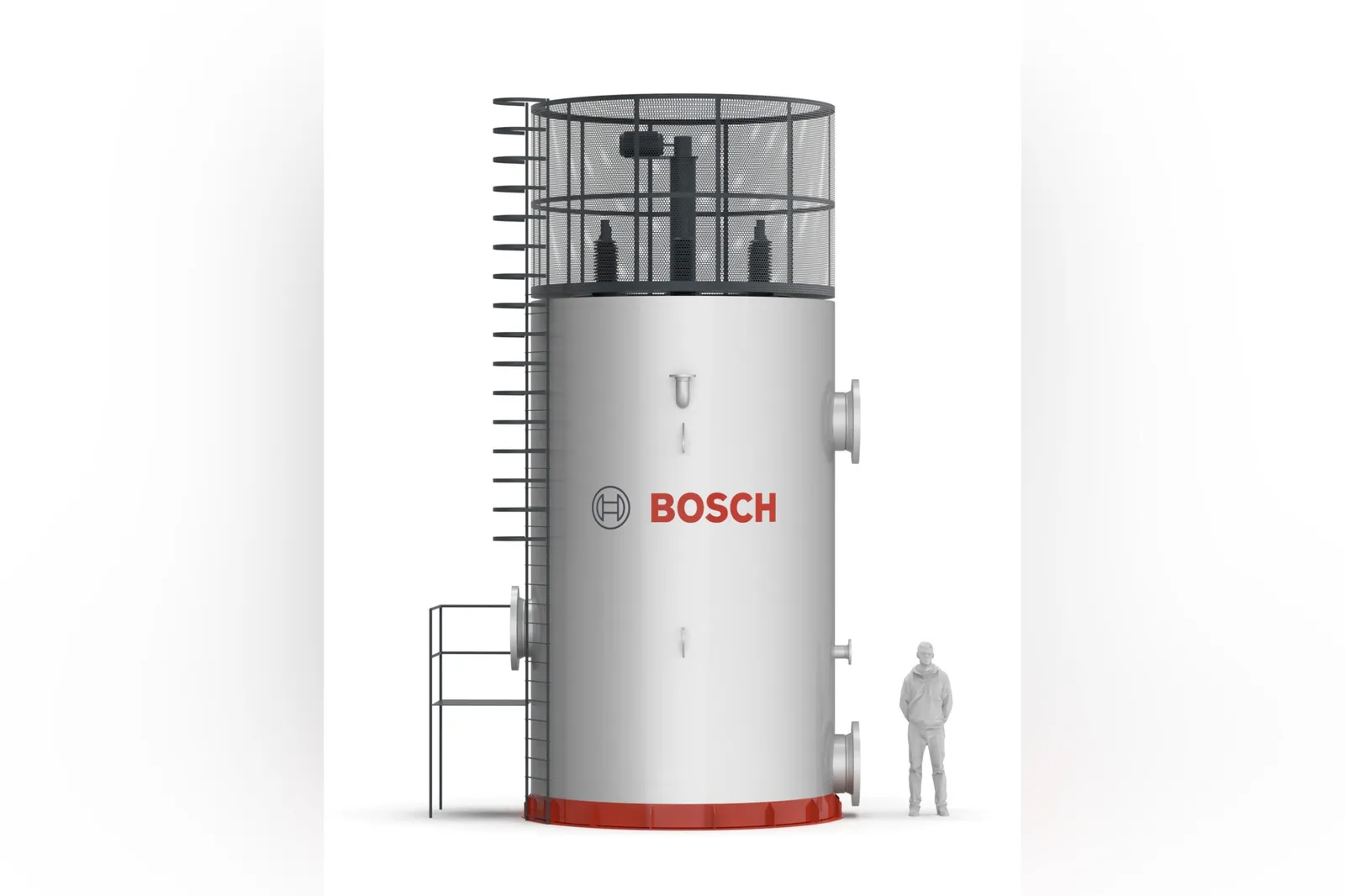
Electric boilers can be divided into two main groups. The first comprises resistance boilers. These steam or hot-water boilers use electric heating elements to heat water and, if required, produce steam. They run almost exclusively on low voltage (three-phase, 400 V to 690 V), which limits their output, although applications up to 5.5 MW (equivalent to 7.5 tonnes of steam per hour) already cover a substantial market segment. The second group comprises electrode boilers. These operate on medium voltage (6 kV to 36 kV). In this design, a voltage is applied between two electrodes submerged in water, with the water itself acting as the conductive medium. The water’s electrical resistance generates heat and, if required, steam. This technology supports applications up to 90 MWe. One advantage of low-voltage boilers is that this voltage level is widely available in industry, although the required electrical capacity should not be underestimated. An electric boiler requires roughly 650 kWe to produce 1,000 kg/h of steam. Another drawback of low voltage is that cable cross-sections quickly become large. Above 6 MW, it becomes difficult to justify staying on low voltage economically. At that point, switching to a medium-voltage boiler is worth considering. Higher voltage levels allow smaller cable cross-sections for the same output.
In addition, these installations are unaffected by harmonics or phase shifts. However, many SMEs still do not have easy access to the medium-voltage grid.
Water quality
Boiler houses today with gas-fired steam boilers, such as fire-tube boilers, already comply with EN12953-10, which specifies water quality requirements for fire-tube boilers. Depending on the feedwater quality, this standard allows boiler-water conductivity of up to 6,000 µS/cm at 25 °C. Chemical additives are also often used in boiler-water treatment to remove residual oxygen, control pH levels and protect pipes and the boiler against corrosion. If an electric boiler is used alongside an existing gas boiler to supply steam to the same steam network, using feedwater from the same feedwater system, compatibility is important. Resistance boilers have a major advantage here, as they can be used in existing boiler houses without any modifications and with the same water treatment as conventional gas boilers. The picture is more nuanced for electrode boilers. There are two common technologies: the immersed electrode boiler and the jet-type electrode boiler. Depending on the manufacturer, immersed electrode boilers require low to very low conductivity, while jet-type boilers require higher values.
Modulation range
To make full use of an electric boiler’s flexibility, a wide modulation range, ideally from 0 to 100%, is essential. Most electric boilers offer a wide modulation range, often better than that of conventional gas-fired boilers. Simple electric resistance boilers use switching relays to control boiler output in steps. Typical steps are 50 or 100 kW. This is not a problem for straightforward applications, but it becomes difficult if you want the boiler to follow a specified load profile as closely as possible. A thyristor is a better option, as it can adjust output continuously across the full modulation range. Jet-type electrode boilers also have the advantage of being 100% modulating. Immersed electrode boilers, by contrast, have difficulty operating at low loads below 10%. Operating at no load is then difficult without switching off the main breaker. Unfortunately, frequent switching adversely affects the service life of this component.
Performance and maintenance
With an efficiency of 99.5% or more, an electric boiler converts almost all electrical input into thermal output. These installations are also emission-free: they produce no CO2, harmful NOx or particulate matter when the electricity is generated from renewable sources. In addition, the absence of a burner, fuel supply and chimney significantly reduces maintenance costs compared with a conventional gas boiler. There is no mechanical wear on a burner fan, no soot contamination and, above all, the installation is much quieter.
A future-proof boiler house in the food industry
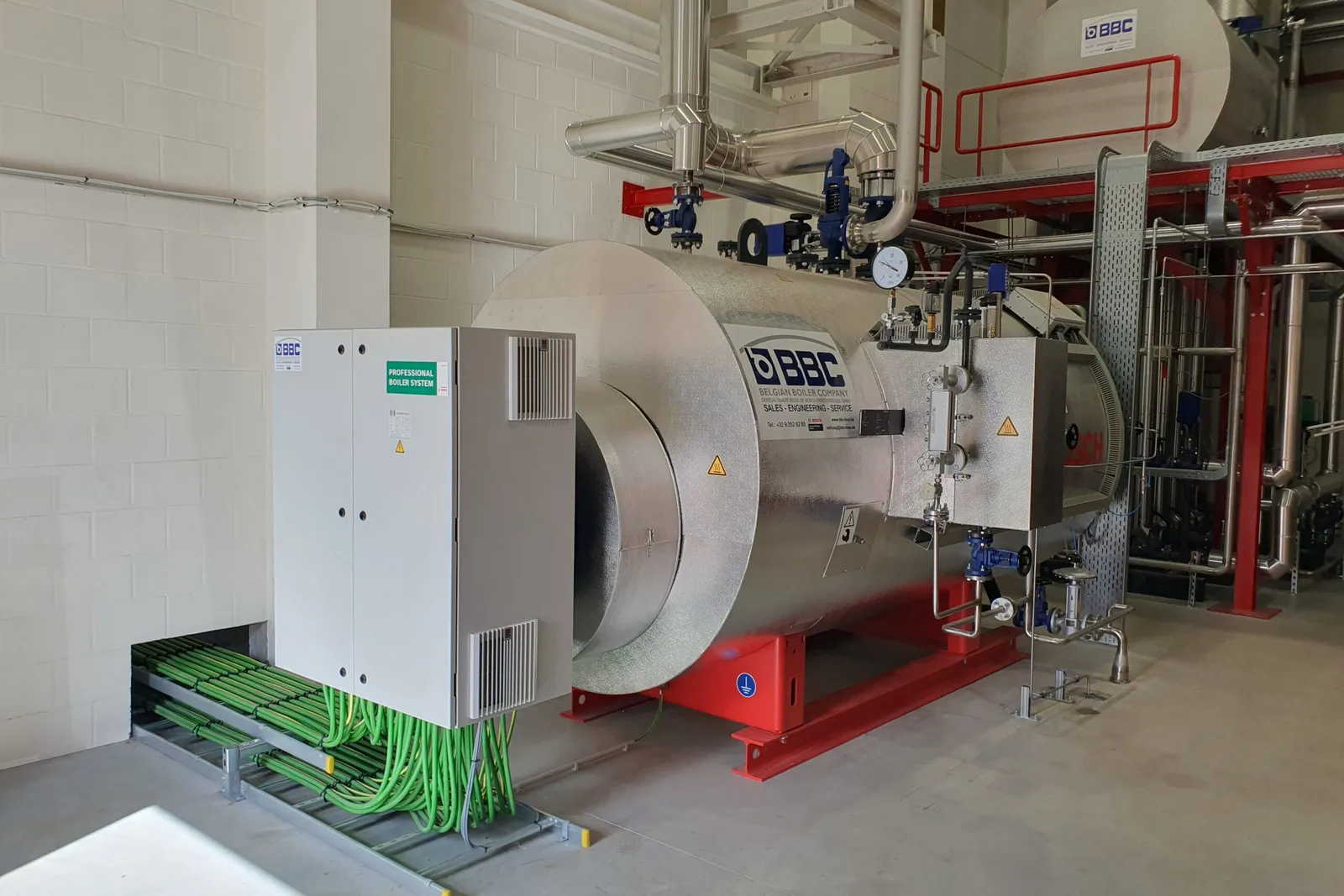
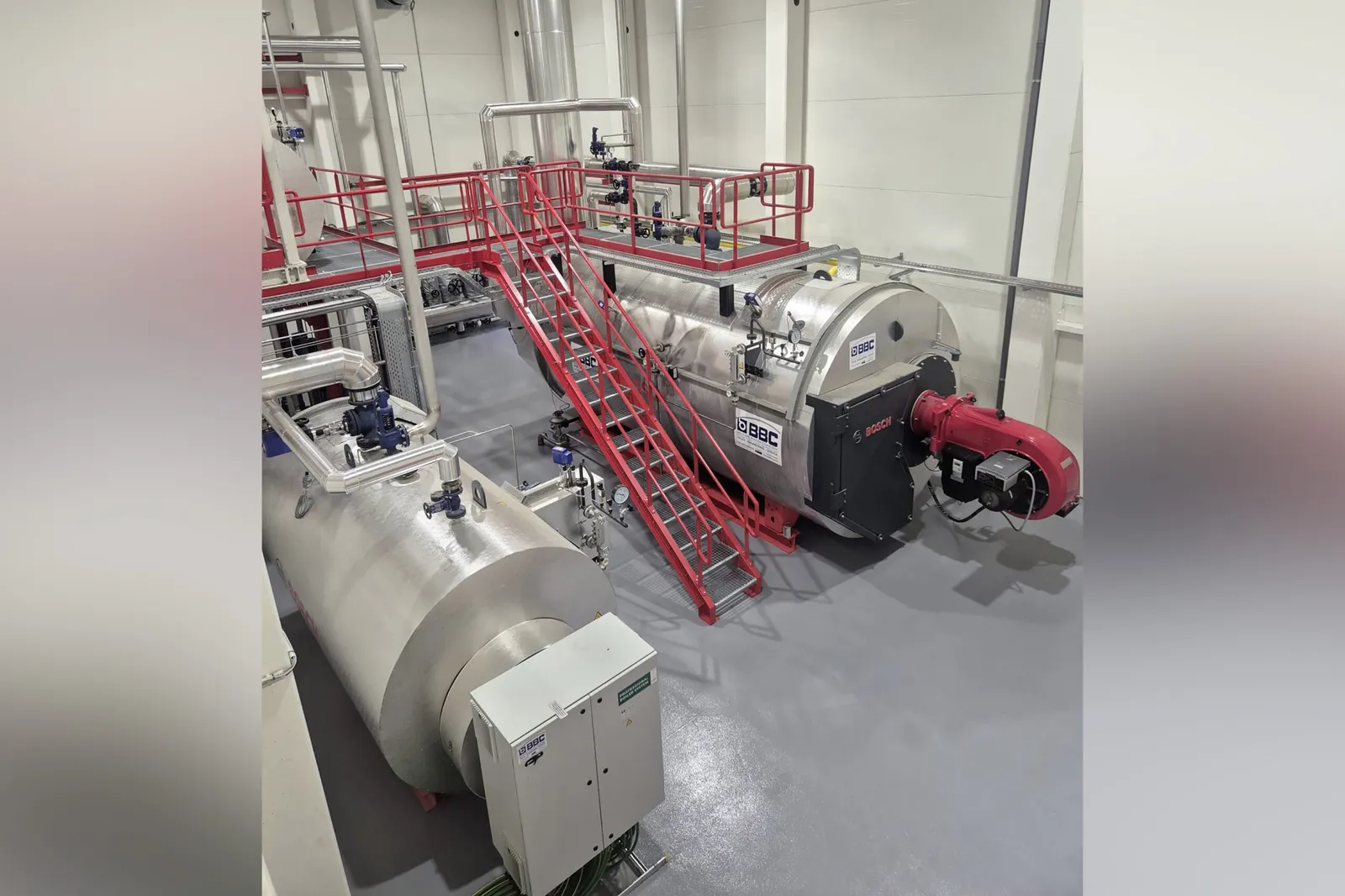
To make full use of flexibility, a boiler house needs to be configured as a hybrid system. A good example was recently delivered by Belgian Boiler Company for a global leader in bakery products. When designing a new boiler house, BBC installed a Bosch low-voltage electric boiler alongside a conventional gas boiler sized to cover the entire steam demand. By integrating the two boilers intelligently, the installation can operate in different modes and the returns from the electric boiler are maximised.
- Mode 1: Conventional master-slave. The focus here is on security of supply. The electric boiler supports the gas boiler during peaks or takes over the base load when technically appropriate.
- Mode 2: Self-consumption. The electric boiler prioritises electricity generated on site from renewable energy sources.
- Mode 3: Variable energy tariffs. Control is based entirely on the day-ahead prices on the electricity market.
- Mode 4: Grid balancing. Some or all of the electric boiler’s capacity is reserved for aFRR signals. The gas boiler supplies the steam, but as soon as the grid operator dispatches the electric boiler, it takes over and the gas boiler’s output is reduced.
This integrated solution was only possible by combining the right technologies. The gas boiler selected was a Bosch UL-S steam boiler with a steam capacity of 9,000 kg/h, an integrated economiser and an additional feedwater cooler. This resulted in a boiler efficiency of more than 96%. At the same time, burner modulation of more than 1:8 was achieved, which is important for ensuring stable control even at low demand. Alongside the gas boiler, BBC installed an ELSB 5 electric steam boiler with an electrical output of approximately 3.3 MW and a steam output of 5,000 kg/h. A thyristor integrated into the boiler’s power cabinet allows output to be modulated fully between 0 and 100%, keeping the electrical load fully under control. Today, this hybrid boiler house not only ensures steam production, but also delivers a substantial reduction in CO2 emissions and optimised energy costs.
Question about this story? Ask your question
Keep following this
Get an email when a new story is published. No account needed.
- ThemeSaving energy and water
- SubjectSustainability