












Software helps optimise supply chains
Text Valérie CouplezImage Optimact

Food companies face considerable complexity in their supply chains. What is the right balance between holding enough stock to serve customers and avoiding excess stock that drives up costs and food waste? And how should production ideally be planned based on forecasting? These are questions that a traditional Excel spreadsheet is increasingly unable to answer. Olivier Corluy found this out for himself. As a supply chain specialist, he decided to develop his own software to manage growing complexity and turn it into efficiency gains. Since 2010, Optimact has been helping food companies find extra margins in their supply chains.
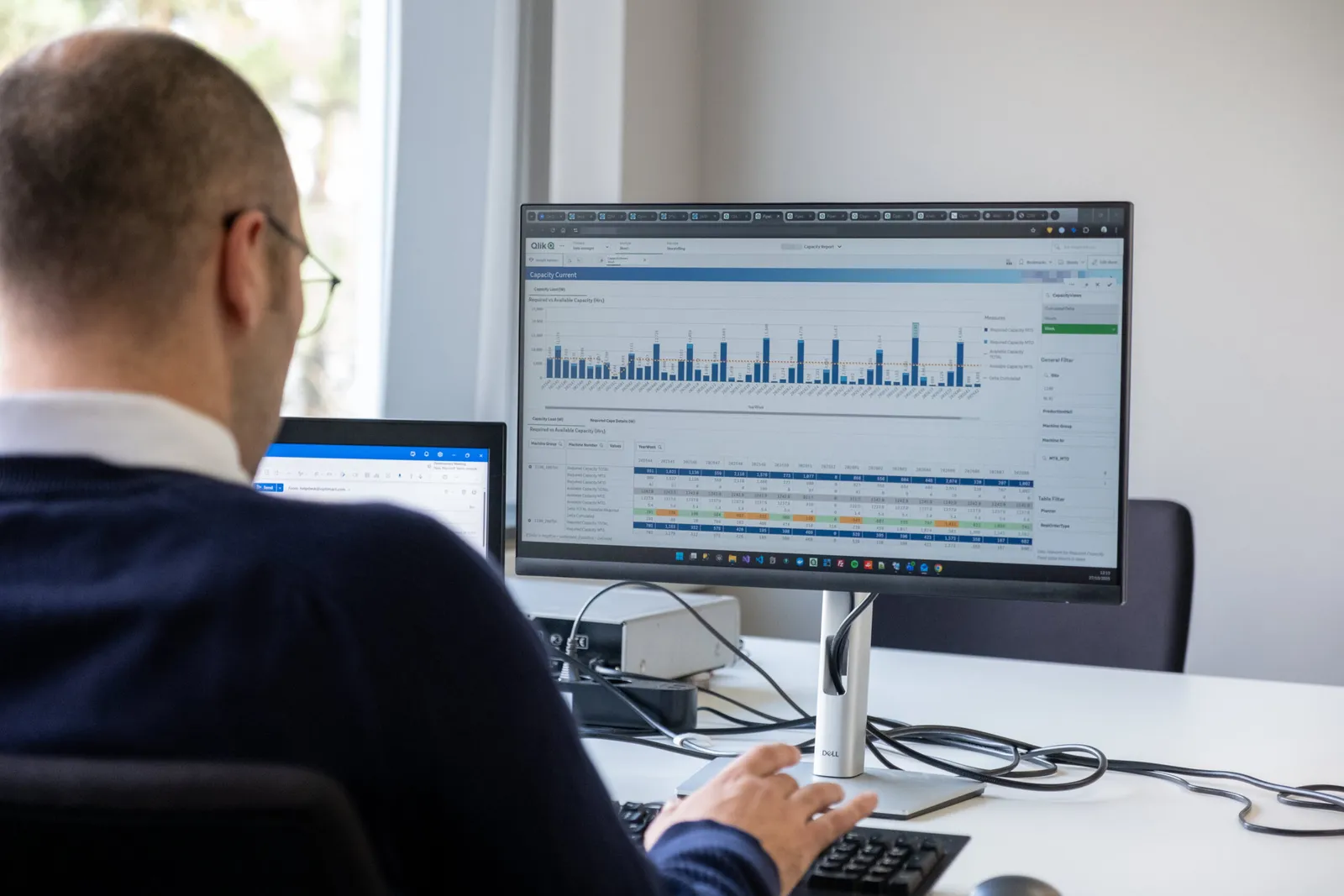
Excel’s biggest drawback is that it is difficult to maintain and transfer. When Corluy had compiled all the data a client needed to create an intelligent plan in an Excel file, he found that a few months later they were no longer using it. “One incorrect formula or cell, and before you know it, you have chaos and incorrect results. Excel is not linked to your ERP system either, so you have to feed it data every month, and the whole process of getting your data right starts all over again. I wanted software to ensure you no longer have to spend time on that. You can see what is happening immediately and take action.”

Software and consultancy
Optimact works across four areas: optimising forecasts, inventory management, production planning and supply. Food companies can choose which modules are relevant to them. “The prerequisite is having an ERP system in place. We then provide the interface to our software. After that, we work with our clients to identify any data they still need to achieve their goals. Our role is to question the way things are done today and suggest improvements to help them operate more efficiently tomorrow.” This is what sets Optimact apart from a traditional software supplier. Consultancy is just as important a part of the process. “It all starts with getting your processes in order. But managing your supply chains effectively requires quite specific knowledge. We bring that expertise to the table. We want to provide the best possible support to food companies in general and planners in particular. Their questions are our answers.”
Simulating the impact
In other words, Optimact does not simply leave its clients to get on with it. “The job is not done once the software has been implemented. Once up and running, it will continue to suggest improvements. In the simulation environment, clients can also simulate the impact of particular decisions themselves.” Corluy gives the example of the Suez Canal being blocked. “Clients can then simulate what that would mean for them in practice. What problems would arise in their supply chain, and how can they take action now?” A degree of AI working behind the scenes should make Optimact’s software even more robust in the future. “There is no crystal ball, but in addition to historical data, we can also take external factors such as temperature into account to produce better short-term forecasts or plan promotions more intelligently.”
Transparency leads to greater efficiency
So what does Optimact’s software deliver for its users? “It is becoming increasingly complex for food companies to keep all the balls in the air. Our software helps them make processes transparent and transferable. Everything continues to run smoothly even when the planner is on holiday or off sick. Our clients’ data shows that efficiency gains of up to 30% are possible, forecasts improve by an average of 10 to 30%, service levels rise and inventory is optimised by 10 to 30%. These are genuinely achievable results. It depends on what your company wants to improve and where its priorities lie. The great thing about our software is that it can grow with our clients. We also have a strong team of specialists who are available and can respond quickly to provide the right answers.”
“Working smarter together, not harder”
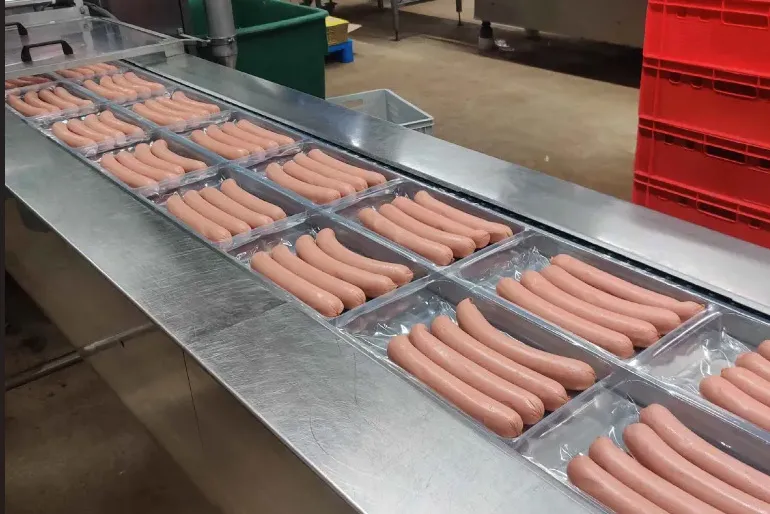
Beltaste is part of the family-owned Vanreusel Snacks group. From three sites in Belgium (Hamont-Achel), the Netherlands (Aalsmeer) and Hungary (Morahalom), it produces around 26,000 tonnes of frozen snacks a year. Optimact carried out a preparatory study for the company. “Over the years, our processes had become increasingly misaligned, but we struggled to identify the underlying causes. We therefore sought advice on how we could adapt and what data we needed to manage things better,” says Luc Slenders, PMO and IT Manager. Optimact identified a lack of a proper S&OP process (sales & operations planning). “We were not performing badly, but we wanted to move away from firefighting towards a more proactive approach. That is essential if we are to keep growing. Otherwise, the increasing complexity of the market would push us to our limits.” With the help of Optimact’s consultants and software, Beltaste learnt to work smarter together rather than harder. “Our data is now reliable and accurate, planning time has been halved, and we are gaining new insights from the software.”
Question about this story? Ask your question
Companies in this story
Keep following this
Get an email when a new story is published. No account needed.
- ThemeSmart production with data
- SubjectTechnology
- CompanyOptimact







