Iodised salt in food: why iodine matters for health and the food industry

Guests: Thidrek Van Grunderbeeck, Marketing & Communications Manager at ZOUTMAN & Maarten Delbaere, Sustainability Manager at ZOUTMAN | Host: Björn Crul
Iodine is an essential trace element that plays an important role in thyroid function, metabolism and brain development in children. Yet mild iodine deficiency is still found in Western Europe. In this FoodTec podcast, Björn Crul, Thidrek Van Grunderbeeck and Maarten Delbaere of ZOUTMAN discuss why iodised salt can play an important role in our daily diet. They look at how iodised salt is produced, differences in European regulations, its use in prepared food products and the opportunities for food companies to help improve consumer health through iodine fortification.


Een zakelijke vraag aan ZOUTMAN? Get in touch
Full transcript
Alle hoofdstukken (32)
- Iodine and the role of salt in our diet
- Why our body needs iodine
- Iodine deficiency in Western Europe
- Mild deficiencies and their possible effects
- Why salt is used as a carrier for iodine
- Salt as a widely available ingredient
- How iodine is added to salt
- Dosage and quality control
- Iodine stability and shelf life
- Iodine remains stable after packaging
- Iodine intake from prepared food products
- The food industry as a key link
- Using iodised salt in the food industry
- Plenty of potential for iodised salt
- Why food companies make little use of iodised salt
- Different regulations across Europe
- Impact on taste and the production process
- No changes to recipes or machinery
- The health contribution as a selling point
- Health benefits and a potential marketing advantage
- Operational barriers
- Changing dietary patterns
- Baker’s salt as a familiar example
- Collective agreements in the bakery sector
- Dealing with different national regulations
- Supporting customers in each export market
- Harmonisation across Europe
- A message for nutritionists
- Consider iodised salt in food products
- What consumers can look out for
- Iodine on the packaging
- Closing
Iodine and the role of salt in our diet
Björn Crul Hello listeners, and welcome to the third episode of this FoodTec podcast, produced in partnership with ZOUTMAN. Today we are focusing on a trace element that is small but hugely important: iodine. Why does our body need it? Where do we get iodine from, and what role can salt and the food industry play? I’m Björn Crul, and I’ll be talking about iodine and salt with Thidrek Van Grunderbeeck and Maarten Delbaere of ZOUTMAN. Gentlemen, welcome to our podcast table. [Unclear] trace element. Thidrek, could you briefly explain exactly what it does in our bodies and why we need it so much?
Why our body needs iodine
Thidrek Van Grunderbeeck Yes, iodine is indeed what is known as a trace element. It’s a nutrient that your body needs only in very small amounts, but it is very important for your functioning. Iodine specifically helps your thyroid work. [Unclear] to produce hormones that regulate your energy and body temperature. It is also particularly important for children’s brain development. Iodine is not naturally present in your body, and you can’t produce it yourself, so you really do need to get it through your diet. Think, above all, of products from the sea, which are very rich in iodine. Fish, shellfish and similar foods. It is less abundant in plant-based foods.
Iodine deficiency in Western Europe
Björn Crul Are there actually many people who are iodine deficient?
Mild deficiencies and their possible effects
Thidrek Van Grunderbeeck More than you might think. This isn’t a problem confined to faraway countries. Here in Western Europe, in Belgium, the World Health Organization, which monitors this too, has found mild iodine deficiency in a very large proportion of the population. So we’re not talking about severe deficiencies, like those once seen in very remote areas, with an enlarged thyroid and so on. We’re talking about mild iodine deficiency, which can lead to a little more fatigue and a slower metabolism. Mild iodine deficiency often means lower energy levels and a slower metabolism. It is especially crucial for children and pregnant women not to be iodine deficient, because iodine is essential for brain development. An iodine deficiency, even a mild one, can really hinder a child’s development.
Read the full transcriptCollapse transcript28 more chapters
Why salt is used as a carrier for iodine
Björn Crul Yes, that’s also why food agencies around the world consider iodine essential for health. Maarten, why has salt historically been used as a way of getting iodine into our diets?
Salt as a widely available ingredient
Maarten Delbaere Put simply, salt is a very accessible ingredient, which also makes it the perfect carrier. Everyone eats salt or consumes it every day, either by adding it to food themselves or through processed food products. So it’s a very easy way to reach the whole population, without having to persuade people to take extra supplements. Salt is also very cheap, available everywhere and relatively easy to add to salt. As a salt producer, we can also focus on doing that.
How iodine is added to salt
Björn Crul Maarten, I hear you saying that it’s actually quite easy for ZOUTMAN to add iodine to salt. How does that process work?
Dosage and quality control
Maarten Delbaere Depending on the legislation, we add potassium iodide or potassium iodate. How easy it is to dose it evenly depends on the grain size: fine salt is easier, coarse salt a little more difficult. Our quality control team also plays a part, of course. They have to check that the iodine content is correct in every batch, so they take representative samples. They can then release the salt in accordance with the legislation in each country, because requirements differ from one country to another. Local authorities also check that the iodine content is correct.
Iodine stability and shelf life
Björn Crul Once iodine has been added to or mixed into the salt, how long does it keep? Does it have a use-by date?
Iodine remains stable after packaging
Maarten Delbaere Yes, we have reference samples and check them too, but we find that the iodine remains very stable. It stays stable for three and a half years after packaging. Heat and so on have no effect on it either. Nor do subsequent stages in the production process, really. It all remains stable.
Iodine intake from prepared food products
Björn Crul Most of the salt we consume comes from prepared food products. Looking specifically at iodine intake, does that mean the average consumer gets enough iodine over the course of a week, for example?
The food industry as a key link
Thidrek Van Grunderbeeck Yes, that’s really the crux of the matter. When people think about salt consumption, they think of the salt shaker in their kitchen. They assume that most of the salt they consume comes from that shaker. But in fact, it comes from prepared food and from the groceries you buy every day. [Unclear] people’s iodine intake, or whether or not they are iodine deficient. So whether or not we get enough iodine actually depends on the groceries we buy and the products we choose from different food companies. And that presents a real opportunity for the food industry.
Using iodised salt in the food industry
Björn Crul Are many food companies already choosing to use salt with added iodine?
Plenty of potential for iodised salt
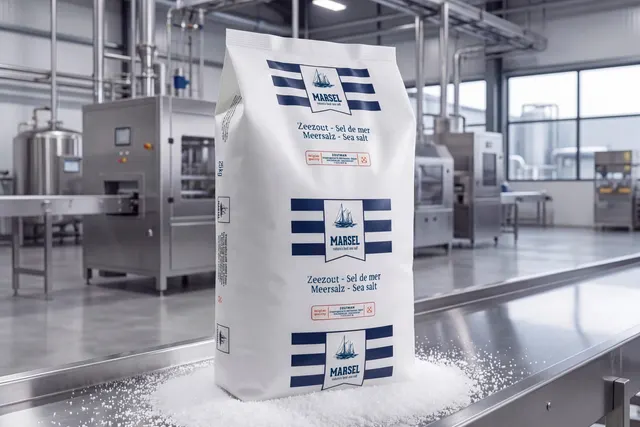
Thidrek Van Grunderbeeck It does happen, but it’s still fairly uncommon. The World Health Organization monitors this too. In our part of the world, the proportion of iodised salt used in prepared food is still relatively low. So there is a lot of potential. By contrast, iodised salt is commonly found in table salt. It says so on the pack: with iodine. So there is a major opportunity for the food industry here.
Why food companies make little use of iodised salt
Björn Crul Why don’t they choose iodised salt more often?
Different regulations across Europe
Thidrek Van Grunderbeeck European legislation actually makes it quite difficult. Every European country has its own iodine standards. For example, in some countries the level is 20 to 40 ppm, while in others it is different. That makes things difficult for a Flemish company exporting to several European countries, because it has to take all those different iodine standards into account. It’s very difficult. On top of that, the labelling has to be amended when you use iodised salt. The labelling change may seem trivial, but it can still be a hassle when exporting to several European countries.
Impact on taste and the production process
Björn Crul Maarten, if a food company chooses to add iodised salt, does that have any impact on the production process or the taste of the food product?
No changes to recipes or machinery
Maarten Delbaere No, not really. Adding iodine doesn’t affect the taste. The recipe doesn’t need to be changed, and the machinery doesn’t need different settings either. As I said, it is a very stable trace element, so it has no impact at all on the finished product.
The health contribution as a selling point
Björn Crul Thidrek, nutritionists are listening in today, of course. What’s the most convincing argument for a company to switch to iodised salt?
Health benefits and a potential marketing advantage
Thidrek Van Grunderbeeck I think the main benefit is self-evident: it contributes to health. By using iodised salt, a food company can help address a deficiency that still exists today. [Unclear] it can be very useful for pregnant women and children. I think that’s such a strong argument that you also get a marketing benefit on top. If you can highlight the fact that your food products contain iodine-fortified salt, that can only be an advantage with consumers, I think.
Operational barriers
Björn Crul Yes, it’s almost surprising that it’s not promoted more widely.
Thidrek Van Grunderbeeck Yes, as I said earlier, it’s simply operationally difficult to do, and European legislation can make things genuinely difficult for food companies because there is no common policy. That’s really the problem.
Changing dietary patterns
Maarten Delbaere Another factor may be that this used to be less of a problem. But we are seeing iodine deficiencies become more common again as people’s diets change and they eat more plant-based food. It was something we associated with the past, but it’s coming back. Several countries are monitoring iodine levels to make sure they remain adequate.
Baker’s salt as a familiar example
Björn Crul Are there any well-known examples of products that routinely contain iodised salt?
Collective agreements in the bakery sector
Thidrek Van Grunderbeeck A well-known example, including in the Netherlands, is baker’s salt, where an industry collectively agrees to use iodine in its products. Bread is a very suitable product for this, because, like salt, it is widely consumed. Lots of people eat [Unclear]. Agreements with traditional bakeries. But this isn’t something that is supported across Europe as a whole.
Dealing with different national regulations
Björn Crul One thing I’ve taken away from what you said earlier is that European legislation does not really encourage the use of iodised salt in food. You explained that the rules vary from country to country. How does ZOUTMAN handle that, Maarten, given that you supply salt across Europe?
Supporting customers in each export market
Maarten Delbaere Yes, that’s right. But we do take on the role of guiding our customers. We also explicitly ask which country the product is intended for export to, if applicable. It is quite complex. Some countries specify a minimum or maximum level, or require a particular additive that may not be permitted in another country. In Poland, for example, the level is around 20 to 30 ppm, while in Germany it is around 15 to 25 ppm. If you make a product for both countries, it is very difficult to offer a single type of salt. We do that, too.
Harmonisation across Europe
Björn Crul Is the EU working to try to harmonise the regulations?
Maarten Delbaere Yes, it is. Following WHO advice, Europe is also looking to establish a degree of consistency, because the legislation is currently holding back a lot of producers.
A message for nutritionists
Björn Crul Thidrek, if you could give one final message to the nutritionists listening today, what would it be?
Consider iodised salt in food products
Thidrek Van Grunderbeeck Consider using iodised salt in your food products. Take a look and see whether it is an option, because it can have a real, measurable impact on people’s health and can also make your products more appealing.
Maarten Delbaere Yes, and I would add that you are not on your own. We advise on the regulations to follow in each country, and we also ensure the correct analysis straight away, thanks to our laboratory.
What consumers can look out for
Björn Crul Maarten, for people heading to the supermarket to do their shopping, what should they look out for if they specifically want to increase their iodine intake?
Iodine on the packaging
Maarten Delbaere This is a general call to action: take a look at the salt packaging and see what it says. If it says ‘with iodine’ or ‘iodised’, it is the healthier option and a good choice.
Closing
Björn Crul Thidrek Van Grunderbeeck and Maarten Delbaere of ZOUTMAN, thank you for this interesting conversation. I’ll remember that we do not get enough iodine from our regular diets and that we should therefore be more mindful than before about which salt we use. Thank you for listening. Until next time, and for more information, visit foodtec.be.
Companies in this story

Keep following this
Get an email when a new story is published. No account needed.
- ThemeDeveloping new foods
- SubjectLegislation
- CompanyZOUTMAN