EUDR and the food sector: why preparation starts long before customs
For years, food supply chain rules focused mainly on food safety, veterinary checks, health certificates and customs formalities. The EU Deforestation Regulation (EUDR) changes this. Sustainability is at the heart of this legislation, but its implications go far beyond sustainability reporting.
For businesses importing food into the European Union, the EUDR brings new obligations. These affect supplier selection, supplier relationships, customs processes and day-to-day supply chain management.
For many businesses, the biggest challenge is not understanding the rules themselves, but ensuring that the right data is collected, checked and linked to customs processes in time, before goods reach the EU border.
Although the date when the main obligations take effect has been postponed, no less preparation is needed. Many businesses are discovering that EUDR compliance does not simply mean submitting an extra document. Operators must be able to demonstrate that their relevant products comply with the rules, right back to the plots of land where the commodities were produced.
Rules affecting the entire food supply chain
The food sector is one of the sectors directly affected by the EUDR. Commodities such as coffee, cocoa, palm oil, soya and cattle products are used in countless food products sold on the European market.
The rules also apply to various derived and processed products listed in Annex I to the Regulation. This means the impact is not limited to businesses importing commodities directly. Whether a product falls within the scope of the EUDR depends on its CN code in Annex I: a food product is not automatically covered by the rules simply because it contains, for example, cocoa, coffee or palm oil.
The precise obligations vary according to each party’s role in the supply chain: operator, downstream operator or trader. However, manufacturers, processors, wholesalers and retailers placing relevant products listed in Annex I on the market, making them available on the market or exporting them all have an important role to play in recording, retaining and sharing the right information.
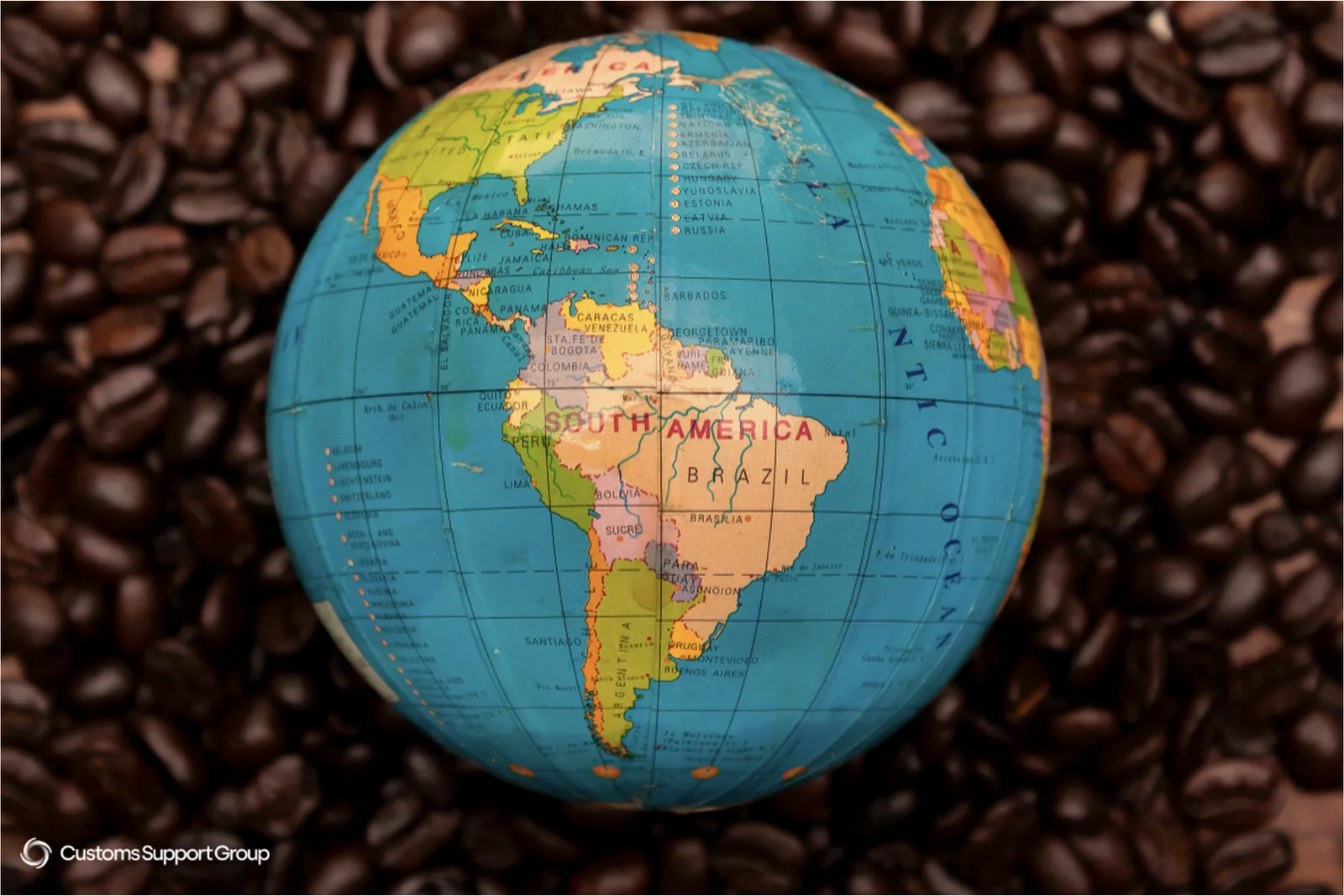
The EUDR requires operators to look much further back in their supply chains than many existing customs rules do. They must know not only who supplied their products, but also exactly where the relevant commodities were produced (country of production and geolocation of the plots of land). They must also be able to demonstrate that these products do not originate from land deforested after the cut-off date and that production complies with the relevant legislation in the country of production.
For many businesses, having such a complete picture of where their products come from is new.
Data quality will be a major challenge
A common misconception about the EUDR is that suppliers can easily provide all the information required. In practice, collecting complete, reliable and verifiable data across an international food supply chain is one of the biggest challenges.
Food supply chains often involve many different parties. Ingredients may pass through several producers, processors, traders and distributors before reaching Europe. The more a product is processed, the harder it becomes to trace every relevant commodity back to the plots of land where it was produced.
Many businesses are therefore finding that their current supplier information is not enough. Exact origin data may be missing, supplier declarations vary in quality, and existing contracts do not always give them access to all the information required under the new rules.
As a result, the EUDR is not just about sustainability. Collecting, managing and checking data properly is also becoming increasingly important.
Customs and the EUDR are becoming increasingly connected
The EUDR is not customs legislation, but customs authorities do have a legally defined role (Article 26 EUDR). The competent authorities are responsible for enforcement overall, while customs checks customs declarations for relevant products released for free circulation or exported.
Relevant products may be placed on the market, made available on the market or exported only if, where required, they are covered by a due diligence statement (DDS) or, for primary micro or small operators, a simplified declaration in the EUDR Information System (Article 33 EUDR). For imports, the DDS reference number or declaration identification number must be available to customs before the goods are released for free circulation.
This means that the commodity code, quantity and country of production must be correctly recorded in the due diligence statement or simplified declaration. Where required, the corresponding DDS reference number or declaration identification number must be included in the customs declaration. Inconsistencies may prompt further verification. If the competent authority has flagged a product for checks, customs will suspend its release for free circulation.
For businesses in the food sector, such delays can have greater consequences than simply creating extra paperwork. Many food products are time-sensitive, and chilled or fresh products have a limited shelf life. Even a short delay can affect production schedules, agreed delivery times and product quality.
The financial impact of non-compliance can therefore go far beyond any fines.
Compliance is a shared responsibility
One reason businesses underestimate the impact of the EUDR is that responsibility rarely rests with just one department. Procurement maintains supplier relationships, sustainability teams handle due diligence, customs teams manage import declarations, and logistics teams ensure goods cross the border on time.
The obligation to submit a DDS rests with the operator first placing a relevant product on the market in the Union, or exporting a relevant product not already covered by a DDS or simplified declaration. For imports, this is generally the importer named in the customs declaration. Downstream operators and traders do not submit their own DDS. However, all these departments need to work closely together to ensure compliance. Parties further down the supply chain also play an important role in retaining and sharing information and ensuring products can be traced throughout the chain. They must collect and retain information about their suppliers and business customers.
When they receive relevant products directly from an operator, they must also record and retain the corresponding DDS reference numbers or declaration identification numbers. Non-SME downstream operators and traders must also check that due diligence has been carried out if there are substantiated concerns.
The EUDR therefore calls for a way of working together that is new for many businesses.
Businesses that treat the EUDR solely as a sustainability issue risk overlooking important practical implications. These may only become apparent when goods arrive at customs.
Conversely, it is not enough to treat the EUDR solely as a new customs obligation. In practice, supplier engagement and data collection and verification often need to take place before goods are shipped. After all, the due diligence process must be completed before products are placed on the market in the Union, and the reference number must be available before release for free circulation.
A sound approach therefore requires one clear process that properly aligns suppliers, product data, customs declarations and the necessary documentation.
It is time to start preparing
Although businesses have been given extra time before the rules fully apply, it is wise not to delay preparations. The main obligations apply from 30 December 2026 for large and medium-sized operators and traders. For operators established as natural persons or as micro or small enterprises by 31 December 2024, the relevant obligations apply from 30 June 2027. For certain products added to Annex I in 2026, including instant coffee, frozen bovine tongues and certain palm oil derivatives, the obligations apply from 30 December 2027.
Mapping the supply chain, assessing suppliers, collecting geolocation data and checking the required information all take time. This calls for close coordination between different parties, particularly for businesses that source ingredients globally.
Many businesses are therefore already using this period to review supplier agreements, improve data quality and clearly assign responsibilities internally. This not only reduces the risk of non-compliance, but also gives businesses greater insight into increasingly complex international supply chains. The transition to the EUDR requires close collaboration between procurement, sustainability, logistics and customs. Businesses that start early will be better prepared to move their goods through the international supply chain without unnecessary problems under the new rules.
Customs Support Group helps businesses in the food sector prepare for the EUDR. We ensure customs processes align with the new obligations, help businesses comply with trade rules and prepare supply chains across Europe for the new requirements. Would you like to know what the EUDR means for your customs processes and supply chain? Contact our experts.
Een zakelijke vraag aan Customs Support Group B.V.? Get in touch
Companies in this story
Keep following this
Get an email when a new story is published. No account needed.
- SubjectLegislation
- CompanyCustoms Support Group B.V.