From dry salt to brine: more efficient salt use in the food industry
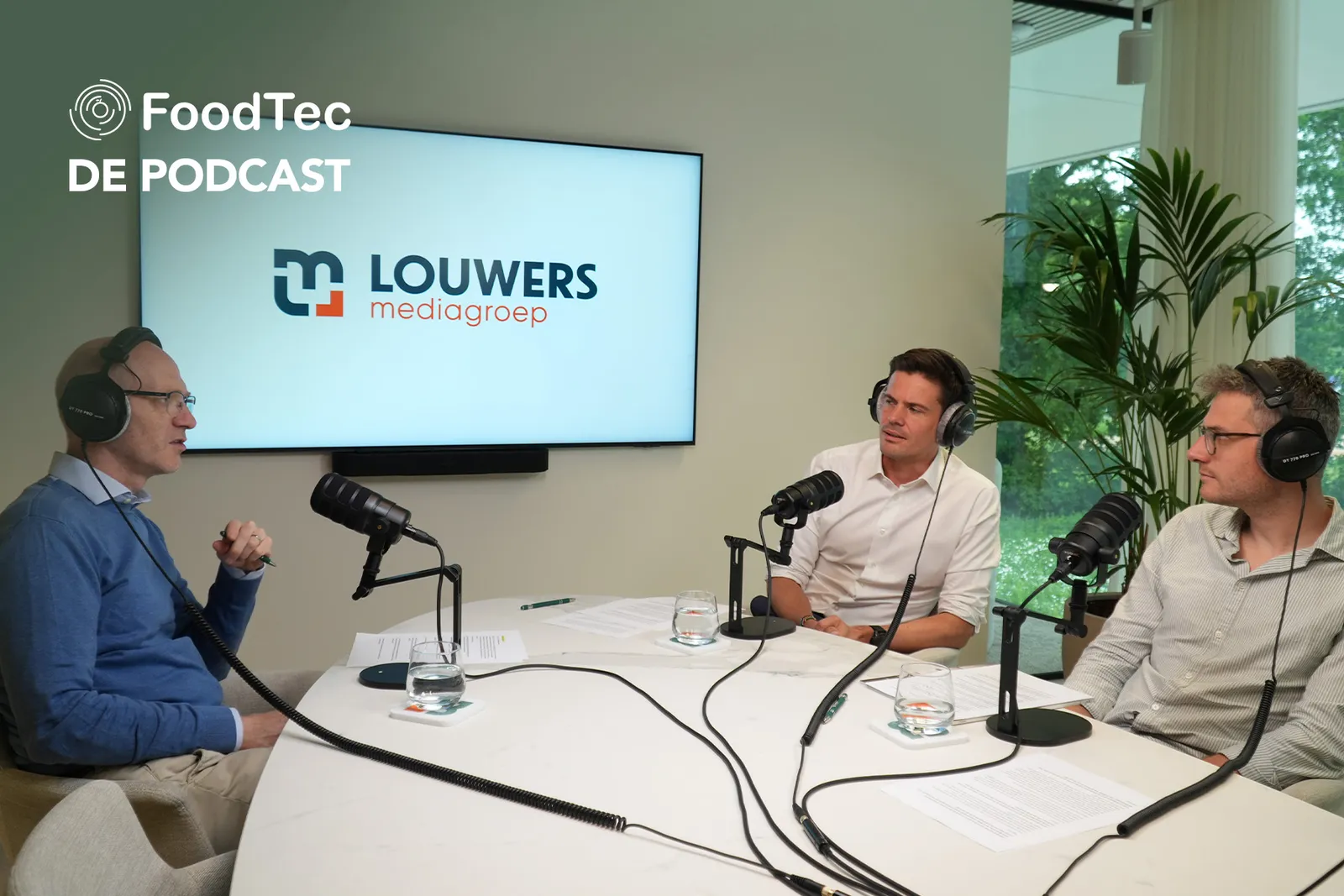
How can food companies store, dose and process salt more efficiently? Björn Crul speaks to Thidrek Van Grunderbeeck and Maarten Delbaere of Zoutman about the benefits of ready-to-use brine, MARSEL® LIQUID, automatic deliveries and applications in sectors including bakeries and margarine production.

Een zakelijke vraag aan ZOUTMAN? Get in touch
Full transcript
Alle hoofdstukken (10)
- Salt deliveries to food companies
- Dry salt and brine
- Brine production and quality
- The logistical benefits of ready-to-use brine
- MARSEL® LIQUID
- Why companies switch to brine
- Brine for production and water softening
- Switching to brine in practice
- Automatic deliveries and stock management
- Advice for food companies
Salt deliveries to food companies
Björn Crul Welcome to this FoodTec podcast, produced in collaboration with Zoutman. In this three-part series, we take you into the world of salt. It’s a product we use every day, but rarely give much thought to. My name is Björn Crul, and today I’m talking to Thidrek Van Grunderbeeck and Maarten Delbaere of Zoutman about how food companies use salt as an essential part of their products. Welcome back, gentlemen. How is salt usually delivered to your customers?
Maarten Delbaere Well, I’ve visited quite a few food companies, and the standard is usually 25-kilogram bags, stacked on pallets. They use it both as a food ingredient and for water softening. Then, further back in the warehouse, there are usually a few pallets of tablets tucked away in a corner. So that’s the standard setup. But we are seeing a trend towards larger quantities, in the form of big bags or silos. Companies are investing in automation. Or, at the request of workers on the shop floor, they are opting for smaller 15-kilogram bags. So we are seeing a slight shift, but bagged salt is still the standard.
Björn Crul From the previous podcast, I gathered that salt is an important ingredient for many food companies, usually in small quantities. But operationally, it is an important factor in the process.
Maarten Delbaere That’s right. Salt may not cost much, but you do need space for it. You need quite a few pallet spaces to store it. It also takes up a lot of room, and I think some people don’t give that enough thought. They look at the cost of the salt itself, but not at the handling involved afterwards. The bags have to be cut open, the salt has to be dosed, and so on. That also comes at a cost, and I don’t think that is always taken into account when making purchasing decisions.
Read the full transcriptCollapse transcriptnog 9 hoofdstukken
Dry salt and brine
Björn Crul There’s dry salt, and there’s brine. What exactly is brine, and why do some food companies prefer it?
Thidrek Van Grunderbeeck There are many food production methods where dry salt is simply mixed with other ingredients to make a particular product. But for a great many applications, brine is better suited. Brine is simply a mixture of water and salt, but it can be easier to dose in some applications. Take salted crisps, for example. They are usually coated with brine. If you were to sprinkle dry salt on them, by the time the consumer opened the bag, all the salt would have settled at the bottom. So there are quite a few applications where brine is better suited to production than dry salt.
Brine production and quality
Björn Crul And how is brine made at Zoutman?
Thidrek Van Grunderbeeck Well, brine isn’t simply, as I said earlier, salt and water.
Björn Crul It’s not just a matter of adding some salt to water and calling it done.
Thidrek Van Grunderbeeck No, no. Our brine production process is highly technical. One very important aspect of producing brine, for example, is maintaining its concentration. Brine can have different salt concentrations, but the concentration needs to remain very stable. Even the slightest variation can have a major impact on the flavour of the end product. Some companies make their own brine by installing a salt dissolver in their production facility. But we are often told that the concentration isn’t always stable, because they don’t necessarily have the in-house expertise to make consistent brine. That’s something we do very well. On top of that, our brine undergoes advanced ultrafiltration. This makes it ideal for use in cheese, for example, without leaving any black specks in the cheese.
The logistical benefits of ready-to-use brine
Björn Crul Maarten, looking at the logistics, brine takes up more space than salt itself, I imagine. Is the quality guarantee what makes ready-to-use brine the best choice for food companies?
Maarten Delbaere There are several factors to consider. We can’t deny that you are transporting quite a lot of water when you use a tanker. Within a radius of around 150 kilometres, that is certainly manageable. But there are also a number of things you no longer have to do. There’s no handling, no need to store the bags, manage stock or cut the bags open. And as Thidrek says, the NaCl concentration in the water is constant, and we make sure it stays that way. We deliver using our own tankers, with dedicated transport and our own drivers. All of that is part of the brine product.
MARSEL® LIQUID
Björn Crul Thidrek, your product is called MARSEL® LIQUID. You’ve just said it’s more than just salt in water. But which companies is it the right solution for?
Thidrek Van Grunderbeeck Our product is called MARSEL® LIQUID because our dry salt is also called MARSEL. And “LIQUID” refers, of course, to the brine. That distinction matters. We don’t just sell brine, we offer the same quality of MARSEL that our customers are used to getting in dry salt. Our salt and our factories are BRC and IFS Higher Level certified, every time, without exception. So with this brine, customers can expect the same quality.
Björn Crul And it’s still made from sea salt?
Thidrek Van Grunderbeeck It is made from MARSEL sea salt, in liquid form. We’re seeing growing demand from food companies across a range of sectors. We’ve had quite a few more enquiries, particularly from industrial bakeries and margarine producers.
Why companies switch to brine
Björn Crul What’s driving that increase in demand?
Thidrek Van Grunderbeeck There’s a wide range of operational benefits. Sometimes I don’t really know where to start. One of the main reasons so many companies are switching from dry salt to brine, to MARSEL® LIQUID, is ergonomics. When you work with dry salt, those 25-kilogram bags are heavy. Many food companies that are still growing don’t always have the time to focus on this. In practice, it’s operators who… There is certainly a strong focus on health and safety when it comes to switching to brine, but the reason can come from somewhere completely different. One customer, for example, made the switch because they simply ran out of space. A brine tank takes up about two pallet spaces. By contrast, storing ten pallets of salt… That customer simply had no room to expand, and brine was the solution.
Brine for production and water softening
Björn Crul Maarten, I understand that food companies also use brine for more than just food applications. What does that mean in practice? Can you give us an example?
Maarten Delbaere To give a concrete example, let’s go back to the start of the episode. That forgotten corner with the tablets for water softening is actually a two-in-one solution. After all, what do you do with those tablets? You dissolve them to make brine. You need brine for the production process and for water softening, so using the same brine for both is an added benefit, I think.
Thidrek Van Grunderbeeck I’d also add that, since you asked earlier which companies brine is of interest to, I think a certain volume of salt needs to be used in these factories. And especially if they also need water and salt in their recipes. Bread requires water and salt, so switching to brine is almost a no-brainer, at least worth considering.
Switching to brine in practice
Björn Crul Maarten, if a company does decide to switch to brine, what does that look like in practice? Does the production process need to change much?
Maarten Delbaere Not really. Brine can be dosed easily. Of course, it depends on how the factory is laid out. As I said, most companies already have a brine dissolver. You can simply replace it like for like with a brine tank. So the setup is essentially plug-and-play. That’s what we’re seeing, and we also advise our customers on it. Our service doesn’t stop at supplying the brine. We work with them on the overall concept, on the basic production setup, and on the best way to implement it if changes are needed.
Björn Crul Does it take a long time to get everything up and running?
Maarten Delbaere Once the decision has been made, everything happens very quickly. The decision-making process beforehand takes much longer, because it involves a lot of people and several departments that need to have their say. It’s a question of safety and operational efficiency, so the engineering team may also be involved. Purchasing may be involved too, at least in part. First, everyone needs to talk to each other, then they put together a business case. If everything adds up, the decision is made, and then things move relatively quickly.
Automatic deliveries and stock management
Björn Crul Thidrek, when companies switch to liquid brine, you also offer a system for automatic deliveries. That sounds very useful for the food industry, where companies often operate 24/7.
Thidrek Van Grunderbeeck Yes, I think it really is the icing on the cake when it comes to the product we offer. If the customer is open to it, we simply install a pressure sensor, which is fairly straightforward, to detect how much brine is left in the tank. When the brine level falls below a certain threshold, we receive an alert at Zoutman’s offices saying that the customer’s tank should be topped up. We then arrange this automatically. We agree the process with the customer. They don’t need to monitor their stock themselves. We simply send a driver who is trained to refill the brine tank. That’s how it works. By switching to brine, the customer no longer has to think about salt at all. It’s always there, wherever and whenever they need it, and they don’t have to keep an eye on it. That’s a nice thing to be able to offer. We also have a customer portal for those who do want to monitor their stock, where they can see the amount of brine in their tank in real time.
Advice for food companies
Björn Crul If a food company wants to find out whether ready-to-use brine is a good solution for them, what should they do?
Thidrek Van Grunderbeeck I would encourage any food companies that are interested to get in touch with us, with no obligation. We have a number of experts in this area who can offer advice, also with no obligation, and help you determine whether it is right for your company. Just to sound us out. We are always happy to do that.
Björn Crul Noted. And listeners, you can also find a QR code for more information alongside this podcast. That brings us to the end of this second podcast. Maarten and Thidrek, thank you for your insights. And thank you, listeners, for joining us. We look forward to seeing you next time.
Companies in this story

Keep following this
Get an email when a new story is published. No account needed.
- ThemeDeveloping new foods
- SubjectSolutions
- CompanyZOUTMAN