The transition to AI-supported agents
Text Valérie CouplezImage iStock and Valérie Couplez
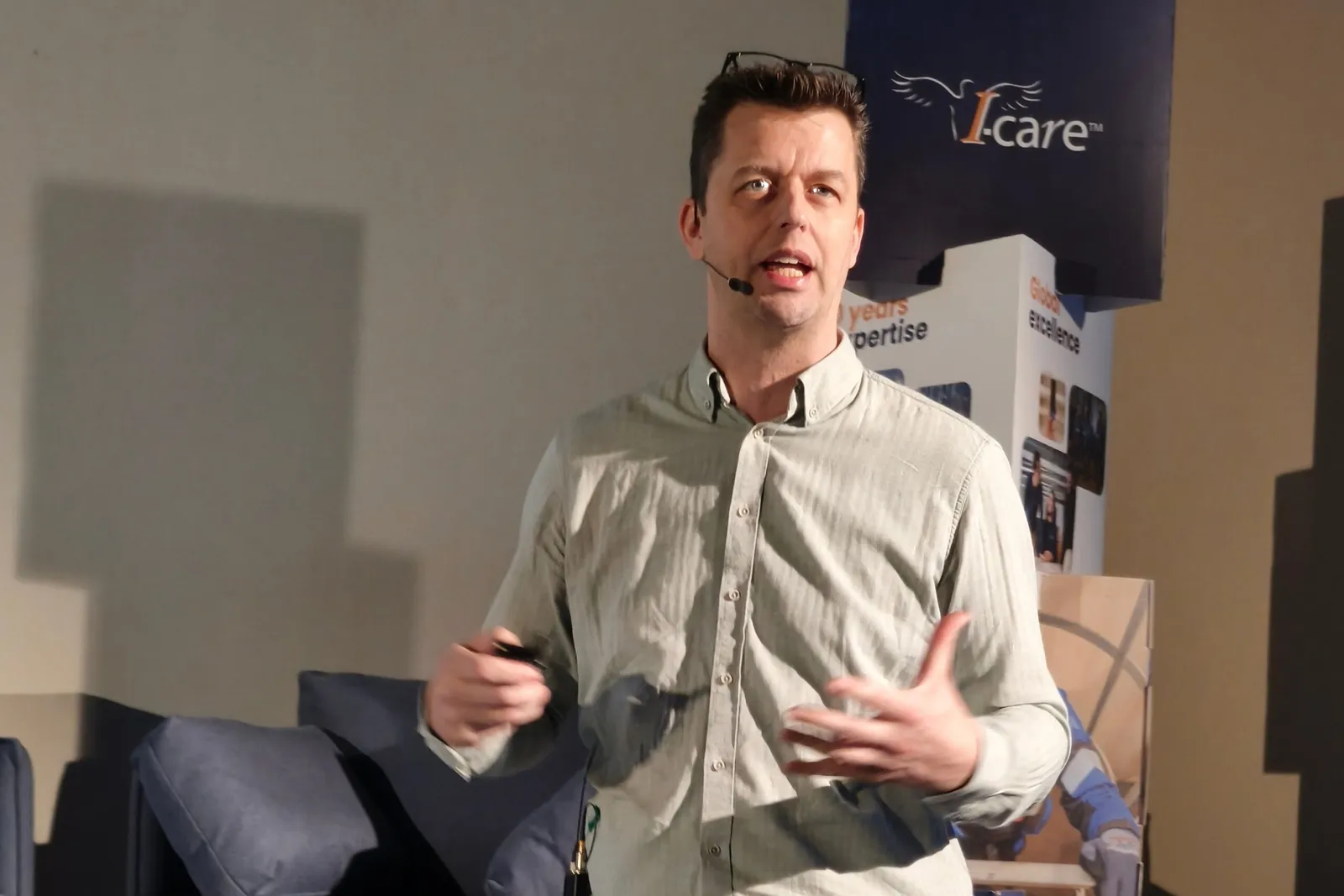
As is customary, BEMAS took over the Wednesday evening programme at the recent Maintenance trade fair with its awards show, highlighting best practices from the world of maintenance. Before the winners were announced, attendees heard Peter Van Hees’s insights into AI agents in maintenance. Industrial Automation was there in the front row and has rounded them up for you in this article.
Maintenance is at a turning point. Sensors measure everything. CMMS and EAM systems are packed with data. Predictive maintenance is growing rapidly. We have embraced Software 2.0, algorithms that recognise patterns in vibration data and calculate RUL. And yet the pressure continues to mount: greater complexity, higher availability requirements, labour shortages and an increasing administrative burden. What if the next leap is not about even better predictions, but about systems that understand objectives, plan actions and execute workflows themselves? AI agents are taking us from dashboards to digital colleagues. From signals to decisions. From prediction to proactive action. But how did we get here, and what are the next steps?
From mobile-first to agent-first
Let’s start with a misconception. AI is nothing new. At seventy years old, it has already reached retirement age. But to enable the applications we are seeing emerge in maintenance today, it had to go through a learning curve. We are now at the end of the mobile-first wave. Apps, dashboards and standalone tools have become powerful instruments, but people are still at the centre. We are the middleware that brings everything together. However, we cannot go much further down this path. How does Van Hees know? The new iPhone offers few new features, just a higher price tag. Digital 4.0 introduces something fundamentally different: instead of mobile-first, we are entering the age of agent-first. Rather than waiting for someone to click, systems anticipate what is needed.
The leap to proactive AI agents
Today’s most advanced systems can predict failures. We have grouped these under the heading of predictive maintenance. AI agents go further: they understand objectives such as uptime, cost efficiency and safety, and take action themselves. They plan interventions, coordinate with SAP or EAM, communicate with suppliers, generate reports and learn from feedback. This is where we leap from pattern recognition to cognitive autonomy. At the heart of agentic AI are large language models (LLMs). Their power? It took Chrome two to three years to build its browser, while coding agents can now do it in a week. AI agents are currently right at the top of Gartner’s hype cycle. There is plenty of ‘agent washing’ going on. But to earn that label, an agent must be autonomous and proactive, and have its own memory. The latter is essential for continuous learning and improvement. Where will they be by next summer? Van Hees is convinced they will already have passed the ‘Trough of Disillusionment’. Things are moving fast.
From experiment to industrial reality
Does the human disappear from this story? No, they take on a new role, one of supervision, validation and strategic decision-making. AI agents may have superpowers that let them process vast amounts of data, understand context and continually improve themselves, but orchestration remains in human hands. We are moving from predictive maintenance to agile maintenance, from insight to action, within the guardrails set by your organisation. What does this mean in practice for maintenance teams? Less time wasted on administration, better allocation of scarce expertise and a shift from executing tasks to orchestrating them. Should we be worried? Experts predict that 92 million jobs will be lost by 2030. Van Hees predicts that if you do nothing and fail to embrace new technology, you will be among those 92 million. But he counters that AI will also create 170 million new jobs: machine learning managers, prompt interaction designers, synthetic data specialists … We still need people for critical thinking, systems thinking, ethical reasoning and human judgement.
Conclusion
Maintenance does not have to lag behind in AI. Quite the opposite. With its combination of data, critical assets and clear KPIs, the sector can make the transition to agent-first faster than many might think.
Question about this story? Ask your question
Keep following this
Get an email when a new story is published. No account needed.
- ThemeReliable machinery and drives
- SubjectTechnology