First meat trays made from recycled plastic
Text Valérie CouplezImage Colruyt Group
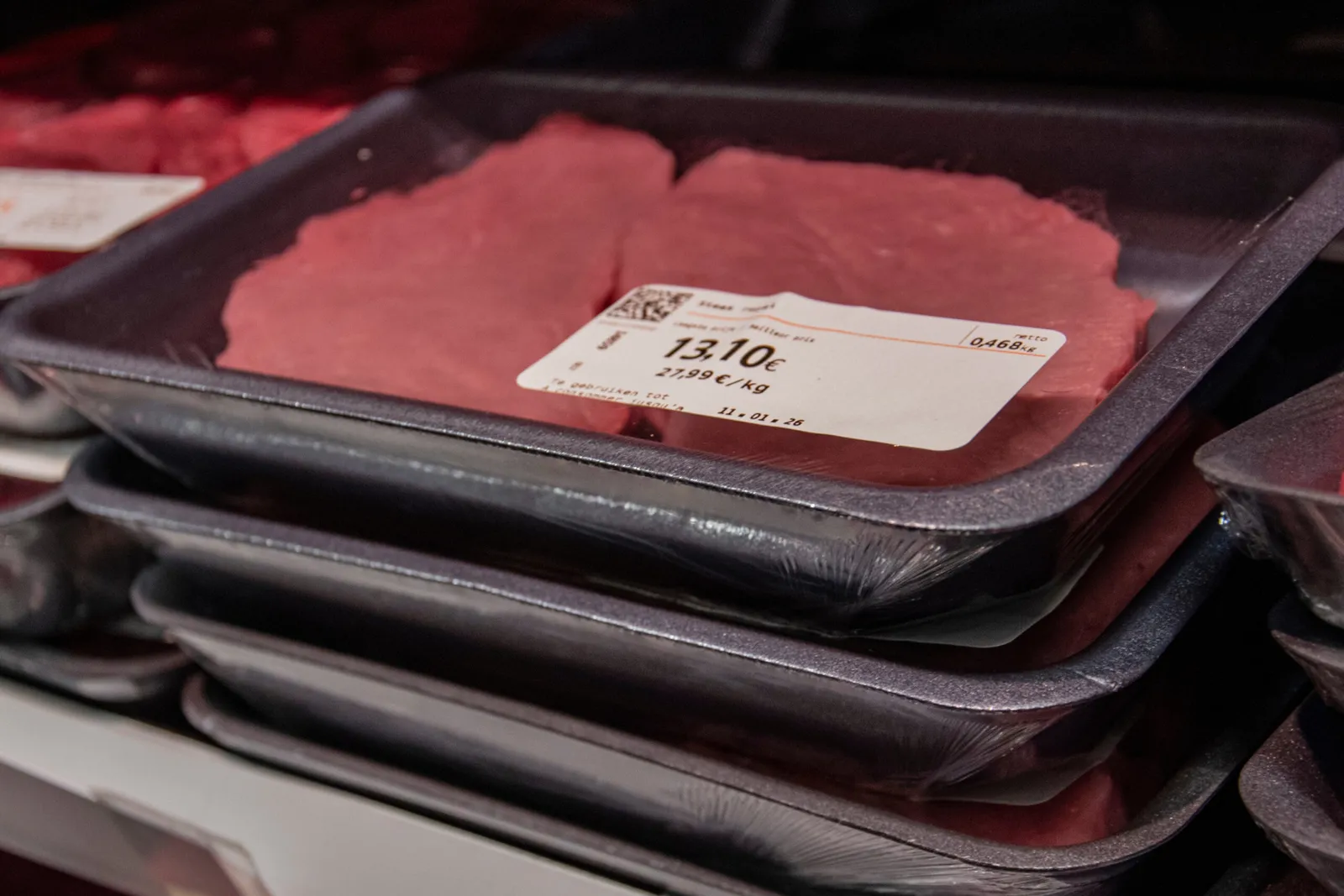
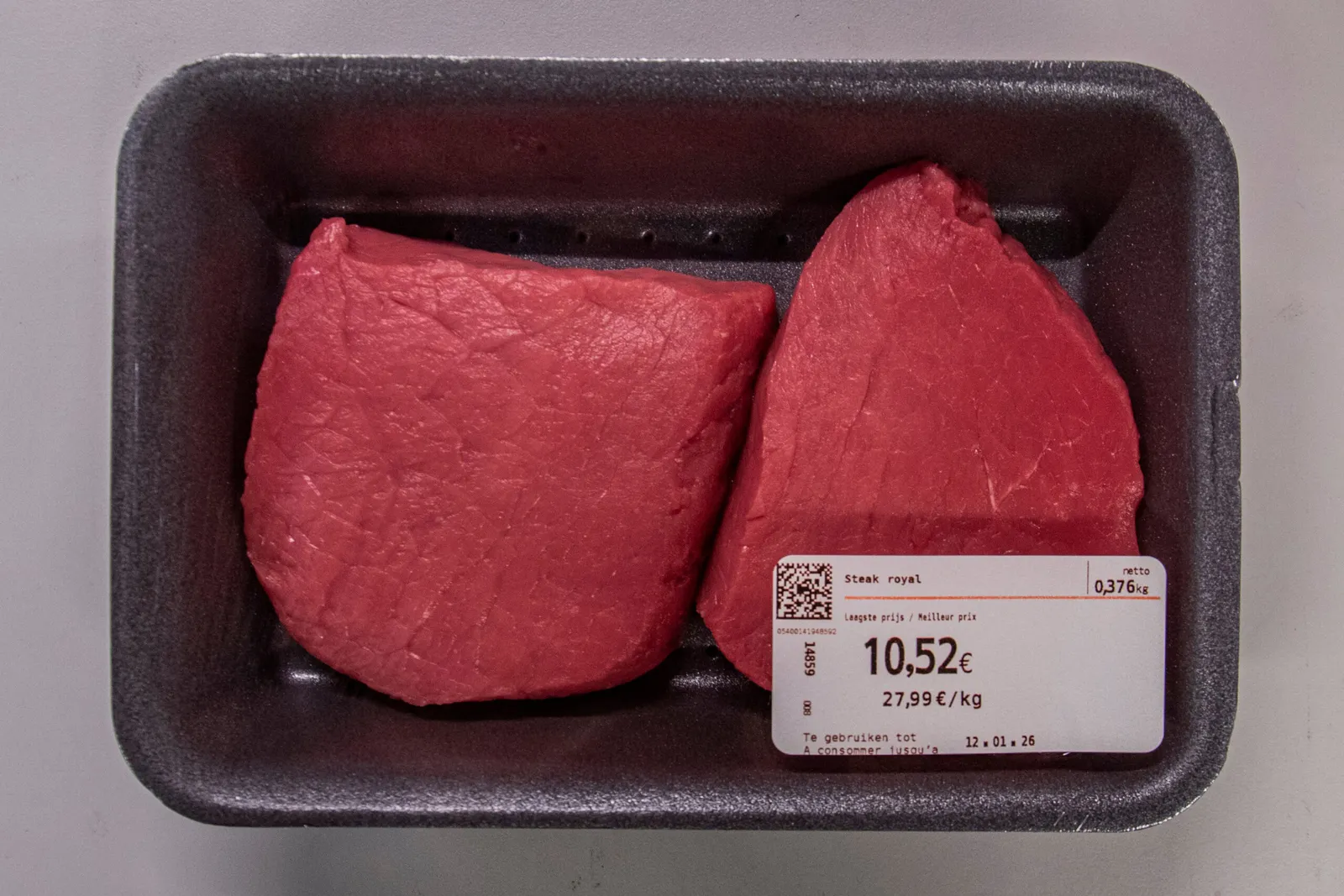
Supermarket chain Colruyt has launched the first meat trays made with polystyrene (XPS) from chemical recycling. Plastic packaging from collected yoghurt pots and foam trays in the PMD bag is processed at Indaver’s new Plastics2Chemicals plant in Antwerp. Colruyt uses around 66 tonnes of this recycled polystyrene each year in the dark grey foam trays for its fresh meat products. The new packaging has been on shop shelves since October 2025.
Every year, 659 tonnes of dark grey foam trays are stocked on Colruyt’s shelves. These trays are made from XPS, or extruded polystyrene. This belongs to the same plastic family as, for example, yoghurt pots made from PS, or polystyrene. Although this type of packaging has been sorted from PMD bags and recycled for some time, material from mechanical recycling cannot be used to make new food packaging if it comes into direct contact with food. Indaver’s new Plastics2Chemicals plant in the Port of Antwerp is changing that, thanks to its recycling technology. Since October, Colruyt’s dark grey foam trays have contained 10% recycled material, equivalent to 66 tonnes of recycled XPS per year. The trays look exactly the same and are just as safe for your meat. They can also be fully recycled again through the PMD bag. Ludo Vanderelst, head of purchasing at Colruyt Group, says: “In 2023, Colruyt was the first retailer to stop using black foam trays, so that empty packaging from PMD bags could be sorted correctly and therefore recycled. Today, we are the first to reuse recycled material from foam trays and yoghurt pots in packaging. This means we need fewer and fewer virgin raw materials for our packaging and reduce our environmental impact.”
Food-safe and environmentally friendly
Inge Baertsoen, communications manager at Indaver, says: “With Plastics2Chemicals, we are taking the next step in plastic recycling. Using advanced chemical recycling, we convert polystyrene packaging into recycled styrene. This is the raw material for making new packaging and has the same properties as virgin material. The styrene can therefore also be used for food packaging. The plant has only been operating properly since the summer, which makes this collaboration all the more special.” Plastics2Chemicals has a total capacity of 26,000 tonnes. In 2025, the plant was already processing sorted polystyrene and extruded polystyrene from PMD bags on an industrial scale. Thermal depolymerisation (using heat) and distillation (purification) convert PS packaging waste into basic chemicals. The end product has a very high purity, equivalent to virgin material, making it a high-quality alternative to fossil raw materials. During 2026, Plastics2Chemicals will also start recycling packaging films from PMD bags, such as snack wrappers and outer packaging. The total investment in the new site is 75 million euros.
Sorting, recycling and manufacturing at home
Europe requires packaging to contain at least 10% recycled material by 2030, depending on the type of plastic. This is not always straightforward for food packaging, because only recycled PET from mechanical recycling may be used for packaging food or drink. Colruyt and Plastics2Chemicals are closing the recycling gap by supplying post-consumer plastic waste with properties equivalent to virgin material. Mik Van Gaever, COO at Fost Plus, says: “By recycling locally and producing secondary raw materials, we are less dependent on virgin material, which often comes from outside Europe. We reduce the environmental footprint of packaging and create sustainable jobs at home over the long term. Indaver is one of the six partners that sorts the contents of PMD bags. Its decision to also recycle this difficult-to-recycle material locally shows that a systems approach works.”
Closing the loop for foam trays in eight steps
- PMD bags are collected door to door and taken to six sorting centres in Belgium, including Indaver’s sorting centre;
- PMD is sorted into sixteen fractions, including polystyrene;
- The sorted bales are sent to specialist recycling companies; polystyrene bales are mainly sent to Plastics2Chemicals;
- During pre-treatment, the polystyrene is turned into agglomerates;
- Advanced technology is used to form styrene monomers;
- Chemical partners Trinseo and INEOS Styrolution polymerise the recycled styrene monomers into new polystyrene;
- Happy Group and Silverplastics buy the recycled polystyrene, blend it with virgin polystyrene and produce foam trays for Colruyt;
- These trays return to shop shelves and, after use, are sorted into PMD bags, allowing the whole process to start again.
Question about this story? Ask your question
Keep following this
Get an email when a new story is published. No account needed.
- ThemePackaging and product traceability
- SubjectSustainability