












70% of listeria cases can be traced back to drainage

The importance of flooring and drainage in food factories is still often underestimated. Yet good, hygienic design of these components plays a crucial role in reducing sources of contamination.
To highlight this issue, ACO, Master Builder Solutions and EHEDG recently organised a webinar. They discussed the key considerations for achieving a hygienic and therefore food-safe result.
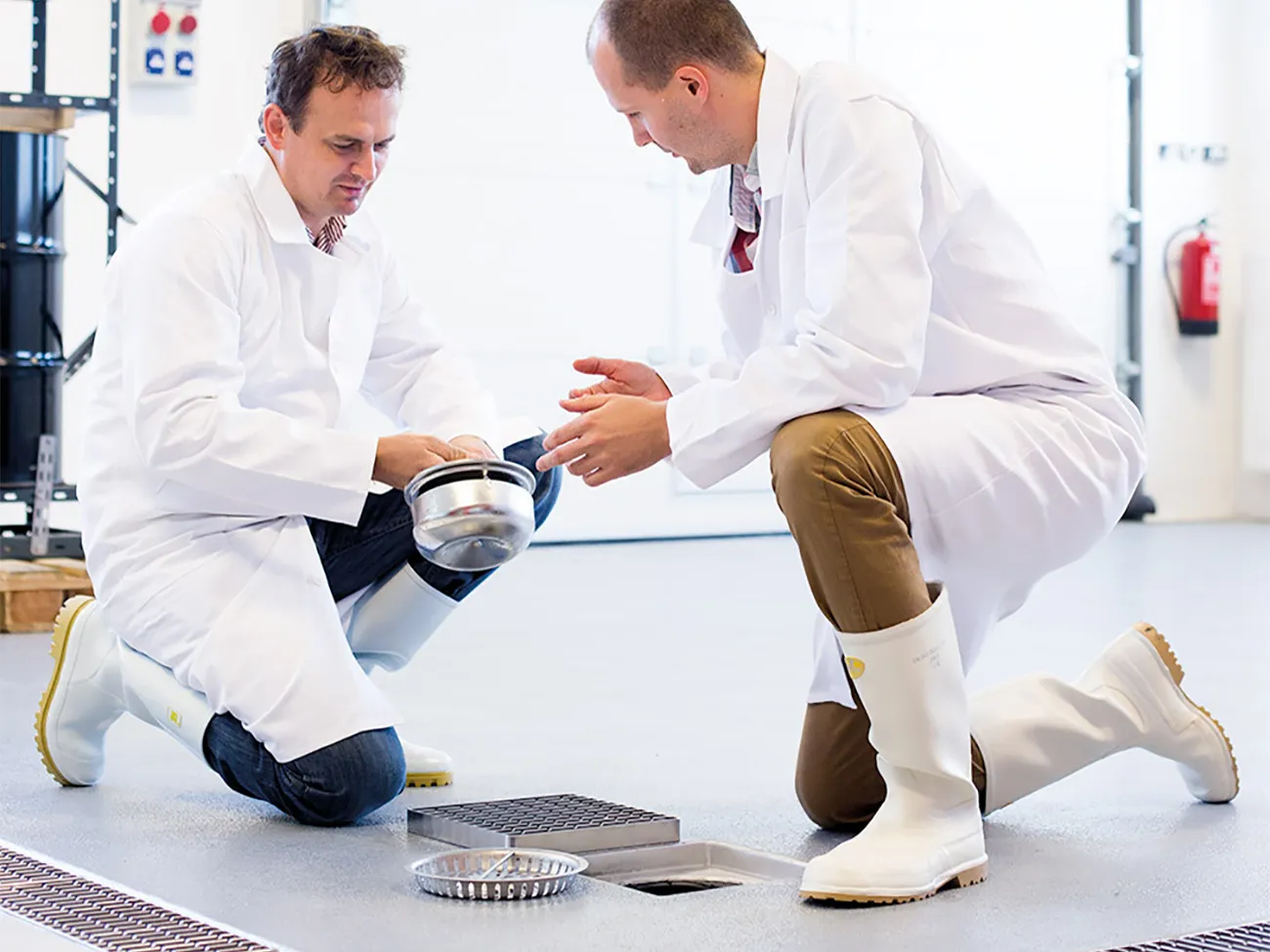
The importance of hygienic design for floors and drainage
A recent listeria outbreak in South Africa once again highlighted the importance of good hygiene practices in the food industry. The toll was extremely high, with 1,024 confirmed cases and 200 deaths, including 80 babies. “Because of the long incubation period, it takes a while before we can identify listeria as the cause,” says Hein Timmerman of EHEDG, explaining the figures. “A lack of understanding of hygienic design for floors and drainage was behind the outbreak. This is no coincidence, as 70% of listeria cases can be traced back to these issues.”
EHEDG has been working towards better food hygiene since the late 1980s by publishing practical guidelines for both end users and manufacturers of equipment and components for food-processing environments. So far, 55 have been published. “Guideline 44 looks in more detail at how floors should be designed to minimise the risk of contamination. The most important point is to achieve seamless integration between the floor and drainage.”
Key considerations for flooring
Yet flooring still all too often goes wrong. Kris Van Humbeeck of Master Builder Solutions sees several reasons for this. “Floors are often not designed to withstand the loads placed on them, whether mechanical (overweight forklifts, falling objects), chemical (acids, fats, solvents, strong cleaning agents) or thermal (excessively high or low temperatures). In addition, effective drainage must be in place to remove moisture.”
Key considerations for drainage
Finally, drainage in your production areas definitely deserves due attention. Reggy Dekeyser of ACO says: “Good drainage starts, of course, with correctly positioning the outlets and/or channels and ensuring the right gradient to carry water away. But there is more to it than that.
- First and foremost, drainage must allow for thorough cleaning. If water remains in an outlet or channel, any contaminants may spread throughout the entire area during cleaning.
- Secondly, the finish around the drain must be smooth and neat. A filler flange can support the connection, creating a stable and durable transition that minimises the risk of dirt build-up and, consequently, contamination.
- Drainage must also be designed so that the drainage system does not compromise the safety and health of employees.
- A final consideration is capacity. Ensure that drainage outlets are sized for the required flow rate.

Hygiene First at ACO
Through its ‘Hygiene First’ philosophy, ACO is committed to supplying products that deliver the highest levels of hygiene performance. The entire range is therefore characterised by four features:
- All internal radii are 3 mm or greater, significantly improving cleaning effectiveness.
- Hygienic connections are also used. A deep-drawn drain body creates smooth contours, eliminating crevices where harmful bacteria can take hold.
- The drain body is also designed to remain dry. Water cannot collect in the drain body, only in the water trap, which can be removed to drain any excess water from it as well. This prevents odours, microbial growth and potential chemical hazards.
- A fourth consideration at ACO is the filler flange. Its design creates a stable and durable transition between the drainage and the surrounding floor. This helps minimise the risk of cracks in the floor, which can encourage bacterial growth.
Find out more at http://www.hygienefirst.com/be-nl
Een zakelijke vraag aan ACO? Get in touch
Companies in this story
Keep following this
Get an email when a new story is published. No account needed.
- ThemeFood safety from design to audit
- SubjectFood safety
- CompanyACO







