












8 reasons to choose Ucrete industrial flooring
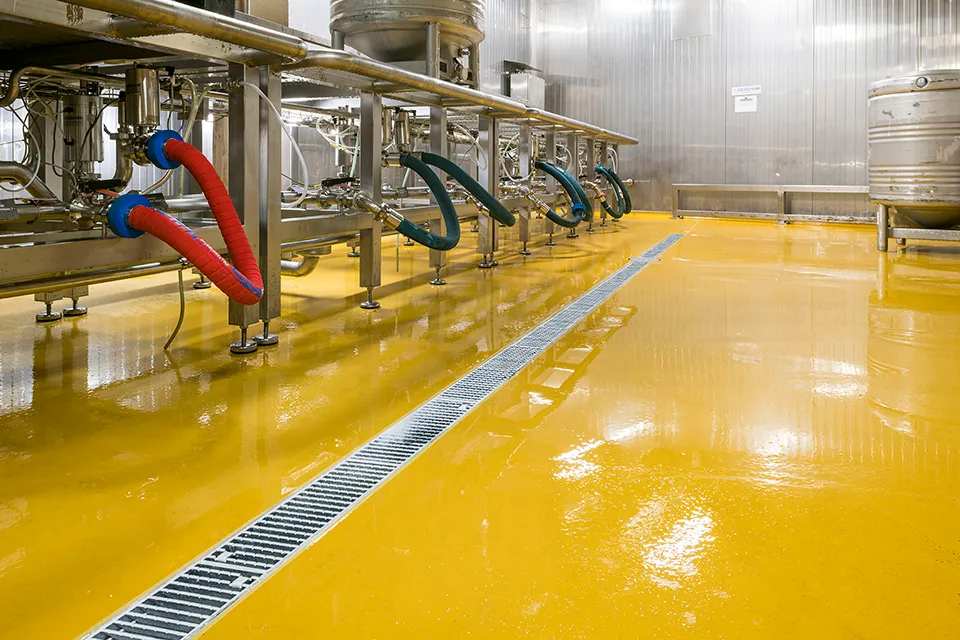
Specifying the right floor is essential for a safe, hygienic and efficient production process. Choosing the wrong floor can lead to huge costs through lost productivity, downtime or personal injury. These costs can far outweigh the initial installation costs of the floor, whether it is a new-build or refurbishment project. Here are eight reasons to choose a Ucrete floor for your production facility.
1. A hygienic industrial floor
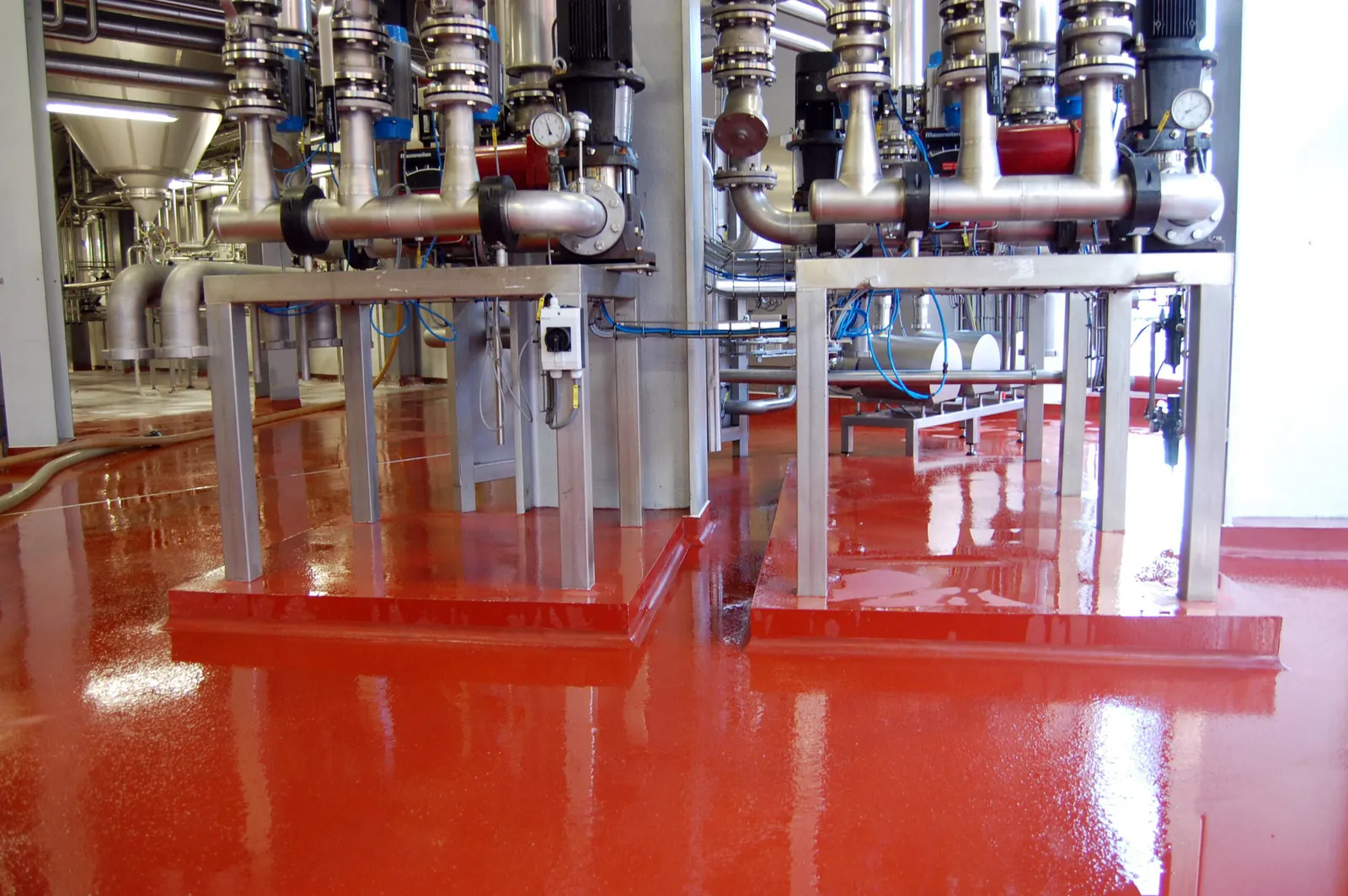
Ucrete industrial floors contribute to improved hygiene thanks to their seamless surface, which is liquid-tight and impermeable throughout its full thickness. This prevents bacteria and mould from growing, which is particularly important in the food and drink sector. Standard floors, by contrast, can cause problems in such environments. With a tiled floor, for example, porous grout must be cleaned carefully and thoroughly to prevent dirt and bacteria from building up between the tiles. Chipped or broken tiles can develop cracks or pits that provide additional breeding grounds for bacteria. Ucrete industrial floors, on the other hand, offer cleanability comparable to the standard applied to stainless steel. Find out here why hygienic floors are important for food production and food safety.
2. No cracks in the floor
In a production environment, standard floors can be prone to cracking and damage. A surface that is not monolithic can, in some cases, vibrate, shift or even crack if the substrate is uneven or subject to regular thermal shock. Cracked or split floors where water and bacteria have penetrated the substrate pose a hygiene and cleanliness problem, as well as a slip hazard for employees.
3. A safe floor
Safety is an important consideration when choosing a floor, especially in production environments with wet work areas. With its wide range of surface profiles, Ucrete offers a lower risk of slips, trips and falls than a standard floor.
The costs of such incidents should not be underestimated. The number of slip-related incidents in the food industry is significantly higher than the industrial average, and these incidents contribute substantially to serious injuries. In today’s increasingly litigious society, it is probably wisest to choose the best possible floor. With its excellent slip resistance, a Ucrete floor provides a safe surface for employees.
4. Prevent production downtime: fast floor installation
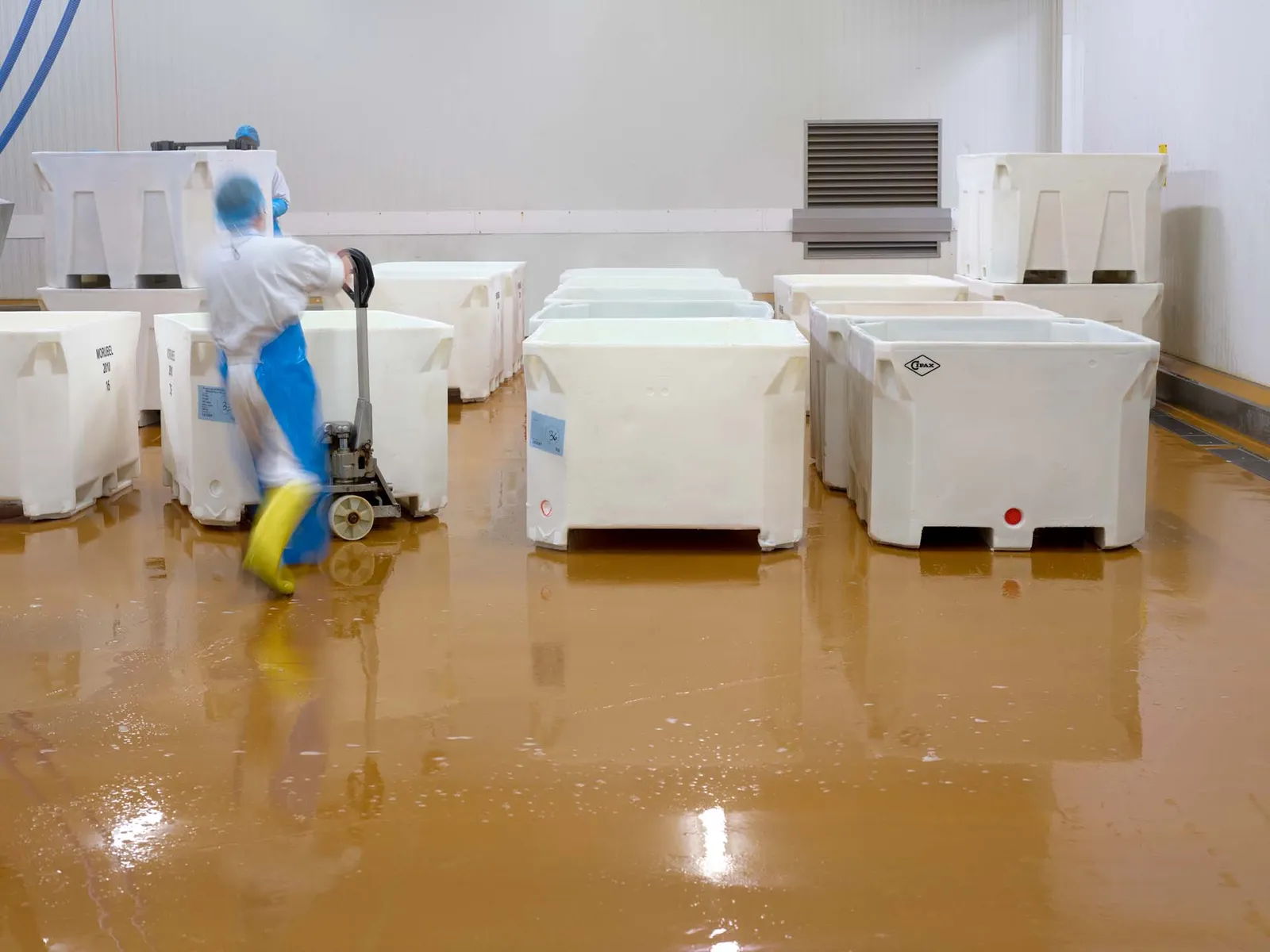
Lost production is costly, so reducing or eliminating production downtime is crucial to running a factory efficiently and productively. When a refurbishment or a new floor is needed, Ucrete’s fast installation causes fewer production interruptions than many other flooring options. Specialist Ucrete applicators can cover a large area with Ucrete in much less time than with other typical industrial flooring.
5. Fast refurbishment
Repairs and refurbishment should always aim to reduce risks and resolve existing problems, not create new ones. Ucrete offers clear advantages here: it is easier to maintain and more durable than standard floors, particularly during the first 10-20 years. Ucrete will not crack or chip, and absorbs direct impacts by distributing them across the entire floor.
When old floors reach the end of their useful life, production safety may be compromised. Damaged floors pose a trip and fall hazard, while cracks can lead to bacterial growth. Choosing a floor that requires minimal maintenance helps you manage the impact of production shutdowns, which are often necessary to refurbish a floor in a production environment.
Fast-curing Ucrete industrial floors make it possible to repair and refurbish floors quickly, permanently and with minimal disruption. Floors can be made safe and hygienic again in no time, and returned to service after curing for just five hours at a temperature of 10°C.
Watch our video, “Ucrete Fast Refurbishment challenge”.
6. Lower total cost of ownership
Ucrete floors are exceptionally strong and offer excellent resistance to chemicals, temperature and wear. As a result, Ucrete will not crack, leading to less maintenance than with standard floors. Over their entire service life, Ucrete floors offer better value than any other flooring because they require less maintenance, cleaning and refurbishment than standard floors. Weighing the cost of use against the initial outlay is essential when choosing a floor. By choosing a Ucrete industrial floor, you can gain many years, even decades, of service life.
7. A sustainable floor
Ucrete is a sustainable flooring option: it requires less energy for maintenance and less water for cleaning than some standard floors, which is particularly relevant in production areas where a high level of hygiene is essential. Cleaning and maintaining an industrial floor can account for up to 90% of its cumulative energy demand. Choosing a sustainable floor from the Ucrete range can help you reduce the use of key resources, which is crucial both for the environment and for operating costs. Correctly installed Ucrete floors can provide an almost maintenance-free solution for more than 30 years, even in the most demanding environments. For example, a Ucrete floor installed in 1984 is still in use at Magor Brewery in the United Kingdom.
Read more about this success story here.
8. An attractive industrial floor
We recently launched Ucrete CS in Europe: an innovative, colour-stable Ucrete industrial floor that sets new aesthetic standards. Colour stability means UV resistance and improved stain resistance, allowing greater flexibility in creating a safer production environment. Read more here about Ucrete CS.
Safe, hygienic and efficient production is crucial for manufacturers. Choosing the right floor plays an important role in their success. A correctly specified floor can be part of the solution that helps businesses succeed. There is a good reason why Ucrete is known as the world’s strongest floor. Watch the “Ucrete destruction challenge” video and you will be convinced.
Question about this story? Ask your question
Keep following this
Get an email when a new story is published. No account needed.
- ThemeFood safety from design to audit
- SubjectFood safety







