












A good day starts with clean workwear
Text Johan DebaereImage Klaratex
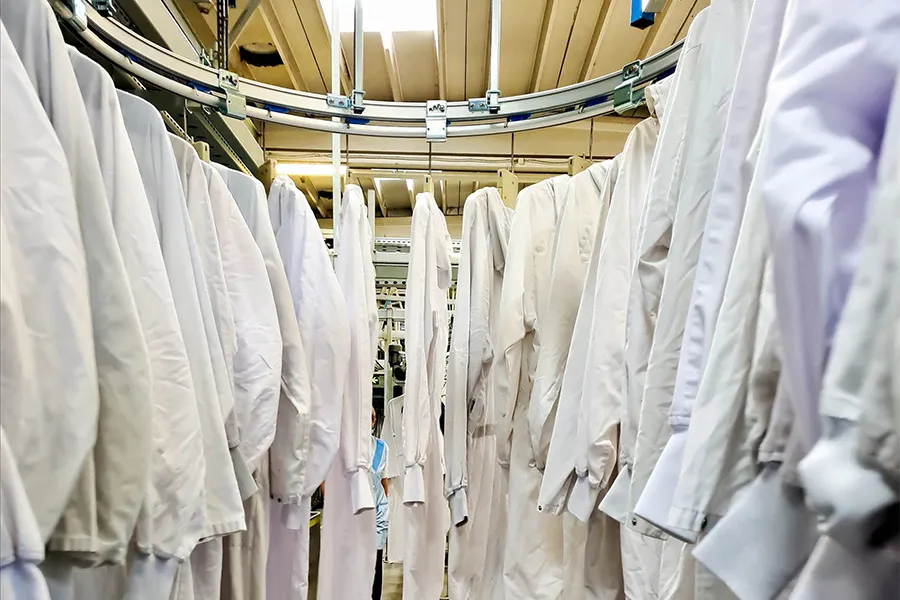
Clean workwear is essential. It is an absolute necessity for hygiene, but also ensures staff safety and comfort and reflects on every company’s image. Klaratex specialises in workwear rental and professional garment care, including washing, drying, ironing and repairs. The family business from Wevelgem, founded 85 years ago by Georges Dermaux, aims to take care of everything for its customers.
“We’re essentially a recycling business. We collect soiled workwear, wash and repair it, replace items if necessary, and then deliver the clean garments back to the customer, sorted by name and placed in the correct locker,” brothers Karel and Piet Dermaux explain from the outset. Now in the third generation, they are building on their grandfather’s life’s work, with an eye on the environment. They have installed a water treatment plant and solar panels on the roof.
Washing, drying and ironing
Klaratex’s six own lorries operate across West and East Flanders, collecting soiled laundry in roll containers or baskets from businesses in the food sector and industry. “First, the garments are sorted here, the pockets emptied and the barcode scanned. While certain specialist garments go into the smaller washing machines, most of the soiled clothing is loaded into large bags, each with a capacity of 50 kg. These are unloaded one by one into the wash tunnel and then go through a cycle of about 1 hour,” Karel explains. “After washing and drying, the garments are hung by hand on hangers at four workstations. They then go through the ironing line while still slightly damp, where they are dried further and the creases removed. Each item then undergoes a thorough quality check, and our repair service deals with any damage straight away.”
Personalised packs distributed in lockers
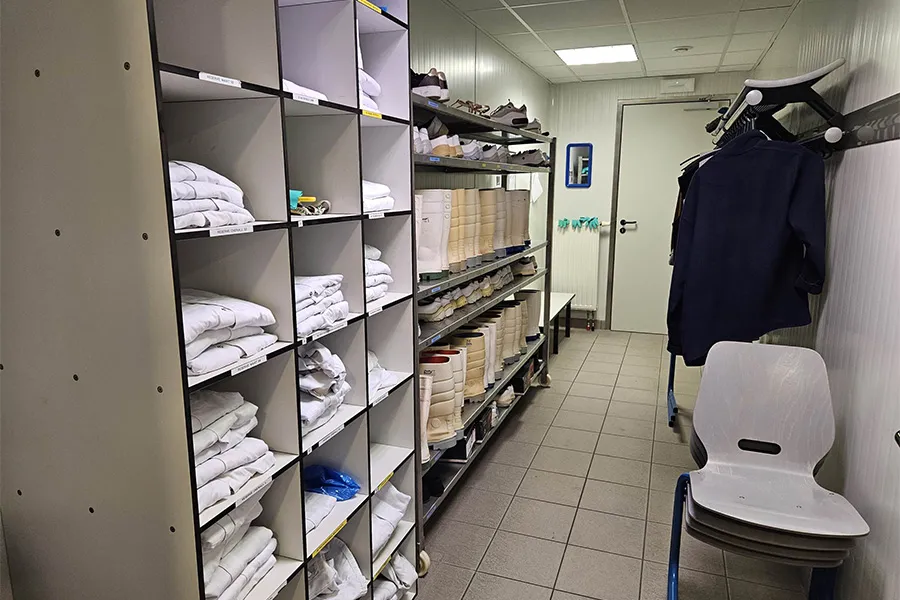
Everything is sorted in a buffer zone on the mezzanine before going through the folding machine. The machine first measures the length of each garment to ensure that everything is folded correctly. The personalised packs are then placed in bins for each customer, and items with a red label are replaced. “Since every garment has a label and barcode, and in many cases we have taken the measurements ourselves, we can respond quickly here too. We have a large stock, stored in three automated vertical storage lifts,” Piet concludes. “We then deliver the garments back to the customer in our lorry. Our drivers distribute the packs into the personalised lockers. We also supply and install the cupboards with integrated roll containers for soiled laundry, as well as the distribution cupboards for clean garments. These are operated with a key or code, but more and more customers are now switching to badge access. In short, Klaratex aims to take care of everything from A to Z.”
Een zakelijke vraag aan Klaratex? Get in touch
Companies in this story
Keep following this
Get an email when a new story is published. No account needed.
- ThemePeople make the food industry
- SubjectFood safety
- CompanyKlaratex







