












Automated disinfection keeps infections at bay in cheese production
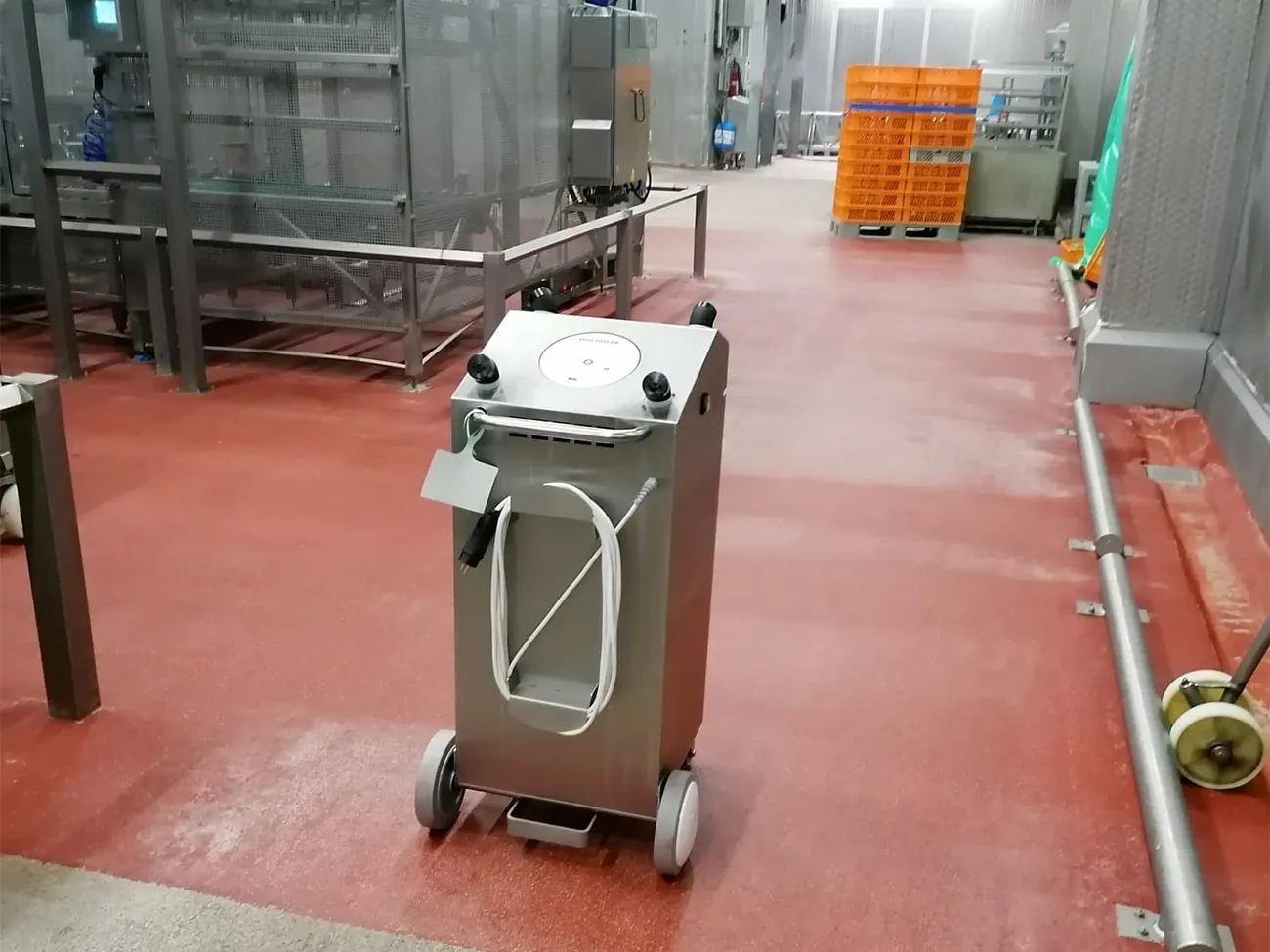
In the food processing industry, both infection prevention and disinfection are crucial priorities. Unfortunately, the risk of contamination, recontamination or cross-contamination is always present. Automated disinfection offers numerous advantages over manual disinfection. In this article, Medtradex showcases its Nocotech solution, which cheese producers also value highly. Bernard Noël, account manager for Belgium/Luxembourg, explains.
As in other food processing businesses, various micro-organisms can pose a threat to the food safety chain during cheese production. “Spores, viruses, bacteria and fungi may be invisible, but they are everywhere,” says Bernard Noël. “Businesses that produce and/or process cheese have a zero-tolerance approach to traditional pathogens such as listeria, salmonella, staphylococcus aureus and coliforms. These micro-organisms pose a greater risk to matured cheeses than to fresh cheeses. Cheese producers also sometimes use preservatives to tackle yeasts and moulds that cause product spoilage. However, this approach is facing growing resistance, including from customers. That is why investing in preventing pathogens before, during and after the production process is a smart move. Automated disinfection of work areas and surfaces is the ideal solution.”
Manual disinfection: full of holes
What are the weak points of manually disinfecting equipment and work surfaces? Noël explains: “As well as being good carriers and spreaders of harmful germs, people sometimes make mistakes when cleaning and disinfecting environmental and work surfaces. Some surfaces in cheese production equipment are harder to reach, making them difficult or even impossible to disinfect. In addition, some areas and materials are sensitive to wet disinfection, such as electrical or electronic equipment. Cleaning product residue can also remain after manual rinsing.” Noël points to a few more weaknesses of manual disinfection. “This method is highly labour-intensive and leads to high consumption of water and disinfectants. Manual disinfection is also never fully measurable or reproducible.”
Benefits of automated disinfection
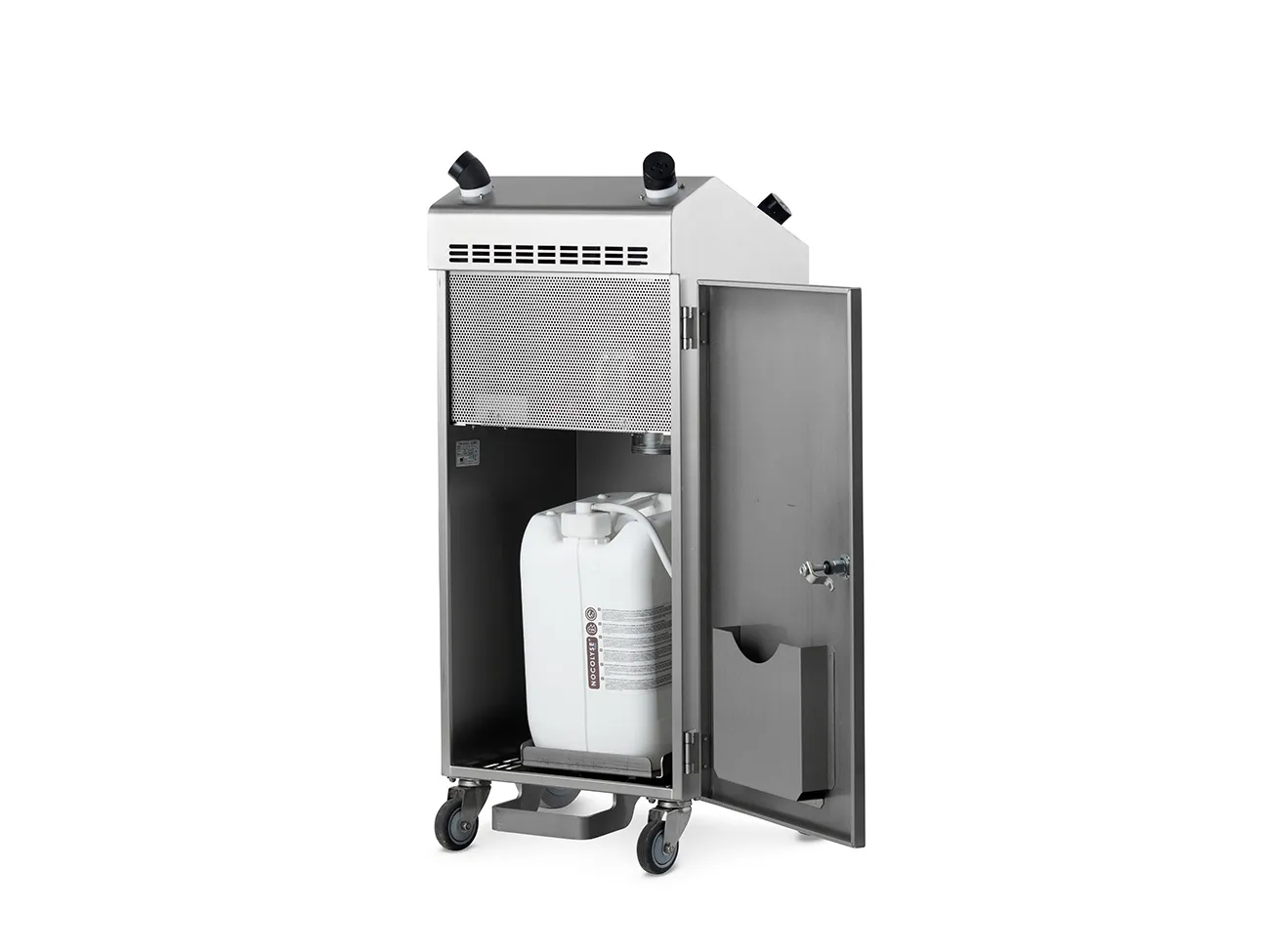
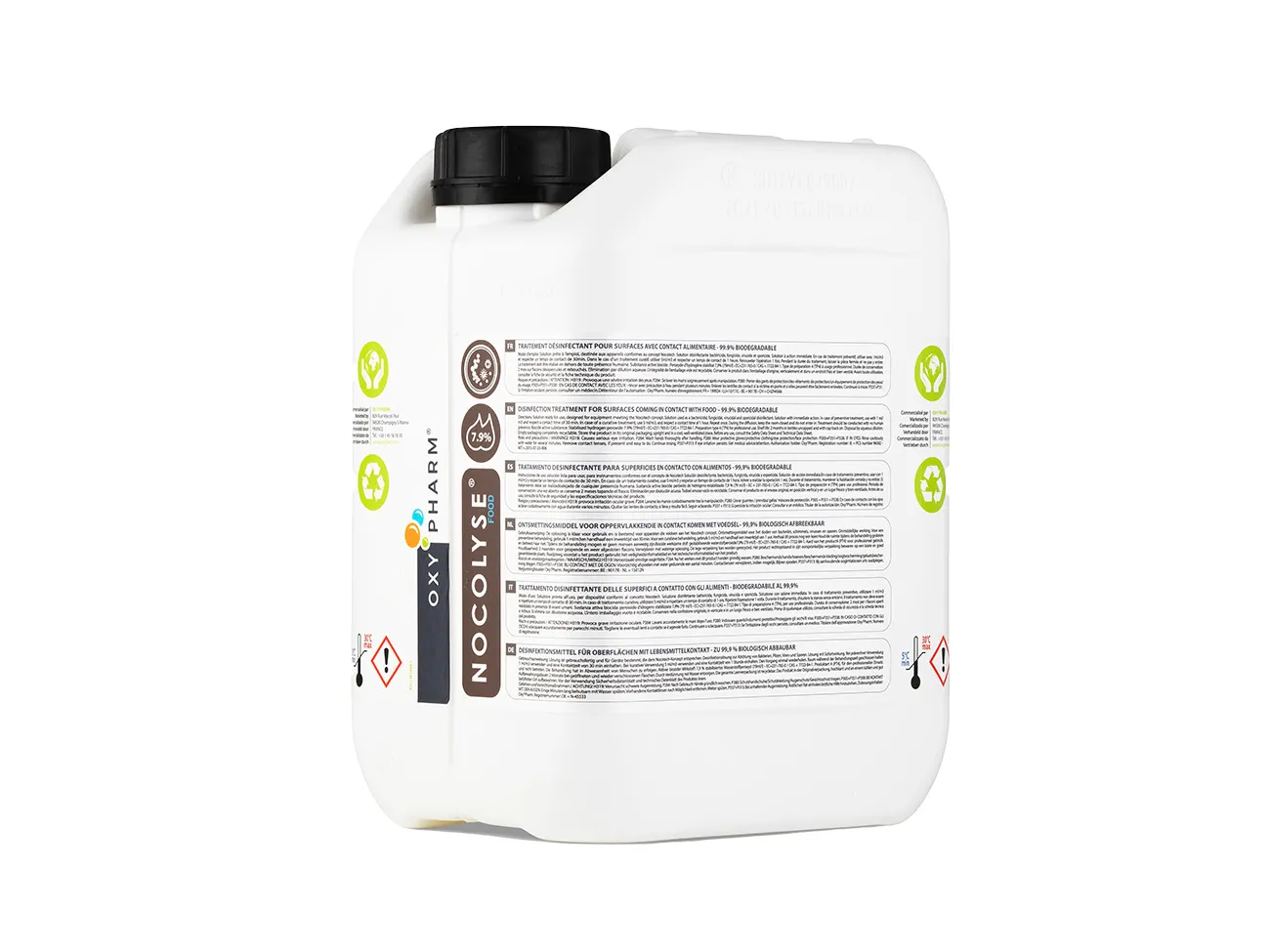
Medtradex’s customer base includes several cheese producers who are fully convinced of the benefits of automated disinfection. “These customers make grateful use of our Nocotech concept,” Noël confirms. “The concept is straightforward: a biodegradable H2O2-based disinfectant (Nocolyse) is dispersed through a room using a fogging device such as our Nocospray 2 or Nocomax. This creates a dry mist, or ‘fog’, whose particles are attracted to surfaces.” Automated disinfection offers numerous benefits. “Hard-to-reach areas are thoroughly disinfected,” Noël begins. “What’s more, all surfaces are disinfected equally, with no risk of corrosion or oxidation to sensitive materials used in cheese production. Our customers point to another important advantage: just 1 ml of Nocolyse can disinfect 1 m³. This gives them an enormous return. The fact that no residue is left behind, so no rinsing is needed, also means work areas can be released for use quickly, without any lingering odour. That saves time too.”
Medtradex offers tailored expertise
Some production areas are particularly susceptible to contamination by micro-organisms. “At Medtradex, we are happy to draw on our many years of expertise and know-how to help anticipate potential risks, using analyses, audits and inspection reports from, among others, cheese producers,” says Bernard. “As part of the disinfection process, we offer our customers validation through quantitative measurements and surface checks. Together with them, we establish that infection problems are kept at bay after using our Nocotech solution.”
Question about this story? Ask your question
Companies in this story
Keep following this
Get an email when a new story is published. No account needed.
- ThemeSmart production with data
- SubjectFood safety
- CompanyMedtradex







