












Basic guidelines for hygienically designed machinery
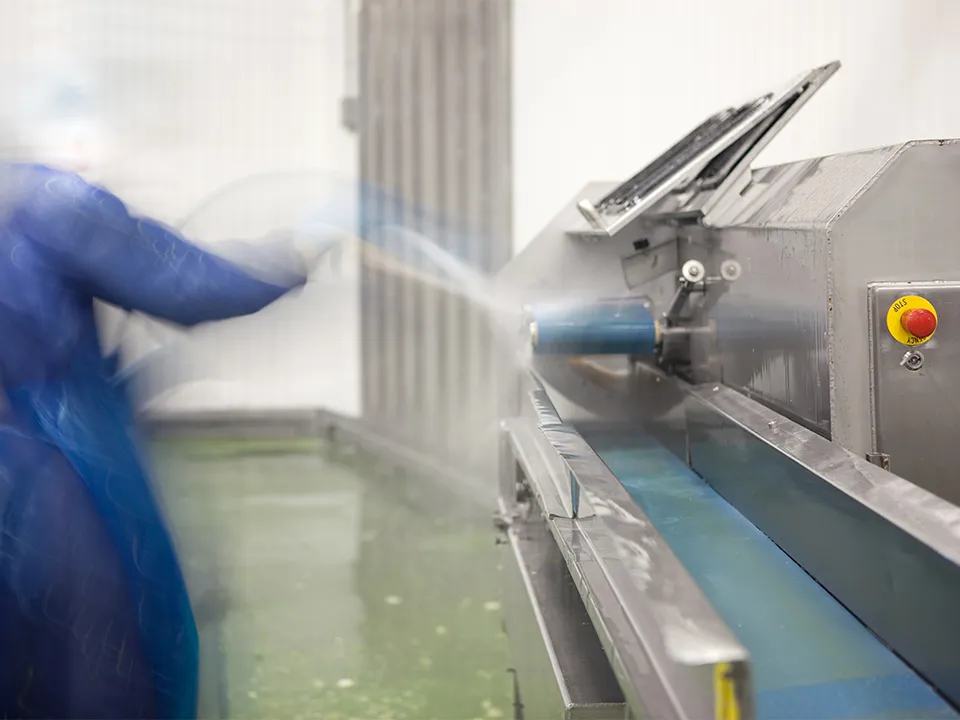
The food industry is subject to stringent standards to ensure consumer food safety. Process equipment must not only continue to function properly, but also be easy to clean and protect products from contamination.
EHEDG (European Hygienic Engineering & Design Group) was established in 1989, bringing together food producers, machine builders and suppliers. Together, they work to improve food safety by drawing up guidelines that promote hygienic design. This article summarises the guideline on the hygienic design of process equipment.
Machines and other equipment intended for the food industry must not cause microbiological problems. This entails a number of functional requirements. Cleanability is a very important first consideration. Equipment that is difficult to clean will require more aggressive chemicals and longer cleaning and disinfection times. This means higher costs, less production time, a shorter service life and more wastewater. In some cases, an additional requirement is that the machine must also be pasteurisable or sterilisable. A second requirement is to prevent the ingress of micro-organisms. The presence of micro-organisms in food must be kept as low as possible. Equipment for aseptic processes must even be impermeable to micro-organisms. As micro-organisms grow very quickly, machine builders must avoid dead spaces, openings and crevices, where micro-organisms can thrive and multiply, at all times. Fourthly, these hygiene requirements must not compromise the machine’s functionality. Designers will therefore have to make compromises in certain areas. These must be documented thoroughly, so that users are aware of them and can opt for more intensive cleaning and disinfection procedures where necessary. Finally, inspections, tests and validations must also be carried out to check that the specified hygiene requirements have been met.
Criteria for surfaces and geometry
To follow good hygienic practice, machine surfaces must be easy to clean and must not pose a toxicological hazard. They must also withstand the cleaning products and methods used in the food industry. Imperfections such as crevices are unacceptable. A number of rules of thumb can be followed to avoid them. Direct metal-to-metal connections, uneven surfaces and the use of O-rings are best avoided. Also ensure that the product cannot come into contact with threads. Corners should preferably have a radius of 6 mm or more, with a minimum radius of 3 mm. Avoid sharp corners (less than 90°).
Criteria for surface finish
Surfaces that come into contact with food must have an acceptable Ra value and must be free of imperfections (pits, folds and crevices). For large surfaces, roughness must be at least 0.8 µm Ra, unless research results can demonstrate that the required level of cleanability is nevertheless achieved. For polymer surfaces, water repellency, wettability and reactivity, for example, can affect cleanability. Cold-rolled steel has a roughness of 0.2 to 0.5 µm and therefore usually does not need to be polished to meet surface roughness requirements. Surfaces that do not come into contact with food must still be smooth enough to facilitate easy cleaning.
Criteria for drainability and installation
Liquids must be able to drain freely from the inside and outside of equipment and from all pipework. Avoid horizontal surfaces where possible: all surfaces must always slope in one direction. On external surfaces, always ensure that liquids flow away from the product area, not towards it. Avoid condensation on equipment, pipes and internal building structures wherever possible. When mounting equipment, whether to the floor, wall, a pillar or the ceiling, ensure that no corners or crevices are created. There must be enough space between the equipment and the building structure to allow thorough cleaning and inspection.
Criteria for welding
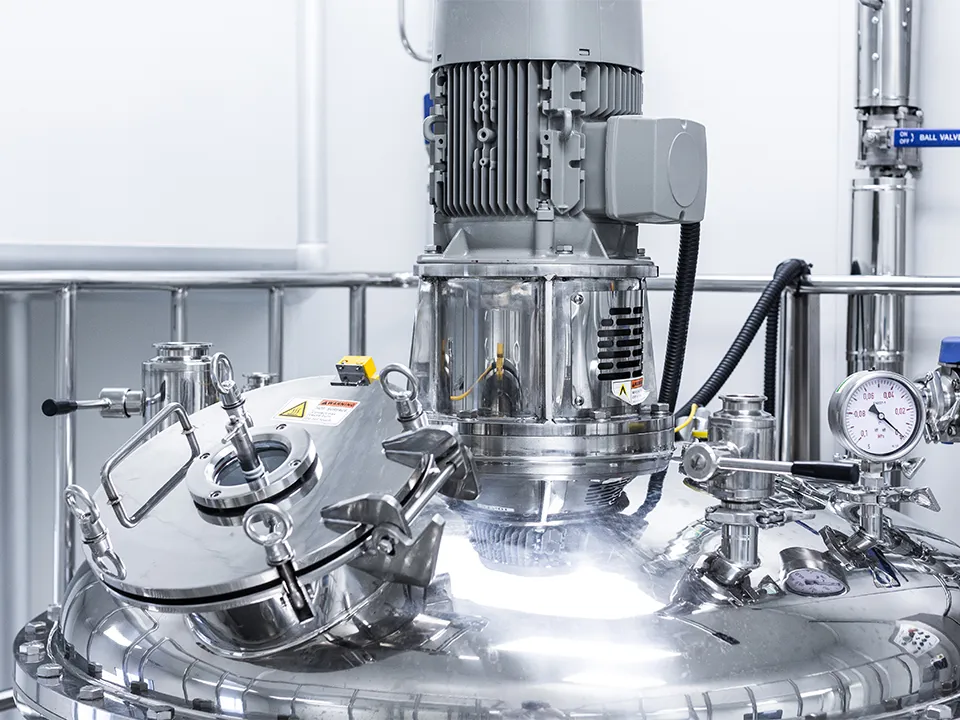
Weld seams on permanent metal-to-metal joints that come into contact with the product must be continuous and defect-free. Use shielding gas on both sides during welding. For pipework, automatic orbital welding is preferred, as this technique produces welds of consistently high quality. Welds on surfaces that do not come into contact with the product must also be continuous and smooth enough to clean easily.
Criteria for supports and insulation
Supports for pipes or equipment must be designed and installed so that water or dirt cannot collect on or in them. Take into account the possibility of adverse galvanic reactions between dissimilar materials. Insulation materials must be enclosed in a stainless steel jacket. This jacket must be fully welded to prevent the ingress of air or moisture. This can promote microbial growth and increase the risk of contamination. In addition, if the insulation material releases chlorides, the risk of corrosion in the cladding will increase. Pipes can be insulated by evacuating the air from the space between the walls of double-wall pipes. This is an extremely effective way to avoid all the problems that can arise.
Question about this story? Ask your question
Keep following this
Get an email when a new story is published. No account needed.
- ThemeFood safety from design to audit
- SubjectFood safety







