












Basic guidelines for hygienically designed machinery
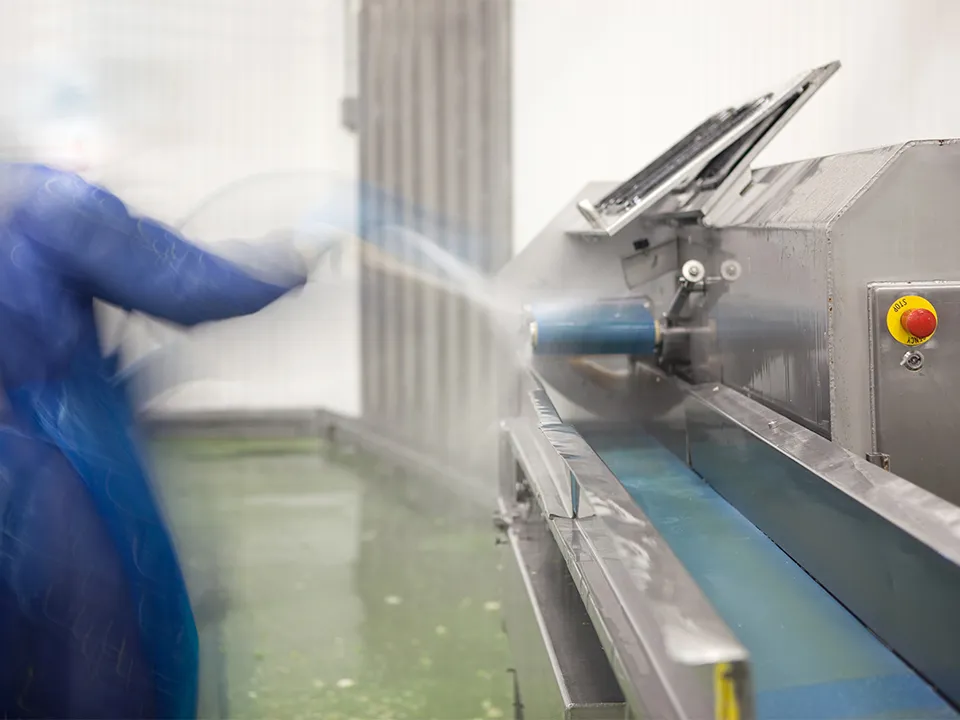
The food industry is subject to strict standards to ensure food safety for consumers.
Process equipment must not only continue to function properly, it must also be easy to clean and protect products from contamination. The guideline for the hygienic design of process equipment provides an excellent framework for achieving this. In 1989, EHEDG (European Hygienic Engineering & Design Group) was established, bringing together food producers, machine manufacturers and suppliers. They work together to improve food safety by developing guidelines that promote hygienic design. This article summarises the guideline on the hygienic design of process equipment. Several basic criteria must be taken into account.
Surfaces and geometry
Direct and indirect product contact surfaces must be easy to clean, non-absorbent and must not pose a toxicological risk by leaching substances into food. Easy to clean means smooth and free of imperfections, such as crevices or cracks. This prevents microorganisms or other residues from accumulating on the surfaces. Therefore, avoid:
Surface finishes that are difficult to clean. Since the surface finish affects cleaning time, an Ra value of 0.8 µm or less is recommended for stainless steel surfaces. Higher Ra values are justified for specific types of equipment or special functional requirements;
- Direct metal-to-metal joints, except welds, as they can corrode and trap dirt and liquids;
- Stepped transitions caused by misalignment of equipment and pipe connections
- The use of O-rings, except in static joints or as otherwise specified in EHEDG documents for special applications;
- Exposed threads, metal-to-metal joints between fasteners, openings, gaps in hinges …;
- Sharp corners. All internal corners of 135° or less must have a radius of at least 3 mm;
Welding
Welds on permanent metal-to-metal joints that come into contact with the product must be continuous and free of defects. The same applies to welds on non-product contact surfaces. In addition, all welds must be sufficiently smooth and correctly positioned to allow easy cleaning.
Drainability
The inside and outside of all equipment and pipework must be self-draining or capable of being drained. Avoid horizontal surfaces, ensuring instead that they slope to one side at a minimum angle of 3°. On external surfaces, direct all liquid away from the main product area.
Insulation
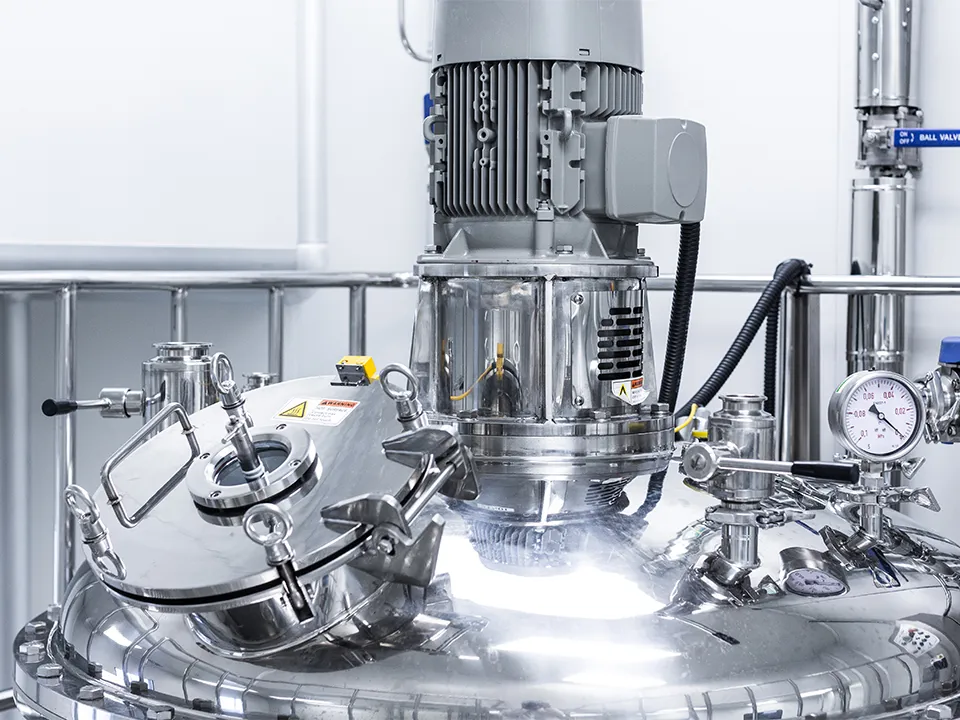
There are two hygienic options for insulating equipment and pipework: a sealed cladding or a vacuum. In the first case, insulation materials must be made from corrosion-resistant materials and fully sealed to prevent air or moisture from entering and microbial growth from occurring. Avoid excessive moisture in the production environment when installing the cladding. Trapped moisture increases the risk of corrosion. Pipes can also be insulated by evacuating the air from the space between the walls of double-walled pipes. This is an extremely effective way to avoid all the problems that can arise.
Installation, supports and layout
In factory buildings, there is always a risk that condensation from equipment, pipework and the internal surfaces of the building will drip onto product contact surfaces. This requires careful consideration during design, layout and installation to ensure that condensate is drained away. Equipment and support structures must be installed so that there are no cavities or openings. Minimise the number and surface area of floor contact points, and ensure there is sufficient space between equipment for cleaning and inspection. Supports for pipes or equipment must be constructed or installed so that water or dirt cannot collect on or in them. Also take into account the possibility of adverse galvanic reactions between dissimilar materials. In addition, supports must be sealed to prevent the accumulation of residues and moisture. When fittings, brackets … are attached to hollow supports, the support must not be penetrated, as this could allow moisture to enter. In terms of layout, ensure that the risk of cross-contamination between process lines is kept to a minimum.
Question about this story? Ask your question
Keep following this
Get an email when a new story is published. No account needed.
- ThemeFood safety from design to audit
- SubjectFood safety







