












Biofilm, the invisible enemy
Text and images Christeyns NV
Imagine this: your production environment is completely clean because you have a reliable, experienced cleaning team. You also use effective cleaning and disinfection products. Yet recurring microbiological deviations show up in tests on the finished product. This could indicate the presence of biofilm … How can you get rid of biofilms and avoid product recalls?
Biofilms form when small amounts of organic soil, invisible to the naked eye, remain on surfaces in the production environment. These residues provide a breeding ground for bacteria, which develop in several stages into a biofilm. A protective polymer layer forms around the bacteria, shielding the microorganisms from their surroundings. As long as the bacteria remain within this biofilm, they cannot be detected by standard microbiological tests. However, once the biofilm breaks open, the bacteria spread rapidly. This can lead to a sudden increase in microorganisms and, ultimately, contamination of the production process.
Rapid test: TBF 300
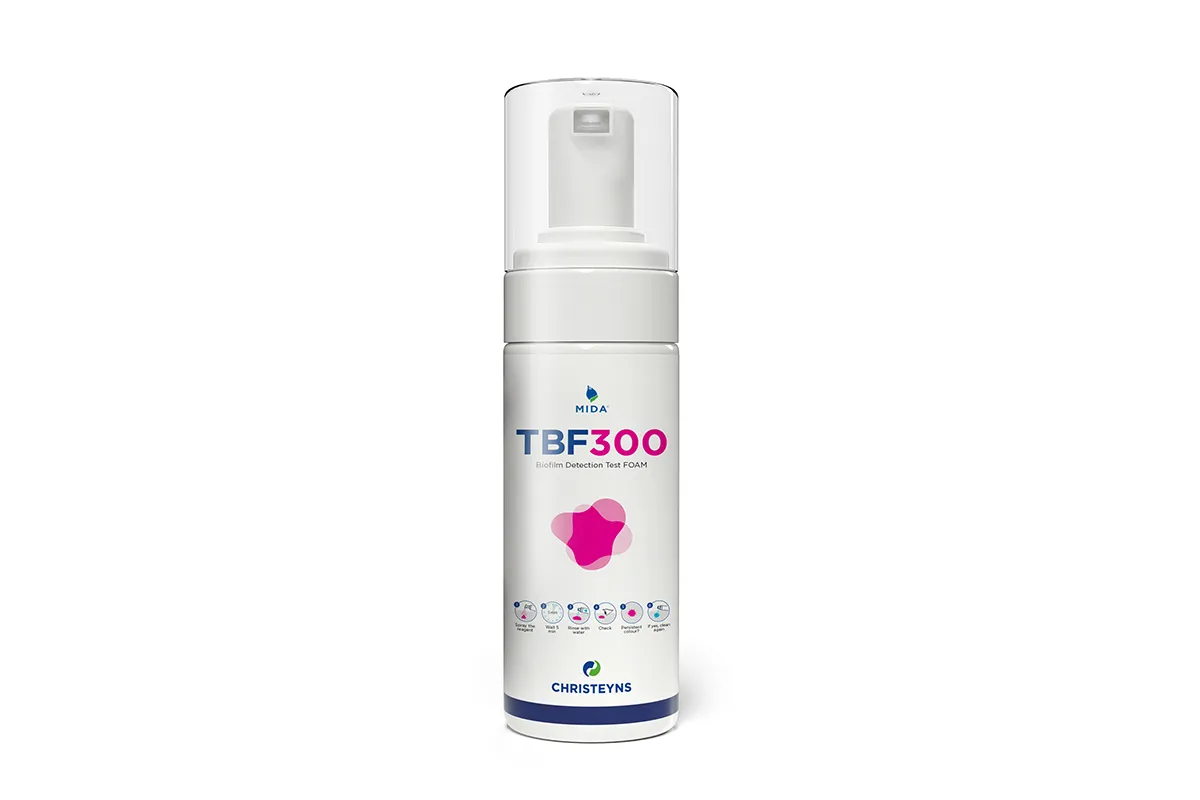
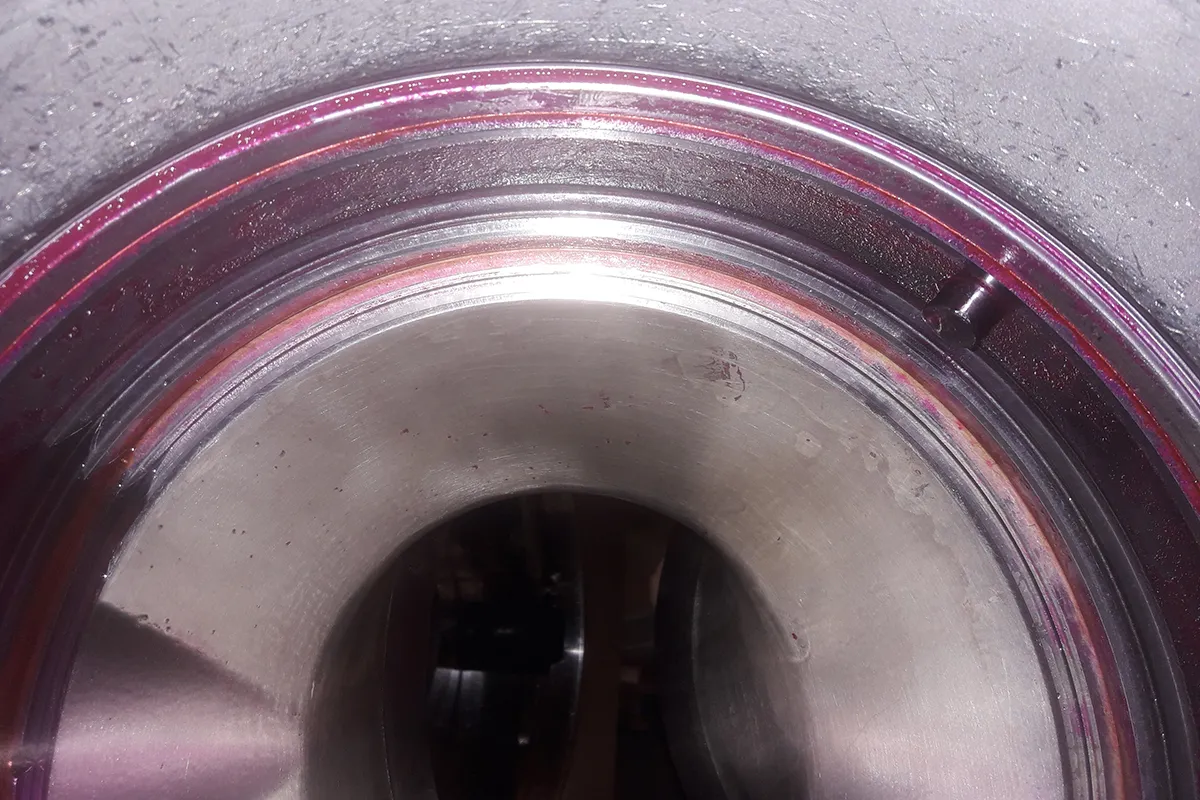
How can you be sure that you are dealing with biofilm? Christeyns has developed a rapid test to detect biofilm: TBF 300. This product binds to the polymer layer of a biofilm within minutes. Jason Owen, Food Hygiene at Christeyns, explains how TBF 300 works: “Before we can carry out a biofilm audit, the stainless steel surface must be spotlessly clean. This means it needs to be cleaned very thoroughly: first with alkaline cleaning agents, followed by an acid clean and, finally, disinfection. The biofilm audit can only be carried out once the surface is completely free of organic soil, inorganic soil and microorganisms. To do this, we apply TBF 300 to exposed stainless steel food-contact surfaces, leave it to work for five minutes and then rinse it off. A pink discolouration appears only in places where biofilm is present.”
BIOFILM-FREE PROTOCOL
Once Christeyns detects biofilm, a cleaning protocol tailored to the customer is applied. Jason explains: “Depending on the situation and the customer’s needs, we can recommend a protocol with or without enzymes to remove or prevent biofilm. Both protocols begin with a curative cleaning programme. In an enzymatic protocol, we use enzymatic cleaning agents, natural proteins that break down the biofilm’s polymer layer and convert it into water-soluble particles.”
“We then disinfect the surfaces to effectively remove any bacteria remaining in the biofilm. After this treatment, the same contact points are checked again with TBF 300 to verify the effectiveness of the cleaning.”
Jason continues: “Biofilm can always develop again. That is why we recommend a preventive protocol as a second phase. This involves using the biofilm-removing solutions weekly to prevent new biofilm from forming.”
Effective solution
In practice, combining rapid detection with TBF 300 and implementing the biofilm protocol is an effective solution to the complex problem of biofilm. Taking prompt action considerably reduces the risk of recontamination, resulting in better quality and a longer shelf life for finished products from your production environment
Een zakelijke vraag aan Christeyns NV? Get in touch
Companies in this story
Keep following this
Get an email when a new story is published. No account needed.
- ThemeFood safety from design to audit
- SubjectFood safety
- CompanyChristeyns NV







