












Clean smarter, not harder, with enzymes
Text and images Christeyns NV
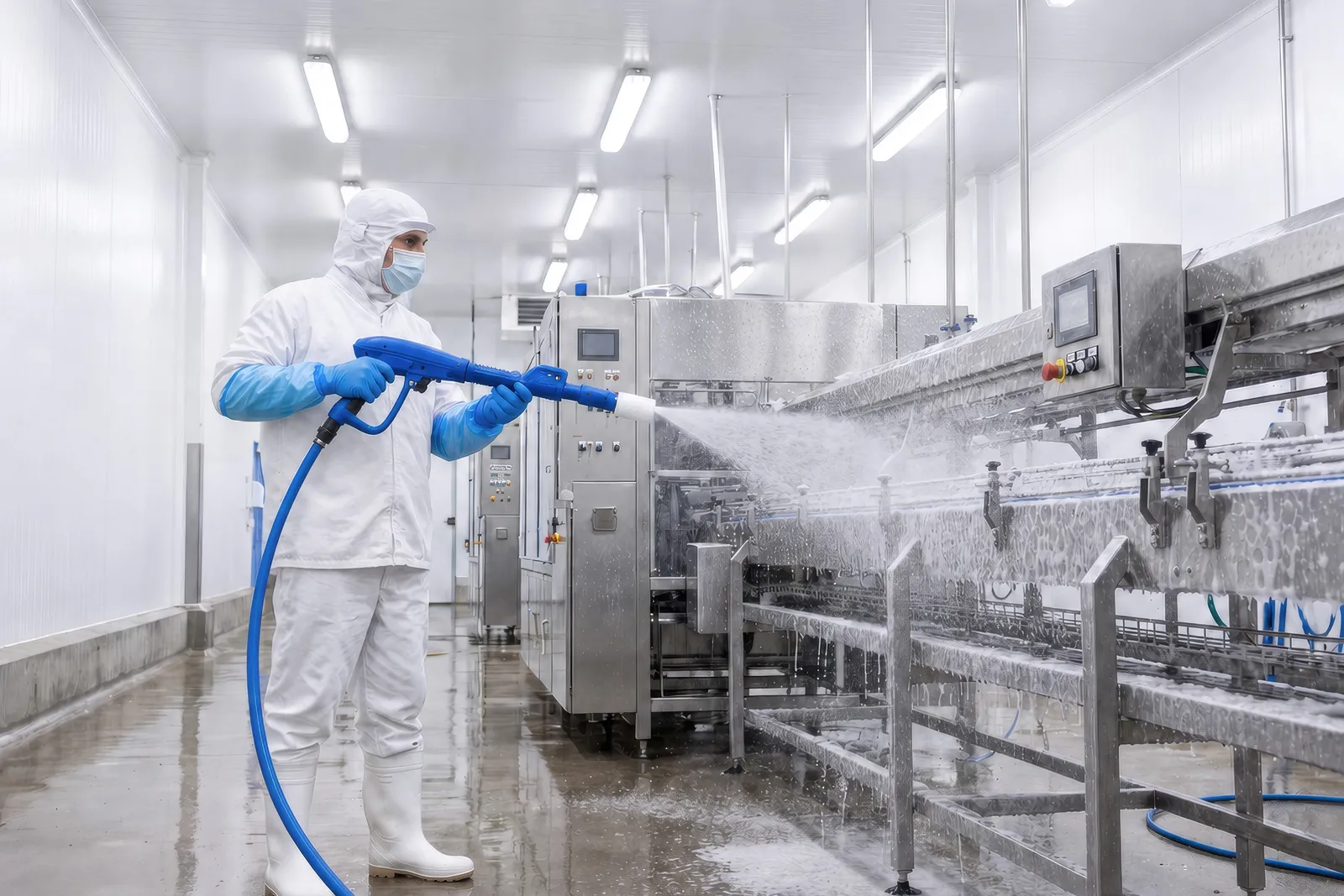
Why use enzymes if conventional cleaning already delivers the desired result? Because they target and break down organic contamination, offering an alternative when high temperatures, harsher chemicals or strong mechanical action are undesirable or insufficient. Enzymes do not replace the existing cleaning protocol, but can strengthen it at critical points.
Enzymes are proteins that act as biological catalysts. They bind to organic material such as proteins, fats and starch, breaking these molecules down into smaller fragments. Surfactants in the cleaning agent bring the enzymes into closer contact with the contamination and help rinse away the fragments that have been dislodged.
Three rules of thumb
Follow these rules of thumb to get the most out of enzymatic cleaning.
1. Know the contamination
Enzymes only act on organic soils. These include food residues, biological sludge, certain polymer matrices, fats, natural oils and other organic residues.
2. Choose the right target
Enzymes are highly selective, with different enzymes acting on different types of contamination. Proteases break down proteins, amylases break down starch, and lipases break down fats and oils. The choice of enzyme depends on the contamination present.
Contamination in the food industry is usually complex, consisting of a mix of proteins, fats, sugars, starch … Products based on a multi-enzyme blend can help remove complex and challenging soil matrices easily and without damaging materials.
3. Monitor process conditions
Each enzyme and enzyme blend has an optimal pH and temperature range to maximise activity and keep it effective for as long as possible. Enzymes also generally require more time than traditional cleaning products.

Tackle biofilms at the matrix
One important application is biofilm control. Enzymes can break down the EPS matrix surrounding a biofilm. This matrix consists, among other things, of proteins, polysaccharides, fatty substances and extracellular DNA. Breaking open this protective structure makes the bacteria beneath it accessible to subsequent disinfection. Stubborn biofilms may require several treatments. Periodic enzymatic cleaning can also be used preventively to help control new build-up.
Clean membranes gently
Enzymes are also increasingly being used in membrane cleaning. During filtration, organic residues are pressed against the membrane surface and into its pores, reducing flow and performance. As membranes can be sensitive to pH, temperature and harsh chemicals, enzymatic cleaning offers a gentler alternative. It breaks down contamination without placing unnecessary stress on the membrane, helping to protect these costly components from damage and wear. The cleaning programme is tailored to the membrane type, the contamination and the manufacturer's instructions. Enzymes can also be used to tackle allergens. Proteases break down allergenic proteins and can therefore contribute to effective cleaning under milder conditions.
Strengthen where it matters
Ultimately, the value of enzymatic cleaning does not lie in replacing conventional cleaning methods. The technology is most effective when dealing with known organic contamination and when temperature, mechanical action, installation requirements or material sensitivity impose limitations. Enzymes can therefore be used very selectively as part of a complete, validated cleaning and disinfection protocol. The aim is not to clean harder, but to intervene more intelligently precisely where conditions call for it.
Een zakelijke vraag aan Christeyns NV? Get in touch
Companies in this story
Keep following this
Get an email when a new story is published. No account needed.
- ThemeFood safety from design to audit
- SubjectFood safety
- CompanyChristeyns NV







