












Custom-made textile ducts meet stringent requirements perfectly
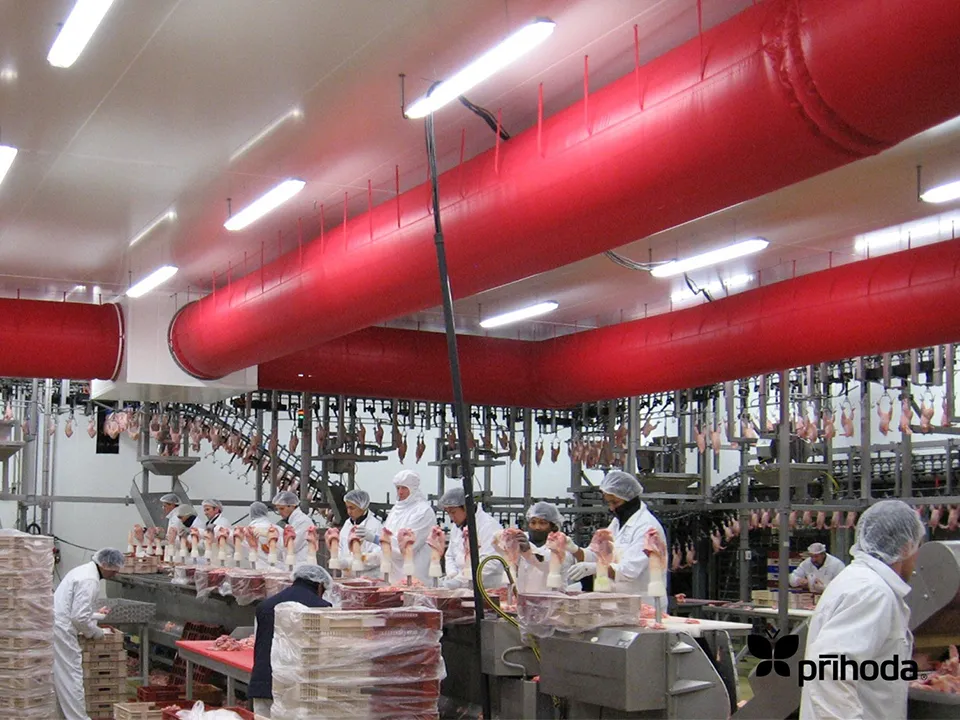
Good air quality is crucial to the comfort, productivity and health of employees in the food industry.
Installations in this sector must also comply with strict hygiene regulations and therefore be easy to clean thoroughly. Custom-made textile ducts from the Czech brand Prihoda offer an ideal solution for distributing cold, warm and conditioned air. They are extremely lightweight and quiet, can be cleaned 100% and prevent condensation. In Belgium and France, HVAC contractors can source these systems from Prihoda NV, part of the Linum Group. The company also has its own software for the rapid, accurate design of a duct system for every project.
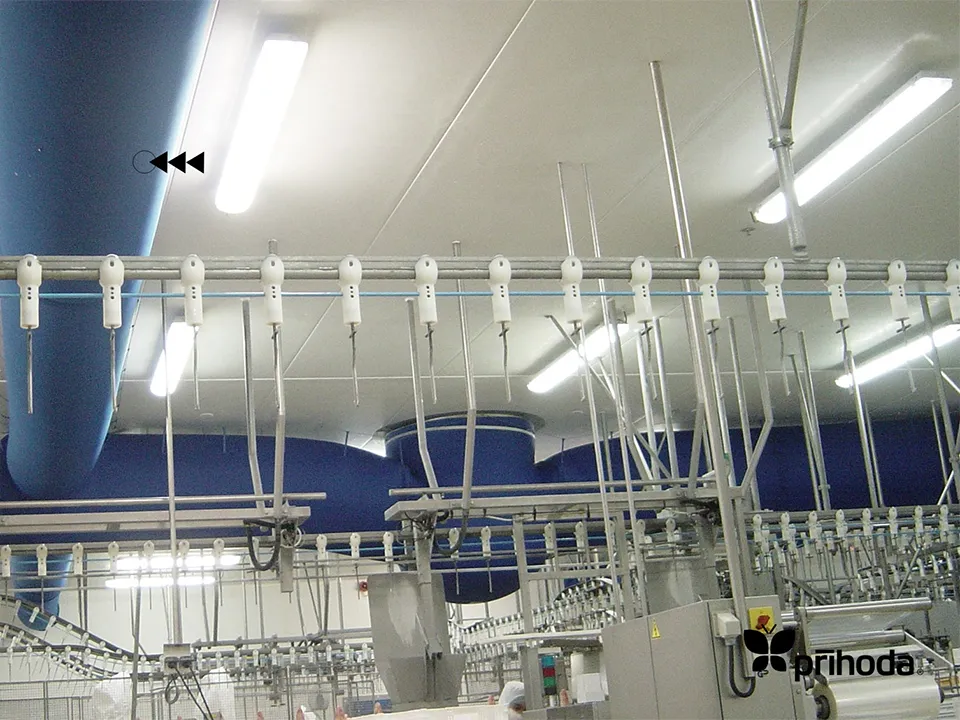
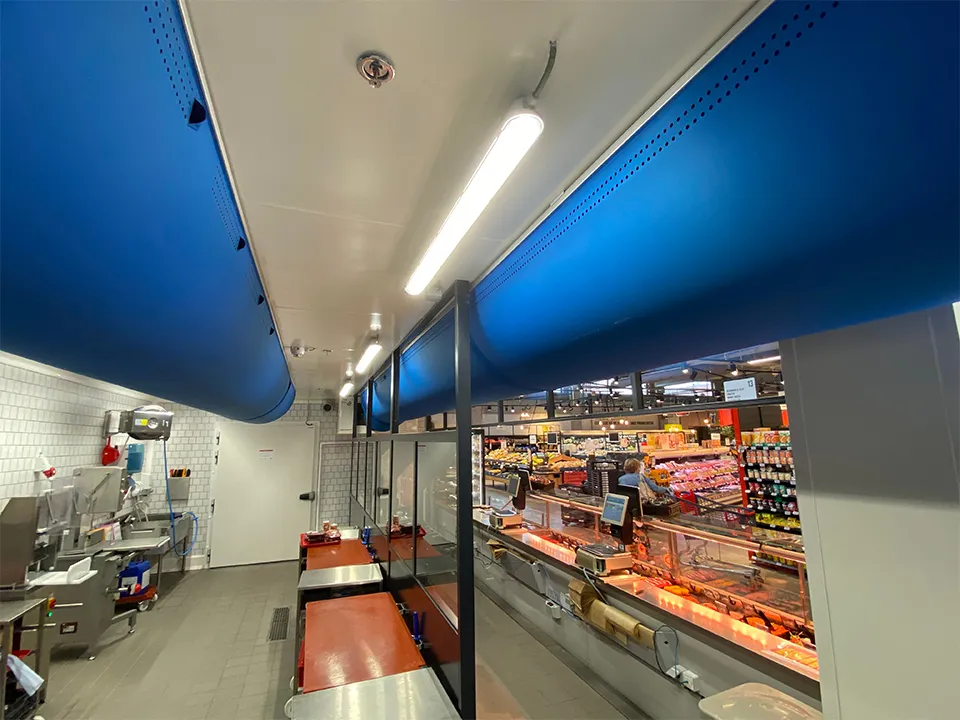
Textile ducts were first used in the food industry. Although they are now installed in a wide range of buildings, they are still widely used in food production, commercial kitchens and refrigeration systems, low-temperature areas, supermarkets, stores and food shops. “The benefits of these textile ducts have been demonstrated time and again in practice, but they are still unfamiliar to many people. Architects and clients too often opt for sleek climate ceilings or an industrial look with metal ducts, even though these are less flexible than textile solutions,” says Wesley Verlez, account manager at Prihoda, which became part of the Linum Group at the end of January 2021. “As the exclusive distributor of textile ducts from the Czech brand Prihoda in Belgium and France, we supply HVAC contractors with custom-made solutions for cooling, heating and ventilation.”
Benefits for contractors and clients
Hygienic textile ducts offer numerous advantages over metal ventilation ducts, for both contractors and clients. Textile provides uniform air distribution without draughts. Every system can be made to measure, including for applications in damp conditions, which are common in food processing businesses. The ducts are delivered ready for installation, saving contractors time during assembly and reducing the number of staff required. They can also plan their work more flexibly and save on the cost of transporting materials to site. “These benefits for contractors, among others, mean clients pay less to purchase the system. End users also get a comfortable, hygienic solution, as Prihoda textile ducts are 100% washable. What’s more, they can have ducts in any colour at no extra cost, or have them designed with their own design, photo, image, logo or lettering,” the account manager explains. “Acoustics are becoming increasingly important, so HVAC calculations need to take the so-called Noise Rating into account more and more. Textile ducts made from polyester absorb airflow noise much better than galvanised steel or aluminium ducts. While an NR of 35 is more or less the norm, we can easily achieve an NR of 30 with small diameters. To reach a similar rating with galvanised steel, the ducts need to be considerably larger in diameter. This increases transport and installation costs and makes installation and suspension more complex. Finally, unlike metal, textile is also 100% condensation-free, so droplets never land on food or employees.”
In-house calculation software
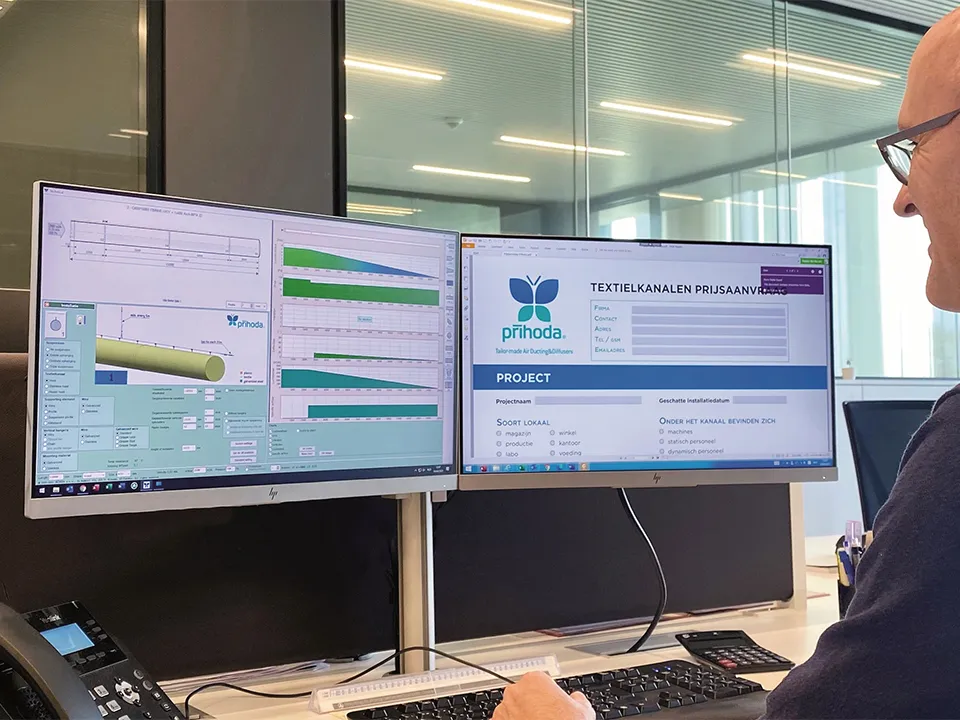
As the saying goes, good preparation is half the battle. The same applies to a duct network. Prihoda’s experts work with the client to determine their requirements and the most suitable technology, standard ducts or membrane ducts. They also establish details such as airflow profiles and ceiling suspension. “Our in-house calculation software is the driving force behind every project. It enables us to provide a design and quotation within 24 hours, including AutoCAD drawings, CFD analysis and technical data,” Verlez concludes. “A textile duct project can therefore be calculated and drawn up from start to finish in advance. This means the contractor does not need to make adjustments during installation. Nor does the system itself have to sacrifice efficiency because of last-minute changes on site.”
Question about this story? Ask your question
Companies in this story

Keep following this
Get an email when a new story is published. No account needed.
- SubjectFood safety
- CompanyPrihoda nv







