












Drain process water hygienically and efficiently

10 drainage tips for the food industry
Hygienic floor drainage is essential when designing production areas and commercial kitchens. Specially designed grating channels, slot channels and floor drains are available for every specific application. Stainless steel, the most hygienic material after glass, is the starting point. That is the first rule. Here, we explain 10 drainage tips to help you with a new build or renovation.
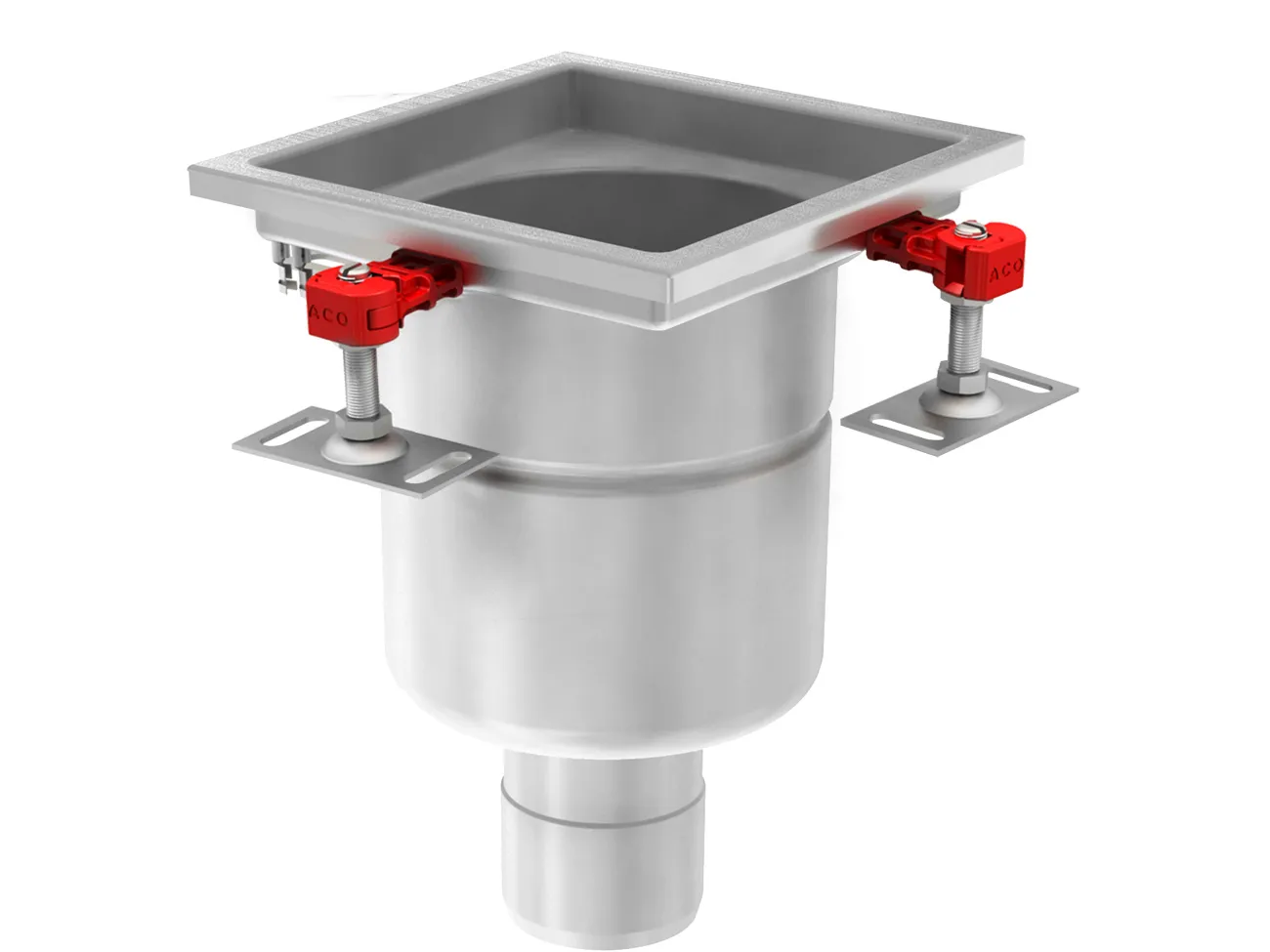
1) Floor drains with a round drain body
Choose floor drains with a round, seamless, deep-drawn drain body. Square or rectangular welded drains are breeding grounds for bacteria, as dirt collects in the corners. Also check whether the connection to the sewer beneath the chosen slot or grating channels is made via a drain body of this kind. Hygienic grating channels must also meet stringent hygiene requirements to prevent bacterial contamination. They must be manufactured in accordance with the relevant hygienic design principles for food-processing equipment set out in EN 1672, EN ISO 14159 and EHEDG.
2) Well-designed debris baskets keep dirt at bay
Always install floor drains with debris baskets or strainers. Did you know that a debris basket can also be fitted in the channel? They collect all debris and prevent the sewer pipes from becoming blocked. If your production process involves small food products or specific ancillary items, such as sticks that could end up on the floor, make sure the mesh size of the debris baskets is suitable. It is not only the debris you might immediately think of that can cause blockages. Do not use debris baskets that also form part of the trap, otherwise removing them for cleaning leaves no water seal. That is not hygienic in a production environment!
3) Trap/water seal
The water seal must be removable for cleaning, preferably when production is stopped. It is very important to choose a floor drain that allows all the water to drain away, leaving water only in the trap. These floor drains can be cleaned thoroughly. Stagnant water is a source of contamination.

4) Choosing between floor drains, slot channels and grating channels
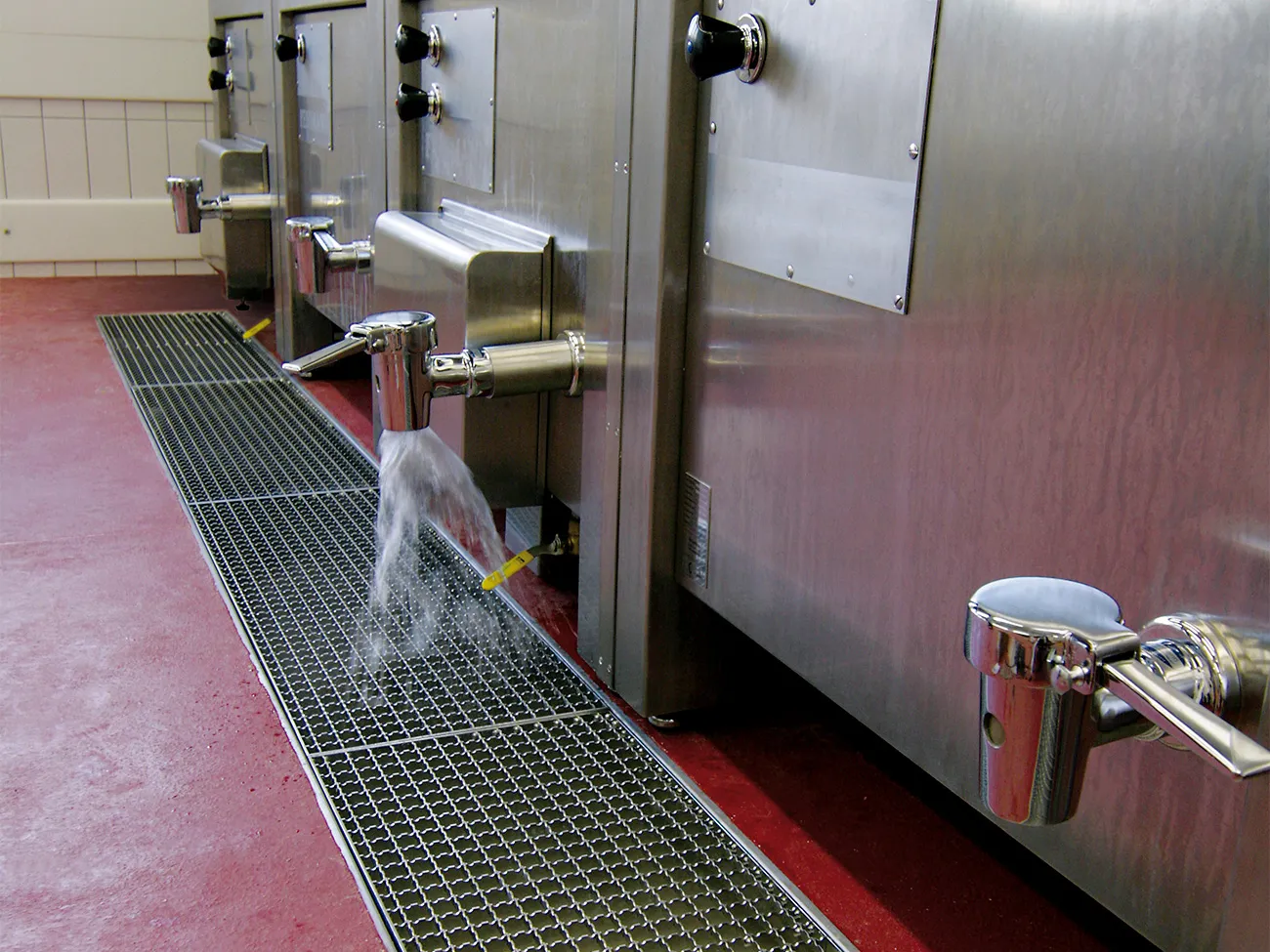
When installing floor drains, create a diamond-shaped floor profile. The floor must slope perfectly towards each point, with 4 slopes. Linear drainage using slot or grating channels is a good alternative, as it is easier to install with only 1 or 2 slopes towards the channel. It is recommended in any case where large volumes of water reach the floor. Of course, the right solution depends on the situation on site. For example, if large tilting kettles are installed, it is best to fit a wide and deep grating channel underneath. This ensures the most efficient drainage of process water. Slot channels, which have a narrow slot and no grating, are usually installed to separate wet and dry areas, for example between the production area and offices or corridors. This prevents these areas from being flooded if a problem occurs in production. Slot channels are usually connected to the sewer via a floor drain, where a grating can be fitted for inspection and maintenance.
5) Flow through built-in channel gradients
If channels are specified, it is best to choose models with a built-in gradient towards the sewer, particularly if the drainage run is long. Surface water entering the slot or grating channels is carried straight to the sewer, rather than stagnating in the channel. Where possible, choose a channel with an outlet in the middle. This offers the best guarantee of efficient drainage. Channels with an outlet at the end of the run, and therefore a single gradient, are also commonly installed. The sewer pipe is often already in place before the exact locations of the drainage modules have been discussed. It is therefore important to include drainage clearly in the project design from the outset.
6) Protective cover plate
When installing the channels, fit a cover plate to prevent dirt, waste or rubble from getting inside. This means the channel will not need to be cleaned after installation. For slot channels, tape over the slot is sufficient. Some manufacturers supply their channels with a protective cover plate and/or tape as standard.
7) Anti-slip gratings
In areas with a lot of surface water, it is best to install grating channels and floor drains with anti-slip gratings. This is the best way to prevent workplace accidents. Here too, rounded corners are recommended, both on the gratings and on the support rim.
8) Load class
The choice of floor drain, slot channel or grating channel depends on the application. Also take account of the load class, or the potential loads placed on the drainage systems. Think about the future too: just because heavy carts are not used on the grating channel today does not mean they will not be tomorrow.
The edges of drainage channels and floor drains have a special edge finish, which may or may not be filled. The grating type is selected according to the loads it must withstand, expressed in kN (kilonewtons).
9) Floor-to-drainage connection
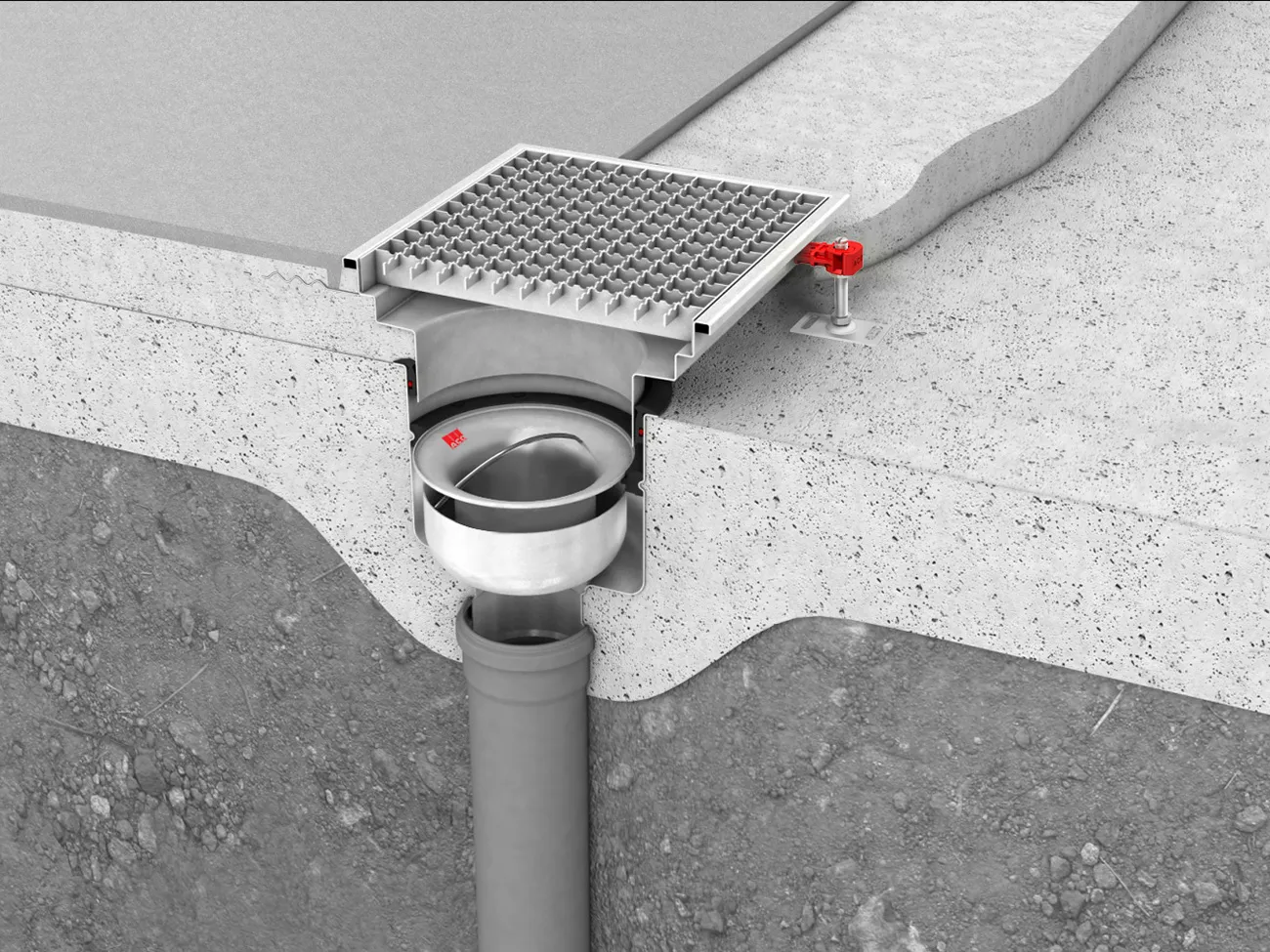
Special edge finishes are also available to provide the best solution for connecting the chosen floor type (tiles, concrete, epoxy or vinyl flooring) to the floor drain or drainage channel. This prevents the floor from ending up a few millimetres below the rim of the drainage module. Puddles must be avoided.
There are also options with clamping and bolting flanges to create a waterproof seal below floor level. This is particularly important on upper floors, where water must not seep through.
10) Bespoke or standard?
Bespoke solutions are common in the food industry. They offer the best guarantee of hygiene, as the channels are made to length in a single piece for each project. No joining pieces are needed to connect channel sections. For bespoke solutions, drainage must be considered early on. Discuss it with the design consultancy, installation company, flooring contractor or other internal and external parties involved.
Een zakelijke vraag aan ACO? Get in touch
Companies in this story
Keep following this
Get an email when a new story is published. No account needed.
- ThemeFood safety from design to audit
- SubjectFood safety
- CompanyACO







